
Hospital Bag & Registry Checklists
Add your due date for a personalized packing timeline.
Your checklists save automatically in this browser.
A gentle guide, not medical advice — always follow your care team's instructions.
The Ultimate Pregnancy Hospital Bag & Registry Checklist: Your Stress-Free Delivery Guide
Welcome to the beautiful, chaotic, and exciting final stretch of your pregnancy! As you enter your third trimester, the reality of your baby’s arrival starts to set in. Suddenly, your to-do list feels a mile long, and one of the biggest tasks looming over your head is packing your hospital bag.
If you’ve been scrolling through social media or asking friends for advice, you’ve probably realized that everyone has a different opinion on what you actually need. Some people will tell you to pack three suitcases, while others will tell you the hospital provides everything. The truth? It’s somewhere in the middle, and it is highly personal.
That is exactly why we created the Blooming Blogs Interactive Newborn Essential Checklist. We wanted to take the guesswork out of your Pregnancy Hospital Bag Checklist and give you a practical, organized, and completely stress-free way to prepare. Whether you are a first-time mom feeling totally overwhelmed, or a seasoned parent who just needs a quick refresher, this comprehensive guide and our custom-built digital tool will walk you through exactly what to pack, when to pack it, and how to organize it all.
Grab a cup of decaf tea, put your feet up, and let’s break down the ultimate Delivery Bag Pack list.
Why Packing Early is Your Secret Weapon
Before we dive into the actual items, let’s talk about timing. When should you pack your hospital bag?
The short answer is: by 35 weeks.
While your due date might feel like a lifetime away, babies operate on their own schedules. About 10% of babies arrive early. If your water breaks at 2:00 AM on a Tuesday when you are 34 weeks along, the last thing you want to be doing is frantically running around the house trying to find your charger or your insurance card.
Having your bag packed and sitting by the door brings an immense sense of peace. It allows you to transition into labor feeling prepared and in control. In our interactive tool above, you’ll notice we have broken down the checklist into specific timeline tags (Weeks 28–32, Weeks 33–36, and Week 37+). This is designed to help you chip away at the task slowly. You don’t have to do it all in one day!
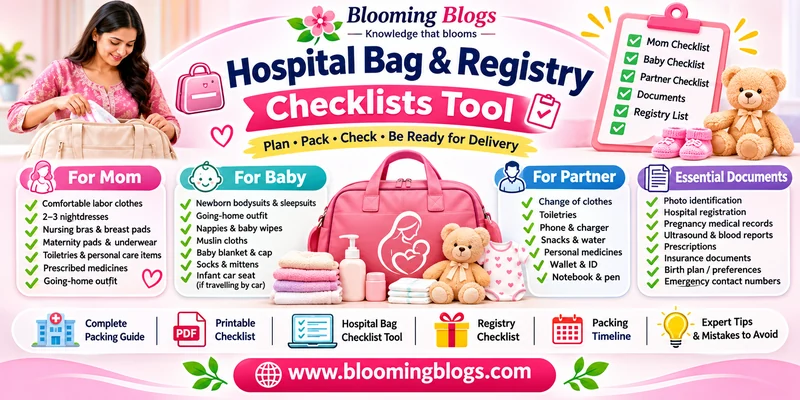
👉Your 10-Point Essential Guide (Based on Our Tool)
We have divided our massive checklist into 10 highly useful, practical categories. Here is a deep dive into what you need and why you need it.
1. The “Birthing Parent” Essentials: Comfort is Queen
When you are in labor, the hospital environment can feel very clinical. Bringing items from home is the best way to ground yourself and feel comfortable.
- Paperwork: Your ID, insurance cards, and hospital forms are the very first things you need. Keep them in a bright folder in the front pocket of your bag.
- Comfortable Clothing: Skip the standard hospital gown if you can. Bring your own dark-colored, button-down nightgown or pajamas. Button-downs are absolutely essential for easy skin-to-skin contact and breastfeeding.
- Non-skid Socks: Hospital floors are notoriously cold and slick. A pair of grippy socks or easy-to-slide-on slippers will make those late-night walks down the hallway much more comfortable.
- Nursing Bras & Pads: Even if you aren’t planning to breastfeed, your milk will come in, and you will need support. Bring soft, seamless bras and plenty of heavy-duty breast pads.
2. The Partner’s Survival Kit
Dads and birth partners are the unsung heroes of the delivery room. They are your advocates, your massage therapists, and your rock. But they also need to survive the 24-48 hour marathon of labor.
- Snacks and Hydration: Hospital cafeterias close early. Bring high-protein snacks, energy bars, nuts, and a large refillable water bottle.
- Entertainment: Labor involves a lot of waiting. Bring a tablet, a laptop, or a good book to pass the time while you rest.
- A Change of Clothes: Labor can be a sweaty, messy process for partners too. Pack comfortable layers, a spare t-shirt, and deodorant.
- The Long Charger: We cannot stress this enough—bring a 10-foot phone charger. Hospital outlets are always located mysteriously far behind the bed.
3. Delivery Room Ambiance
You want the delivery room to feel less like a sterile hospital and more like a calm, welcoming space.
- A Portable Speaker: Creating a relaxing playlist can do wonders for your mental state during early labor.
- Lip Balm: Labor involves a lot of heavy breathing, and hospital air is incredibly dry. Your lips will thank you.
- Hair Ties: Keep your hair out of your face so you can focus on the task at hand.
- Massage Lotion: This is a must-have for your partner. Lower back counter-pressure massages are a lifesaver during contractions.
4. Baby’s Going-Home Outfit (and More)
The hospital will provide diapers, wipes, and blankets for the baby, but you need to bring a few special items.
- The Car Seat: You literally cannot leave the hospital without it. Make sure it is properly installed in your vehicle before you go into labor.
- Zipper Onesies: Skip the complicated snaps. Two-way zipper sleepsuits are a gift from heaven for 3 AM diaper changes. Bring a couple of options in Newborn and 0-3 Month sizes, as you never know how big the baby will be!
- Scratch Mittens: Newborns have sharp little nails. Mittens will keep them from scratching their delicate faces while they sleep.
5. Post-Delivery Recovery (The Unspoken Essentials)
This is the part of the Pregnancy Hospital Bag Checklist that people don’t talk about enough. Recovery is just as important as delivery.
- High-Waist Disposable Underwear: These offer gentle, supportive compression for both vaginal and C-section recovery.
- Perineal Cleansing Bottle: An angled squirt bottle (like the Frida Mom one) is essential for keeping the area clean after using the restroom.
- Cooling Ice Packs: For those first few days, soothing perineal ice packs provide immense relief.
- Nipple Cream: Lanolin ointment is a must if you are nursing. Apply it early and often to prevent painful cracking.
6. The Interactive Baby Registry Tab
Our tool doesn’t just stop at the hospital bag; it also includes a Baby Registry tab. When you are building your registry, it’s easy to get distracted by cute clothes.
Focus on the essentials: a safe bassinet for room-sharing, a sound machine to mimic the womb, feeding supplies (like a nursing pillow and bottles), and diapering essentials. Remember, babies outgrow newborn diapers incredibly fast—do not overstock them!
7. Baby’s Bath and Health Kit
While you are in the hospital, the nurses will handle the baby’s first bath. However, you will need these items for the trip home.
- Digital Thermometer: A forehead or rectal thermometer is vital for peace of mind in those first few weeks.
- Nasal Aspirator: Babies breathe through their noses, and they get stuffy easily. A reliable aspirator is a nursery must-have.
- Electric Nail Trimmer: It can be terrifying to clip a newborn’s nails with regular clippers. An electric file safely grinds them down.
8. Travel and On-the-Go Gear
You will be spending a lot of time holding your baby.
- An Ergonomic Carrier: A wrap or structured carrier allows you to go hands-free around the house.
- Diaper Bag Backpack: Backpacks distribute weight evenly across your shoulders, which is crucial when you are also carrying a car seat.
9. The Partner’s Overnight Bag
If your partner is staying overnight in the hospital, they need to be comfortable. Hospital pull-out couches are notoriously stiff.
- A Spare Pillow: Bring a comfortable pillow from home.
- A Light Blanket: Hospital blankets are thin and made of paper-like material. A soft blanket will make a world of difference.
10. Creating Your Custom List
Every birth is different. Maybe you have a specific medical condition, or perhaps your hospital has a specific policy about what you can bring. This is why our tool allows you to Add Custom Items. You can filter by timeline, priority, and add your own personalized notes.
How to Use the Blooming Blogs Interactive Checklist Tool
We built this tool right here on the page to make your life easier. Here is how to get the most out of it:
- Toggle Between Tabs: Use the top buttons to switch between your Hospital Bag and your Baby Registry.
- Filter by Timeline: Use the timeline buttons (Weeks 28–32, 33–36, 37+). We recommend starting with the “28-32” items—these are the things you can buy or organize early, like car seats and paperwork.
- Track Your Progress: As you buy or pack an item, click the checkbox. Watch the overall completion bar at the top turn from pink to green as you get closer to 100%!
- Print / PDF: Need a physical copy? Click the “Print / PDF” button. The tool will generate a clean, printer-friendly version of your checklist. You can take this to the store with you!
- Save Your Progress: Because we use local browser storage, your checkmarks will be saved automatically. If you close the page and come back later, your progress will still be there.
Frequently Asked Questions About Hospital Bags
What should I leave at home?
Leave your valuables, expensive jewelry, and any items you would be devastated to lose or get stained. Labor is messy! Also, leave the cloth diapers at home unless your hospital specifically allows them. Hospitals generally use standard disposable diapers for monitoring purposes.
Does the hospital provide postpartum supplies?
Yes, most hospitals will provide you with thick pads, mesh underwear, and a basic squirt bottle. However, many moms find that upgrading to their own high-waist underwear and angled bottles makes the recovery process much more comfortable.
When should I pack the baby’s bag?
We recommend having the baby’s bag packed alongside yours by 35 weeks. The car seat, however, should be installed and checked by a certified technician by 34 weeks.
What if I have a C-section?
If you are having a planned C-section, pack loose, high-waisted clothing that won’t rub against your incision. You will also want to bring a small pillow from home to hold against your belly when you cough or laugh.
Final Thoughts: You Are Ready
Preparing for a baby is one of the most exciting, exhausting, and transformative experiences of your life. It is completely normal to feel overwhelmed by the Delivery Bag Pack list and all the baby gear.
Take a deep breath. You do not have to be perfect. You just need to be present.
Use this tool, print it out, and take it one day at a time. By the time you are walking into that hospital, you will have everything you need. You’ve got this, mama!
(Medical Disclaimer: This article and tool are for informational purposes only. Always consult with your healthcare provider regarding your specific pregnancy, delivery, and postpartum care.)
📚 External Authoritative References
The following sources support the hospital preparation and newborn safety guidance included in this article.
- NHS – Hospital Bag Checklist
https://www.nhs.uk/best-start-in-life/pregnancy/preparing-for-labour-and-birth/hospital-bag-checklist/ - University College London Hospitals – What to Bring to Hospital
https://www.uclh.nhs.uk/our-services/find-service/womens-health-1/maternity-services/giving-birth/what-bring-hospital - National Childbirth Trust – Hospital Bag Checklist
https://www.nct.org.uk/information/labour-birth/planning-birth/hospital-bag-checklist-what-do-i-need - American Academy of Pediatrics – Safe Sleep
https://www.aap.org/en/patient-care/safe-sleep/ - National Highway Traffic Safety Administration – Rear-Facing Car Seat Installation
https://www.nhtsa.gov/car-seats-and-booster-seats/how-install-rear-facing-car-seats
Use the relevant references alongside the claims they support. Check them periodically for updates.ersally best, and that specialised formulas require more careful consideration.
🔗 Related Articles
If you are preparing for a newborn, these helpful Blooming Blogs guides can help you plan, prepare, and care for your baby with greater confidence:
- Newborn Baby Essentials Checklist for Soon-to-Be Parents — A practical checklist of important newborn essentials to prepare before your baby arrives.
- How to Prepare Formula Milk for a Newborn Baby — Learn the basic steps for preparing formula milk safely and hygienically for a newborn.
- Newborn Baby Care: Complete Guide for New Parents — A comprehensive guide covering essential newborn care and everyday needs for new parents.
- Best Infant Formula for Newborns: Types, Choices & Safety Guide
🌱 Continue Exploring…
Whether you’re nurturing a newborn, curating a sanctuary for your home and garden, or simply looking to level up your day-to-day life, there’s always a new perspective waiting to be discovered. From practical everyday parenting guidance, women’s wellness information, ideas to make your home more beautiful, tips for caring for pets and plants, or inspiration for your spiritual journey, Blooming Blogs brings useful knowledge together in one place.
Blooming Blogs — knowledge that blooms.
🌸 Blooming Blogs Promise
We’re here to bring you thoughtful, reliable, and helpful insights you can truly count on. Every article on Blooming Blogs is thoroughly researched, crafted with care, and written with genuine empathy to support you in your everyday journey. Your trust means everything to us, and we are dedicated to sharing content that informs, inspires, and makes your life a little easier.
📝 Editorial Notes
Our team strives for clarity, accuracy, and depth in every piece we publish. Content is periodically updated to ensure facts, recommendations, and guides stay relevant over time. While we consult trusted sources and expert research, our goal is always to present complex topics in a simple, practical, and conversational way that works for real life.
⚠️ Disclaimer
The content provided on Blooming Blogs is for informational and educational purposes only and should not be considered professional medical, legal, or financial advice. Always consult with a qualified expert or licensed professional before making decisions related to your health, family, or personal finances. Blooming Blogs is not liable for any actions taken based on the information provided on this website. (For full details, please visit our Disclaimer Policy Page).
💬 Share Your Experience — Leave a Comment
We’d love to hear from you! Did this article help you, or do you have a personal tip or story to share with our community? Drop your thoughts, questions, or feedback in the comment section below. Every voice enriches our community, and we read every single comment!