
Add Custom Safety Hazard
🩺 Pediatrician & Emergency Notes
Keep medical numbers, allergy alerts and blood type handy for emergencies.
Complete Room-by-Room Baby-Proofing Checklist & Interactive Home Safety Audit Tool
A home that feels calm and comfortable to an adult transforms rapidly once a baby starts exploring it. A low glass coffee table becomes a sharp corner at forehead height. Meanwhile, a dangling phone charger looks like an intriguing teething cord. Similarly, a bucket of water or an unsecured bookshelf shifts from background furniture to an immediate hazard. This happens the moment a baby learns to roll, scoot, or pull up to stand.
Many parents wait until their baby is already crawling before thinking seriously about home safety. By then, babies often move faster than expected and reach into low cabinets. Furthermore, they put almost everything they find straight into their mouths. Preparing your living space earlier gives you time to spot risks calmly and install safety hardware properly. As a result, you can build safer daily habits before mobility begins.
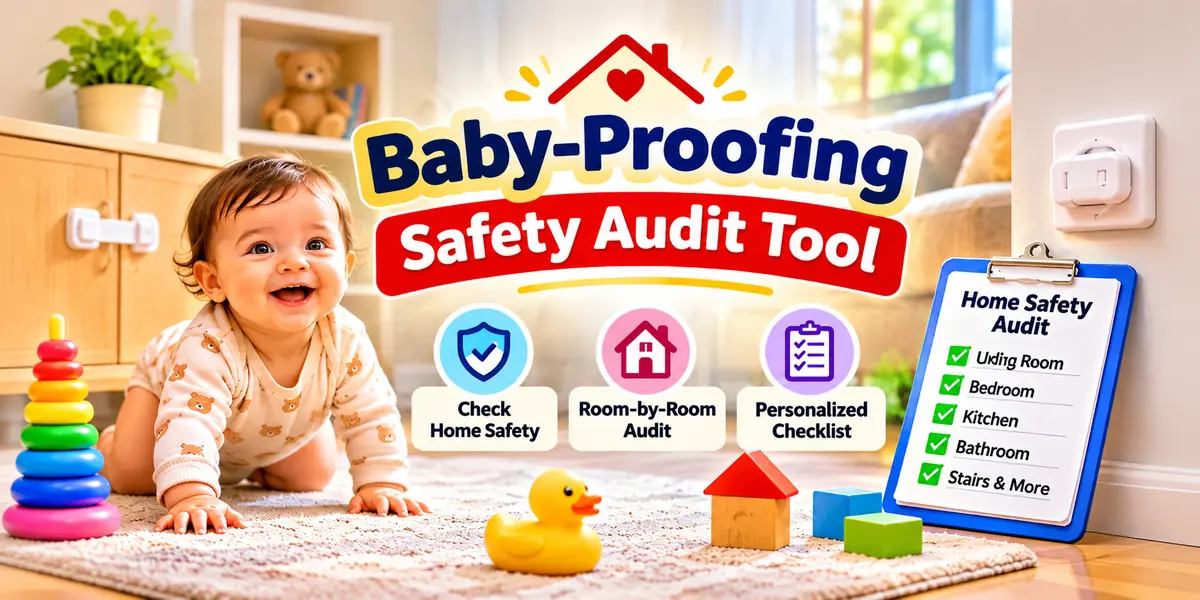
The Baby-Proofing & Safety Audit Tool on Blooming Blogs helps parents and caregivers evaluate their home systematically without feeling overwhelmed. Rather than handing you a generic list, the interactive generator builds a customized room-by-room baby safety checklist. It tailors every check to your child’s developmental stage, your rooms, and your household setup. Whether you are expecting your first child or preparing for a crawling six-month-old, this guide shows how the tool works. In addition, it explains what to look for in every corner of your home.
Quick Takeaways
- Start before mobility begins: Reviewing household safety during pregnancy or early infancy prevents rushed fixes once your baby starts rolling or crawling.
- Adapt as your baby grows: A baby-proofing checklist is not a one-time project. Instead, each new motor milestone brings fresh areas within reach.
- Anchor heavy furniture and televisions: Unsecured dressers, bookshelves, wardrobes, and flat-screen TVs pose serious tipping hazards even before a child attempts to climb.
- Lock away medicines, chemicals, and small items: Store all medications, cleaning supplies, button batteries, coins, and magnets completely out of sight and reach.
- Protect electrical outlets and loose cords: Install appropriate outlet covers or tamper-resistant receptacles. Also, keep charging wires and blind cords bundled out of reach.
- Stay vigilant around water and heights: Never leave buckets, bathtubs, or basins unattended. Additionally, install suitable safety gates, window guards, and balcony protections.
- Supervision remains irreplaceable: Safety gates, cabinet locks, and corner guards reduce exposure to hazards. However, they never replace active adult supervision.
- Inspect safety hardware regularly: Check latches, anchors, and gates routinely to confirm they remain securely fastened and properly aligned.
Key Points to Remember Before You Begin
- No home is 100% accident-proof: Baby-proofing lowers the likelihood of common household injuries. Yet, attentive supervision and safe daily routines remain your strongest protection.
- Every child develops on their own timeline: Age ranges are helpful guides rather than strict rules. Therefore, base your home adjustments on what your baby can physically do today—and what they might attempt next.
- Local housing layouts matter: You might live in a multi-story house, a high-rise apartment with balconies, or a home with tiled floors. Consequently, your audit should always reflect your real living environment.
Understanding Baby Development and Home Safety
Baby-proofing works best when you treat it as an ongoing routine rather than a single weekend chore. As babies build strength, coordination, and curiosity, their physical reach expands rapidly. In fact, they explore both horizontally across floors and vertically toward shelves, countertops, and windowsills.
Newborn Stage (0–3 Months)
During the first three months, babies cannot crawl or walk. Thus, safety focuses primarily on their immediate sleeping and caregiving zones.
- Safe sleep environment: Follow established pediatric safe-sleep recommendations by placing your baby on their back to sleep. Use a firm, flat, separate sleep surface—such as a crib or bassinet that meets current safety standards—with a fitted sheet only. Keep pillows, loose blankets, crib bumpers, stuffed animals, and sleep positioners out of the sleep space.
- Cords and hanging items: Ensure monitor cords, curtain ties, mobiles, and wall hangings stay well away from the crib. Otherwise, items could fall in or wrap around your baby.
- Caregiving supplies: Keep diaper creams, wipes, nail clippers, and thermometers organized out of the crib and off unstable surfaces.
- Room temperature and air quality: Maintain a comfortable, smoke-free room temperature. Furthermore, avoid placing cribs directly beneath heavy wall frames or near heating vents and windows.
3–6 Months: Rolling, Reaching, and Grasping
Between three and six months, babies begin rolling over and pushing up on their arms. Soon after, they start grabbing nearby objects and bringing items straight to their mouths to explore texture and taste.
- Changing table safety: Never step away from a baby on an elevated changing table, bed, or sofa—even for a second. First, keep diapers and wipes within arm’s reach before you begin, and always use safety straps if available.
- Reachable clutter: Clear small items, jewelry, hair ties, and stationery from bedside tables, low coffee tables, and play mats.
- Floor-level hygiene: Because tummy time happens on the floor, vacuum or sweep regularly. This removes stray coins, buttons, pet kibble, or lint.
6–9 Months: The Crawling Milestone and Why Audits Matter Most
Searches for a baby-proofing checklist for 6 to 9 month old babies spike sharply for good reason. Around this window, many babies learn to sit independently, rock on hands and knees, or crawl briskly from room to room.
- Sudden mobility: A baby who stayed in one spot last week may cross a room in seconds today.
- Low-level exploration: Crawling puts electrical outlets, dangling cords, pet bowls, and floor plants directly in your baby’s path. Moreover, under-sink cabinets and bathroom doors suddenly become easy targets.
- Pulling down objects: Seated or crawling babies love tugging on tablecloths, lamp cords, and low shelf items. As a result, heavy or hot objects can fall onto them.
- Constant mouthing: At 6–9 months, almost every discovered object goes straight into the mouth. Consequently, small objects, dust bunnies, loose batteries, and toxic leaves become major concerns.
Conducting a thorough baby-proofing safety audit at or before six months helps you catch low-level hazards early. That way, you spot risks before your baby finds them first.
9–12 Months: Pulling Up, Cruising, and Opening Cabinets
As babies approach their first birthday, they begin pulling themselves up on sofas, low tables, and bookshelves. Next, they start cruising along furniture edges and experimenting with latches and handles.
- Furniture stability: A baby pulling up on an unanchored bookshelf or drawer chest can easily tip the entire unit forward.
- Higher reach: Countertop edges, dining table borders, and mid-level shelves suddenly come within fingertip reach.
- Cabinet curiosity: Babies quickly figure out how to pull open unlocked drawers and lower kitchen or bathroom cupboards.
12–24 Months: Walking, Running, and Climbing
Toddlers gain speed, balance, and problem-solving skills. Along with these skills comes the determination to climb chairs, open doors, and test boundaries.
- Climbing hazards: Dining chairs pushed near counters, ottomans near windows, and low shelves quickly become stepping stools.
- Kitchen and bathroom access: Toddlers can turn door knobs, push open unlatched doors, and reach stove knobs or faucets.
- Outdoor and balcony risks: Sliding glass doors, garden gates, stairs, and outdoor water features require reliable barriers and constant oversight.
How the Blooming Blogs Baby-Proofing & Safety Audit Tool Works
The Baby-Proofing & Safety Audit Tool on Blooming Blogs simplifies home safety planning. Specifically, it turns a massive, overwhelming task into a structured, room-by-room walkthrough. Instead of reading through hundreds of irrelevant items, you generate a tailored childproofing checklist matched to your home and child.
Step 1: Select Your Baby’s Developmental Stage
First, start by choosing the stage that best matches your household today:
- Expecting a baby (pre-arrival preparation)
- Newborn (0–3 months)
- 3–6 months (rolling and reaching)
- 6–9 months (sitting and crawling)
- 9–12 months (pulling up and cruising)
- 12–18 months (early walking and exploring)
- 18–24 months (active climbing and opening doors)
- Toddler (2 years and above)
Selecting your stage highlights the hazards most relevant to your child’s current physical capabilities. Simultaneously, it reminds you what to prepare for next.
Step 2: Select the Rooms and Areas to Audit
Next, choose one room at a time or select multiple areas across your home:
- Nursery / Baby’s Bedroom
- Master Bedroom
- Living Room
- Kitchen
- Bathroom
- Dining Area
- Hallways and Staircases
- Balcony and Windows
- Laundry and Utility Area
- Garden and Outdoor Spaces
- Entire Home
Auditing one or two rooms per session makes it much easier to take immediate action without feeling fatigued.
Step 3: Identify Your Household Conditions
Then, answer a few quick, optional setup questions so the tool can refine your checklist. Notably, no personal contact details are required:
- Does your home have internal stairs or split levels?
- Do you have a balcony, terrace, or low windows?
- Are heavy bookshelves, wardrobes, or televisions present?
- Are cleaning supplies or detergents stored in lower cabinets?
- Do pets share your indoor or outdoor living areas?
- Has your baby started crawling, pulling up, or walking?
- Do you keep indoor potted plants or a home garden?
- Where are family medicines and vitamins stored?
- Do you live in an apartment or an independent house?
Step 4: Generate Your Customized Safety Audit
Once you submit your selections, the tool builds an organized, interactive checklist. Every item includes six clear details:
- Safety inspection point: A clear description of what to check.
- Hazard explanation: Why the item poses a risk at your child’s stage.
- Recommended preventive action: Practical steps to reduce or remove the hazard.
- Priority level: An educational organizational label to help you decide what to tackle first.
- Completion checkbox: A way to mark items off as you inspect and resolve them during your session.
- Optional notes field: Space to jot down measurements, hardware needed, or reminders while walking through your home.
Step 5: Review and Prioritize Safety Findings
To help you focus your time and budget, audit items are grouped into three practical categories:
- High Priority: Immediate attention required (such as unsecured heavy furniture, accessible medicines, open water hazards, or unprotected stairs and balconies).
- Medium Priority: Address as soon as reasonably possible (such as cabinet latches, corner cushions, or cord organizers).
- Routine Check: Ongoing maintenance and habit checks (such as checking floor clutter, testing smoke alarms, and verifying gate latches).
Note: These priority tags are educational planning labels designed to help parents organize household tasks. Therefore, they are not formal engineering or medical risk assessments.
Step 6: Complete, Recheck, and Revisit Over Time
Finally, walk through each selected room with your checklist in hand, check off completed items, and review anything still unresolved. Because browser-based sessions may reset when refreshed or closed, complete your immediate action notes during your audit. Moreover, re-run the tool whenever your baby reaches a new milestone or you rearrange furniture.
Complete Room-by-Room Baby-Proofing Guide
Use the detailed room-by-room breakdown below alongside the Baby-Proofing & Safety Audit Tool. Together, they help you spot common household hazards and put practical safeguards in place.
A. Nursery and Baby’s Bedroom
Your baby spends many hours sleeping and resting in the nursery. Consequently, calm, clutter-free organization is essential.
Sleep Space and Crib Checks
- Crib and cot safety: Check that crib slats are no more than 2⅜ inches (6 cm) apart so a baby’s head or limbs cannot become trapped. Avoid antique or drop-side cribs, and confirm all bolts and hardware are tight.
- Mattress fit and safe sleep: The mattress should fit snugly against all four sides of the crib with no gaps wider than two fingers. Always place your baby on their back to sleep on a firm, flat mattress. Keep pillows, quilts, loose blankets, bumper pads, soft toys, and weighted sleep products out of the crib.
Cords, Furniture, and Changing Area Checks
- Window blind and curtain cords: Dangling pull cords pose a serious strangulation risk. Switch to cordless window coverings where possible, or keep cords secured high out of reach using cleats. Furthermore, never place a crib directly next to a window.
- Electrical outlets and monitor cables: Cover unused outlets with secure protectors. In addition, route baby monitor or lamp cords behind heavy furniture or inside wall-mounted cord channels at least 3 feet away from the crib.
- Furniture tipping: Anchor dressers, changing tables, and bookshelves to wall studs or masonry using anti-tip brackets.
- Changing table and care supplies: Keep lotions, diaper creams, powders, wipes, and nail scissors in closed drawers or high shelves. Never leave them within a baby’s grasp on the changing pad.
- Small decorations and room comfort: Remove button-battery nightlights, small figurines, and heavy wall frames above the crib. Meanwhile, keep the room comfortably ventilated and free from smoke or strong fragrances.
B. Living Room
The living room is often where babies spend most of their awake floor time. At the same time, many everyday adult items sit right at toddler height.
Heavy Furniture, TVs, and Sharp Edges
- Television and media units: Flat-screen TVs are top-heavy and can tip easily if a child pulls on the stand or screen. Therefore, mount TVs securely to the wall or anchor both the TV and its stand using rated anti-tip straps.
- Bookshelves, cabinets, and sideboards: Anchor tall or narrow storage units to the wall. Also, place heavier items on bottom shelves to lower the center of gravity.
- Sharp edges and glass tables: Apply soft corner and edge guards to low wooden or stone coffee tables, TV consoles, and hearth edges. If you have a glass-top table, consider moving it to storage until your child is older or adding safety film.
Electronics, Batteries, and Room Heaters
- Floor-level outlets and tangled wires: Conceal power strips inside locked cable boxes and route speaker, router, and lamp cords behind furniture.
- Remote controls and button batteries: Television remotes, gaming controllers, flameless candles, and key fobs often contain coin-sized lithium button batteries. Check that battery compartments are secured with screws and store remotes out of reach.
- Small decorative items and choking hazards: Move coasters, decorative stones, scented candles, matches, and small knick-knacks to high shelves.
- Fireplaces and room heaters: Place a sturdy, heat-resistant safety barrier around active fireplaces, space heaters, and radiators. Never leave portable heaters running unattended.
C. Kitchen
The kitchen contains heat, sharp tools, chemicals, and heavy appliances in one busy space. Whenever possible, keep babies out of the active cooking zone using a safety gate or supervised playpen.
Cooking Surfaces, Heat, and Appliances
- Stovetop and hot surfaces: Cook on back burners whenever possible. Additionally, turn pot and pan handles inward toward the back of the stove so small hands cannot grab them. Use stove knob covers if knobs sit on the front panel.
- Oven doors and hot liquids: Keep toddlers away from hot oven doors, and never hold a baby while carrying hot tea, coffee, or boiling water. Likewise, avoid placing hot mugs near table edges or on tablecloths that a baby can pull.
- LPG cylinders, gas lines, and appliances: In homes using LPG gas cylinders, keep cylinder valves closed when not in use and have hoses inspected regularly by an authorized technician. Furthermore, unplug toasters, blenders, and kettles after use with cords tucked back from counter edges.
Sharp Tools, Cleaners, and Food Storage
- Knives, scissors, and glass: Store sharp knives, peelers, graters, and breakable glassware in upper cabinets or drawers fitted with reliable child safety latches.
- Cleaning chemicals and dishwashing pods: Move dishwashing liquids, dishwasher pods, drain cleaners, and surface sprays from under the sink to a high locked cabinet. Colorful laundry or dishwasher pods often look like candy to young children.
- Plastic bags and wraps: Keep grocery bags, garbage liners, cling film, and aluminum foil rolls locked away to prevent suffocation and sharp-edge cuts.
- Small foods and choking hazards: Keep whole nuts, popcorn, hard candies, raw carrots, whole grapes, and dry beans out of reach on low counters or pantry shelves.
- Refrigerator and pantry doors: Add appliance latches if your toddler opens the fridge or freezer door, and keep heavy glass jars off bottom shelves.
D. Bathroom
Bathrooms combine hard, slippery surfaces with water, electrical devices, and personal care chemicals.
Water Safety and Slip Prevention
- Constant water supervision: A young child can drown silently in just a couple of inches of water in under a minute. Therefore, never leave a baby or toddler alone in a bathtub, bath seat, or near any water—not even to grab a towel.
- Buckets and tubs: In many households, plastic buckets and tubs are kept filled for bathing or washing. Empty all buckets immediately after use and store them upside down out of reach.
- Toilets: Install a toilet lid lock so toddlers cannot lift the lid and fall headfirst into the bowl.
- Slippery floors: Place non-slip mats inside the bathtub or shower area and absorbent, rubber-backed bath mats on wet bathroom floors.
- Hot water temperature: Test bathwater with your wrist or a bath thermometer before placing your baby in the tub. Where adjustable, set your water heater thermostat to no higher than 120°F (49°C) to reduce scalding risk.
Medicines and Bathroom Appliances
- Medicines, cosmetics, and razors: Store all prescription drugs, pain relievers, vitamins, mouthwash, nail polish remover, hair dyes, and disposable razors in a high, locked cabinet.
- Electrical appliances: Unplug hair dryers, trimmers, and electric shavers immediately after use and store them away from sinks. Also, keep bathroom doors closed and fitted with a high hook or exterior latch when not in use.
E. Staircases and Hallways
Stairs and hallways are high-traffic zones where trips and falls happen quickly.
- Top-of-stair vs. bottom-of-stair gates: At the top of a staircase, always install a hardware-mounted safety gate screwed securely into wall studs or solid framing. Never use a pressure-mounted gate at the top of stairs, because a child leaning against it can push it loose. Instead, reserve pressure-mounted gates for bottom-of-stair openings or flat doorways between rooms.
- Gate selection and installation: Choose gates with vertical slats spaced no more than 2⅜ inches apart and follow the manufacturer’s instructions carefully. Avoid accordion-style gates with large diamond openings that can trap a child’s head or fingers.
- Floor surfaces and clutter: Secure loose runners or rugs with non-slip pads, repair uneven thresholds, and keep shoes, toys, and laundry baskets off stair steps.
- Door pinch guards and low decor: Place foam pinch guards on hinged doors to protect tiny fingers. Meanwhile, remove low glass vases or unstable umbrella stands from narrow hallways.
F. Windows and Balconies
Falls from windows and balconies can cause severe injuries. Fortunately, simple preventive steps dramatically improve safety.
- Window opening limiters and window guards: Install certified window stops or guards that limit window openings to 4 inches (10 cm) or less so a child cannot squeeze through. Ensure adult emergency release mechanisms are understood by family members.
- Insect screens are not safety devices: Window mesh or mosquito screens are designed only to keep insects out. In reality, they give way immediately if a baby or toddler leans against them.
- Keep climbable furniture away: Never place cribs, beds, sofas, chairs, or toy chests beneath windows or beside balcony railings.
- Balcony doors and railings: Keep balcony doors locked with high-mounted latches out of toddler reach. Check that balcony railings are sturdy, free from rust or loose joints, and have narrow vertical gaps.
- Blind cords and sliding glass: Tie up all curtain and blind cords high out of reach. Furthermore, place eye-level decals on large sliding glass doors so toddlers do not run into closed glass.
G. Laundry and Utility Areas
Utility rooms, wash balconies, and laundry closets hold concentrated chemicals and heavy machinery.
- Original containers and locked storage: Keep laundry detergents, liquid pods, fabric softeners, stain removers, and bleach in their original labeled containers inside a high, locked cabinet. Never transfer chemicals into water bottles or food jars.
- Washing machines and dryers: Keep front-loading washer and dryer doors closed and child-locked when not in use so toddlers cannot climb inside.
- Irons, cords, and water buckets: Unplug clothes irons immediately after ironing and wind cords up high. Likewise, ensure utility buckets and mop pails are emptied right after cleaning.
H. Garden and Outdoor Spaces
Backyards, terraces, and shared apartment gardens offer wonderful sensory play for babies. However, you should always check the area before letting your child crawl or walk.
- Plant identification: Walk through your garden and patio to identify every potted plant, shrub, and tree. Remove toxic plants from areas your child can access, or place pots on high stands out of reach.
- Fertilizers, manure, and pesticides: Store garden fertilizers, organic manure bags, potting mixes, slug pellets, ant powders, and weed killers in a locked shed or high shelf. In addition, keep babies off freshly sprayed or fertilized soil and lawns.
- Garden tools and small ground hazards: Put away trowels, shears, hoses, pebbles, fallen seeds, and small debris before outdoor playtime.
- Standing water and tanks: Empty kiddie pools, watering cans, and plant saucers after use. Moreover, ensure underground water tanks, sumps, septic covers, and garden ponds have locked, heavy covers or full perimeter fencing.
- Outdoor steps and surfaces: Supervise toddlers closely on rough stone paths, wet outdoor tiles, and patio steps.
Special Focus: Electrical Safety
Curious fingers naturally gravitate toward wall sockets, glowing charger lights, and trailing wires. Taking a methodical approach to electrical hazards protects your child from shocks and burns.
- Outlet protection: In areas accessible to babies and toddlers, install tamper-resistant electrical outlets or snug, well-fitting outlet covers. Choose designs compatible with your country’s specific plug type (such as Type A/B in North America, Type G in the UK, or Type C/D/M in India). Avoid tiny, loose plastic plugs that a toddler can pull out and put in their mouth.
- Damaged sockets and exposed wiring: Inspect outlets, switches, and appliance cords for cracks, scorch marks, loose faceplates, or frayed insulation. Never attempt electrical repairs yourself. Instead, hire a licensed electrician to fix damaged sockets or faulty wiring.
- Extension boards and charging cables: Avoid leaving multi-plug extension strips on the floor where a baby can chew cords or poke objects into unused slots. Also, unplug phone and laptop chargers when not in use so live charging tips do not dangle within reach.
- Water and electricity: Keep all electrical appliances and cords well away from sinks, bathtubs, wet balconies, and damp utility floors.
Special Focus: Furniture Anchoring
Furniture tip-overs can happen silently in seconds. Even a baby simply pulling open a bottom drawer or grabbing a shelf edge to stand up can trigger a tip.
- Items that need anchoring: Bookshelves, wardrobes, chests of drawers, media consoles, tall cabinets, and freestanding televisions should all be evaluated for stability. Heavy furniture is not safe simply because it is heavy or pushed flush against a wall. In fact, an open drawer shifts the weight forward and creates leverage that can pull the piece down.
- Choosing and installing anti-tip hardware: Use metal L-brackets or heavy-duty nylon anti-tip straps rated for the weight of your furniture. Fasten one end into the solid frame of the furniture and the other into a wall stud or solid masonry, following the manufacturer’s instructions.
- Ongoing checks: Re-check brackets and straps every few months and whenever you move furniture to clean or redecorate.
Special Focus: Cabinet Locks and Drawer Safety
Once babies learn to sit and crawl, opening cupboard doors becomes a favorite game.
- Types of locks and latches: Magnetic locks (which stay hidden inside the cabinet and open with a magnetic key), spring-loaded latches, sliding U-shaped handle locks, and adhesive corner latches each suit different cabinet styles.
- Priority zones: Focus first on lower kitchen cabinets, bathroom vanities, medicine drawers, home office drawers containing stationery or batteries, and bedside tables.
- Important limitation: Cabinet latches are a second line of defense rather than a substitute for high storage. Always store the most dangerous items—such as medications, strong cleaners, pesticides, and sharp knives—in high, locked cabinets. Additionally, test latches regularly to ensure adhesives have not loosened or screws have not worked free.
Special Focus: Toxic Plants and Poisoning Risks
Young children explore the world by tasting. Unfortunately, many attractive indoor and garden plants can cause mouth irritation, stomach upset, or serious toxicity if chewed or swallowed.
Common Household Plants Requiring Caution
- Dieffenbachia (leopard lily) and Philodendron: Contain insoluble calcium oxalate crystals. If chewed, they can cause immediate burning, swelling of the lips and tongue, and difficulty swallowing.
- Pothos (Devil’s Ivy): Popular as a trailing indoor vine, yet it contains calcium oxalate crystals that irritate the mouth and digestive tract.
- Oleander: An outdoor ornamental shrub whose leaves, flowers, and stems contain cardiac glycosides. Even small amounts can cause severe toxicity.
- Sago Palm: Frequently used in landscaping and patios; all parts—especially the seeds—are highly toxic to both children and pets.
- Peace Lily and Aloe Vera: Can cause oral irritation or digestive upset if ingested.
Because plant toxicity depends on the exact botanical species, the plant part chewed, and the amount swallowed, identify your plants using reliable botanical references or nursery labels. Remember that not every houseplant is dangerous, so checking each specific variety helps you make accurate decisions without unnecessary worry.
What to Do If Poisoning Is Suspected
- Keep medicines, cleaning agents, cosmetics, pesticides, and button batteries locked away in original containers at all times.
- If you suspect your child has swallowed a potentially poisonous substance, medicine, battery, or toxic plant: Do not wait for symptoms to appear. Furthermore, do not induce vomiting or give home remedies unless specifically instructed by a medical professional. Instead, contact your local poison control center or emergency medical services immediately.
- Save your regional poison helpline and pediatrician numbers in your phone and post them clearly near your kitchen or entryway (for example: 1-800-222-1222 in the United States, 111 / 999 in the United Kingdom, or the National Poisons Information Centre / 112 in India).
Choking and Strangulation Hazards
Because babies and toddlers have narrow airways and an instinct to mouth objects, small everyday items and dangling cords demand consistent vigilance.
- Common choking hazards: Coins, marbles, button batteries, high-powered magnets, small toy parts detached from older siblings’ toys, bottle caps, deflated balloons, jewelry, and small round foods.
- Why button batteries and magnets are uniquely dangerous: Swallowed coin-sized button batteries can trigger a chemical reaction inside the esophagus within hours, causing severe internal tissue burns. Similarly, swallowing more than one magnet—or a magnet and a metal object—can pinch intestinal walls together and cause life-threatening blockages or perforations.
- Strangulation hazards: Window blind cords, curtain ties, long phone charger cables, drawstring bags, bibs left on during sleep, and decorative wall garlands near cribs or play mats.
- Practical inspection habit: Check age-grading labels on all toys before giving them to your child. Moreover, inspect older toys regularly for loose wheels or eyes, and sweep floors, sofa cushions, and rug edges daily for small dropped objects.
Fire, Heat, and Burn Prevention
Babies have thinner, more delicate skin than adults. Consequently, hot liquids and surfaces cause burns faster and at lower temperatures.
- Hot drinks and meals: Never hold your baby while drinking hot tea or coffee. Instead, place hot bowls and cups toward the center of the table rather than near edges or on hanging tablecloths.
- Cooking and appliances: Keep toddlers away from stoves, ovens, pressure cookers, hot irons, and hair styling tools. Always let appliances cool down out of reach before storing them.
- Candles and open flames: Avoid burning candles, incense sticks, or oil lamps within a child’s reach or near curtains and bedding.
- Smoke alarms and fire planning: Install working smoke alarms on every level of your home and outside sleeping areas. Test them monthly, and ensure every adult caregiver knows your home’s fire exit plan.
Pets and Baby Safety
Pets are beloved members of the family. Yet, even gentle, well-trained dogs and cats can react unpredictably to a baby’s sudden movements, loud cries, or clumsy grabbing.
- Never leave pets and babies unsupervised: Always stay within arm’s reach when a baby and a pet are in the same room. When you step away, use baby gates or closed doors to separate them.
- Pet food, water bowls, and litter boxes: Pick up pet food and water bowls when your baby is crawling on the floor. Pet kibble is a choking hazard, while water bowls pose a drowning and hygiene risk. Likewise, keep cat litter trays in a gated utility area or behind a latch-equipped door.
- Pet toys and medications: Store dog chews, small cat toys, flea treatments, and pet medicines in closed containers out of your baby’s reach. In addition, maintain a quiet, baby-free resting space where your pet can retreat comfortably.
Baby-Proofing Products and Essentials Comparison
Not every home needs every gadget on the market. Use these two tables to match common baby-proofing tools to your actual layout and select safe, properly fitted products.
Core Structural and Barrier Hardware
| Product Name | Primary Purpose | Where It Is Used | Important Selection Considerations |
| Electrical Outlet Protectors | Blocks babies from inserting fingers or objects into sockets | Living room, nursery, bedrooms, hallways | Choose tamper-resistant outlets or snug, large-plate covers compatible with your regional plug standard; avoid small loose plugs that pose a choking risk. |
| Furniture Anti-Tip Straps | Prevents heavy furniture and TVs from tipping forward | Living room, nursery, bedrooms, dining area | Select metal brackets or heavy-duty straps rated for the furniture’s weight and anchor into wall studs or solid masonry. |
| Cabinet Locks & Latches | Restricts access to chemicals, sharp tools, and breakables | Kitchen, bathroom, utility area | Look for sturdy locking mechanisms (magnetic or spring-loaded) that adults can operate easily without leaving unlatched. |
| Drawer Locks | Keeps toddlers from opening drawers or using them as steps | Kitchen, bedroom dressers, study desks | Ensure smooth installation on your drawer frame style and re-check adhesive or screw mounts periodically. |
| Safety Gates | Blocks access to stairs and off-limit rooms | Top and bottom of stairs, kitchen and bathroom doorways | Use hardware-mounted gates at the top of stairs; ensure vertical bars are spaced no more than 2⅜ inches apart. |
| Window Locks & Guards | Limits window opening width to prevent falls | Bedrooms, living room, hallways | Choose devices that restrict openings to 4 inches or less while allowing quick adult release in an emergency. |
Surface Cushioning, Storage, and Detection Gear
| Product Name | Primary Purpose | Where It Is Used | Important Selection Considerations |
| Door Finger Guards | Prevents doors from slamming shut on tiny fingers | Bedroom doors, bathroom doors, living room doors | Place high on the door edge or hinge side out of the toddler’s reach so it cannot be pulled off and chewed. |
| Corner & Edge Protectors | Cushions sharp table, counter, and hearth corners | Coffee tables, TV units, dining tables | Select thick, non-toxic foam or silicone bumpers with strong adhesive that resists peeling by curious fingers. |
| Cord Management Solutions | Conceals and shortens electrical and blind cords | Nursery, living room, home office | Use rigid wall cord channels, locked power-strip boxes, and cordless window blinds or high cord cleats. |
| Anti-Slip Bathroom Products | Reduces slips on wet floors and tub surfaces | Bathtubs, shower floors, bathroom tiles | Choose mats with strong suction cups for tubs and rubberized non-slip backing for wet floors; dry after use. |
| Child-Resistant Storage Boxes | Secures medicines, batteries, and small items | Medicine cabinet, closet shelves, utility room | Opt for opaque, lockable boxes stored on high shelves out of sight and reach. |
| Smoke Alarms | Provides early warning in case of fire or smoke | Hallways, outside bedrooms, every floor level | Choose certified alarms, test monthly, and replace batteries and units according to manufacturer guidelines. |
Common Baby-Proofing Mistakes Parents Should Avoid
Even thoughtful, well-prepared parents can miss subtle hazards. Watch out for these common pitfalls across planning, storage, and supervision:
Planning and Hardware Oversights
- Waiting until the baby starts crawling: Babies often transition from rolling to scooting or crawling overnight. Therefore, preparing by 4–5 months keeps you ahead of sudden mobility.
- Securing only the nursery: Babies quickly spend most of their waking hours in the living room, hallway, and bedrooms. As a result, you should audit every space your baby enters.
- Forgetting to anchor heavy furniture: Assuming a heavy dresser or bookshelf will not tip is one of the most dangerous oversights in home safety.
- Assuming outlet covers fix every electrical risk: Loose power strips, frayed appliance cords, and dangling phone chargers remain accessible even when wall sockets are covered.
- Using pressure-mounted gates at the top of stairs: Pressure gates can dislodge if pushed hard. Accordingly, reserve them for bottom-of-stair or flat room thresholds only.
- Forgetting to re-audit after rearranging furniture: Moving a sofa closer to a window or adding a new floor lamp introduces fresh hazards that require a quick check.
Storage, Water, and Supervision Oversights
- Leaving medicines in handbags or bedside drawers: Guests’ purses, diaper bags, and unlocked nightstands often contain painkillers, vitamins, or inhalers within easy reach.
- Storing cleaners under the kitchen sink without a reliable lock: Under-sink cupboards sit right at crawling eye level. Thus, move toxic cleaners up high or fit a tested lock.
- Overlooking windows and balconies: Relying on mosquito mesh or leaving a chair near a balcony railing creates serious fall risks.
- Leaving water-filled buckets in bathrooms or utility areas: Emptying buckets immediately after bathing or mopping eliminates a major household drowning hazard.
- Assuming gentle pets need no supervision: Stress, startled reactions, or toy guarding can happen with any animal; always supervise closely.
- Relying on baby monitors instead of direct supervision: Monitors are helpful audio-visual aids, not substitutes for being physically present around water or stairs.
How Often Should Parents Repeat the Safety Audit?
Think of your home safety checklist for babies as a living routine. Re-run the Blooming Blogs Baby-Proofing & Safety Audit Tool whenever:
- You are preparing your home before your baby arrives.
- Your baby begins rolling and reaching (around 3–6 months).
- Your baby starts sitting and crawling (around 6–9 months).
- Your baby begins pulling up to stand and cruising (around 9–12 months).
- Your toddler starts walking, running, and climbing (12–24 months+).
- You rearrange furniture, bring in new appliances, or host overnight guests with luggage and medications.
- You move to a new home, stay in a vacation rental, or leave your baby regularly at a grandparent’s or caregiver’s house.
Did You Know?
- Babies explore with their mouths first: Infants have a higher concentration of nerve endings in their lips and tongue than in their fingertips during early infancy. Consequently, mouthing objects is a primary way they learn about size, texture, and shape.
- Gravity and open drawers create leverage: Opening just the top two drawers of an unanchored dresser shifts the center of mass forward. Thus, even the weight of a small toddler leaning on the edge can tip the cabinet over.
- Drowning is silent: Unlike in movies, young children who slip into shallow water rarely splash or shout for help. Therefore, uninterrupted, arm’s-reach supervision around bathtubs, buckets, and pools is critical.
- Cordless window coverings dramatically reduce strangulation risks: Modern child-safety standards for window blinds favor cordless designs or inaccessible cord tensioners because dangling loops pose hazards near cribs.
- Crawling changes visual perspective: From 10 inches off the floor, gaps under appliances, loose carpet tacks, dropped coins, and low electrical strips become far more visible than they appear from adult height.
Parent’s Practical Safety Tips
- Get down on your hands and knees: Crawl through your living room, nursery, and hallway to see every cord, sharp corner, and small object from your baby’s exact eye level.
- Create a designated “yes” play zone: Set up one gated, thoroughly baby-proofed play area where your baby can explore safely while you prepare a meal nearby.
- Keep a strict “one-hand rule” on elevated surfaces: Keep one hand on your baby at all times on changing tables, beds, or sofas.
- Check guests’ bags immediately: When grandparents or visitors arrive, place their handbags, backpacks, and coats on a high hook or inside a closed closet.
- Inspect floor edges before playtime: Do a quick 30-second floor sweep for coins, hairpins, button batteries, or small toy pieces before putting your baby down to play.
- Brief every caregiver: Walk babysitters, grandparents, and older siblings through your safety gates, cabinet latches, safe-sleep rules, and emergency phone numbers.
Practical Hacks for Everyday Baby-Proofing
- Use a toilet-paper tube as a quick choking gauge: Any small toy part or household object that fits completely inside a standard cardboard toilet-paper roll (roughly 1.25 inches / 3.17 cm in diameter) is a choking hazard for children under three.
- Bundle loose cords with Velcro ties or wall channels: Securing excess slack behind entertainment units keeps cords neat and removes tempting loops for crawling babies.
- Store medicines in a clear-labeled lockbox on a top closet shelf: Keeping all family medications together in one locked box prevents accidental stray strips from ending up in drawers.
- Put rubber bands or door-knob covers on seldom-used rooms: Keeping spare bedrooms, storage closets, and utility rooms closed narrows the number of rooms you need to monitor at once.
- Keep a laminated emergency card inside your main kitchen cabinet: List your pediatrician, local poison control helpline, ambulance number, and home address so any caregiver can read it immediately.
Quick Baby-Proofing Audit Checklist (Summary)
If you want a fast off-screen reference while walking through your home, use this condensed room-by-room baby safety checklist:
- Bedroom & Nursery: Crib mattress fits snugly with no loose bedding or pillows; blind cords secured high; outlets covered; dresser and bookshelf anchored; small care products out of reach.
- Living Room: TV and bookshelves anchored; sharp table corners padded; power strips boxed and cords hidden; remotes and button batteries secured; fragile decor moved high.
- Kitchen: Front stove knobs covered and pot handles turned inward; knives, cleaners, and dishwasher pods locked away; plastic bags and choking-hazard foods stored high; safety gate installed if needed.
- Bathroom: Buckets emptied immediately after use; toilet lid locked; non-slip mats in tub and on floor; medicines, razors, and hair dryers locked up; water temperature checked before bathing.
- Staircases & Hallways: Hardware-mounted gate at top of stairs; pressure or hardware gate at bottom; rugs secured with non-slip pads; stairs free of clutter; finger guards on hinged doors.
- Windows & Balconies: Window opening stops/guards installed (4 inches or less); furniture moved away from windows and railings; balcony doors locked high; blind cords secured.
- Laundry & Utility: Detergents, bleach, and pods locked in original containers; washer/dryer doors kept closed; irons unplugged and stored high; mop pails emptied.
- Garden & Outdoors: Toxic plants identified and removed or raised; fertilizers, manure, and pesticides locked away; standing water and tanks covered; tools and small stones cleared before play.
Recommendations and Authoritative Guidance
When planning your home safety setup, align your checklist with evidence-based guidance from recognized child health and consumer safety authorities:
- Safe Sleep Practices: Follow the American Academy of Pediatrics (AAP) safe-sleep guidelines. Always place infants on their backs on a firm, flat, non-inclined sleep surface without soft bedding, bumpers, or toys.
- Furniture and TV Tip-Over Prevention: Follow U.S. Consumer Product Safety Commission (CPSC) Anchor It! recommendations to secure dressers, bookcases, and televisions to wall studs or masonry.
- Developmental Safety Planning: Use Centers for Disease Control and Prevention (CDC) milestone checklists alongside home safety guides to anticipate new physical skills before they appear.
- Everyday Household Accident Prevention: Consult NHS baby and toddler safety guidance for practical advice on preventing burns, falls, choking, and poisoning at home.
- Regional Considerations: If you live in India or homes with similar architectural features—such as tiled floors, floor-level water buckets, open balconies, LPG gas cylinders, or mosquito coils—pay special attention to bucket water safety, balcony grill spacing, gas valve checks, and keeping chemical repellents out of reach. Always verify that any safety product you buy complies with applicable local safety standards.
Gentle Reminders for Parents and Caregivers
- Progress beats perfection: You do not need to finish every room in a single afternoon. Instead, start with high-priority hazards—water, medicines, furniture anchoring, stairs, and balconies—and work steadily through the rest of your home.
- Safety tools support, never replace, you: Locks, gates, and outlet covers buy you valuable seconds. However, your eyes, presence, and routines are what truly keep your baby safe.
- Stay adaptable: Every child is wonderfully curious and unique. Watching how your baby interacts with your home is the best clue for what to secure next.
External References
- American Academy of Pediatrics (HealthyChildren.org) – How to Keep Your Sleeping Baby Safe: AAP Policy Explained: https://www.healthychildren.org/English/ages-stages/baby/sleep/Pages/A-Parents-Guide-to-Safe-Sleep.aspx
- American Academy of Pediatrics (HealthyChildren.org) – Baby-Proofing Your Home: A Room-by-Room Checklist: https://www.healthychildren.org/English/safety-prevention/at-home/Pages/Make-Babys-Room-Safe.aspx
- U.S. Consumer Product Safety Commission (CPSC) – Anchor It! Furniture and TV Tip-Over Prevention: https://www.anchorit.gov/
- U.S. Consumer Product Safety Commission (CPSC) – Childproofing Your Home: 12 Safety Devices to Protect Your Children: https://www.cpsc.gov/safety-education/safety-guides/kids-and-babies/Childproofing-Your-Home
- Centers for Disease Control and Prevention (CDC) – Child Safety and Injury Prevention: https://www.cdc.gov/injury/features/child-injury/index.html
- NHS (UK) – Baby and Toddler Safety: https://www.nhs.uk/conditions/baby/first-aid-and-safety/safety/baby-and-toddler-safety/
- World Health Organization (WHO) – World Report on Child Injury Prevention: https://www.who.int/publications/i/item/9789241563574
- Poison Control (U.S. National Capital Poison Center) – Poison Prevention for Children: https://www.poison.org/articles/poison-proofing-your-home
Frequently Asked Questions (FAQs)
1. When should I start baby-proofing my home?
Ideally, begin basic baby-proofing before your baby is born or during the first 3 to 4 months. Starting early gives you plenty of time to anchor heavy furniture, organize safe sleep spaces, and install outlet protection before crawling begins.
2. Why is baby-proofing especially important at 6–9 months?
Between 6 and 9 months, most babies learn to sit independently, rock on hands and knees, and crawl. Consequently, this sudden mobility brings low electrical outlets, dangling cords, floor plants, pet bowls, and lower cabinets within immediate reach.
3. Which room should I baby-proof first?
First, start with the rooms where your baby spends the most time: the nursery or bedroom and the living room. Next, prioritize high-risk areas like the kitchen, bathroom, staircases, and balconies.
4. How do I baby-proof a home before my baby starts crawling?
Get down to floor level in each main room and look for dangling wires, uncovered outlets, sharp table corners, and small floor items. Then, anchor heavy furniture, secure blind cords, clear low shelves, and set up safe storage for medicines and cleaners.
5. Are electrical outlet covers necessary?
Yes, covering unused outlets within a child’s reach helps prevent babies from inserting fingers or metal objects into live sockets. Choose tamper-resistant outlets or snug, large-plate outlet covers that a toddler cannot easily pull off.
6. How do I secure heavy furniture safely?
Use rated metal L-brackets or heavy-duty anti-tip straps attached to the solid frame of bookshelves, wardrobes, dressers, and TV stands. Anchor them directly into wall studs or solid masonry according to the manufacturer’s instructions.
7. Do I really need cabinet locks?
Cabinet locks are strongly recommended for lower kitchen and bathroom cupboards, utility closets, and drawers containing sharp tools or household products. However, always store the most hazardous substances—like medicines, strong cleaners, and pesticides—in high, locked cabinets.
8. How can I make my kitchen safer for a baby?
Use a safety gate to keep babies out of the active cooking zone when possible, and cook on back burners with pot handles turned inward. Additionally, install stove knob covers, lock away knives and cleaning chemicals, and keep hot drinks far from counter edges.
9. How do I protect my baby around stairs?
Install a hardware-mounted safety gate screwed into wall framing at the top of every staircase, and use a hardware- or pressure-mounted gate at the bottom. Furthermore, keep stairs completely clear of toys, shoes, and loose rugs, and never leave gates unlatched.
10. How can I make windows and balconies safer?
Install window opening limiters or window guards so windows open no more than 4 inches, and move all climbable furniture away from windows and railings. Also, keep balcony doors locked high out of reach, and never rely on insect screens to prevent falls.
11. Which household plants may be toxic to babies?
Common plants that can cause irritation or toxicity if chewed or swallowed include Dieffenbachia (leopard lily), Pothos, Philodendron, Oleander, Sago Palm, and Peace Lily. Therefore, identify every indoor and garden plant in your home and move potentially harmful species out of reach.
12. How do I identify choking hazards around the house?
Watch for coins, marbles, button batteries, magnets, small detached toy parts, bottle caps, deflated balloons, and round foods. Any object small enough to fit completely inside a standard cardboard toilet-paper roll is a potential choking hazard for children under three.
13. How often should I inspect baby-proofing equipment?
Check cabinet latches, safety gates, outlet covers, corner guards, and furniture straps every few weeks. Adhesive latches can loosen over time, and growing toddlers quickly test locks with stronger pulling force.
14. Can baby gates replace adult supervision?
No. Baby gates are helpful physical barriers that slow children down and block access to stairs or off-limit rooms. Nevertheless, determined toddlers can sometimes climb or unlatch gates, so active adult supervision is always required.
15. How do I baby-proof a rented apartment without damaging walls?
In rented homes, use adhesive cabinet latches, tension-mounted doorway gates (for flat room thresholds, never top of stairs), cord-concealing boxes, and corner bumpers. For tall furniture, ask your landlord for permission to install discreet wall anchors, as tip-over prevention is critical.
16. Is it necessary to baby-proof every single room?
You must baby-proof every room your baby enters, as well as any corridor or unlocked door they can reach. However, if you keep spare rooms, home offices, or utility areas securely closed with high hooks or door-knob covers, you can focus your hardware on shared living spaces.
17. How can I keep pets and babies safe together?
Never leave a baby and a pet alone together, even briefly. Pick up pet food and water bowls during baby playtime, keep litter boxes behind gates, store pet medications safely, and give your pet a quiet, baby-free space to relax.
18. Can this Baby-Proofing Safety Audit Tool replace a professional home safety inspection?
No. The Blooming Blogs Baby-Proofing & Safety Audit Tool is an educational planning checklist designed to help parents organize room-by-room safety checks. Thus, it does not replace a certified childproofing specialist, licensed electrician, or structural inspector.
Final Thoughts & Final Review
Preparing your home for a growing baby does not require turning your living space into a fortress. Instead, it simply means viewing everyday rooms through your child’s curious eyes and removing avoidable hazards before accidents happen. By combining proactive physical safeguards with attentive adult supervision, you create an environment where your baby can roll, crawl, stand, and explore safely.
Use the Baby-Proofing & Safety Audit Tool on Blooming Blogs as your starting point today. Revisit it as your baby reaches new milestones, and keep emergency contacts accessible for every caregiver in your home.
Disclaimer & Medical Safety Notice:
The Blooming Blogs Baby-Proofing & Safety Audit Tool and this guide are educational planning resources only. They do not provide professional safety certification, replace an in-person inspection by a qualified specialist, identify every hazard, or guarantee an accident-free home. Safety products cannot replace active adult supervision, nor does this content offer medical advice. For serious falls, burns, choking, shocks, or suspected poisoning, seek immediate emergency medical care or contact poison control.
🔗 Related Articles
If you are preparing for a newborn, these helpful Blooming Blogs guides can help you plan, prepare, and care for your baby with greater confidence:
- 1. Best Infant Formula for Newborns: Types, Choices & Safety Guide
- 2. Newborn Baby Essentials Checklist for Soon-to-Be Parents
- 3. How to Prepare Formula Milk for a Newborn Baby
- 4. Newborn Baby Care: Complete Guide for New Parents
- 5. Formula Mixing & Bottle Ratio Calculator
- 6. Hospital Bag for Delivery: Complete Checklist for Mom and Baby
- 7. The Ultimate Pregnancy Hospital Bag & Registry Checklist: Your Stress-Free Delivery Guide
- 8. Hospital Bag Checklist Tool
- 9. Rompers for Newborn: Ultimate Guide to Safe Baby Clothes
- 10. Onesies and Rompers: How to Dress Your Newborn Right
- 11. Baby Onesies Buying Guide: Best Soft Outfits for Newborns
🛠️ Try Our Free Interactive Baby Care Tools
Planning your nursery or setting up daily routines? Check out these handy calculators designed to simplify baby care:
🌱 Continue Exploring…
Whether you’re nurturing a newborn, curating a sanctuary for your home and garden, or simply looking to level up your day-to-day life, there’s always a new perspective waiting to be discovered. From practical everyday parenting guidance, women’s wellness information, ideas to make your home more beautiful, tips for caring for pets and plants, or inspiration for your spiritual journey, Blooming Blogs brings useful knowledge together in one place.
Blooming Blogs — knowledge that blooms.
🌸 Blooming Blogs Promise
We’re here to bring you thoughtful, reliable, and helpful insights you can truly count on. Every article on Blooming Blogs is thoroughly researched, crafted with care, and written with genuine empathy to support you in your everyday journey. Your trust means everything to us, and we are dedicated to sharing content that informs, inspires, and makes your life a little easier.
📰 Editorial Notes
Our team strives for clarity, accuracy, and depth in every piece we publish. Content is periodically updated to ensure facts, recommendations, and guides stay relevant over time. While we consult trusted sources and expert research, our goal is always to present complex topics in a simple, practical, and conversational way that works for real life.
⚠️ Disclaimer
The content provided on Blooming Blogs is for informational and educational purposes only and should not be considered professional medical, legal, or financial advice. Always consult with a qualified expert or licensed professional before making decisions related to your health, family, or personal finances. Blooming Blogs is not liable for any actions taken based on the information provided on this website. (For full details, please visit our Disclaimer Policy Page).
💬 Share Your Experience — Leave a Comment
We’d love to hear from you! Did this article help you, or do you have a personal tip or story to share with our community? Drop your thoughts, questions, or feedback in the comment section below. Every voice enriches our community, and we read every single comment!