
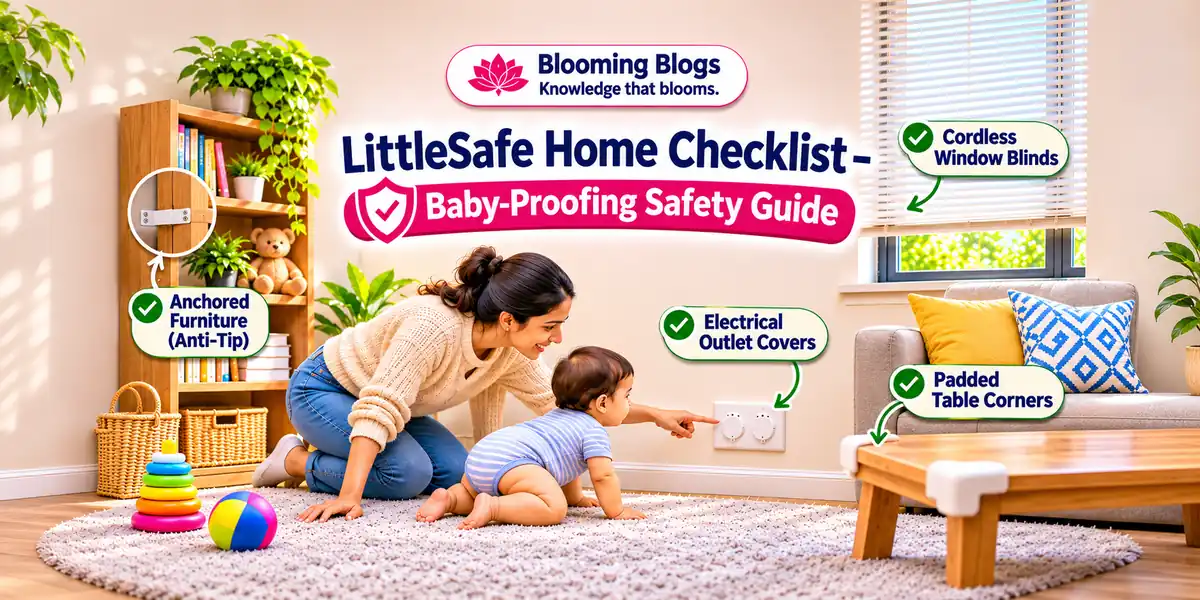
Little Steps Towards a Safer Home!
Select your child's current age, mobility milestones, home layout, and rooms to generate a tailored safety inspection.
Check off each corrective action below as you complete improvements around your home.
Introduction:
Why Every Home Needs a LittleSafe Home Checklist.
A Baby-Proofing Checklist helps parents identify household hazards before their little one starts crawling, standing, and exploring. Everyday objects such as electrical sockets, furniture, cleaning products, stairs, and window cords can create unexpected risks. The LittleSafe Home Checklist from Blooming Blogs helps parents review these areas systematically and plan practical safety improvements.
Babies are naturally curious. They learn by touching, grabbing, moving, and putting objects into their mouths. As their physical abilities develop, their surroundings become increasingly important.
A room that seems perfectly safe to an adult may contain several hazards at a baby’s eye level. An uncovered electrical socket, an unstable bookshelf, or a small object on the floor can become a potential danger.
This is why baby-proofing should begin before your child becomes mobile. Parents do not need to purchase every available safety product. Instead, they should identify genuine risks and address them according to their importance.
The LittleSafe Home Checklist is an interactive safety audit tool designed to simplify this process. It helps parents create a customized, room-by-room inspection plan based on their baby’s age, developmental milestones, home layout, and household conditions.
Whether you are preparing for a newborn or have a crawling baby between 6 and 9 months, this guide will help you understand household safety and take practical preventive steps.
Quick Takeaways: LittleSafe Home Checklist Essentials
- Start preparing your home before your baby begins crawling.
- Review household safety according to your child’s developmental milestones.
- Secure heavy furniture, televisions, and unstable storage units.
- Keep medicines, cleaning products, and chemicals securely stored.
- Protect accessible electrical outlets and loose wires.
- Install suitable safety gates around staircases.
- Inspect balconies, windows, and accessible water sources.
- Identify potentially toxic indoor and outdoor plants.
- Remove small objects that may cause choking.
- Supervise babies around pets, water, heat, and household appliances.
- Repeat your home safety audit as your child grows.
Key Points: Understanding the LittleSafe Home Checklist
The LittleSafe Home Checklist is designed to make household safety inspections easier and more organized.
Its main features include:
- Customized baby age and developmental-stage selection.
- Multiple room and home-layout selections.
- Additional inspection modules for pets, plants, balconies, and staircases.
- Individual safety checkpoints for each selected room.
- Three inspection statuses: Safe / Completed, Needs Attention, and Not Applicable.
- Visible Not Checked labels for unanswered items.
- High-priority hazard alerts.
- Progress tracking during the inspection.
- Personalized safety audit reports.
- Tiered action plans for outstanding safety issues.
- Print and Save as PDF functionality.
- Copy Audit Summary functionality.
The tool helps parents organize their findings. It does not certify a home as completely safe or replace professional inspection.
1. Why Is Baby-Proofing Important?
Baby-proofing is the process of identifying and reducing potential hazards in the home. It includes physical barriers, safer storage, furniture anchoring, electrical protection, and changes to everyday household habits.
Babies develop new physical abilities quickly. Their curiosity also increases as they become more mobile.
A newborn may remain in one place during supervised activities. A crawling baby can explore several rooms within minutes. A toddler may pull open drawers, climb furniture, and reach objects that were previously inaccessible.
A practical Baby-Proofing Checklist helps parents identify these changing risks.
Common Household Hazards
| Hazard | Possible Risk | Preventive Action |
|---|---|---|
| Electrical outlets | Electric shock | Use suitable outlet protection |
| Unanchored furniture | Furniture tipping | Install appropriate anti-tip hardware |
| Cleaning chemicals | Accidental poisoning | Store in locked cabinets |
| Small objects | Choking | Keep floors and low surfaces clear |
| Open staircases | Falls | Install suitable safety gates |
| Hot liquids | Burns | Keep hot beverages away from edges |
| Window cords | Strangulation | Use cordless window coverings |
| Water-filled buckets | Drowning | Empty and store safely |
| Toxic plants | Poisoning or irritation | Identify and restrict access |
2. When Should Parents Start Baby-Proofing?
The best time to begin preparing your home is before your baby becomes mobile.
You can start with nursery safety during pregnancy. Review furniture placement, sleeping arrangements, and accessible household items before your baby arrives.
Between 4 and 6 months, begin checking floor-level hazards. This gives you time to install safety equipment before crawling starts.
Baby-Proofing According to Developmental Stages
Newborn to 3 Months
Focus on:
- Safe sleeping arrangements.
- Crib and mattress safety.
- Changing table precautions.
- Safe placement of baby-care products.
- Accessible electrical cords.
- Appropriate room temperature.
3–6 Months
Focus on:
- Rolling and reaching hazards.
- Loose objects.
- Accessible cords.
- Furniture stability.
- Medicines and cleaning products.
- Indoor plant identification.
6–9 Months
This stage deserves special attention because many babies begin crawling or moving independently.
Focus on:
- Electrical outlets.
- Cabinet locks.
- Staircase gates.
- Furniture anchoring.
- Small objects on floors.
- Pet food and water bowls.
- Accessible household chemicals.
9–12 Months
Focus on:
- Pulling up to stand.
- Furniture stability.
- Window access.
- Drawer safety.
- Climbing hazards.
- Secure storage.
12–24 Months
Focus on:
- Walking and climbing.
- Kitchen access.
- Bathroom safety.
- Door locks and handles.
- Balcony access.
- Outdoor hazards.
Every child develops differently. Prepare your home according to your baby’s actual abilities rather than relying only on age.
3. How to Use the LittleSafe Home Checklist Tool
The LittleSafe Home Checklist turns a large home safety project into manageable inspection steps.
Step 1: Set Up Your Child and Home Profile
Start by selecting your baby’s current age stage.
Available options include:
- Expecting a baby.
- Newborn.
- 3–6 months.
- 6–9 months.
- 9–12 months.
- 12–18 months.
- 18–24 months.
- Above 24 months.
Next, select your child’s current developmental milestones.
These may include:
- Rolling over.
- Sitting independently.
- Starting to crawl.
- Crawling confidently.
- Pulling up to stand.
- Cruising along furniture.
- Walking independently.
You can also select an upcoming milestone. This helps you prepare before your child develops a new ability.
Step 2: Select Your Home Type and Rooms
Choose the housing layout that best describes your home.
Select all applicable rooms:
- Nursery or Baby’s Bedroom.
- Master Bedroom.
- Living Room.
- Kitchen.
- Bathroom.
- Dining Area.
- Hallways and Staircases.
- Balcony and Windows.
- Laundry and Utility Area.
- Garden and Outdoor Spaces.
- Garage and Storage Areas.
Use the Select Core Living Rooms or Select All Rooms buttons for quicker selection.
Step 3: Identify Special Household Conditions
Select additional conditions that apply to your household.
Examples include:
- Pets at home.
- Indoor plants.
- Open staircase.
- Open balcony.
- Multiple floors.
- Accessible windows.
- Heavy furniture.
- Household medicines.
- Cleaning chemicals.
The tool adds relevant inspection modules when applicable.
For example, selecting Indoor Plants adds plant and garden safety checks. Selecting Pets at Home adds pet and baby safety checks.
Click Start / Update Safety Audit to load your personalized inspection workspace.
Step 4: Inspect Each Room
Walk through your home with the checklist open.
Get down to your baby’s eye level. Look for objects and hazards that may be difficult to notice from a standing position.
Each inspection point explains:
- Why It Matters: The reason the item requires attention.
- What to Check: The specific household condition to inspect.
- Recommended Action: A practical preventive step.
Select one of the three inspection statuses.
| Status | Meaning |
|---|---|
| Safe / Completed | The hazard has been checked and addressed or is already secured |
| Needs Attention | A hazard requires corrective action |
| Not Applicable | The feature does not exist in your home |
Items that remain unanswered are marked Not Checked.
High-priority findings trigger a red alert banner. This makes important hazards easier to identify.
You can also use the optional room notes field. Record measurements, hardware requirements, and shopping reminders.
Step 5: Generate Your Personalized Safety Report
After inspecting the selected rooms, click Generate Personalized Safety Audit Report.
Your report includes:
- Inspection status.
- High-priority issue count.
- Outstanding safety items.
- Completed checks.
- Not applicable items.
- Tiered action plan.
The report uses three action levels.
Action 1 – Address Immediately
These are high-priority findings that require immediate attention.
Action 2 – Fix Soon
These are issues that should be corrected as soon as reasonably possible.
Action 3 – Routine Prevention
These are regular maintenance and preventive checks.
Use Print / Save as PDF to keep a copy. You can also use Copy Audit Summary to share your findings with your partner, grandparents, or caregivers.
4. Room-by-Room Baby-Proofing Checklist
Every room has different safety requirements. A systematic inspection helps parents avoid overlooking less obvious hazards.
A. Nursery and Baby’s Bedroom Safety
The nursery requires careful planning because babies spend considerable time sleeping and playing there.
Baby-Proofing Checklist for the Nursery
- Check the crib structure and mattress fit.
- Use a firm, flat sleeping surface.
- Place your baby on their back for sleep.
- Keep pillows, quilts, loose blankets, and soft toys out of the crib.
- Keep crib bumpers and sleep positioners out of the sleeping area.
- Keep window blind cords inaccessible.
- Secure monitor cables away from the crib.
- Anchor nearby dressers and storage units.
- Keep medicines and small objects out of reach.
- Check the stability of shelves and wall decorations.
Important safe-sleep reminder: Follow current pediatric safe-sleep recommendations. A baby should sleep on a firm, flat, separate sleep surface with only a fitted sheet.
B. Master and Guest Bedroom Safety
Adult bedrooms often contain small items that can become choking hazards.
Check:
- Coins and jewelry.
- Hair accessories.
- Medicines.
- Charging cables.
- Unstable bedside tables.
- Wardrobes and dressers.
- Accessible windows.
- Loose decorative objects.
Anchor heavy furniture securely. Keep medicines in locked storage.
C. Living Room Safety
The living room often contains televisions, tables, electronics, and decorative objects.
Living Room Safety Checklist
- Secure televisions against tipping.
- Anchor bookshelves and cabinets.
- Protect sharp furniture corners where appropriate.
- Secure loose electrical cables.
- Keep remote controls out of reach.
- Check battery compartments.
- Remove small decorative objects.
- Secure unstable floor lamps.
- Use suitable non-slip rug pads.
- Keep hot drinks away from table edges.
Pay special attention to furniture that a baby may use to pull up or stand.
D. Kitchen Safety
The kitchen contains several hazards, including heat, sharp objects, chemicals, and small food items.
Check:
- Stove and cooking surfaces.
- Hot liquids.
- Oven doors.
- Knife storage.
- Lower cabinets.
- Cleaning products.
- Dishwasher detergents.
- Plastic bags.
- Small food items.
- LPG cylinders and gas connections.
- Electrical appliance cords.
Keep children away from active cooking areas. Use rear burners when possible and turn pot handles inward.
Install suitable child-resistant locks on cabinets containing hazardous items.
E. Bathroom Safety
Bathrooms require constant attention because water-related accidents can happen quickly.
Bathroom Safety Checklist
- Never leave a baby unattended near water.
- Empty buckets and tubs after use.
- Keep medicines locked away.
- Secure cleaning products.
- Store razors and sharp objects safely.
- Use suitable non-slip bathroom products.
- Check bathwater temperature.
- Keep electrical appliances away from water.
- Secure toilet lids where appropriate.
Never rely on bath seats or bath rings as substitutes for adult supervision.
F. Staircase and Hallway Safety
Staircases are a significant fall hazard for mobile babies and toddlers.
Check:
- Safety gates at staircase access points.
- Loose rugs.
- Uneven flooring.
- Cluttered steps.
- Open railing gaps.
- Furniture near railings.
- Loose electrical cables.
Hardware-mounted gates are generally the appropriate choice at the top of stairs. Follow the gate manufacturer’s installation instructions.
G. Balcony Safety
Balconies require careful inspection, particularly in apartments and high-rise buildings.
Check:
- Balcony door locks.
- Railing stability.
- Gaps between railings.
- Furniture near railings.
- Accessible planters.
- Storage boxes.
- Climbable objects.
Keep children away from balconies unless directly supervised. Never place chairs or stools near railings.
H. Window Safety
Window screens are not designed to prevent children from falling.
Check:
- Window opening restrictions.
- Window guards where appropriate.
- Accessible window handles.
- Blind and curtain cords.
- Furniture near windows.
- Loose window hardware.
Use suitable window safety devices that preserve emergency exit access.
I. Laundry and Utility Area Safety
Laundry areas contain concentrated detergents, chemicals, and electrical appliances.
Check:
- Laundry detergent storage.
- Cleaning chemicals.
- Bleach.
- Laundry pods.
- Washing machine access.
- Dryer access.
- Electrical connections.
- Irons and ironing equipment.
- Water buckets.
Keep laundry chemicals in their original containers. Store them in secure cabinets.
J. Garden and Outdoor Safety
Outdoor areas may contain plants, tools, chemicals, and water hazards.
Check:
- Plant identification.
- Fertilizers.
- Pesticides.
- Gardening tools.
- Standing water.
- Ponds.
- Outdoor stairs.
- Uneven flooring.
- Pet-related hazards.
Identify unfamiliar plants using reliable botanical or poison information sources.
K. Garage and Storage Areas
Garages and storage spaces often contain hazardous materials.
Check:
- Automotive fluids.
- Paints and solvents.
- Sharp tools.
- Ladders.
- Power tools.
- Batteries.
- Cleaning chemicals.
- Storage shelves.
Keep access restricted and store hazardous materials securely.
5. Electrical Safety for Babies
Babies may become interested in electrical outlets, charging cables, and switches as they start crawling.
A practical Baby-Proofing Checklist should include electrical safety in every accessible room.
Electrical Hazards to Inspect
- Unused electrical outlets.
- Damaged sockets.
- Exposed wiring.
- Loose cables.
- Extension boards.
- Charging adapters.
- Appliances near water.
- Overloaded electrical connections.
Use compatible outlet protection or tamper-resistant receptacles.
Secure cables with suitable cord management products. Keep electrical appliances away from wet areas.
Do not attempt electrical repairs yourself. Ask a qualified electrician to inspect damaged sockets or exposed wiring.
6. Furniture Tip-Over Prevention
Heavy furniture can cause serious injuries if it tips over.
Babies may pull drawers or use furniture for support as they learn to stand.
Furniture to Inspect
- Wardrobes.
- Dressers.
- Bookshelves.
- Television stands.
- Storage cabinets.
- Tall drawers.
- Freestanding shelving units.
Use suitable anti-tip straps or brackets. Install them according to the manufacturer’s instructions and the wall construction.
Store heavier objects on lower shelves. Avoid placing attractive toys on top of tall furniture.
7. Cabinet and Drawer Safety
Cabinets often contain medicines, cleaning products, sharp utensils, and small objects.
Not every cabinet needs a lock. Focus on those that contain hazardous items.
Consider:
- Magnetic cabinet locks.
- Internal spring latches.
- Child-resistant drawer locks.
- Secure chemical storage.
- Locked medicine cabinets.
Check locks regularly. Replace damaged or loose hardware.
8. Toxic Plants and Household Poisoning Risks
Some common decorative plants may cause irritation or poisoning if children chew their leaves or stems.
Examples include:
- Dieffenbachia.
- Pothos.
- Philodendron.
- Oleander.
- Sago palm.
Plant toxicity varies by species and the part consumed. Identify plants correctly before deciding whether they are safe.
Household chemicals also require secure storage.
Keep these products inaccessible:
- Cleaning liquids.
- Bleach.
- Pesticides.
- Insecticides.
- Medicines.
- Essential oils.
- Laundry detergents.
Never transfer chemicals into beverage bottles.
If you suspect that your child has swallowed a poisonous substance, seek immediate advice from an appropriate poison information service or emergency medical professional. Do not induce vomiting unless instructed by a qualified professional.
9. Choking and Strangulation Hazards
Babies explore objects with their mouths. Small household items can become choking hazards.
Inspect:
- Coins.
- Buttons.
- Small toy parts.
- Pen caps.
- Marbles.
- Batteries.
- Magnets.
- Plastic bags.
- Loose cords.
- Blind strings.
Button batteries and powerful magnets deserve particular attention. Swallowing them can cause severe internal injuries.
Keep cords away from sleeping and playing areas. Choose cordless window coverings wherever possible.
10. Fire, Heat and Burn Prevention
Babies have delicate skin and can suffer burns from common household sources.
Inspect:
- Hot beverages.
- Cooking appliances.
- Irons.
- Heaters.
- Candles.
- Fireplaces.
- Hot water.
- Electrical equipment.
Never carry a baby while handling hot drinks or cooking.
Keep matches, lighters, and candles inaccessible. Check smoke alarms and maintain a household fire safety plan.
11. Pet and Baby Safety
Pets and babies can share a home safely when adults establish suitable boundaries.
However, even familiar pets should never be left alone with a baby.
Check:
- Pet food storage.
- Water bowls.
- Litter trays.
- Pet toys.
- Pet medicines.
- Pet sleeping areas.
Supervise every interaction. Give pets a quiet area where they can rest without being disturbed.
12. Baby-Proofing Considerations for Indian Homes
Indian homes may have specific architectural and household conditions that deserve attention.
Balcony and Terrace Safety
Inspect railing gaps, balcony doors, and climbable furniture. Keep chairs and planters away from railings.
Open Staircases
Install appropriate safety gates at staircase access points. Check open railing gaps.
Electrical Outlets
Inspect low-level sockets and charging points. Secure unused outlets with suitable protection.
Bathroom Water Storage
Many households store water in buckets or drums. Empty them after use and prevent unsupervised access.
Kitchen and LPG Safety
Keep babies away from gas stoves, cooking appliances, hot tea, and pressure cookers. Ask a qualified professional to inspect unsafe gas connections.
Mosquito Repellents and Insecticides
Keep vaporizer refills, sprays, coils, and insecticides out of reach.
Prayer Rooms and Pooja Areas
Keep diyas, incense, matchboxes, camphor, and other hot or small objects away from crawling children.
Wet Tile and Marble Floors
Dry wet floors promptly. Use suitable non-slip products where necessary.
13. Essential Baby-Proofing Products
The right products depend on your home layout and your child’s abilities.
| Product | Purpose | Important Consideration |
|---|---|---|
| Outlet protectors | Electrical protection | Choose compatible designs |
| Anti-tip straps | Furniture stability | Follow installation instructions |
| Cabinet locks | Restrict cabinet access | Check locking mechanisms |
| Safety gates | Restrict access | Select the correct mounting type |
| Door finger guards | Reduce finger injuries | Install correctly |
| Corner protectors | Cushion sharp edges | Do not rely on them to prevent falls |
| Window locks | Restrict opening | Preserve emergency exit access |
| Cordless blinds | Reduce cord hazards | Select appropriate coverings |
| Non-slip mats | Reduce slipping | Check grip regularly |
| Smoke alarms | Fire warning | Test and maintain regularly |
No safety product replaces supervision or correct installation.
14. Common Baby-Proofing Mistakes
Parents sometimes overlook hazards because they appear harmless to adults.
Here are common mistakes to avoid.
- Waiting until crawling begins: Start preparing before your baby becomes mobile.
- Checking only the nursery: Review every accessible room.
- Ignoring furniture anchoring: Secure heavy furniture against tipping.
- Using unsuitable outlet plugs: Select compatible outlet protection.
- Leaving cleaning products under sinks: Use secure storage.
- Depending on bath seats: Always supervise around water.
- Ignoring balcony access: Secure doors and remove climbable objects.
- Forgetting loose cords: Review chargers and window coverings.
- Assuming all plants are harmless: Identify unfamiliar species.
- Using unsuitable safety gates: Follow manufacturer recommendations.
- Leaving small objects on floors: Inspect regularly.
- Treating baby-proofing as a one-time task: Repeat inspections as your child grows.
15. How Often Should Parents Repeat a Baby-Proofing Checklist?
Home safety needs change as babies develop new abilities.
Review your home:
- Before your baby arrives.
- Before crawling begins.
- When your baby starts pulling up.
- When independent walking begins.
- After rearranging furniture.
- After buying new appliances.
- After moving to a new home.
- When introducing indoor plants or pets.
A review every few months can also help identify equipment that needs maintenance.
16. Creating a Safer Home on a Budget
Baby-proofing does not always require expensive products.
Start with simple household changes.
- Remove small objects from floors.
- Move medicines to secure storage.
- Keep cleaning chemicals inaccessible.
- Remove unstable furniture from play areas.
- Keep stairs clear.
- Move chairs away from windows.
- Secure loose cables.
- Empty buckets after use.
Prioritize essential safety equipment such as furniture anchors, suitable stair gates, and cabinet locks.
Purchase products according to actual household needs.
17. Parent’s Practical Safety Tips
These simple habits can improve everyday household safety.
- Inspect your home from your baby’s eye level.
- Check behind sofas and furniture.
- Keep small objects away from play areas.
- Review every accessible electrical outlet.
- Secure tall furniture.
- Store medicines safely.
- Check window and balcony access.
- Keep bathroom floors dry.
- Supervise pets and babies.
- Check toys for loose parts.
- Keep hot beverages away from edges.
- Inspect safety gates regularly.
- Share household safety rules with caregivers.
- Keep emergency contact details accessible.
- Repeat the inspection after major household changes.
18. Did You Know? Interesting Baby Safety Facts
- Babies may become mobile before parents expect them to.
- Crawling changes which household objects a baby can reach.
- Heavy furniture can tip when children climb drawers.
- Window insect screens are not designed to prevent falls.
- Button batteries can cause serious internal injuries when swallowed.
- Drowning can happen in very shallow water.
- Familiar pets still require supervised interactions with babies.
- Baby-proofing needs to evolve as children learn new physical skills.
19. Authoritative External References (Primary Public Health & Safety Sources)
- American Academy of Pediatrics (AAP) – HealthyChildren.org: Home Safety: Tips for Families with Young Children
Official pediatric guidance on safe infant sleep, water supervision, burn prevention, and poisoning safety. - U.S. Consumer Product Safety Commission (CPSC): Anchor It! Furniture and TV Tip-Over Prevention Campaign
Authoritative guidance on anchoring dressers, bookshelves, and televisions to prevent furniture tip-over accidents. - Centers for Disease Control and Prevention (CDC): Child Injury Prevention at Home
Evidence-based prevention strategies for falls, burns, drowning, and poisoning. - Safe Kids Worldwide: Home Safety Checklist and Room-by-Room Guides
Practical safety checklists covering stair gates, window guards, button batteries, and cord safety. - National Health Service (NHS – UK): Baby and Toddler Safety in the Home
Guidance on scald prevention, choking hazards, and safe household chemical storage. - America’s Poison Centers (Poison Control): Poison Prevention & Plant Safety Resources
Poison prevention information, emergency assistance (1-800-222-1222 in the United States), and household and garden plant toxicity guidance. - AIIMS National Poisons Information Centre (India): All India Institute of Medical Sciences (AIIMS)
Poison information resources and emergency medical guidance for households in India. For emergencies, call 112. - World Health Organization (WHO): Child Injury Prevention
Global public health information about childhood injuries, risk factors, and prevention.
Important Reference Note
These authoritative organizations provide educational information about child safety, injury prevention, and household hazards. Always consult the relevant source for current recommendations.
For technical installations, consult qualified professionals. Follow manufacturer instructions and applicable local safety requirements.
20. Quick Summary: Complete Baby-Proofing Checklist
Use this summary to review the main safety areas.
| Area | Essential Checks |
|---|---|
| Nursery | Safe sleep, crib, cords, furniture |
| Bedroom | Medicines, drawers, wardrobes |
| Living Room | TV anchors, cables, small objects |
| Kitchen | Chemicals, cooking surfaces, sharp tools |
| Bathroom | Water, medicines, slippery floors |
| Staircase | Suitable safety gates and clear steps |
| Balcony | Secure access and safe railings |
| Windows | Opening restrictions and cordless blinds |
| Laundry | Detergents, chemicals, appliances |
| Garden | Plant identification, tools, water |
| Garage | Chemicals, batteries, sharp tools |
| Pets | Supervised interaction and secure supplies |
Use the LittleSafe Home Checklist to organize these inspections and prepare a personalized action plan.
🔗 Related Articles
If you are preparing for a newborn, these helpful Blooming Blogs guides can help you plan, prepare, and care for your baby with greater confidence:
- 1. Best Infant Formula for Newborns: Types, Choices & Safety Guide
- 2. Newborn Baby Essentials Checklist for Soon-to-Be Parents
- 3. How to Prepare Formula Milk for a Newborn Baby
- 4. Newborn Baby Care: Complete Guide for New Parents
- 5. Formula Mixing & Bottle Ratio Calculator
- 6. Hospital Bag for Delivery: Complete Checklist for Mom and Baby
- 7. The Ultimate Pregnancy Hospital Bag & Registry Checklist: Your Stress-Free Delivery Guide
- 8. Hospital Bag Checklist Tool
- 9. Rompers for Newborn: Ultimate Guide to Safe Baby Clothes
- 10. Onesies and Rompers: How to Dress Your Newborn Right
- 11. Baby Onesies Buying Guide: Best Soft Outfits for Newborns
21. Frequently Asked Questions About Baby-Safety.
1. When should I start baby-proofing my home?
Start preparing the nursery before birth. Begin checking floor-level hazards between 4 and 6 months. Complete essential safety improvements before crawling begins.
2. Is baby-proofing necessary before crawling?
Yes. Babies may roll, pivot, and reach objects before they crawl. Early preparation helps prevent last-minute changes.
3. Which room should I baby-proof first?
Start with the nursery and main living areas. Then inspect the kitchen, bathroom, stairs, windows, and other accessible spaces.
4. Why is a baby-proofing checklist important at 6–9 months?
Many babies become increasingly mobile during this period. They may explore electrical outlets, cupboards, furniture, and small objects on floors.
5. Are electrical outlet covers necessary?
Suitable outlet protection can reduce access to electrical sockets. Choose products compatible with your outlet design and applicable safety standards.
6. How do I secure heavy furniture?
Use appropriate anti-tip straps or brackets. Follow the manufacturer’s installation instructions and secure the hardware into suitable structural support.
7. Do I need cabinet locks?
Use locks on cabinets containing medicines, chemicals, sharp tools, glass objects, and other hazards.
8. How can I make my kitchen safer?
Keep babies away from active cooking areas. Secure cleaning products and sharp utensils. Use suitable cabinet locks and keep hot liquids out of reach.
9. How do I protect my baby around stairs?
Use suitable safety gates. Hardware-mounted gates are generally recommended at the top of stairs. Follow the manufacturer’s installation instructions.
10. How can I make windows and balconies safer?
Restrict access, install appropriate window safety devices, and remove furniture that children could climb. Never rely on insect screens to prevent falls.
11. Which household plants may be toxic to babies?
Some examples include pothos, philodendron, dieffenbachia, oleander, and sago palm. Identify plants accurately using reliable botanical or poison information sources.
12. How do I identify choking hazards?
Look for coins, batteries, magnets, small toy parts, and other objects that can fit into a young child’s mouth. Use age-appropriate choking-prevention guidance.
13. How often should I inspect baby-proofing equipment?
Check safety devices regularly. Repeat your home audit when your baby reaches new milestones or when your household layout changes.
14. Can baby gates replace adult supervision?
No. Gates are additional barriers. They cannot replace attentive adult supervision.
15. How do I baby-proof a rented apartment?
Focus on removable or landlord-approved safety solutions. Use suitable furniture anchors and ask permission before making structural modifications.
16. Is it necessary to baby-proof every room?
Inspect every area your child may enter. Give priority to rooms with greater exposure to household hazards.
17. How can I keep pets and babies safe together?
Supervise interactions, restrict access to pet supplies, and provide pets with a separate resting space.
18. Can the LittleSafe Home Checklist replace a professional home inspection?
No. It is an educational planning tool. It does not provide professional certification or guarantee that every hazard has been identified.
19. What additional precautions matter in Indian homes?
Pay attention to balconies, open staircases, electrical outlets, bathroom water buckets, LPG cooking areas, mosquito repellents, pooja lamps, and slippery floors.
20. Does completing a baby-proofing checklist make a home completely safe?
No. A checklist helps identify common hazards and organize improvements. Continuous supervision and regular inspections remain essential.
22. Final Thoughts
Small Safety Steps Make a Big Difference
Baby-proofing is an ongoing responsibility. It changes as your child develops new abilities and explores different parts of the home.
A carefully completed Baby-Proofing Checklist can help parents identify overlooked hazards and prioritize important improvements.
Start with the areas that need immediate attention. Secure furniture, protect electrical outlets, store hazardous products safely, and review every accessible room.
Most importantly, remember that no checklist or safety product can eliminate every risk.
Use the LittleSafe Home Checklist from Blooming Blogs to organize your household inspection and take practical steps towards a safer environment for your little one.
23. Important Safety Disclaimer
The LittleSafe Home Checklist and its accompanying educational guide are provided for general informational purposes.
The tool is not a professional home inspection service. It does not provide medical advice, safety certification, or a guarantee of an accident-free environment.
Completing the checklist does not mean that every household hazard has been identified.
Parents and caregivers must continue supervising babies and young children. Follow product instructions and seek professional assistance when required.
For suspected poisoning, serious injury, or other emergencies, seek appropriate medical assistance immediately.
🛠️ Try Our Free Interactive Baby Care Tools
Planning your nursery or setting up daily routines? Check out these handy calculators designed to simplify baby care:
🌱 Continue Exploring…
Whether you’re nurturing a newborn, curating a sanctuary for your home and garden, or simply looking to level up your day-to-day life, there’s always a new perspective waiting to be discovered. From practical everyday parenting guidance, women’s wellness information, ideas to make your home more beautiful, tips for caring for pets and plants, or inspiration for your spiritual journey, Blooming Blogs brings useful knowledge together in one place.
Blooming Blogs — knowledge that blooms.
🌸 Blooming Blogs Promise
We’re here to bring you thoughtful, reliable, and helpful insights you can truly count on. Every article on Blooming Blogs is thoroughly researched, crafted with care, and written with genuine empathy to support you in your everyday journey. Your trust means everything to us, and we are dedicated to sharing content that informs, inspires, and makes your life a little easier.
📰 Editorial Notes
Our team strives for clarity, accuracy, and depth in every piece we publish. Content is periodically updated to ensure facts, recommendations, and guides stay relevant over time. While we consult trusted sources and expert research, our goal is always to present complex topics in a simple, practical, and conversational way that works for real life.
⚠️ Disclaimer
The content provided on Blooming Blogs is for informational and educational purposes only and should not be considered professional medical, legal, or financial advice. Always consult with a qualified expert or licensed professional before making decisions related to your health, family, or personal finances. Blooming Blogs is not liable for any actions taken based on the information provided on this website. (For full details, please visit our Disclaimer Policy Page).
💬 Share Your Experience — Leave a Comment
We’d love to hear from you! Did this article help you, or do you have a personal tip or story to share with our community? Drop your thoughts, questions, or feedback in the comment section below. Every voice enriches our community, and we read every single comment!