
Introduction
Stepping outside into crisp winter air with a brand-new baby can trigger an immediate wave of second-guessing. Is she warm enough? Is he sweating under that hat? Between conflicting advice from well-meaning relatives and endless online shopping tabs, figuring out the right baby blanket and newborn winter clothes feels overwhelming when you are already running on three hours of sleep.
You do not need a closet bursting with expensive snowsuits or a dozen heavy quilts to keep your little one comfortable. What you actually need is a simple, pediatrician-backed system built around breathable layers, safe sleep habits, and smart fabric choices.
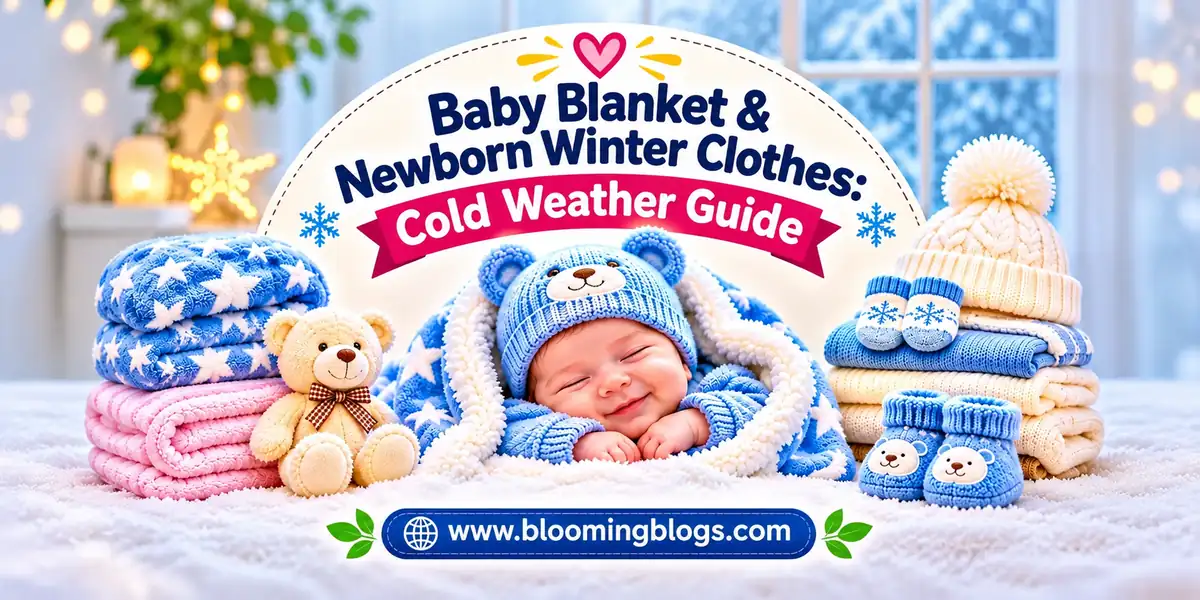
In this complete guide, we break down everything from choosing between cotton, fleece, and wool to mastering the “plus-one” layering rule. You will learn exactly how to use a baby blanket safely during stroller walks and tummy time, how to build a practical baby winter clothes 0-3 months wardrobe, and how to tell if your newborn is too hot or too cold with one quick touch.
Understanding Newborn Temperature Regulation in Cold Weather
Newborns are not just miniature adults; their bodies are still learning how to manage heat. During the first few weeks of life, babies lose heat nearly four times faster than adults because they have a larger skin surface area relative to their body weight and very little insulating body fat. At the same time, young infants cannot shiver effectively to warm themselves up, nor can they kick off heavy covers if they become dangerously overheated.
Because overheating is a known risk factor for Sudden Infant Death Syndrome (SIDS), dressing your baby for winter is all about balance. The golden rule recommended by pediatricians is simple: dress your baby in one additional thin layer than what you are comfortably wearing in the exact same environment. If you are indoors wearing a long-sleeve t-shirt and jeans, your baby will likely feel cozy in a cotton bodysuit, a footed sleeper, and a wearable sleep sack.
Instead of relying on your baby’s hands and feet to judge their warmth, check their core temperature. Cold fingers and toes are completely normal in newborns due to immature circulation. Slide two fingers down the back of your baby’s neck or feel their chest. The skin should feel warm and dry. If their neck feels damp, sweaty, or hot, remove a layer immediately.
- Ideal Indoor Nursery Temperature: Keep the room between 68°F and 72°F (20°C to 22°C).
- The Neck Check: Warm and dry means just right; sweaty or flushed means too warm; cool to the touch means add one light layer.
- Car Seat Rule: Never buckle your baby into a car seat wearing a puffy baby winter coat or bulky snowsuit. Thick padding compresses in a crash, leaving dangerous slack in the harness straps. Instead, buckle your baby in thin, snug layers and tuck a warm throw securely over the buckled straps.
Choosing the Best Baby Blanket for Every Winter Scenario
Not every throw serves the same purpose, and knowing where and when to use each style keeps your baby both safe and snug. While loose bedding is strictly off-limits in the crib for babies under one year old, a well-made baby blanket is an indispensable daily tool for supervised snuggles, stroller rides, nursing cover-ups, and clean tummy-time surfaces.
Breathable Everyday Options: Cellular, Muslin, and Cotton
For indoor naps under supervision or mild winter days, breathability is your top priority. A baby cellular blanket features an open, honeycomb-like weave that traps warm air close to your baby’s body while still allowing airflow if the fabric accidentally brushes near their face. Lightweight cotton knit throws and multi-layer muslin swaddles also excel here because they stretch gently around your infant without trapping excess heat.
Heavy Winter Warmth: Fleece, Teddy Fleece, and Knit Throws
When temperatures plummet and you are heading outdoors for a stroller walk, reach for denser insulation. A baby blanket for heavy winter—such as plush microfleece, teddy-fleece-lined cotton, or chunky wool-blend knits—blocks biting wind. If you love handmade heirlooms, a crochet baby blanket or baby knitted blanket made from soft, washable acrylic or merino yarn makes a wonderful stroller cover. Just check that the stitch pattern does not have large holes where tiny fingers and toes can get tangled.
Swaddles and Wearable Alternatives for Safe Sleep
When it is time to put your newborn down in the bassinet, swap loose throws for a baby wrap newborn swaddle or a zip-up sleep sack. A properly wrapped swaddle mimics the snug security of the womb and prevents the startle reflex from waking your baby, while eliminating the risk of loose fabric covering their nose and mouth.
- Standard Baby Blanket Size: Most receiving blankets measure 30″ x 30″ or 36″ x 36″, while crib and stroller blankets typically measure 30″ x 40″ or 40″ x 50″.
- Gifting & Keepsakes: If you are shopping for a baby shower, a personalised baby blanket or baby blanket with name embroidered in the corner offers both practical daily warmth and sentimental value.
Building a Practical Newborn Winter Clothes Wardrobe (0–3 Months)
Babies grow at lightning speed during their first ninety days, often outgrowing “Newborn” sizes within two to three weeks. When shopping for newborn winter clothes, focus your budget on comfortable, easy-change essentials in baby winter clothes 0-3 months sizing rather than elaborate outfits with stiff buttons or scratchy tags.
Base Layers: Bodysuits and Thermal Wear
Every cold-weather outfit starts with a soft foundation against sensitive newborn skin. Stock up on long-sleeve wrap-style bodysuits (kimono snaps save you from pulling fabric over a wobbly newborn head) and lightweight baby winter thermal wear. Organic cotton is ideal for base layers because it wicks away minor moisture and prevents heat rash.
Mid-Layers: Rompers, All-in-Ones, and Outfit Sets
Over the base bodysuit, add warmth and coverage with baby all-in-ones newborn winter clothes. Footed sleepers with two-way zippers are lifesavers during 2:00 AM diaper changes because you only need to unzip from the ankle up, keeping your baby’s chest warm. For daytime play, mix and match outfit sets newborn winter clothes—such as soft knit pullovers paired with baby winter pants that feature wide, gentle waistbands that will not press against a healing umbilical cord stump.
Outer Layers: Jackets, Sweaters, and Snowsuits
For trips from the house to the car or brisk neighborhood walks, layer on a cozy cardigan, a fleece bunting suit, or a hooded baby winter snowsuit. Look for fold-over mittens built right into the sleeve cuffs; newborns scratch their faces easily, and integrated cuffs stay put far better than separate baby winter gloves.
- Essential Quantities for 0–3 Months:
- 6–8 long-sleeve cotton bodysuits
- 6–8 footed zip-up sleepers (mix of cotton and micro-fleece)
- 3–4 soft knit sweaters or zip-up hoodies
- 4–5 pairs of footed leggings or soft trousers
- 2–3 soft cotton or knit baby winter hats (always remove hats indoors so baby can release excess heat through their head)
- 6–8 pairs of stay-on cotton socks or fleece booties
- 1–2 pram suits or bunting bags for outdoor stroller rides
Fabric Showdown: Cotton vs. Fleece vs. Wool for Sensitive Skin
Choosing the right material matters just as much as choosing the right size. Newborn skin is roughly 30% thinner than adult skin, making infants prone to dryness, chafing, and eczema flare-ups when exposed to harsh synthetic dyes or rough fibers.
Organic Cotton: The undisputed champion for base layers and mild-weather blankets. Organic newborn winter clothes are breathable, hypoallergenic, machine-washable, and gentle on eczema-prone skin. Brushed cotton interlock and quilted cotton offer extra coziness without trapping sweat.
Microfleece and Teddy Fleece: Synthetic polyester fleece is lightweight, dries quickly after spit-up accidents, and traps heat remarkably well. However, fleece does not breathe as well as natural fibers. Always put a thin cotton onesie underneath fleece newborn winter clothes to prevent static, skin irritation, and overheating.
Merino Wool and Cashmere: Natural wool is a temperature-regulating powerhouse—it keeps babies warm when it is freezing outside and cools them down when stepping into a heated store. Modern ultra-fine merino wool is buttery soft and non-itchy, though it requires gentle washing cycles and comes at a higher price point.
| Fabric Type | Warmth Level | Breathability | Best Use Case | Care Difficulty |
| Organic Cotton | Low to Medium | High | Base bodysuits, indoor sleepers, cellular throws | Easy (Machine wash & dry) |
| Microfleece | High | Low to Medium | Outer pram suits, stroller blankets, chilly walks | Easy (Machine wash, low heat dry) |
| Merino Wool | High (Adaptive) | Very High | Outer knitwear, winter sleep sacks, heirloom throws | Moderate (Gentle cycle, lay flat) |
| Bamboo Viscose | Low to Medium | Very High | Swaddles, sensitive/eczema-prone base layers | Moderate (Cool wash, delicate dry) |
Comparison Chart / Tables
Baby Blanket & Sleep Layer Comparison Guide
| Product Type | Typical Dimensions / Fit | Best Season / Temp | Safe for Unsupervised Crib Sleep? | Primary Advantage |
| Cellular Cotton Blanket | 30″ x 40″ | All seasons (65°F–75°F) | No (Loose blanket) | Honeycomb weave maximizes airflow and prevents overheating |
| Muslin Swaddle Wrap | 47″ x 47″ | Spring, Summer, Mild Winter | Yes (Only when snugly wrapped before baby rolls) | Stretchy, breathable, and calms the newborn startle reflex |
| Wearable Sleep Sack (2.5 TOG) | Sleeveless wearable bag | Cold Winter (61°F–68°F) | Yes (AAP recommended alternative to loose blankets) | Cannot be kicked off or cover baby’s face during sleep |
| Plush Fleece / Sherpa Throw | 30″ x 40″ | Heavy Winter (Below 55°F) | No (Stroller & supervised use only) | Blocks cold wind and provides instant cozy warmth |
| Heirloom Knit / Crochet Throw | 36″ x 36″ | Fall & Winter | No (Supervised use & photo keepsakes) | Durable, stretchy, and makes a meaningful personalized gift |
Essential Winter Accessories: Caps, Socks, Mittens, and Sweaters for Newborns
When winter temperatures drop, keeping a newborn’s extremities warm requires careful attention. Because infants lose heat rapidly through their head and skin, accessories like caps, booties, and layering sweaters are daily necessities—provided you follow crucial indoor and outdoor safety rules.
1. Baby Winter Caps & Beanies: Indoor vs. Outdoor Rules
A newborn’s head accounts for a significant percentage of their total body surface area, making beanies vital during outdoor transit. However, knowing when to remove them is just as important as putting them on.
- Outdoor Walks: Always pair a soft, double-layered cotton knit or fine merino wool beanie with your stroller outings. Ensure the beanie covers their ears completely without slipping down over their eyes or nose.
- The Indoor Rule: Always remove hats the moment you step indoors. Babies regulate their body temperature primarily by releasing excess heat through their head and face. Leaving a warm beanie on indoors can quickly cause dangerous overheating.
- Never Sleep in Hats: Hats should never be worn while a baby is sleeping in a crib or bassinet, as loose caps can slip off and cover the airway or cause overheating during the night.
2. Winter Socks, Booties, and Footwear Mechanics
Newborn circulation is immature, meaning blood flow prioritizes core vital organs first. This leaves hands and feet feeling naturally cool, but standard socks alone may not suffice in freezing weather.
- Layering Socks: Pull thin organic cotton socks over your baby’s bare feet first, then slip footed pajamas or booties on over them. For extra biting cold, a pair of soft fleece booties with gentle velcro closures will stay secure much better than loose knit socks that easily slip off in car seats or carriers.
- Avoiding Tight Elastic: Check that sock cuffs and bootie bands do not leave red indentation rings around your baby’s ankles, which can restrict healthy circulation.
3. Mittens and Scratch Protection
Tiny fingernails grow astonishingly fast and are paper-thin, leading newborns to scratch their delicate cheeks easily in winter when skin is prone to seasonal dryness.
- Integrated Cuffs vs. Separate Mittens: Look for newborn rompers and sleepers featuring built-in fold-over sleeve cuffs. They stay attached far better than separate infant mittens. If using separate mittens, choose soft 100% cotton with a loose elastic wristband.
- Allowing Sensory Development: While mittens help during sleep or pram rides, remember that bare hands are essential for sensory exploration and self-soothing during supervised wake windows.
4. Cardigans, Sweaters, and Knit Layering Pieces
When building an outfit for a chilly room or an outdoor errand, a good mid-layer sweater is indispensable.
- Cardigans Over Pullovers: Choose front-button cardigans, zip-up hoodies, or kimono-style wrap sweaters rather than tight pull-over crewnecks. Newborns have large, delicate heads and narrow necks, making pulling tight clothes over their face stressful for both of you.
- Hardware Safety: Inspect all buttons, wooden toggles, and zippers before dressing your baby. Ensure buttons are stitched on tightly so they cannot detach and become choking hazards. Always check for a fabric zipper guard at the top of zip-up sweaters to protect your baby’s chin from pinching.
Advanced Cold-Weather Infant Care & Specialized Winter Gear
1. Deep-Dive Microclimate Management: How Prams, Strollers, and Car Seats Alter Infant Thermoregulation
When we talk about keeping a newborn warm during the bitter winter months, it is easy to assume that outdoor air temperature is the only factor at play. However, infants inside strollers, prams, car seats, and baby wraps experience a localized microclimate that can differ dramatically from ambient weather reports. Understanding how wind chill, solar radiation, and enclosed spaces interact with your baby’s skin is essential for preventing both hypothermia and dangerous overheating.
The Physics of Stroller Microclimates
A stroller or pram acts as a semi-enclosed shelter. When you push a stroller against a brisk winter wind, air currents sweep over the canopy and create pressure zones. If you pull a heavy, non-breathable blanket tightly across the front opening of the stroller to block the wind, you inadvertently trap stagnant air, humidity, and exhaled carbon dioxide while cutting off fresh airflow.
- The Greenhouse Effect: Direct winter sunlight hitting a clear plastic rain or wind cover can quickly turn the interior of a pram into a heat trap, raising internal temperatures by 10°F to 15°F in minutes.
- Moisture Accumulation: Babies sweat very easily when over-bundled. Trapped moisture cools rapidly against the skin once the baby stops moving, increasing the risk of chilling.
Best Practices for Outdoor Microclimate Control
To maintain a safe and stable thermal environment during walks, follow these guidelines:
- Never drape heavy blankets tightly across stroller openings. Instead, use a structured stroller footmuff (muff bag) that zips up around the lower body, leaving the baby’s face completely open to circulating fresh air.
- Monitor the wind angle. Position the stroller so that prevailing winds hit the back of the canopy rather than blowing directly into the seating compartment.
- Check the neck frequently. Every 15 to 20 minutes during extended outdoor exposure, slide your fingers under the collar of their base layer to check for perspiration.
2. Advanced Layering Chemistry: Balancing Synthetic, Natural, and Blended Fibers
Choosing the right combination of fabrics goes far beyond deciding whether something looks soft. The science of thermal insulation relies on trapping microscopic pockets of warm air between fibers while managing moisture transport away from the skin.
The Three-Layer Principle Explained
- The Base Layer (Moisture Management): This layer sits directly against the skin. It must be hydrophilic (moisture-attracting) or highly breathable to pull invisible perspiration away from the body. 100% fine organic cotton or bamboo-cotton blends excel here. Never use 100% untreated synthetic polyester as a base layer for infants, as it traps sweat directly against the skin and causes chilling when activity stops.
- The Mid-Layer (Thermal Insulation): This layer provides the bulk of the warmth by trapping dead air spaces. Microfleece, lightweight merino wool sweaters, or quilted cotton rompers work wonderfully here.
- The Outer Layer (Weather Defense): This layer blocks wind, snow, and rain. Windproof nylon shells or lined bunting suits serve this purpose during transit, keeping external moisture away from the insulating mid-layers.
Pros and Cons of Winter Baby Fabrics
| Fabric Category | Primary Advantages | Critical Disadvantages & Risks | Best Suited For |
|---|---|---|---|
| Organic Cotton | Hypoallergenic, highly breathable, gentle on eczema, machine-washable. | Absorbs moisture and holds it against skin if damp; provides low insulation when wet. | Base layer bodysuits, indoor sleepers, lightweight indoor throws. |
| Merino Wool | Exceptional thermoregulation, naturally antimicrobial, warms even when damp. | Requires delicate washing cycles; higher price point; potential wool sensitivity in rare cases. | Cold-weather mid-layers, outdoor socks, winter sleep sacks. |
| Polyester Microfleece | Lightweight, dries rapidly after spit-ups, blocks wind effectively. | Low breathability; traps heat easily; can generate static electricity and skin irritation if used as base layer. | Outer pram suits, stroller bunting bags, heavy winter covers. |
| Bamboo Viscose Blends | Silky soft, highly stretchable, excellent moisture-wicking properties. | Can lose structural integrity if washed on high heat; slower to dry than synthetic counterparts. | Sensitive skin base layers, swaddle wraps, transition sleep bags. |
3. Night Time Thermal Management: Room Dynamics, TOG Ratings, and Sleep Sacks
Nighttime winter parenting introduces unique challenges as home heating cycles fluctuate between evening warmth and pre-dawn chill. Relying on guesswork when dressing your baby for sleep can disrupt their circadian rhythm and compromise safety.
Mastering TOG (Thermal Overall Grade) Ratings
TOG is an internationally recognized unit of measurement for insulation and warmth of textile products. Choosing the correct TOG rating prevents your baby from waking up cold or overheating into a deep, unsafe lethargy.
- 0.5 TOG: Designed for warm summer rooms (75°F–80°F / 24°C–26°C).
- 1.0 TOG: Ideal for mild transition seasons and comfortable indoor rooms (69°F–73°F / 20°C–23°C).
- 2.5 TOG: Engineered for standard winter bedrooms (61°F–68°F / 16°C–20°C).
- 3.5 TOG: Built for cold homes and chilly winter nights (below 61°F / 16°C).
Night Time Dressing Matrix by Room Temperature
| Room Temperature Range | Recommended Base Layer | Recommended Sleep Bag / Sack | Additional Safe Adjustments |
|---|---|---|---|
| Above 72°F (22°C) | Short-sleeve cotton bodysuit | 0.5 TOG Sleep Bag | No blankets or hats; check for damp neck. |
| 68°F – 72°F (20°C–22°C) | Long-sleeve cotton bodysuit or light sleeper | 1.0 TOG Sleep Sack | Standard infant sleep environment. |
| 65°F – 67°F (18°C–19°C) | Long-sleeve footed cotton sleeper | 2.5 TOG Sleep Sack | Add lightweight cotton cap only if room is drafty (remove once sleeping deeply). |
| Below 64°F (18°C) | Long-sleeve thermal sleeper | 2.5 or 3.5 TOG Heavy Sleep Bag | Use jersey-knit fitted crib sheets to reduce initial cold shock. |
4. Infant Car Seat Safety & Winter Travel Protocols
Winter travel presents hidden hazards that every parent must navigate. The combination of bulky winter coats and modern multi-point car seat harnesses creates a severe safety blind spot during transit.
The Physics of Compression in Vehicle Collisions
When an infant wears a puffy down jacket or heavy snowsuit and is strapped into a car seat, the harness straps appear tight to the parent’s hand. However, during a sudden stop or collision, the immense kinetic energy instantly compresses the fluffy air pockets inside the winter coat. This compression creates several inches of slack in the harness webbing, allowing the infant’s body to lunge forward violently before the harness catches them.
Safe Winter Transit Protocol
- Dress in Thin Layers: Put your baby in a snug base bodysuit, pants, and a fleece jacket or sweater—items that fit close to the body without bulk.
- Strap Snugly: Adjust the harness chest clip to armpit level and perform the “pinch test” on the webbing at the collarbone. If you can pinch excess webbing between your fingers, the harness is too loose.
- Cover After Buckling: Once the harness is securely locked and tightened, place a warm blanket or a dedicated car seat cover over the buckled straps. Never place blankets underneath the harness or route them behind the baby’s back.
- Pre-Warm the Vehicle: Whenever possible, warm up your car before placing your baby inside so they transition comfortably without needing heavy outerwear in the seat.
*Note – A Plush Synthetic Fabric: In textiles and fashion, “sherpa” (often called sherpa fleece or teddy fleece) is a thick, synthetic polyester knit fabric designed to mimic the bumpy, woolly texture of sheepskin. It is smooth on one side and fluffy on the other, making it popular for lining winter jackets, blankets, and slippers.
Tips
- Buy Mostly 0–3 Month Sizes: Skip buying dozens of “Newborn” outfits; a few newborn sleepers are plenty, while baby winter clothes 0-3 months give room for diaper bulk and rapid growth spurts.
- Check TOG Ratings: When buying sleep sacks or quilted blankets, look for the TOG (Thermal Overall Grade) rating—aim for 1.0 TOG in heated homes and 2.5 TOG in chilly bedrooms.
- Pre-Wash Everything: Wash all new blankets and outfits in fragrance-free, dye-free baby detergent before first wear to remove factory finishes.
- Keep a Spare Kit in the Diaper Bag: Winter blowouts happen at the worst times; pack an extra cotton onesie, fleece sleeper, socks, and a compact receiving blanket in a zip-top bag.
- Remove Hats Indoors: Babies release excess body heat primarily through their heads and faces, so always take off beanies the moment you step inside a warm house or car.
Did You Know? 💡
- Did you know a newborn’s hands and feet often feel cool or look slightly bluish (a harmless condition called acrocyanosis) during the first few days of life because their circulatory system prioritizes sending warm blood to vital organs first?
- Did you know the “cellular” weave in a baby cellular blanket has been used in maternity hospitals for decades because the tiny air pockets insulate like double-glazed windows while remaining breathable?
- Did you know dressing a baby in three thin layers traps more body heat than putting them in one thick sweater, thanks to the warm air pockets created between each fabric layer?
Hacks
- The Double-Sock Trick: If baby socks constantly fall off, pull cotton socks over your baby’s bare feet first, then put their footed sleeper on over the socks—or layer a pair of adult ankle socks over the outside of the sleeper feet.
- Warm the Bassinet Sheet: Five minutes before bedtime, place a warm hot-water bottle or heating pad on the crib mattress so your baby does not wake up from the shock of cold cotton sheets. Always remove the heating device completely and test the sheet with your hand before laying your baby down.
- The Poncho Car Seat Hack: Cut a small neck hole in the center of a warm fleece blanket or use a dedicated car-seat poncho; buckle your baby into their harness first, then drape the poncho over the straps so you can lift it easily when the car heater warms up.
- Zip-Up Laundry Bags for Mittens & Socks: Toss tiny newborn socks, scratch mittens, and knit hats into a mesh delicates bag before putting them in the washing machine so your dryer never eats a single sock again.
Common Mistakes to Avoid
- Using Loose Blankets in the Crib: Even lightweight throws pose a suffocation and entanglement hazard for sleeping infants under 12 months. Stick strictly to fitted sheets and wearable sleep sacks for unsupervised sleep.
- Putting Puffy Coats Under Car Seat Straps: Thick winter jackets create a dangerous gap between the harness and your baby’s chest during sudden stops.
- Over-Bundling at Night: Worrying that your baby is cold often leads parents to pile on fleece sleepers, hats, and heavy swaddles inside a 72°F room, which can trigger dangerous overheating.
- Buying Pull-Over Sweaters Without Neck Snaps: Newborn heads are proportionally large and delicate; tight crewnecks without shoulder snaps make dressing a frustrating struggle for both of you.
- Ignoring Zipper Guards: Always check that zip-up sleepers have a small fabric tab at the top of the zipper so cold metal never pinches or scratches your baby’s chin.
Expert Recommendations
- Pediatric Safe Sleep Standard: Follow the American Academy of Pediatrics (AAP) “ABC” rule—babies should sleep Alone, on their Back, in a Crib with a firm, flat mattress and zero loose blankets, bumpers, or pillows.
- Choosing Gender-Neutral Staples: Investing in baby unisex winter clothes in soft whites, oatmeal, sage, and heather gray makes hand-me-downs effortless if you plan to grow your family later.
- Inspecting Handmade Knits: If you receive a handmade crochet baby blanket, gently tug any decorative ribbons, buttons, or loose yarn ends to ensure nothing can detach and become a choking hazard.
Recommendations
- Best Base Layer: Long-sleeve organic cotton kimono bodysuits with flatlock seams.
- Best Nighttime Sleep Gear: Footed cotton sleeper paired with a 1.5 to 2.5 TOG sleeveless wearable sleep sack.
- Best Stroller Blanket: Double-layered plush-backed fleece throw tucked snugly around the baby’s lower body, well below their chin.
- Best Budget Strategy: Shop multi-pack newborn winter clothes set bundles for everyday basics and splurge on just one high-quality fleece bunting suit for outdoor errands.
Key Points
- Dress your newborn in one more thin layer than you are wearing comfortably in the same room.
- Judge warmth by feeling the back of the neck or chest, never the hands or feet.
- Keep all loose blankets out of the crib until after your baby’s first birthday; use swaddles or sleep sacks instead.
- Always remove bulky coats and snowsuits before strapping your infant into a car seat.
- Prioritize breathable natural fibers like cotton and merino wool next to delicate newborn skin.
Points to Remember
- Indoor nursery temperatures should stay cool and comfortable between 68°F and 72°F (20.00°C & 22.22°C).
- Hats belong outdoors—remove them inside to prevent overheating.
- Two-way zippers on footed pajamas make middle-of-the-night diaper changes faster and warmer.
- Check frequently for signs of overheating: sweaty hair, damp neck, flushed cheeks, or rapid breathing.
Gentle Reminders
You are doing an amazing job navigating a brand-new world with your little one. No parent gets the layering formula right on the very first try, and checking your baby’s neck a dozen times during your first winter walk is completely normal. Trust your instincts, keep your layers simple, and remember that a cozy, safely dressed baby does not need a designer wardrobe—just your warmth and care.
FAQs
1. Can a newborn sleep with a baby blanket at night?
No. According to pediatric safe sleep guidelines, loose blankets should never be placed in a crib or bassinet with an unattended baby under 12 months old due to suffocation and SIDS risks. Use a fitted swaddle or wearable sleep sack instead.
2. How many layers of clothes does a newborn need in winter?
Follow the “plus-one” rule: dress your newborn in one additional thin layer compared to what an adult would comfortably wear in the same temperature. Indoors, this usually means a cotton bodysuit, a footed sleeper, and a sleep sack.
3. What is the best material for a winter baby blanket?
For indoor supervised use, breathable cotton knit or a baby cellular blanket works best. For cold outdoor stroller walks, micro-fleece, plush-lined cotton, or soft merino wool provides superior wind protection and warmth.
4. How do I know if my newborn is too cold at night?
Feel the skin on the back of your baby’s neck or their chest. If it feels cool to the touch, add one thin layer such as a long-sleeve bodysuit under their sleeper or switch to a warmer TOG-rated sleep sack.
5. How do I tell if my baby is overheating in winter clothes?
Signs of overheating include a sweaty neck, damp hair, flushed red cheeks, heat rash on the chest, or unusually rapid breathing. Remove a layer immediately if you notice these signs.
6. Why are my newborn’s hands and feet always cold?
Newborns have immature circulatory systems that prioritize sending warm blood to vital organs first. Cool hands and feet are completely normal and do not mean your baby is cold overall.
7. What size baby blanket is best for a newborn?
A 30″ x 30″ or 36″ x 36″ receiving blanket is ideal for burping, lap snuggles, and tucking into a car seat over straps, while a 30″ x 40″ blanket gives better coverage for stroller rides.
8. Should a newborn wear a hat indoors during winter?
No, except during the first few hours after birth in the hospital. Once home, remove hats indoors because babies release excess heat through their heads, and hats can slip over their face during sleep.
9. Is fleece safe for newborn winter clothes?
Yes, fleece is safe and very warm for outer layers and stroller blankets, provided you dress your baby in a breathable cotton layer underneath and monitor them closely so they do not overheat indoors.
10. Can I put my baby in a winter coat in the car seat?
No. Puffy coats and snowsuits compress in a collision, creating dangerous slack in the harness straps. Dress your baby in thin, snug layers, buckle the harness tightly, and place a blanket over the straps.
11. What is a cellular baby blanket?
A cellular blanket is woven with small, breathable cells or holes that trap warm air close to the body while allowing airflow, helping regulate temperature and reduce overheating risks.
12. How many winter outfits does a newborn need in 0–3 months?
Plan for 6 to 8 long-sleeve bodysuits, 6 to 8 footed sleepers, 3 to 4 sweaters or cardigans, 4 to 5 pairs of soft pants, 2 to 3 hats, and 1 outdoor bunting suit.
13. Are wool blankets safe for newborns?
Soft, fine merino wool is safe for supervised stroller use and temperature regulation, though coarse wool can irritate sensitive skin. Always place a cotton layer between wool and your baby’s skin.
14. What should a newborn wear under a winter sleep sack?
In a 68°F–72°F room, a long-sleeve cotton bodysuit alone or a cotton footed sleeper under a 1.0 to 2.5 TOG sleep sack is usually sufficient.
15. When can a baby safely sleep with a blanket?
Pediatricians recommend waiting until after your baby’s first birthday (12 months) before introducing a lightweight, breathable blanket into the crib.
16. Is crochet or knitted yarn safe for a baby blanket?
Yes, for supervised cuddling and stroller walks, as long as the yarn is soft, machine-washable, and crocheted with tight stitches so tiny fingers cannot get caught in large loops.
17. What is the ideal room temperature for a newborn in winter?
Keep your baby’s sleep space between 68°F and 72°F (20°C to 22°C) for optimal comfort and safe sleep.
18. Should I buy newborn size or 0–3 months for winter clothes?
Buy mostly baby winter clothes 0-3 months, keeping only two or three “Newborn” size outfits on hand in case your baby arrives on the smaller side.
19. How do I dress my newborn for a winter stroller walk?
Layer a cotton bodysuit, a footed fleece sleeper, a knit hat, and socks, then tuck your baby into a stroller footmuff or cover their lower body with a heavy winter blanket.
20. Are footed pajamas better than pants and socks for winter?
Yes, especially at night. Footed sleepers prevent socks from slipping off and keep your baby’s ankles and toes covered continuously.
21. What are TOG ratings on baby blankets and sleep sacks?
TOG stands for Thermal Overall Grade and measures how much warmth a fabric retains. Higher numbers (2.5–3.5 TOG) are designed for cold winter rooms, while 0.5–1.0 TOG suits warm rooms.
22. Can newborns wear thermal underwear in winter?
Yes, soft cotton-blend baby winter thermal wear makes an excellent base layer under rompers or pants when heading outdoors in freezing weather.
23. How do I wash newborn winter clothes and blankets?
Machine wash in cool or warm water using a gentle, fragrance-free, hypoallergenic baby detergent, and avoid fabric softeners or dryer sheets that can irritate newborn skin.
24. Do newborns need mittens indoors in winter?
Only if your baby has sharp fingernails and keeps scratching their face, or if your home is unusually drafty. Otherwise, bare hands help newborns explore and self-soothe.
25. Is teddy fleece safe for baby blankets?
Teddy fleece is great for outer stroller blankets and car seat covers in heavy winter, but it is too warm and non-breathable for crib use or indoor swaddling.
26. How do I swaddle a newborn in winter without overheating?
Use a single lightweight cotton or bamboo swaddle wrap over a long-sleeve bodysuit—never layer a thick fleece blanket over a swaddled baby in a heated room.
27. What is a pram suit or bunting bag?
A pram suit is a padded, hooded one-piece winter suit designed to keep babies warm during outdoor walks in a stroller or baby carrier.
28. Can I use a heated blanket in my baby’s crib?
Never use electric blankets, heating pads, or hot water bottles in a baby’s crib while the baby is inside, as they can cause severe burns and dangerous overheating.
29. How many baby blankets do I actually need?
Four to six blankets is plenty: two lightweight cotton/muslin blankets, two breathable cellular or knit blankets, and one or two heavy fleece blankets for outdoor trips.
30. What is the safest way to keep a baby warm in a bassinet?
Use a snug, breathable fitted sheet over a firm mattress and dress your baby in layers topped with a properly sized wearable blanket or swaddle.
31. Are organic newborn winter clothes worth the cost?
If your baby has sensitive skin, dryness, or a family history of eczema, organic cotton base layers are worth it because they are free from harsh chemical dyes and pesticide residues.
32. Should I dress my baby in cotton or fleece at night?
Breathable cotton sleepers paired with a sleep sack are generally safer at night because fleece can trap excess heat while your baby sleeps deeply.
33. How can I keep my baby’s face warm in winter wind?
Angle the stroller canopy to block direct wind, use a breathable stroller weather shield with ventilation holes, and apply a pediatrician-approved barrier balm to prevent windburn on cheeks. Never drape a blanket tightly over the stroller opening, as it traps heat and restricts airflow.
34. Do babies need snowsuits if they cannot walk yet?
If you live in a snowy climate and take daily outdoor walks in a stroller or carrier, a fleece or down bunting suit is very practical—just remember to take it off before putting baby in the car seat.
35. Why do kimono-style bodysuits work best for newborns?
Kimono bodysuits snap down the front and side, allowing you to lay your baby on top of the open garment and wrap it around them without pulling tight fabric over their head.
36. Can I use secondhand newborn winter clothes?
Yes! Babies outgrow winter outfits so quickly that pre-loved clothes are often in near-new condition. Just check that zippers, snaps, and elastic waistbands are secure and wash them thoroughly before use.
37. What socks actually stay on newborn feet?
Look for terry-lined cotton socks with fold-over cuffs or elastic arch support, or choose booties with soft Velcro ankle closures.
38. Is bamboo fabric warm enough for winter?
Bamboo viscose is naturally thermo-regulating—it works great as a soft base layer under thicker sweaters or inside a 2.5 TOG winter sleep sack.
39. How do I dress a newborn when baby wearing in winter?
Remember that your own body heat acts as an extra layer. Dress your baby in light indoor clothes, put a warm hat and booties on them, and zip an oversized winter coat or baby wearing cover around both of you.
40. What should a newborn wear home from the hospital in winter?
A soft cotton long-sleeve onesie, a footed fleece or knit sleeper, a warm hat, socks, and a heavy blanket tucked securely over the buckled car seat straps.
41. Are hooded sleepers safe for newborns to sleep in?
No. Remove any clothing with hoods before putting your baby down to sleep, as loose hoods can bunch up around the neck or cover your baby’s face.
42. How do I stop my baby’s crib sheets from feeling icy cold?
Flannel or jersey-knit fitted crib sheets feel noticeably warmer against newborn skin than crisp percale cotton sheets during winter months.
43. Should I use a humidifier in my newborn’s room in winter?
Yes, a cool-mist humidifier helps combat dry winter indoor air, preventing dry skin and stuffy newborn noses. Clean it daily to prevent mold buildup.
44. What is the difference between a receiving blanket and a swaddle blanket?
Receiving blankets are smaller (around 30″ x 30″) and great for burping or lap warmth, while swaddle blankets are larger (44″ x 47″) to allow a secure wrap around growing babies.
45. Can a newborn wear polyester clothes in winter?
Polyester fleece is fine for outer layers, but 100% polyester directly against newborn skin can trap sweat and cause heat rash. Keep cotton as the inner layer.
46. How often should I wash my baby’s winter blanket?
Wash everyday blankets once or twice a week, and immediately after any spit-up, milk spills, or diaper leaks.
47. Do premature newborns need extra winter layers?
Premature babies have even less body fat and trouble regulating heat, so they often need an extra light layer initially. Ask your pediatrician or NICU discharge team for personalized temperature guidance.
48. Are personalized baby blankets safe?
Yes, provided the embroidery is flat, securely stitched with no loose threads, and the blanket is used only for supervised awake time or stroller rides.
49. What features make newborn winter pants comfortable?
Look for soft, wide fold-over yoga waistbands that sit gently over the belly without digging into your newborn’s diaper area.
50. How do I know if a winter outfit is too tight on my newborn?
Check for red elastic marks around the wrists, ankles, or waist when undressing your baby, and make sure you can easily slide two fingers inside the collar and waistband.
Quick Takeaways
- Layer Smart: Combine breathable cotton base layers with cozy mid-layers and wind-blocking outer layers rather than relying on one bulky outfit.
- Safe Sleep First: Keep cribs completely free of loose blankets; opt for wearable sleep sacks and swaddles until 12 months.
- Car Seat Safety: Buckle thin layers first, then tuck a warm throw over the outside of the harness.
- Neck Check Over Hands: Always test your baby’s chest or the back of their neck to accurately gauge warmth.
Quick Summary
Dressing your infant for cold weather comes down to smart layering, breathable fabrics, and strict adherence to safe sleep rules. Start with soft organic cotton bodysuits, add easy-zip footed sleepers or knit sets, and reserve plush fleece or crochet throws for supervised stroller walks and cuddles. By keeping indoor temperatures steady and checking the back of your baby’s neck, you can keep your newborn cozy, comfortable, and safe all winter long.
Disclaimer & Medical Safety Notice:
Medical & Safe Sleep Disclaimer: The information provided on Blooming Blogs is for educational and informational purposes only and does not replace professional medical advice, diagnosis, or treatment. Always consult your pediatrician regarding your baby’s specific health, temperature regulation, or skin sensitivities. To reduce the risk of Sudden Infant Death Syndrome (SIDS) and suffocation, never place loose blankets, quilts, pillows, or plush toys inside a crib or bassinet with an unattended sleeping infant under 12 months of age.
External Authoritative References & Citations
- American Academy of Pediatrics (AAP) – Safe Sleep Guidelines: HealthyChildren.org Safe Sleep Recommendations
- American Academy of Pediatrics (AAP) – Winter Car Seat Safety: HealthyChildren.org Winter Car Seat Coat Guidelines
- Consumer Product Safety Commission (CPSC) – Bare Is Best Crib Safety: CPSC Safe Sleep Educational Resources
- National Institutes of Health (NIH) – Safe to Sleep Campaign: NICHD Safe to Sleep Temperature & Bedding Guidance
🔗 Related Articles
If you are preparing for a newborn, these helpful Blooming Blogs guides can help you plan, prepare, and care for your baby with greater confidence:
- 1. Best Infant Formula for Newborns: Types, Choices & Safety Guide
- 2. Newborn Baby Essentials Checklist for Soon-to-Be Parents
- 3. How to Prepare Formula Milk for a Newborn Baby
- 4. Newborn Baby Care: Complete Guide for New Parents
- 5. Formula Mixing & Bottle Ratio Calculator
- 6. Hospital Bag for Delivery: Complete Checklist for Mom and Baby
- 7. The Ultimate Pregnancy Hospital Bag & Registry Checklist: Your Stress-Free Delivery Guide
- 8. Hospital Bag Checklist Tool
- 9. Rompers for Newborn: Ultimate Guide to Safe Baby Clothes
- 10. Onesies and Rompers: How to Dress Your Newborn Right
- 11. Baby Onesies Buying Guide: Best Soft Outfits for Newborns
🛠️ Try Our Free Interactive Baby Care Tools
Planning your nursery or setting up daily routines? Check out these handy calculators designed to simplify baby care:
🌱 Continue Exploring…
Whether you’re nurturing a newborn, curating a sanctuary for your home and garden, or simply looking to level up your day-to-day life, there’s always a new perspective waiting to be discovered. From practical everyday parenting guidance, women’s wellness information, ideas to make your home more beautiful, tips for caring for pets and plants, or inspiration for your spiritual journey, Blooming Blogs brings useful knowledge together in one place.
Blooming Blogs — knowledge that blooms.
🌸 Blooming Blogs Promise
We’re here to bring you thoughtful, reliable, and helpful insights you can truly count on. Every article on Blooming Blogs is thoroughly researched, crafted with care, and written with genuine empathy to support you in your everyday journey. Your trust means everything to us, and we are dedicated to sharing content that informs, inspires, and makes your life a little easier.
📰 Editorial Notes
Our team strives for clarity, accuracy, and depth in every piece we publish. Content is periodically updated to ensure facts, recommendations, and guides stay relevant over time. While we consult trusted sources and expert research, our goal is always to present complex topics in a simple, practical, and conversational way that works for real life.
⚠️ Disclaimer
The content provided on Blooming Blogs is for informational and educational purposes only and should not be considered professional medical, legal, or financial advice. Always consult with a qualified expert or licensed professional before making decisions related to your health, family, or personal finances. Blooming Blogs is not liable for any actions taken based on the information provided on this website. (For full details, please visit our Disclaimer Policy Page).
💬 Share Your Experience — Leave a Comment
We’d love to hear from you! Did this article help you, or do you have a personal tip or story to share with our community? Drop your thoughts, questions, or feedback in the comment section below. Every voice enriches our community, and we read every single comment!