

There Is Something Magical About the Rain… Until You Have a Baby.
The first rain of the season has a charm of its own.
The smell of wet soil fills the air, trees suddenly look greener, temperatures become pleasant, and everyone seems eager to enjoy a hot cup of tea while watching the rain from the window.
But for parents, especially those with newborns and toddlers, the rainy season often brings a completely different reality.
One afternoon, your baby is happily playing in a soft cotton romper. A few hours later, a cool breeze flows through the house, mosquitoes begin appearing near the windows, and the clean clothes you washed that morning are still hanging on the drying rack—slightly damp.
You check them once.
Then again.
And again before bedtime.
Instead of becoming dry and fresh, they have that familiar “almost dry” feeling that every parent dreads.
If you’ve ever stood in front of an indoor drying rack late at night wondering whether your baby’s clothes are dry enough to wear tomorrow, you’re certainly not alone.
The rainy season changes everything.
Laundry takes longer to dry.
Humidity lingers inside wardrobes.
Babies sweat more because moisture stays trapped against their delicate skin.
Mosquitoes become more active.
Unexpected showers can quickly change the temperature inside your home.
All these little changes make dressing a baby much more challenging than during summer or winter.
Fortunately, there’s a simple solution that many experienced parents now prefer—
A Seasonal Baby Clothing Capsule.
Instead of buying dozens of outfits that remain folded in drawers, a capsule wardrobe focuses on owning only the clothing your baby actually needs, while ensuring every piece is practical, breathable, comfortable, and easy to mix and match.
This guide will help you build the perfect rainy season baby wardrobe, explain exactly how many outfits you need, identify the best fabrics for humid weather, and share practical laundry and storage tips that can make parenting during the monsoon much easier.
By the end of this article, you’ll know how to create a wardrobe that’s not only organized and budget-friendly but also keeps your little one comfortable, dry, and happy throughout the rainy season.
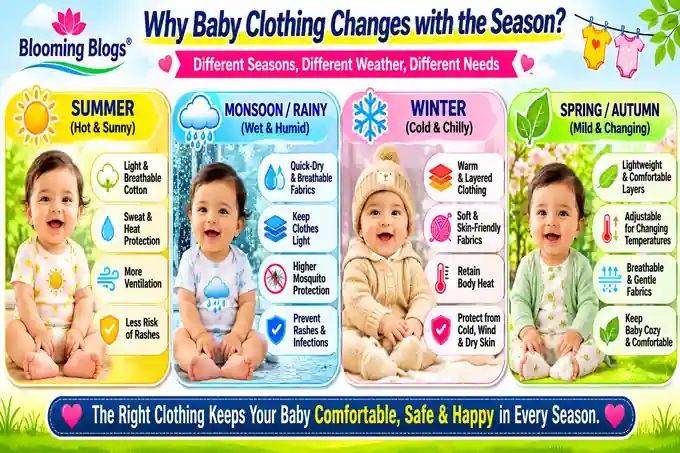
Why Dressing Babies During the Rainy Season Is Completely Different
Many parents assume that rainy-season dressing simply means adding an extra layer of clothing.
In reality, the rainy season creates a unique combination of challenges that babies experience differently from adults.
Unlike grown-ups, babies are still developing the ability to regulate their body temperature efficiently. Their skin is thinner, more sensitive, and more likely to react to prolonged dampness or excessive heat.
During the monsoon, four common factors affect your baby’s comfort every single day.
1. High Humidity
Humidity prevents sweat from evaporating quickly.
Instead of cooling the body naturally, moisture remains trapped against the skin, increasing the risk of:
- Heat rash
- Skin irritation
- Chafing
- Diaper-area discomfort
- General fussiness
Choosing breathable clothing becomes much more important than choosing fashionable designs.
2. Sudden Weather Changes
A bright sunny morning can quickly turn into a cool, rainy afternoon.
Your baby’s clothing should be easy to adjust without requiring a complete outfit change every few hours.
That’s why lightweight layering works much better than thick clothing.
3. Slower Laundry Drying
One of the biggest frustrations during the rainy season is laundry.
Even after washing clothes early in the morning, they may still feel damp by evening because high humidity slows the drying process.
Damp clothes don’t just feel uncomfortable—they can also develop unpleasant odors if not dried properly.
This is why parents often find themselves rotating a smaller collection of high-quality clothes rather than maintaining an oversized wardrobe.
4. Increased Mosquito Activity
Standing water after rainfall creates ideal breeding conditions for mosquitoes.
During evenings or outdoor walks, lightweight full-sleeve clothing and breathable full-length pants can provide an additional layer of protection without making your baby feel overheated.
The Rainy Season Triple Challenge
Instead of worrying about just one weather condition, parents are actually managing three different environmental challenges at the same time.
High Humidity
- Clothes dry slowly.
- Babies sweat more.
- Moisture remains trapped inside fabrics.
Frequent Rain
- Outdoor trips become unpredictable.
- Extra outfit changes become common.
- Damp clothes require immediate replacement.
Cooler Evenings
- Temperatures often drop after rainfall.
- Babies may need one additional breathable layer before bedtime.
Understanding these changing conditions makes it much easier to choose the right wardrobe instead of buying unnecessary clothing.
What Exactly Is a Seasonal Baby Clothing Capsule?
Imagine opening your baby’s wardrobe and finding that every single outfit is useful.
Imagine opening your baby’s wardrobe without finding tiny shirts that are already too small, heavy winter sweaters mixed with summer rompers, or forgotten outfits with their tags still attached. Instead, imagine a carefully planned collection of everyday essentials that work beautifully together. That is the idea behind a baby clothing capsule.
Rather than owning 40 or 50 outfits, a capsule wardrobe focuses on a smaller collection of versatile, high-quality clothing that meets your baby’s daily needs. Each piece serves a purpose, while comfortable designs make dressing easier. With carefully chosen essentials, you can mix and match outfits effortlessly.
For parents, this means:
- Faster morning routines
- Less laundry stress
- Better wardrobe organization
- Lower clothing expenses
- Less clutter
- Easier travel packing
- Smarter shopping decisions
Most importantly, it means your baby spends every day in clothing that’s designed for comfort—not just appearance.
And during the rainy season, that’s exactly what matters most.
Exactly How Many Rainy Season Outfits Does Your Baby Really Need?
If you’re expecting a magic number, here it is:
For most families, 25–35 carefully selected clothing pieces are enough to comfortably get through the rainy season.
That surprises many parents.
Why?
Because baby stores often make us believe we need dozens of adorable outfits. Tiny dresses, matching sets, fancy jackets, and seasonal collections can quickly fill an entire wardrobe.
The truth is much simpler.
Babies don’t need a large wardrobe.
They need a smart wardrobe.
During the rainy season, practicality always wins over quantity.
If you wash baby clothes every one to two days, a well-planned capsule wardrobe will keep your baby comfortable without overflowing drawers or endless piles of laundry.
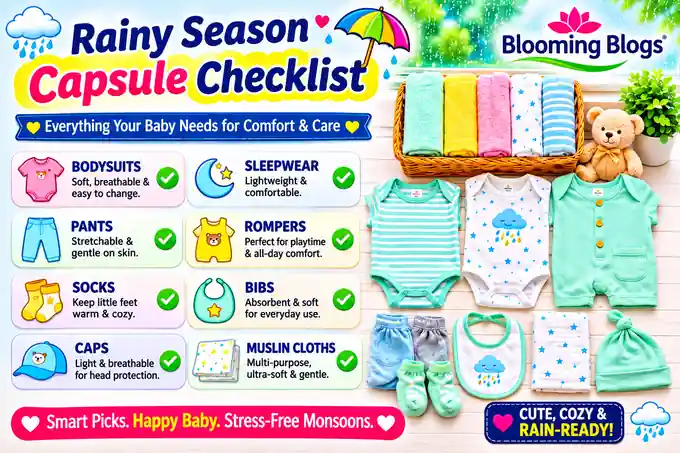
Your Complete Rainy Season Baby Capsule Checklist
Below is a practical checklist that works well for most babies during the monsoon.
| Clothing Item | Recommended Quantity | Why You Need It |
|---|---|---|
| Cotton Bodysuits | 8–10 | Everyday base layer |
| Sleepwear | 5–7 | Comfortable nighttime clothing |
| Leggings / Soft Pants | 5–6 | Protection from cool air and insects |
| Rompers | 4–6 | Easy daytime outfit |
| Lightweight Cardigans | 2 | For cooler evenings |
| Baby Caps | 2 | Mild protection outdoors |
| Socks | 6–8 Pairs | Keep feet dry and comfortable |
| Bibs | 8–10 | Handle drooling and feeding messes |
| Muslin Cloths | 8–12 | Burping, wiping, light blanket, stroller cover |
This collection is more than enough for most households and prevents unnecessary spending on clothes your baby may outgrow within a few months.
Why Buying More Clothes Isn’t Always Better
Many new parents believe a larger wardrobe means fewer worries.
Ironically, the opposite is often true.
Imagine opening a wardrobe packed with sixty tiny outfits.
Some no longer fit.
Some are still waiting to be worn.
Others have become damp because there isn’t enough air circulating between the clothes.
Finding today’s outfit suddenly becomes frustrating.
Now imagine opening a wardrobe where every item fits, every outfit matches, and every piece has a purpose.
That’s the beauty of a capsule wardrobe.
Instead of managing clothing, you spend more time enjoying your baby.
Rainy Season Clothing Needs by Baby’s Age
Every stage of your baby’s growth comes with slightly different clothing requirements.
Newborn (0–3 Months)
Newborns typically require the most outfit changes.
Milk spills, spit-ups, diaper leaks, and frequent sleeping mean clothes can become soiled several times each day.
Recommended Capsule
- 10 Bodysuits
- 6 Sleepsuits
- 5 Pants
- 2 Cardigans
- 8 Bibs
- 10 Muslin Cloths
- 6 Socks
Choose soft fabrics with envelope necklines and snap buttons to make dressing easier.
3–6 Months
At this stage, babies become more active.
They roll over, grab everything around them, and drool considerably more.
A practical wardrobe should include:
- 8 Everyday Outfits
- 5 Rompers
- 5 Pants
- 6 Bodysuits
- 6 Bibs
- 6 Socks
Stretchable fabrics allow greater freedom of movement while remaining comfortable.
6–12 Months
Now your little explorer is crawling, sitting, and discovering every corner of the house.
Expect more frequent outfit changes due to food, playtime, and floor exploration.
Suggested wardrobe:
- 10 Outfits
- 6 Leggings
- 5 Rompers
- 6 Sleepwear Sets
- 2 Cardigans
- 8 Bibs
Durable yet breathable clothing becomes especially valuable during this stage.
12–24 Months
Toddlers love puddles almost as much as they love saying “No.”
Whether they’re walking, climbing, or chasing after you, comfortable clothing is essential.
Recommended wardrobe:
- 10–12 Everyday Outfits
- 6 T-Shirts
- 5 Leggings
- 5 Pajamas
- 2 Lightweight Jackets
- 8 Socks
Choose clothing that’s easy to wash and dries quickly.
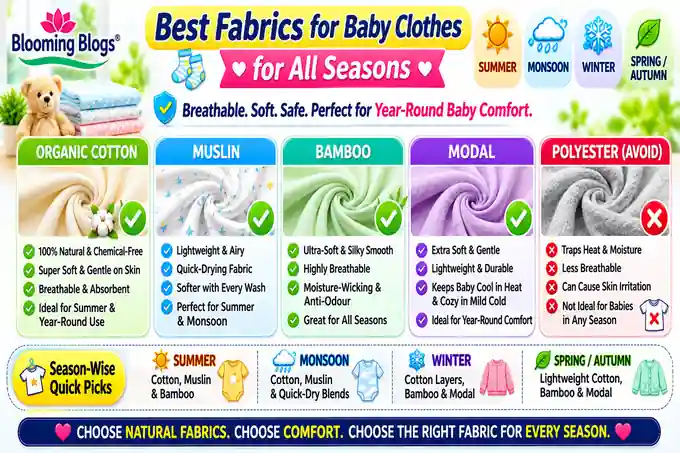
The Best Fabrics for Rainy Season Baby Clothes
When it comes to dressing babies during the rainy season, fabric matters far more than fashion.
A beautiful outfit that traps heat or takes two days to dry is unlikely to become a favorite.
Instead, choose fabrics that help your baby stay cool, dry, and comfortable.
Organic Cotton – The Everyday Hero
Organic cotton is one of the best choices for babies.
It is:
- Soft on delicate skin
- Highly breathable
- Comfortable throughout the day
- Durable enough for frequent washing
- Easy to layer
Its gentle feel makes it especially suitable for babies with sensitive skin.
Muslin – Lightweight and Quick Drying
Parents often fall in love with muslin because of its versatility.
Its loose weave allows better airflow and faster drying compared with many heavier fabrics.
Muslin cloths can also be used as:
- Burp cloths
- Nursing covers
- Light blankets
- Stroller covers
- Shoulder cloths
A few good-quality muslin cloths can replace several single-purpose baby products.
Bamboo Fabric – Soft and Moisture Friendly
Bamboo-blend clothing has become increasingly popular for babies.
Its silky texture, breathability, and moisture-wicking properties make it comfortable during humid weather.
Many parents appreciate how quickly bamboo garments dry compared to thicker materials.
Fabrics to Avoid During the Rainy Season
Not every fabric is suitable for humid weather.
The following materials are better reserved for colder months because they tend to trap heat, absorb moisture, and take much longer to dry:
- Thick fleece
- Heavy wool
- Velvet
- Heavy denim
- Thick polyester
- Plastic-lined clothing
If clothes stay damp for long periods, they may develop unpleasant odors and become uncomfortable for babies with sensitive skin.
Choosing breathable, lightweight fabrics keeps your baby cooler, allows better airflow, and makes laundry much easier during the rainy season.
Quality Always Beats Quantity
When shopping for baby clothes, it can be tempting to fill your cart with every adorable outfit you see.
Tiny shoes.
Matching hats.
Mini jackets.
Everything looks irresistible.
But ask experienced parents which clothes their baby wore the most, and you’ll often hear the same answer:
“The simple cotton outfits.”
Those are the clothes that:
- Fit comfortably
- Wash easily
- Dry quickly
- Feel soft all day
- Match almost everything
A capsule wardrobe isn’t about owning fewer clothes just for the sake of minimalism.
It’s about owning the right clothes.
High-quality essentials save time, reduce laundry stress, simplify travel, and make everyday parenting easier.
Most importantly, they keep your baby comfortable through every rainy day.
Dressing Your Baby Comfortably Throughout a Rainy Day
No two rainy days are exactly alike.
One morning may begin with bright sunshine, followed by a humid afternoon and a cool, breezy evening after a heavy shower.
As parents, it’s natural to wonder whether your baby is wearing too many layers or not enough.
The secret isn’t dressing your baby in thick clothing—it’s dressing them in smart layers that can be added or removed as the weather changes.
Think of your baby’s outfit as something flexible rather than fixed.
A breathable cotton bodysuit in the morning may be perfect on its own. By evening, adding a lightweight cardigan may be all that’s needed.
This simple approach keeps your baby comfortable without unnecessary outfit changes.
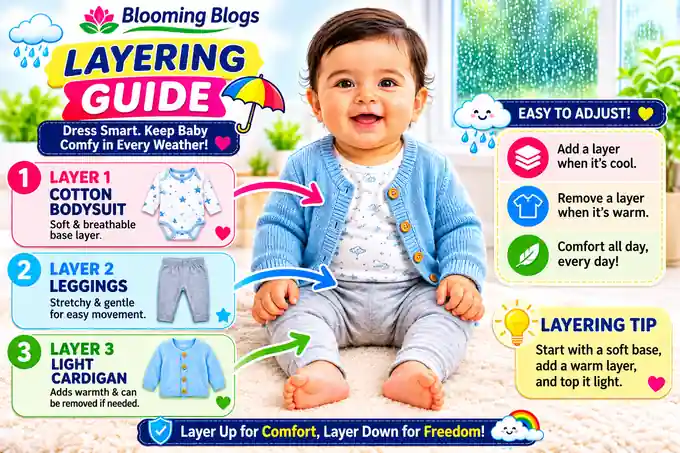
The Simple Three-Layer Formula
Parents often think rainy weather means heavy clothes.
In reality, humidity makes breathable layers much more effective than thick garments.
Layer 1 – Soft Cotton Bodysuit
This is the layer that stays closest to your baby’s skin.
Choose:
- Organic cotton
- Muslin cotton
- Bamboo blend
A breathable base layer absorbs moisture while allowing air to circulate freely.
Layer 2 – Comfortable Leggings or Soft Pants
Lightweight leggings protect delicate legs from:
- Cool breezes
- Mosquito bites
- Floor dust while crawling
Choose stretchable fabrics that allow your baby to move freely.
Layer 3 – Lightweight Cardigan
Keep a soft cardigan nearby instead of dressing your baby in a heavy sweater.
It’s useful when:
- Rain suddenly cools the room
- Air conditioning is running
- You’re heading outdoors
- Evening temperatures begin to drop
The biggest advantage?
It can be removed within seconds if your baby starts feeling warm.
How Do You Know If Your Baby Is Comfortable?
Many parents instinctively check their baby’s hands or feet.
Surprisingly, these aren’t always the best indicators.
Because babies have developing circulation, their hands and feet often feel cooler than the rest of their body.
Instead, gently place your hand on:
- The back of the neck
- The upper chest
If the skin feels:
- Warm and dry — Your baby is comfortable.
- Hot and sweaty — Remove one layer.
- Cool to the touch — Add one lightweight layer.
This simple habit can help prevent both overheating and unnecessary chilling.
A Typical Rainy-Day Clothing Routine
Morning
Dress your baby in a breathable cotton bodysuit with lightweight pants.
This is usually enough for a warm, humid morning.
Afternoon
As humidity increases, avoid adding unnecessary layers.
Your baby is likely to be more comfortable in lightweight, breathable clothing.
Evening
Rain often brings cooler air and increased mosquito activity.
Switch to:
- Lightweight full-sleeve clothing
- Soft full-length pants
This provides gentle protection without trapping excess heat.
Bedtime
Choose comfortable nightwear such as:
- Cotton sleepwear
- Bamboo sleepwear
- Lightweight footed sleepers if the room feels cool
Avoid overdressing your baby while sleeping.
A comfortable baby usually sleeps better.
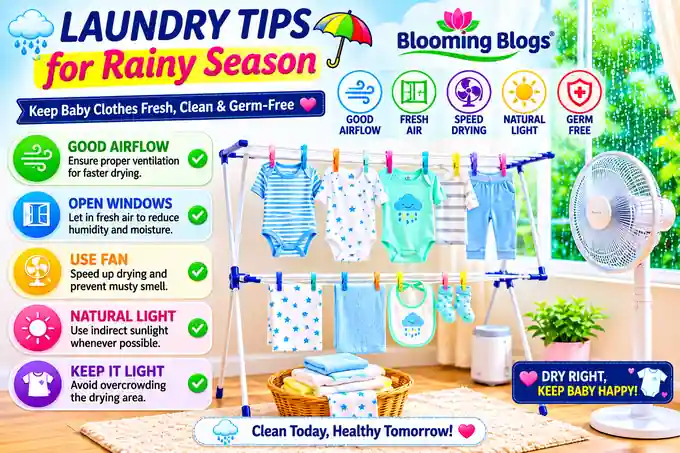
The Rainy Season Laundry Challenge
Almost every parent experiences the same problem during the monsoon.
You wash your baby’s clothes in the morning.
By evening, they still don’t feel completely dry.
You touch them.
They don’t seem wet.
But they don’t feel fresh either.
That “almost dry” stage is one of the biggest challenges of rainy-season laundry.
Humidity slows evaporation, allowing moisture to remain trapped deep within fabric fibres.
Although clothes may look dry, hidden moisture can leave them feeling cool, encourage unpleasant odours, and make them uncomfortable for babies with sensitive skin.
Smart Laundry Tips Every Parent Should Follow
Wash Smaller Loads More Frequently
Instead of waiting for a full basket, wash baby clothes every one or two days.
Smaller loads:
- Dry faster
- Stay fresher
- Reduce wardrobe shortages
- Make laundry more manageable
Never Leave Soiled Clothes Overnight
Milk spills, food stains, and diaper leaks combined with humid weather can create conditions where odour-causing microbes multiply more easily.
Rinse or wash soiled garments as soon as possible.
Dry Clothes Completely
Never store clothes that still feel damp.
If natural sunlight is limited:
- Dry clothes near an open window.
- Use a ceiling or pedestal fan.
- Leave enough space between garments for airflow.
Patience during drying can prevent musty-smelling clothes later.
Improve Air Circulation
Indoor drying works much better when air is moving.
Simple habits include:
- Opening windows when weather allows
- Running a fan nearby
- Avoiding overcrowded drying racks
Good airflow is often more effective than heat alone.
Why Ironing Baby Clothes During the Rainy Season Can Be Helpful
Many parents—and especially grandparents—have long recommended ironing baby clothes during the monsoon.
There’s practical value behind this advice.
After clothes are fully dry, ironing can:
- Remove traces of residual moisture.
- Leave fabrics feeling crisp and fresh.
- Help reduce wrinkles where dampness can linger.
- Make clothes more comfortable to wear.
It’s particularly useful for:
- Bodysuits
- Sleepwear
- Bibs
- Muslin cloths
- Cotton rompers
Always check the garment’s care label and use the recommended heat setting.
Important: Ironing should only be done after clothes are completely dry. It complements proper washing and drying—it doesn’t replace them.
Should You Use a Laundry Sanitizer?
The rainy season creates ideal conditions for lingering moisture and unpleasant odours.
Some parents choose to use a baby-safe laundry sanitizer or fabric disinfectant formulated for clothing, especially during long periods of humid weather.
If you decide to use one:
- Select a product suitable for baby clothes.
- Follow the manufacturer’s instructions carefully.
- Use only the recommended amount.
- Rinse garments as directed by the product.
- Ensure clothes are completely dry before your baby wears them.
For babies with eczema, allergies, or particularly sensitive skin, consult your pediatrician before introducing any new laundry product.
Storing Baby Clothes the Right Way
Freshly washed clothes can quickly lose their freshness if stored in a damp wardrobe.
A few simple habits make a noticeable difference.
- Store only completely dry clothes.
- Fold clothes loosely instead of packing drawers tightly.
- Keep wardrobes clean and well ventilated.
- Wipe wardrobe shelves regularly during the rainy season.
- Avoid storing baby clothes in sealed plastic bags for long periods, as trapped moisture may encourage musty odours.
A fresh wardrobe helps keep your baby’s clothes ready to wear at any time.
Small Habits That Make a Big Difference
Experienced parents often say it’s not expensive products that make parenting easier—it’s good routines.
Try keeping:
- One spare outfit in your diaper bag.
- Two clean bibs near the feeding area.
- Several muslin cloths within easy reach.
- A lightweight cardigan beside your baby’s sleeping area.
When unexpected spills, rain showers, or cooler evenings arrive, you’ll be prepared without any last-minute stress.
Sometimes, the simplest habits make the biggest difference.
Rainy Season Travel: Pack Smart, Not Heavy
If you’ve ever packed for a weekend trip with a baby, you know how quickly a small diaper bag can turn into two overflowing bags.
Many parents pack for every possible situation, only to return home with half the clothes untouched.
The rainy season makes packing even more challenging.
A bright, sunny morning can suddenly become a rainy afternoon. A spilled bottle, an unexpected diaper leak, or a playful splash in a puddle may mean changing your baby’s clothes sooner than planned.
The good news is that a capsule wardrobe makes traveling much easier.
Instead of carrying many outfits “just in case,” you carry versatile essentials that can be mixed and matched throughout your trip.
A little planning saves space, reduces luggage, and gives you peace of mind.
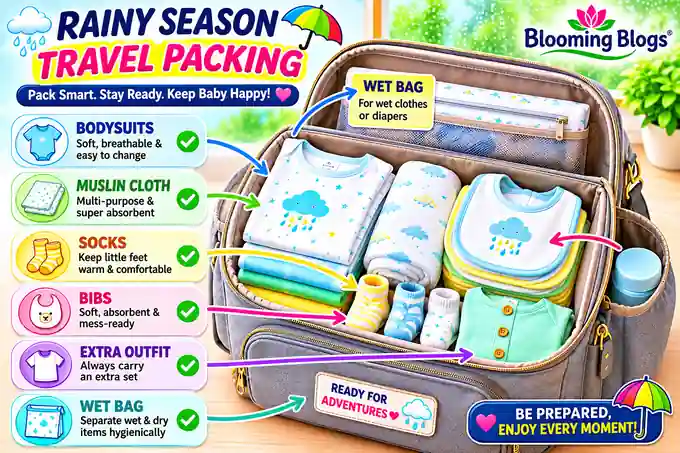
Rainy Season Baby Travel Packing Checklist
For a one- or two-day trip, this simple checklist is usually all you need.
Clothing
- 3 Everyday outfits
- 2 Cotton bodysuits
- 2 Sleepwear sets
- 2 Soft leggings or pants
- 1 Lightweight cardigan
- 4 Bibs
- 4 Muslin cloths
- 3 Pairs of socks
Baby Care Essentials
- Diapers
- Baby wipes
- Changing mat
- Wet bag for soiled clothes
- Soft towel
- Baby-safe laundry bag
- Hand sanitizer for parents
- Extra reusable storage pouch
A helpful packing tip is to roll clothes instead of folding them. Rolled clothes take up less space and are easier to organize inside the diaper bag.
How to Organize Your Baby’s Capsule Wardrobe
A well-organized wardrobe doesn’t just look tidy—it saves valuable time every single day.
Imagine trying to find one clean pair of baby socks while your little one is crying during a diaper change.
The fewer minutes you spend searching, the more time you spend caring for your baby.
Rather than organizing clothes by colour, organize them by purpose.
This simple system makes everyday dressing faster and helps you immediately see which essentials need washing or replacing.
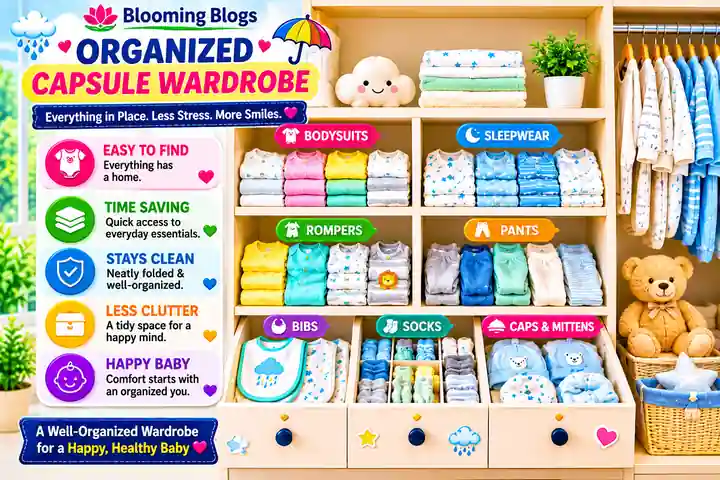
A Simple Drawer Organization System
1. Drawer 1
- Cotton bodysuits
- Everyday tops
2. Drawer 2
- Leggings
- Pants
- Shorts
3. Drawer 3
- Sleepwear
- Rompers
Small Storage Box
- Socks
- Bibs
- Caps
- Mittens
Separate Basket
- Muslin cloths
- Burp cloths
- Receiving blankets
This organization method allows you to locate what you need in seconds—even during busy mornings.
The One-In, One-Out Rule
Babies grow surprisingly fast.
One month an outfit fits perfectly.
The next month it’s already too small.
Instead of allowing wardrobes to become overcrowded, follow one simple rule:
Whenever you buy one new outfit, remove one that no longer fits.
You can:
- Donate it.
- Pass it on to family or friends.
- Keep one or two special outfits as keepsakes.
This habit prevents clutter while making room for clothes your baby can actually wear.
Common Shopping Mistakes Parents Make
Shopping for baby clothes is exciting.
Tiny shoes.
Mini jackets.
Matching hats.
Beautiful rompers.
Everything looks adorable.
But experienced parents often say the same thing:
“Our baby wore the comfortable cotton outfits far more than the fancy ones.”
Keeping that in mind can save both money and wardrobe space.
Buying Too Many Newborn Clothes
Babies grow much faster than most first-time parents expect.
Instead of buying dozens of newborn outfits, purchase enough essentials and add more only if needed.
This prevents spending money on clothes that may only fit for a few weeks.
Choosing Style Over Comfort
Special occasion outfits certainly have their place.
However, for everyday wear, comfort should always come first.
Look for clothing with:
- Soft seams
- Easy snap buttons
- Stretchable waistbands
- Breathable fabrics
A comfortable baby is usually a happier baby.
Ignoring Fabric Quality
Rainy-season clothes are washed frequently.
Lower-quality fabrics may lose their softness, shrink, or fade after repeated washing.
Choosing durable fabrics helps clothes last longer while remaining gentle on your baby’s delicate skin.
Buying Clothes That Don’t Match
One of the biggest strengths of a capsule wardrobe is versatility.
Choose a simple colour palette such as:
- White
- Beige
- Mint Green
- Sky Blue
- Soft Peach
- Light Grey
Almost every top will match every bottom, making outfit selection quick and effortless.
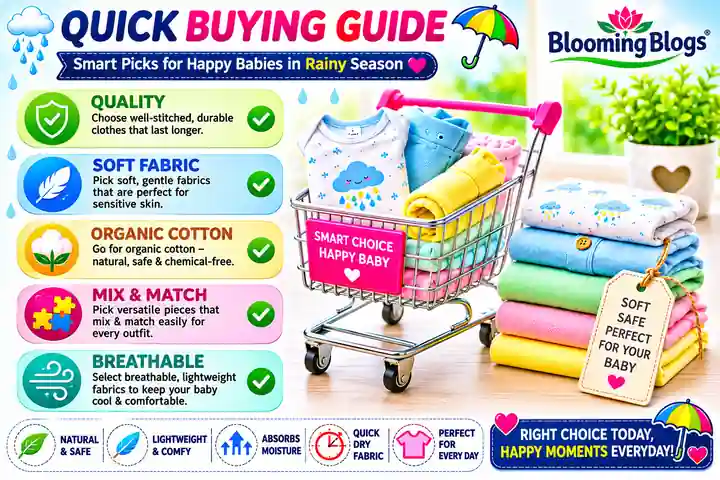
Quality Always Costs Less in the Long Run
At first glance, buying cheaper clothes may seem like a way to save money.
But after several washes, low-quality fabrics often lose their softness, stretch out of shape, or begin to fade.
A premium cotton bodysuit that lasts through dozens of washes is often a much better investment than several inexpensive outfits that need replacing quickly.
When Shopping, Look For:
- Breathable fabrics
- Reinforced stitching
- Comfortable neck openings
- Easy diaper access
- Durable snap buttons
- Colourfast fabrics
- Soft elastic waistbands
Think of each purchase as an investment in your baby’s comfort rather than simply adding another outfit to the wardrobe.
Building a Capsule Wardrobe on a Budget
Creating a practical wardrobe doesn’t have to be expensive.
Many experienced parents save money by following a few simple strategies.
- Buy multi-packs of bodysuits and socks.
- Shop during end-of-season sales.
- Compare fabric quality rather than brand names.
- Accept gently used clothes from trusted family members.
- Make a shopping list before visiting stores.
- Avoid impulse purchases because something looks cute.
Planning ahead almost always saves money.
A Capsule Wardrobe Is Also Better for the Environment
Babies outgrow clothes quickly.
Buying only what your child truly needs helps reduce unnecessary waste.
A capsule wardrobe encourages thoughtful shopping.
Instead of filling wardrobes with rarely used outfits, you focus on clothing that will actually be worn.
When your baby outgrows their clothes, consider:
- Donating garments in good condition.
- Passing clothes on to younger siblings.
- Sharing with relatives or friends.
- Repurposing worn cotton clothes as cleaning cloths or burp cloths.
Small choices today can make a meaningful difference over time.
A Small Wardrobe Can Create Bigger Memories
Years from now, your child probably won’t remember how many outfits they owned.
What they’ll remember are the cuddles during rainy afternoons, bedtime stories, first smiles, first steps, and warm moments spent with family.
A capsule wardrobe gives parents something far more valuable than extra clothes.
It gives:
- Less clutter
- Less laundry stress
- Faster mornings
- Smarter shopping
- More family time
Sometimes, owning a little less helps you enjoy a little more.
Expert Tips That Make Rainy-Season Parenting Easier
Parenting during the rainy season isn’t about having the biggest wardrobe—it’s about building small habits that make everyday life easier.
Many experienced parents will tell you that it’s not the expensive products that save the day. It’s the simple routines you follow consistently.
The little things—keeping a spare outfit nearby, checking tomorrow’s weather before bedtime, or organizing clothes by category—can make rainy-season parenting far less stressful.
Here are some practical tips that can make a noticeable difference.
✔ Always Keep One Extra Outfit Ready
Whether you’re visiting grandparents, heading to the pediatrician, or simply going grocery shopping, always keep one complete change of clothes in your diaper bag.
Include:
- One cotton bodysuit
- One pair of leggings
- One bib
- One pair of socks
- One muslin cloth
Unexpected spills and diaper leaks are part of parenting, and being prepared means less stress for everyone.
✔ Check the Weather Before Dressing Your Baby
Rainy-season weather can change within minutes.
Before dressing your baby, consider:
- Temperature
- Humidity
- Chance of rain
- Wind conditions
- Whether you’ll be indoors or outdoors
This helps you choose clothing that’s appropriate for the entire day rather than just the morning.
✔ Keep a Rainy-Day Essentials Basket
Create a small basket near your baby’s changing station containing:
- Clean muslin cloths
- Fresh bibs
- Cotton bodysuits
- Lightweight cardigan
- Socks
- Soft towel
Having these essentials within arm’s reach makes outfit changes much quicker.
✔ Rotate Clothes Every Week
Many parents unknowingly use the same favorite outfits repeatedly while other clothes remain untouched.
Rotate your baby’s wardrobe regularly so that every item gets used before your child outgrows it.
✔ Inspect Clothes Before Dressing Your Baby
Before putting clothes on your baby, quickly check for:
- Loose buttons
- Broken snap fasteners
- Rough seams
- Loose threads
- Stretched elastic
These quick checks improve comfort and help clothing last longer.
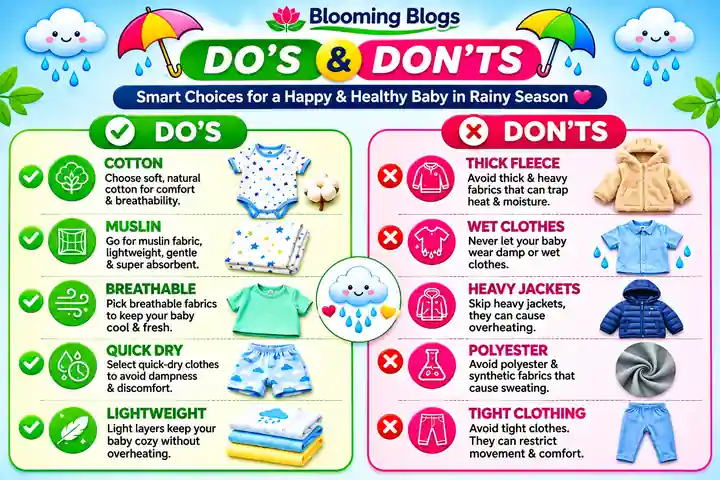
Rainy Season Baby Clothing Do’s and Don’ts
Choosing the right clothing during the rainy season doesn’t have to be complicated.
Keeping a few simple do’s and don’ts in mind can help your baby stay comfortable throughout the day.
✅ DO
- Choose breathable cotton, muslin, or bamboo fabrics.
- Dress your baby in lightweight layers.
- Change wet or damp clothes promptly.
- Wash baby clothes with a mild baby detergent.
- Dry clothes completely before storing them.
- Iron garments (where suitable) after they are fully dry if you prefer an extra level of freshness during humid weather.
- Keep wardrobes clean and well ventilated.
- Carry one extra outfit whenever you leave home.
❌ DON’T
- Dress your baby in thick fleece during humid weather.
- Store clothes that still feel damp.
- Overdress your baby indoors.
- Choose rough fabrics for everyday use.
- Overfill wardrobe shelves and drawers.
- Ignore signs that your baby is feeling too hot or too cold.
Simple habits often have the biggest impact.
Common Myths About Dressing Babies During the Rainy Season
Every family has heard different advice from relatives, neighbors, or friends.
Some tips have stood the test of time.
Others are simply myths.
Let’s separate fact from fiction.
Myth 1: Babies Should Wear Thick Clothes Whenever It Rains
Reality
Rain doesn’t always mean cold weather.
Humidity can make babies feel warmer than expected.
Breathable layers usually work much better than thick winter clothing.
Myth 2: More Layers Mean Better Protection
Reality
Too many layers can trap heat and moisture.
Instead of helping, they may make your baby uncomfortable.
Dress according to the weather—not just the season.
Myth 3: Slightly Damp Clothes Are Safe to Wear
Reality
Clothes should always be completely dry before your baby wears them.
Even if the outside feels dry, moisture can remain trapped inside thicker fabrics.
Myth 4: Babies Need a New Outfit Every Day
Reality
Babies need clean clothes—not endless clothes.
A carefully planned capsule wardrobe provides enough variety while reducing clutter and unnecessary spending.
Quick Rainy Season Baby Clothing Checklist
Before the rainy season begins, make sure you have these essentials ready.
- 8–10 Cotton Bodysuits
- 5–7 Sleepwear Sets
- 5–6 Soft Pants or Leggings
- 4–6 Rompers
- 2 Lightweight Cardigans
- 6–8 Pairs of Socks
- 8–10 Bibs
- 8–12 Muslin Cloths
- 2 Baby Caps
- Mild Baby Laundry Detergent
- Baby-Safe Laundry Sanitizer (optional and suitable for your baby’s needs)
- Indoor Drying Rack
- Good Airflow or Fan
- Iron Suitable for Cotton Garments
Keeping this checklist handy makes seasonal shopping much easier.
Frequently Asked Questions
How many outfits does a baby need during the rainy season?
Most babies only need around 25–35 carefully selected clothing pieces if laundry is done every one to two days. This usually includes bodysuits, sleepwear, rompers, leggings, bibs, socks, and muslin cloths.
Which fabric is best for rainy-season baby clothes?
Organic cotton, muslin, and bamboo-blend fabrics are among the best choices because they are breathable, soft, comfortable, and generally dry faster than heavier materials.
Should babies wear full sleeves during the rainy season?
Lightweight full-sleeve clothing can be useful during cooler evenings and when mosquitoes become more active. Choose breathable fabrics to avoid overheating.
Is it safe to iron baby clothes?
Yes. If the care label permits, ironing fully dried baby clothes can help remove residual moisture, smooth wrinkles, and leave garments feeling fresh. Always use the correct heat setting for the fabric.
Can I use a laundry sanitizer for baby clothes?
Some parents choose a baby-safe laundry sanitizer during prolonged humid weather. Follow the manufacturer’s instructions carefully, and ensure clothes are thoroughly rinsed (if required) and completely dry before use.
How often should baby clothes be washed during the rainy season?
Baby clothes should generally be washed after each use or whenever they become soiled. Regular washing helps keep clothes fresh and comfortable during humid weather.
How do I stop baby clothes from smelling musty?
Wash clothes promptly, dry them completely, provide good airflow while drying, avoid overcrowding the drying rack, and store garments only after they are fully dry.
Can a capsule wardrobe really save money?
Yes.
Buying fewer, high-quality essentials often reduces unnecessary purchases, simplifies daily routines, and helps parents avoid buying clothes that may never be worn.
Related Articles You May Like
To improve your parenting knowledge, you may also enjoy these helpful guides:
- Complete Newborn Baby Essentials Checklist
- How to Wash Baby Clothes Safely
- Choosing the Best Fabric for Baby Clothes
- Baby Skin Care During the Rainy Season
- Hospital Bag Checklist for New Parents
- Baby Clothing Size Guide by Age
- Monsoon Baby Care Tips
- Essential Baby Travel Checklist
Final Thoughts: A Small Wardrobe Can Make Parenting Much Easier
Every parent wants the same thing—a happy, healthy, and comfortable baby.
During the rainy season, achieving that doesn’t require an overflowing wardrobe or expensive designer outfits.
What truly matters is choosing clothes that are soft, breathable, easy to care for, and suitable for changing weather conditions.
A thoughtfully planned capsule wardrobe helps you focus on quality instead of quantity, comfort instead of clutter, and smart planning instead of last-minute stress.
Instead of spending time searching through crowded drawers or worrying about whether yesterday’s clothes are dry enough to wear, you’ll have a collection of reliable essentials that work together beautifully.
You’ll spend less time doing laundry, less money buying unnecessary clothes, and more time enjoying the precious moments that matter most.
Whether it’s your baby’s first smile during a rainy afternoon, their first crawl across the living room floor, or a peaceful nap wrapped in soft cotton clothing, those are the memories you’ll treasure—not the number of outfits hanging in the wardrobe.
A capsule wardrobe doesn’t just simplify dressing your baby.
It simplifies parenting.
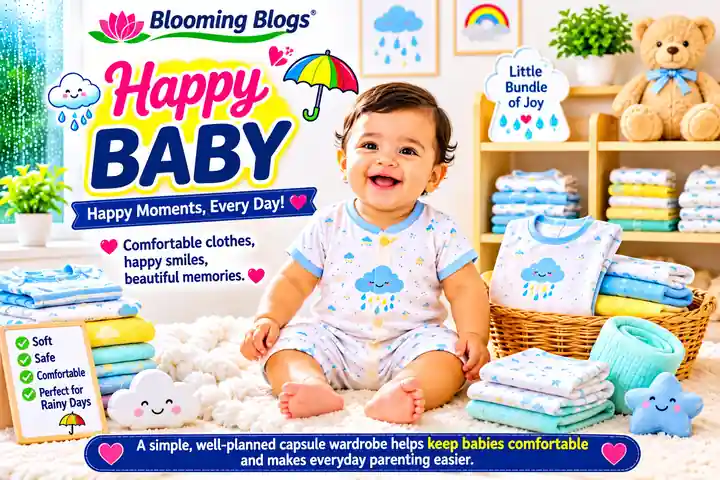
A thoughtfully planned rainy-season capsule wardrobe keeps babies comfortable while making everyday parenting simpler.
Key Takeaways
If you remember only a few things from this guide, let them be these:
1. A capsule wardrobe focuses on quality, comfort, and versatility rather than owning excessive clothes.
2. Around 25–35 carefully selected clothing pieces are enough for most babies during the rainy season when laundry is done every one to two days.
3. Organic cotton, muslin, and bamboo-blend fabrics are excellent choices because they are breathable, soft, and comfortable in humid weather.
4. Dress your baby in lightweight layers that can be adjusted as temperatures change throughout the day.
5. Never dress your baby in clothes that still feel damp. Wash garments promptly, dry them thoroughly, and store them only when they are completely dry.
6. During prolonged humid weather, some parents choose to use a baby-safe laundry sanitizer designed for clothing. Always follow the manufacturer’s instructions and ensure garments are ready to wear before dressing your baby.
7. If appropriate for the fabric, ironing fully dried baby clothes can help remove traces of residual moisture and leave garments feeling fresh.
8. Organizing clothes by category saves time and reduces wardrobe clutter.
9. Investing in fewer, high-quality garments often provides better value than buying many inexpensive outfits.
Quick Rainy Season Capsule Wardrobe Summary
| Clothing Item | Recommended Quantity |
|---|---|
| Cotton Bodysuits | 8–10 |
| Everyday Outfits | 7–10 |
| Rompers | 4–6 |
| Sleepwear | 5–7 |
| Soft Pants / Leggings | 5–6 |
| Lightweight Cardigans | 2 |
| Socks | 6–8 Pairs |
| Bibs | 8–10 |
| Muslin Cloths | 8–12 |
| Baby Caps | 2 |
This simple checklist can be saved, printed, or used as a shopping guide before the rainy season begins.
Why More Parents Are Choosing Capsule Wardrobes
A capsule wardrobe is more than a trend.
It’s a practical approach to modern parenting.
Instead of opening an overcrowded wardrobe every morning, you’ll know that every outfit fits well, matches easily, and is suitable for the season.
Parents who adopt this approach often find that they:
- Spend less time choosing outfits.
- Reduce rainy-season laundry stress.
- Save money by avoiding unnecessary purchases.
- Keep wardrobes neat and organized.
- Pack more efficiently for family trips.
- Focus more on family time and less on household chores.
Sometimes, simplifying your baby’s wardrobe also simplifies your day.
Gentle Reminder
Every baby is unique.
Some babies feel warm more easily, while others may need an extra layer during cooler evenings.
Use this guide as a practical starting point, but always observe your baby’s comfort.
If your baby has eczema, allergies, recurring skin irritation, or any medical condition that affects clothing choices or skin care, consult your pediatrician for personalized advice.
Your Baby Deserves Comfort in Every Season
If you found this guide helpful, consider sharing it with family members, new parents, or friends who are preparing for their baby’s first rainy season.
A thoughtful recommendation today may help another family save time, reduce stress, and make smarter choices for their little one.
Don’t forget to bookmark this guide so you can revisit it whenever the rainy season returns or your baby moves into the next stage of growth.
Thank you for reading, and we wish you and your little one a happy, healthy, and comfortable rainy season!
Editorial Note: This article is intended for general informational purposes and does not replace personalized medical advice. If your baby has persistent skin irritation, eczema, fever, or any other health concerns, consult a qualified pediatrician or healthcare professional.
Disclaimer & Medical Safety Notice:
Medical Disclaimer: This article provides general information about baby clothing, fabrics, layering and seasonal wardrobe care; it is not a substitute for professional medical advice. Consult your paediatrician if your baby develops skin irritation, overheating, unusual discomfort or other health concerns.
External Authoritative References & Citations
The following trusted medical and child-care resources support the recommendations in this article on baby rainy season outfits, breathable fabrics, comfortable layering, clothing selection and preventing overheating.
1. NHS – How to Dress a Newborn Baby
Explains how to choose comfortable baby clothing, use lightweight cotton in warm weather and adjust clothing according to temperature.
Read NHS guidance on dressing a newborn.
2. American Academy of Pediatrics (AAP) – Tips for Dressing Your Baby
Provides practical guidance on dressing babies in different weather conditions and choosing appropriate clothing layers.
Read AAP baby clothing recommendations.
3. American Academy of Pediatrics (AAP) – Safe Infant Sleeping Environment
Explains the importance of avoiding excessive clothing and overheating, including signs such as sweating, flushed skin and a hot chest.
Read AAP infant safety recommendations.
4. Raising Children Network – How to Dress a Baby and Choose Baby Clothes
Covers baby clothing sizes, fabric selection, comfort, easy-care clothing and why parents should avoid purchasing excessive quantities.
Read baby clothing and fabric guidance.
5. Canadian Paediatric Society – Your Baby’s Skin
Explains clothing-related skin irritation, contact dermatitis, heat rash and the benefits of loose-fitting cotton clothing.
Read baby skin-care guidance.
6. Health Canada – Dressing Your Baby for Sleep
Provides safety recommendations about appropriate sleepwear, room temperature and preventing overheating.
Read Health Canada safe-sleep clothing guidance.
7. Hong Kong Department of Health – Common Skin Problems in Infants
Offers guidance on infant skin care, comfortable clothing and choosing fabrics suitable for sensitive baby skin.
Read infant skin-care guidance.
Editorial Note: The suggested rainy-season wardrobe quantities (approximately 25–35 clothing pieces) are practical planning estimates, not medically prescribed requirements. Actual needs depend on the baby’s age, growth, laundry frequency, climate and individual circumstances.
Blooming Blogs recommends consulting qualified healthcare professionals for individual concerns about infant skin health, overheating or clothing-related irritation.
🔗 Related Articles
If you are preparing for a newborn, these helpful Blooming Blogs guides can help you plan, prepare, and care for your baby with greater confidence:
- 1. Best Infant Formula for Newborns: Types, Choices & Safety Guide
- 2. Newborn Baby Essentials Checklist for Soon-to-Be Parents
- 3. How to Prepare Formula Milk for a Newborn Baby
- 4. Newborn Baby Care: Complete Guide for New Parents
- 5. Formula Mixing & Bottle Ratio Calculator
- 6. Hospital Bag for Delivery: Complete Checklist for Mom and Baby
- 7. The Ultimate Pregnancy Hospital Bag & Registry Checklist: Your Stress-Free Delivery Guide
- 8. Hospital Bag Checklist Tool
- 9. Rompers for Newborn: Ultimate Guide to Safe Baby Clothes
- 10. Onesies and Rompers: How to Dress Your Newborn Right
- 11. Baby Onesies Buying Guide: Best Soft Outfits for Newborns
🛠️ Try Our Free Interactive Baby Care Tools
Planning your nursery or setting up daily routines? Check out these handy calculators designed to simplify baby care:
🌱 Continue Exploring…
Whether you’re nurturing a newborn, curating a sanctuary for your home and garden, or simply looking to level up your day-to-day life, there’s always a new perspective waiting to be discovered. From practical everyday parenting guidance, women’s wellness information, ideas to make your home more beautiful, tips for caring for pets and plants, or inspiration for your spiritual journey, Blooming Blogs brings useful knowledge together in one place.
Blooming Blogs — knowledge that blooms.
🌸 Blooming Blogs Promise
We’re here to bring you thoughtful, reliable, and helpful insights you can truly count on. Every article on Blooming Blogs is thoroughly researched, crafted with care, and written with genuine empathy to support you in your everyday journey. Your trust means everything to us, and we are dedicated to sharing content that informs, inspires, and makes your life a little easier.
📰 Editorial Notes
Our team strives for clarity, accuracy, and depth in every piece we publish. Content is periodically updated to ensure facts, recommendations, and guides stay relevant over time. While we consult trusted sources and expert research, our goal is always to present complex topics in a simple, practical, and conversational way that works for real life.
⚠️ Disclaimer
The content provided on Blooming Blogs is for informational and educational purposes only and should not be considered professional medical, legal, or financial advice. Always consult with a qualified expert or licensed professional before making decisions related to your health, family, or personal finances. Blooming Blogs is not liable for any actions taken based on the information provided on this website. (For full details, please visit our Disclaimer Policy Page).
💬 Share Your Experience — Leave a Comment
We’d love to hear from you! Did this article help you, or do you have a personal tip or story to share with our community? Drop your thoughts, questions, or feedback in the comment section below. Every voice enriches our community, and we read every single comment!