
Introduction
Newborn Baby Essentials — Bringing a newborn home is one of life’s most beautiful milestones—and, for many parents, one of its most overwhelming. The moment that positive pregnancy test appears, excitement quickly mixes with a flood of advice, shopping lists, and advertisements. Suddenly, every brand seems convinced that its high-tech swing, automated bottle maker, or designer nursery set is absolutely essential for your baby’s happiness and development.
Preparing for a new baby is exciting, but it can also feel confusing. A quick online search reveals hundreds of newborn checklists, each recommending different products. Some suggest buying more than 100 items before your due date, while others insist you need only a handful. The real challenge isn’t finding baby products—it’s knowing which ones are genuinely essential and which are simply nice to have.
If you’re expecting your first child, it’s perfectly normal to have questions. Do you really need dozens of tiny outfits? Is an expensive video baby monitor worth the investment? How many diapers should you buy before your baby is born? Should you purchase every baby gadget before delivery, or can some items wait?
The reassuring news is that newborns have surprisingly simple needs. They don’t care about luxury nursery decor, trendy baby gear, or matching furniture. What they truly need is a safe place to sleep, regular feeding, clean diapers, comfortable clothing, gentle hygiene products, basic healthcare essentials, and, above all, loving and responsive care. Focusing on these priorities will help you avoid unnecessary spending while creating a safe, practical, and welcoming environment for your little one.
This comprehensive guide has been created to simplify the process. Instead of overwhelming you with endless product recommendations, we’ll walk you through every important category of newborn baby essentials—from safe sleep and feeding to diapering, bath time, health, travel, nursery setup, and your hospital bag. Along the way, you’ll find practical shopping advice, money-saving tips, expert recommendations, and common mistakes to avoid so you can make informed decisions with confidence.
Whether you’re creating your very first baby shopping list, preparing for your baby shower, or checking that you’ve packed everything before heading to the hospital, this guide will help you focus on what truly matters.
By the end of this article, you’ll have a clear, practical Newborn Essentials Checklist 2027, understand what to buy before your baby’s arrival, know which purchases can wait until later, and feel confident creating a checklist that fits your family’s lifestyle, home, and budget
This comprehensive guide has been created to simplify the process. Instead of overwhelming you with endless product recommendations, we’ll walk through the most useful categories of newborn baby essentials—from safe sleep and feeding to diapering, bath time, health, travel, nursery setup, and your hospital bag. You’ll also find practical shopping advice, money-saving tips, common mistakes to avoid, and a printable checklist.
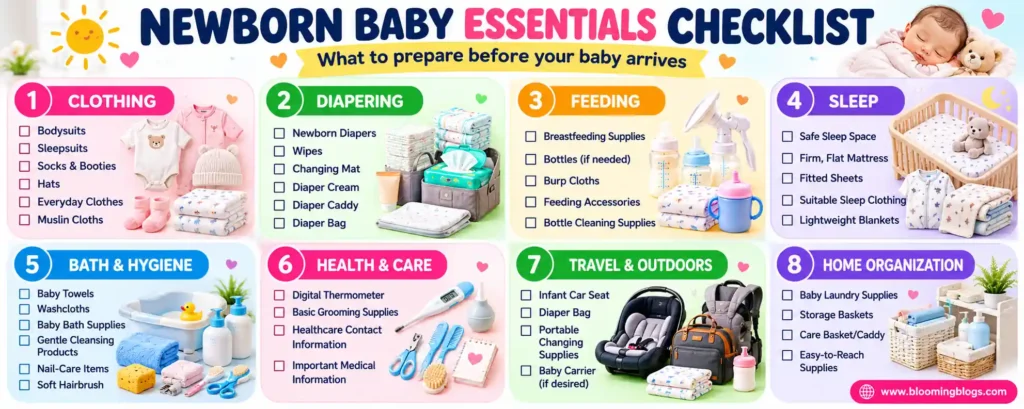
Complete Newborn Baby Essentials Checklist
If you are preparing for your baby’s arrival, this quick newborn baby essentials checklist gives you a practical starting point. You do not need to purchase everything at once. Start with the items your baby is most likely to need immediately, then add optional products later as your family’s needs become clearer.
1. Safe Sleep and Nursery Essentials
- Safe Sleep Space: An appropriate crib, bassinet or other approved infant sleep product with a firm, flat sleep surface.
- Firm Mattress: Use a mattress designed for the sleep product and fitted correctly according to the manufacturer’s instructions.
- Fitted Sheets (2–3): Keep a few clean, properly fitted sheets available.
- Wearable Sleep Sacks or Swaddles (2–4): If used, follow the manufacturer’s instructions and current safe-sleep guidance.
- Room Essentials: Keep the sleeping area comfortable and avoid overheating.
Safe Sleep Rule: Keep loose blankets, pillows, bumper pads, stuffed toys and other soft objects out of the baby’s sleep space. Place your baby on their back for sleep on a firm, flat surface.
2. Wardrobe Essentials (0–3 Months)
- Front-Snap or Kimono-Style Onesies (5–8): Easy to put on and remove.
- Two-Way Zip Sleepers (4–6): Convenient for nighttime diaper changes.
- Soft Socks or Booties (3–5 Pairs): Useful when appropriate for the weather.
- Scratch Mittens (2–3 Pairs): Optional clothing accessories that some parents find useful.
- Weather-Appropriate Hat (1–2): Choose clothing appropriate for the season and avoid unnecessary indoor overheating.
- Muslin Burp Cloths (6–10): Useful for feeding and everyday cleanups.
3. Diapering Station
- Newborn and Size 1 Diapers: Start with small quantities because babies grow at different rates.
- Fragrance-Free Wipes or Cotton Pads: Choose a gentle option that suits your baby’s skin.
- Barrier Cream: A suitable barrier product can help protect skin from moisture-related irritation.
- Wipeable Changing Pad: Choose a stable, easy-to-clean changing surface.
- Covered Waste Bin or Diaper Pail: Optional, depending on your household preferences.
4. Feeding Supplies
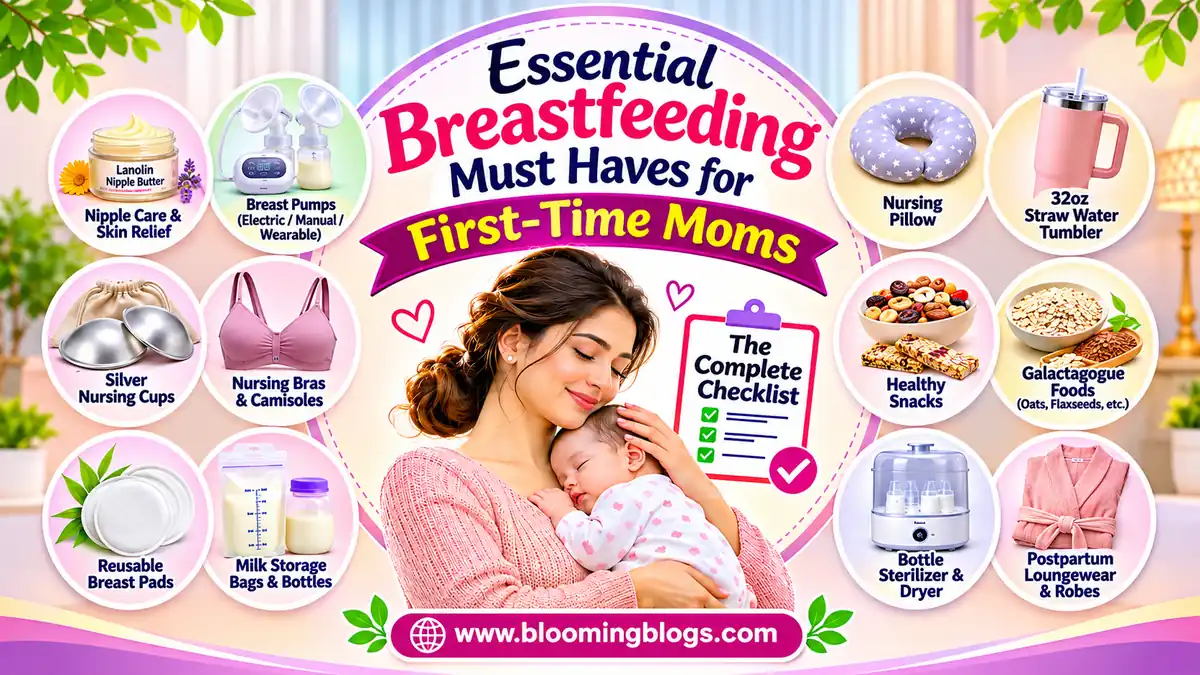
For Breastfeeding
- Nursing Bras (2–3): Comfortable support can make feeding more convenient.
- Absorbent Breast Pads: Useful for managing milk leakage.
- Nipple-Care Product: Some parents find a suitable nipple cream helpful during the early weeks.
- Breast Pump and Milk Storage Bags: Optional and dependent on your individual feeding plans.
For Bottle and Formula Feeding
- BPA-Free Bottles (4–6): Start with a small number rather than buying a large set immediately.
- Newborn-Suitable Nipples: Choose a flow rate appropriate for your baby’s age and follow the manufacturer’s instructions.
- Bottle Brush and Drying Rack: Useful for cleaning and organizing feeding equipment.
5. Bathing and Hygiene
- Newborn-Suitable Baby Bath: Choose a bathing product appropriate for your baby’s age.
- Gentle Baby Wash: Use a mild product if needed and follow the manufacturer’s instructions.
- Soft Hooded Towels (2): Useful after bathing.
- Soft Washcloths (3–4): Helpful for gentle cleaning and sponge bathing.
Bath Safety Rule: Never leave a baby unattended in or near water. Prepare everything you need before starting the bath.
6. Health and Grooming Kit
- Digital Thermometer: Keep a reliable thermometer available at home.
- Nasal Aspirator: Can be useful for clearing nasal secretions when appropriate.
- Saline Nasal Drops: Use an infant-appropriate product and follow healthcare guidance when needed.
- Baby Nail File or Infant Nail Clippers: Choose equipment designed for babies.
- Soft Baby Hairbrush: Useful for gentle hair and scalp care.
Medical Safety Note: A temperature of 100.4°F (38°C) or higher in a baby younger than three months requires prompt medical evaluation. Contact your pediatrician, healthcare provider or appropriate emergency medical service for guidance. Do not give medication to a newborn unless a qualified healthcare professional has advised you about the medicine and dose.
7. Travel and Mobility
- Rear-Facing Infant Car Seat: If traveling by car, use an appropriate rear-facing car seat installed according to the car-seat and vehicle manufacturer’s instructions.
- Newborn-Suitable Stroller: Use a stroller configuration that the manufacturer specifically states is suitable from birth.
- Baby Carrier or Wrap: Choose one appropriate for your baby’s age and size and follow the manufacturer’s instructions carefully.
Travel Safety Rule: Never assume that a stroller, carrier or car seat is suitable for newborn use simply because it is marketed as a baby product. Check the manufacturer’s age, weight, positioning and safety instructions.
Smart Budget Strategy: Essential vs. Optional
A practical way to control newborn spending is to separate items you are likely to need immediately from products that can wait.
| Category | Must-Have: Buy Before Birth | Nice-to-Have: Can Wait |
|---|---|---|
| Sleep | Appropriate crib or bassinet, firm mattress, fitted sheets | Smart rocking bassinet, specialized monitoring gadgets |
| Travel | Rear-facing car seat if traveling by car | Luxury stroller systems and accessories |
| Diapering | Diapers, gentle wipes or cotton pads, changing pad | Electronic wipe warmer, specialized diaper pail |
| Feeding | Supplies appropriate to your feeding method, burp cloths | Automated formula equipment, bottle warmer |
| Clothing | Front-opening onesies, sleepers, weather-appropriate clothing | Designer outfits, decorative shoes |
| Bathing | Towels, washcloths, basic bathing supplies | Large collections of specialized bath products |
| Health | Digital thermometer, basic grooming supplies | Advanced consumer monitoring gadgets |
A Simple Buying Rule
When in doubt, ask yourself:
“Will my baby need this during the first few weeks, or can I wait until I know I actually need it?”
Starting with the basics can reduce waste, save money and give you the flexibility to adapt your shopping list after your baby arrives.
Why You Can Trust Blooming Blogs
At Blooming Blogs, our goal is to create practical, clearly explained content that helps readers make informed decisions.
This guide has been researched using publicly available guidance from established health and safety organizations, including the World Health Organization (WHO), American Academy of Pediatrics (AAP), Centers for Disease Control and Prevention (CDC), UNICEF, NHS and other recognized sources where relevant.
Because newborn care and product-safety recommendations can vary by country, healthcare provider, product and individual circumstances, this article should be used as a general planning guide rather than a substitute for advice from your pediatrician, maternity team or other qualified healthcare professional.
Product categories mentioned in this article are general suggestions, not endorsements of particular brands.
Why a Newborn Baby Essentials Checklist Matters for First-Time Parents
Walk into any baby store or browse online and you’ll find thousands of products described as “must-haves.” From smart bassinets and bottle warmers to wipe dispensers and nursery gadgets, it can quickly feel as though you need to buy everything before your baby arrives.
The reality is usually much simpler.
During the first few months, babies need a safe place to sleep, regular feeding, clean diapers, comfortable clothing, basic hygiene, routine healthcare and plenty of loving attention.
Many products marketed to new parents are conveniences rather than essentials. A well-planned newborn baby essentials checklist helps you focus on what is genuinely useful, making it easier to prepare your home, manage your budget and feel more confident before your baby arrives.
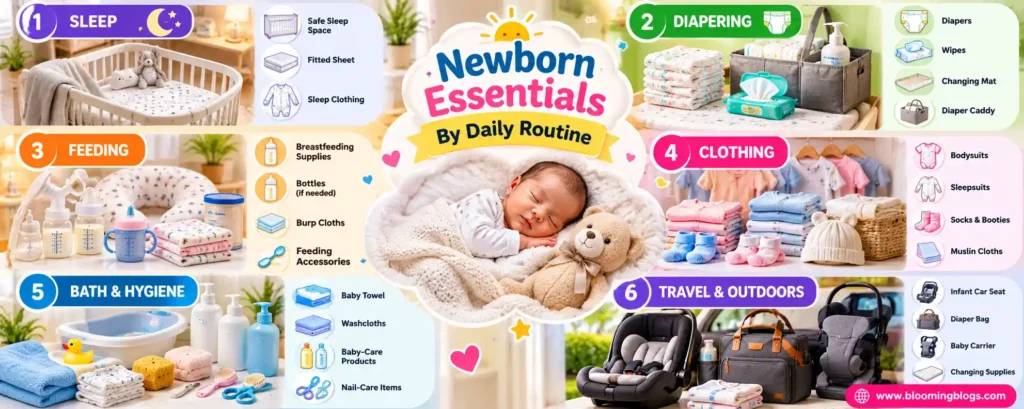
Why Planning Your Newborn Baby Essentials List Ahead Makes Life Easier
Preparing before your due date means you can spend less time shopping after birth and more time caring for your newborn and recovering from delivery.
While it is impossible to predict every need, having the basics ready can reduce stress during the first few weeks.
A structured newborn baby essentials list can help you:
- Avoid forgetting important everyday supplies.
- Reduce last-minute shopping trips after delivery.
- Stay within your budget by avoiding panic purchases.
- Organize your nursery and baby supplies before birth.
- Share your practical needs with family and friends.
- Feel more prepared for your baby’s arrival.
- Share your needs with family and friends for baby showers or gift registries.
A Practical Planning Tip
Think of your checklist as a practical planning tool rather than a shopping challenge.
Expert Tip: Start gathering the most important newborn baby essentials items gradually during the second trimester if possible rather than purchasing everything at once. Spreading purchases over several months gives you more time to compare products, check safety information and decide what your family actually needs.
Every Family’s Needs Are Unique: Customizing Your Newborn Baby Essentials.
No two babies—or families—are exactly alike. A checklist should be a planning guide, not a strict rulebook.
Climate and Weather
Families living in colder climates may need additional warm clothing, while families in warmer regions may prefer lightweight, breathable fabrics.
Your baby’s clothing should be appropriate for the surrounding temperature, and overheating should be avoided.
Feeding Plans
Parents who plan to breastfeed may need different supplies from parents using formula or combination feeding.
It is also reasonable for feeding plans to change after birth. Avoid purchasing large quantities of specialized feeding equipment until you know what works for you and your baby.
Living Space
Apartment living may favor compact, multi-purpose equipment, while families with more space may choose larger nursery furniture.
You do not need a separate changing table or large nursery to provide your baby with a safe and comfortable environment.
Lifestyle
Families who travel frequently may prioritize a suitable infant car seat, baby carrier or practical stroller.
The most useful products are usually the ones that fit your actual lifestyle rather than products that are simply popular online.
Key Points :
- Families living in colder climates may need additional warm clothing and sleepwear.
- Those in warmer regions may require lighter, breathable fabrics.
- Parents who plan to breastfeed will have different feeding needs than those who choose formula feeding.
- Apartment living may influence the size and type of nursery furniture you choose.
- Families who travel frequently might prioritize lightweight strollers and portable sleeping options.
Your lifestyle, home, climate, budget, and caregiving arrangements all play a role in deciding which products are most useful.
What to Buy for a Newborn: Essential Items vs. Nice-to-Have Items
One of the most common mistakes first-time parents make is assuming every baby product is necessary.
Here is a simple breakdown of items that are commonly useful versus products that can usually wait:
| Category | Essential or Useful Items | Nice-to-Have Items |
|---|---|---|
| Safe Sleep | Firm, flat sleep surface, appropriate crib or bassinet, fitted sheets | Smart rocking bassinet, specialized sleep gadgets |
| Travel & Mobility | Appropriate rear-facing infant car seat when traveling by car, suitable carrier | Luxury modular stroller system |
| Diapering | Newborn diapers, gentle wipes or cotton/water option, changing surface | Electronic wipe warmer, specialized diaper pail |
| Feeding | Burp cloths and feeding supplies appropriate to your feeding method | Bottle warmer, automated formula equipment |
| Clothing | Soft onesies, sleepers and weather-appropriate clothing | Designer outfits, tiny decorative shoes |
| Hygiene & Health | Digital thermometer, basic grooming supplies, saline drops if recommended | Electronic nail buffer, novelty bath gadgets |
A Minimalist Approach to Buying Newborn Baby Essentials
Buying Less Can Sometimes Be Better
It may seem surprising, but buying fewer baby products often works in your favor. Newborns grow quickly. Clothing sizes change within weeks, diaper brands may not suit every baby, and your feeding plans may evolve after birth. Purchasing large quantities too early can lead to unused items and unnecessary spending. Instead of stocking up on everything, consider buying enough for the first few weeks and adjusting based on your baby’s needs. For example:
- Purchase a modest supply of newborn-sized diapers rather than several large boxes.
- Buy a variety of bottle types only if you plan to bottle-feed, rather than committing to one brand immediately.
- Limit newborn-sized clothing, as many babies outgrow it within a short time.
This flexible approach can save money and reduce waste.
Instead of stockpiling every newborn baby essentials item, consider purchasing enough for the first couple of weeks and then adjusting your shopping based on your baby’s needs.
For example:
- Purchase one or two small packs of newborn diapers initially.
- Consider buying a small number of bottles before purchasing a large bottle set.
- Keep newborn clothing quantities modest.
- Buy additional sizes after you know your baby’s growth pattern.
- Avoid purchasing expensive gadgets until you know they will solve a real problem for your family.
What You Actually Need in the First Week
| Buy Before Birth | Can Usually Wait |
|---|---|
| Safe sleep space | Large toy collection |
| Appropriate car seat if traveling by car | High chair |
| Small supply of diapers | Large quantities of larger-size clothing |
| Basic baby clothing | Designer outfits |
| Feeding supplies appropriate to your feeding plan | Specialized feeding gadgets |
| Digital thermometer | Advanced monitoring gadgets |
| Basic bathing and grooming supplies | Large nursery accessories |
This approach can make your initial shopping list shorter, more affordable and easier to manage.
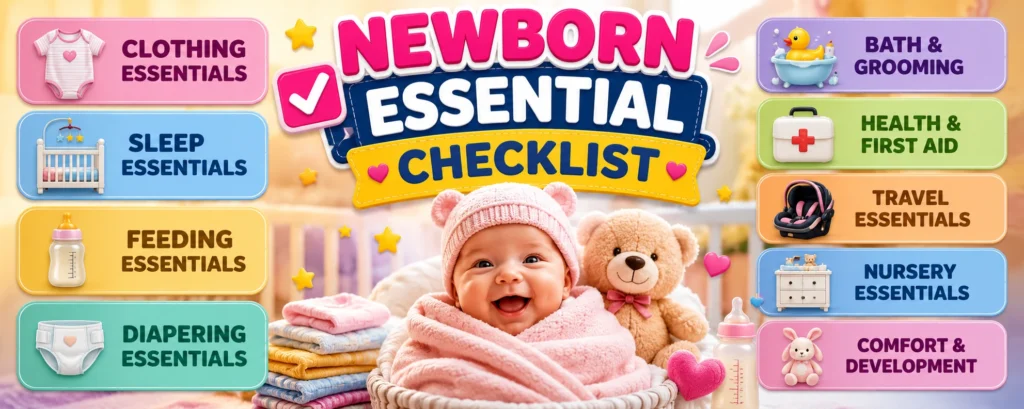
How to Budget for Newborn Essentials
Baby expenses can add up quickly, but spending more money does not automatically mean buying a safer or better product.
Divide your shopping into three practical stages.
Buy Before Birth
Prioritize items that you are likely to need immediately:
- Car seat if you will travel by car.
- Crib, bassinet or other appropriate safe sleep space.
- Small supply of diapers.
- Basic baby clothing.
- Thermometer.
- Feeding supplies appropriate to your feeding plan.
- Basic hygiene and grooming supplies.
Buy Later
Some products can be purchased after your baby arrives:
- Additional clothing sizes.
- Extra feeding equipment.
- Play mat.
- Larger quantities of diapers.
- Additional nursery accessories.
- Toys.
Optional and Luxury Purchases
These can usually wait until you know whether you actually need them:
- Smart monitors.
- Wipe warmers.
- Automated bottle equipment.
- Decorative nursery products.
- High-end baby gadgets.
Common Mistakes First-Time Parents Make When Shopping
Learning from other parents can save money and reduce unnecessary shopping.
1. Buying Too Many Newborn-Size Clothes
Some babies move into larger clothing sizes sooner than expected. Start with a modest quantity.
2. Stockpiling One Diaper Brand
A particular diaper may not fit your baby comfortably or may not work well for your family’s needs. Start with a small quantity before buying in bulk.
3. Choosing Products Because They Are Trending
Popularity on social media does not automatically mean a product is necessary or suitable.
Look at the product’s purpose, safety information, instructions and suitability for your baby’s age.
4. Forgetting Everyday Supplies
Small everyday items can be more useful than expensive gadgets. Keep essentials such as burp cloths, diapers, changing supplies and basic grooming products readily accessible.
5. Leaving the Car Seat Until the Last Minute
If you will travel with your newborn by car, choose an appropriate infant car seat ahead of time and follow both the car-seat and vehicle manufacturer’s installation instructions.
What to Pack for Your Newborn’s Hospital Trip
When heading to the hospital or birthing center, keep your newborn packing list practical.
Hospitals differ in what they provide and what they expect parents to bring, so check your hospital’s own instructions before packing.
Newborn Hospital Checklist
- Appropriate rear-facing infant car seat if traveling home by car
- Going-home outfit
- One backup outfit
- Soft weather-appropriate hat if needed
- Two or three muslin cloths or swaddles
- Small supply of newborn diapers
- Wipes or cotton pads, depending on your preference and hospital guidance
- Pediatrician or healthcare provider contact information
- Relevant hospital and insurance documents
- Any feeding supplies specifically recommended by your healthcare team
Hospital Packing Tip
Do not pack your entire nursery.
A small, organized hospital bag is easier to manage, especially when you are tired after delivery.
Nursery Setup and Safe Sleep
Sleep is a major part of newborn life, so creating a safe sleep environment should be one of your highest priorities.
The Safe Sleep Environment
A newborn’s sleep space should be:
- Firm and flat.
- Free from pillows and loose bedding.
- Free from stuffed toys and bumper pads.
- Covered only with an appropriately fitted sheet.
- Set up according to the crib, bassinet or sleep-product manufacturer’s safety instructions.
Safe Sleep Rules
For routine sleep, place your baby on their back on a firm, flat sleep surface.
Keep soft objects, loose blankets, pillows, toys and other unnecessary items out of the baby’s sleep area.
Room-sharing without bed-sharing is commonly recommended during early infancy. Ask your healthcare professional if you have questions about your baby’s individual sleep circumstances.
Choosing a Crib or Bassinet
Look for a product that meets the applicable safety requirements in your country.
Do not rely solely on marketing phrases such as “premium,” “luxury,” or “orthopedic.” Read the manufacturer’s safety information, weight and age limits and assembly instructions.
Choosing a Mattress
The mattress should be firm, flat and designed specifically for the sleep product.
It should fit correctly according to the manufacturer’s instructions, with no dangerous gaps around the edges.
Fitted Sheets
Use only appropriately fitted sheets designed for the mattress.
Avoid adding extra padding, pillows, quilts, loose blankets or other soft materials beneath or around your baby.
Wearable Sleep Products
If you use a swaddle or wearable blanket, follow the manufacturer’s age, size and usage instructions.
Stop swaddling when your baby shows signs of attempting to roll, and never use loose blankets as a substitute for safe sleep practices.
Safe Sleep Hazards to Avoid
Avoid Routine Sleep in Sitting Devices
Car seats, swings, rockers and other sitting devices are not substitutes for a safe sleep surface.
If a baby falls asleep in a product designed for sitting or travel, follow current safety guidance and move the baby to an appropriate firm, flat sleep surface when practical.
Avoid Overheating
Dress your baby appropriately for the surrounding temperature and avoid excessive layers.
Indoor hats are generally unnecessary once your baby is home unless specifically recommended for a particular situation.
Newborn Baby Essentials Clothes and Wardrobe Planning
It is remarkably easy to overspend on adorable outfits.
Newborns can require frequent clothing changes because of spit-up, diaper leaks and feeding-related messes. For this reason, practical and easy-to-change clothing is usually more useful than complicated outfits.
Suggested Starter Wardrobe
| Item | Suggested Starting Quantity |
|---|---|
| Front-snap onesies | 5–8 |
| Two-way zip sleepers | 4–6 |
| Swaddles | 2–4 |
| Soft socks | 3–5 pairs |
| Weather-appropriate hat | 1–2 |
| Burp cloths | 6–10 |
These are starting points rather than strict requirements. Laundry frequency, climate and your baby’s size can change how many items you actually need.
Front-Snap or Kimono-Style Onesies
Front-opening clothing can make dressing easier during the newborn period.
Choose soft fabrics and avoid clothing with loose decorations, cords or other features that could create a safety concern.
Footed Sleepers and Rompers
Zip-up sleepers can make nighttime diaper changes easier.
Two-way zippers may be particularly convenient because they can allow access to the diaper area without completely removing the garment.
Socks and Mittens
Socks can help keep feet comfortable when appropriate for the weather.
If you use mittens, make sure they fit safely and check them regularly.
Hats
Use weather-appropriate hats when needed outdoors.
Avoid unnecessary overheating indoors.
Newborn Baby Essentials for Diapers and Diapering
Newborns can go through several diapers each day, so keeping a small supply ready is practical.
The exact number varies between babies.
Setting Up a Diapering Station
Keep frequently used supplies together:
- Newborn and Size 1 diapers.
- Gentle wipes or cotton pads and water.
- Changing pad.
- Barrier cream if needed.
- Clean clothes.
- Waste bin.
- Hand-washing supplies.
Newborn and Size 1 Diapers
Start with a small pack rather than buying a large stockpile.
Your baby’s birth size and growth rate will determine how long newborn-size diapers remain useful.
Wipes and Cleaning
Some parents prefer fragrance-free wipes, while others use cotton pads and water during the early newborn period.
Choose products that are gentle and suitable for your baby’s skin.
If your baby develops persistent irritation, discuss it with a healthcare professional.
Barrier Cream
A suitable barrier cream can help protect irritated skin from moisture.
If diaper rash is severe, persistent, spreading or accompanied by other symptoms, seek medical advice.
Changing Pad
A waterproof, easy-to-clean changing surface can make diaper changes easier.
Never leave a baby unattended on a changing table or elevated changing surface, even for a moment.
Newborn Baby Essentials Bathing and Grooming Routine
Newborns generally do not need a full bath every day.
The frequency can depend on your baby’s skin, circumstances and healthcare guidance.
Until the umbilical cord stump falls off, follow your healthcare provider’s instructions for keeping the area clean and dry.
Bath Time Checklist
- Baby bathtub or suitable bathing setup.
- Soft washcloths.
- Two or three clean towels.
- Gentle baby cleanser if you choose to use one.
- Soft baby hairbrush.
- Clean diaper and clothing.
- Safe storage for grooming supplies.
Baby Bathtub
Choose a bathing product appropriate for newborns and follow its instructions carefully.
Always support your baby and keep one hand on your baby during bathing.
Never leave a baby alone in or near water.
Baby Wash
A gentle cleanser may be used when appropriate.
You do not need a large collection of specialized bathing products.
Towels and Washcloths
Keep several clean, soft towels and washcloths available.
Prepare everything before beginning the bath so you never need to leave your baby unattended to retrieve an item.
Newborn Baby Feeding Essentials: Breastfeeding and Bottle Feeding Supplies
Feeding arrangements vary from family to family.
Some parents breastfeed, some use formula, and some use a combination of both. Your feeding plan may also change after birth.
For Breastfeeding Parents
Useful items may include:
- Nursing bras.
- Breast pads.
- Burp cloths.
- Nipple-care products if recommended or helpful.
- Breast pump if needed for your circumstances.
- Milk-storage containers or bags if expressing milk.
A breast pump is not automatically essential for every breastfeeding parent. Whether you need one depends on your feeding plan, work arrangements, milk expression needs and healthcare advice.
For Bottle and Formula Feeding Parents
Useful items may include:
- Baby bottles.
- Appropriate newborn nipples.
- Bottle brush.
- Drying rack.
- Safe method for cleaning and sterilizing feeding equipment according to the manufacturer’s instructions.
- Formula-feeding supplies appropriate to your chosen feeding method.
Choosing Bottles
There is no single bottle design that works best for every baby.
Start with a small number of bottles and observe how your baby feeds.
Choose nipples appropriate for the baby’s age and follow the manufacturer’s instructions.
Bottle Cleaning
Clean feeding equipment carefully according to current health guidance and the product manufacturer’s instructions.
Keep bottle-cleaning equipment clean and allow washed components to dry properly.
Newborn Baby Health and Grooming Essentials
A basic health and grooming kit can be useful during the first few weeks.
Basic Newborn Health Kit
Consider keeping:
- Digital thermometer.
- Saline nasal drops if recommended.
- Nasal aspirator.
- Baby nail clippers or suitable nail file.
- Soft baby hairbrush.
- Basic first-aid supplies appropriate for infants.
Important Fever Safety Information
A temperature of 100.4°F (38°C) or higher in a baby younger than three months requires prompt medical evaluation.
If your newborn develops a fever or you are concerned about their health, contact your pediatrician, healthcare provider or emergency medical service as appropriate.
Do not give fever-reducing medication to a newborn unless a qualified healthcare professional has advised you about the medicine and correct dose.
Medicines
Do not automatically add infant medicines to your newborn shopping list.
Medicines for young babies should be used only according to qualified medical advice and appropriate dosing instructions.
On-the-Go Travel: Car Seats, Strollers and Baby Carriers
Transporting a newborn safely requires equipment that is appropriate for the baby’s age, size and developmental stage.
Infant Car Seat
If your newborn will travel by car, use an appropriate rear-facing infant car seat installed according to both the car-seat and vehicle manufacturer’s instructions.
Many hospitals and maternity facilities recommend or require an appropriate car seat before discharge when families are traveling home by car, but policies vary.
Car Seat Installation
Check:
- The seat is suitable for your baby’s size.
- The seat is installed according to the manufacturer’s instructions.
- The harness is adjusted correctly.
- The seat is used in the appropriate rear-facing configuration.
- The vehicle installation method is compatible with the seat and vehicle.
Do not use a secondhand car seat if you cannot verify its history, condition, labels, instructions and safety status.
Strollers for Newborns
Newborns have limited head and trunk control.
If using a stroller with a newborn, use only a configuration that the manufacturer specifically states is suitable from birth.
Do not assume that a stroller is newborn-safe simply because its seat reclines.
Baby Carriers and Wraps
If you use a carrier or wrap, choose one appropriate for your baby’s age and size.
Follow the manufacturer’s instructions carefully and make sure the baby’s airway remains clear.
A properly supported position should allow you to monitor your baby’s face and breathing.
Newborn Baby Essentials for Winter and Summer
Seasonality affects what you may need to purchase.
Newborn Baby Essentials for Winter
Winter may require:
- Warm but breathable clothing.
- Layering pieces.
- Weather-appropriate sleepwear.
- Warm outer clothing for outdoor travel.
- A suitable room environment.
Avoid using loose blankets in the baby’s sleep space simply to keep the baby warm.
Keeping Your Baby Warm Safely
Use appropriate layers and monitor your baby for signs of overheating.
The safest sleep environment is still a firm, flat sleep surface free from loose bedding and unnecessary soft items.
Summer Newborn baby Essentials
Summer may require:
- Lightweight breathable clothing.
- Muslin cloths.
- Weather-appropriate sun protection.
- Shade when outdoors.
- Appropriate room ventilation.
Sun Protection
Keep young babies out of direct sunlight whenever possible and use shade and protective clothing.
For sunscreen use in infants, follow current guidance from your pediatrician and local health authorities, particularly for babies younger than six months.
Newborn Baby Essentials for Hot and Humid Climates
Families living in warm or humid regions may need to pay particular attention to clothing, ventilation and safe sleep.
Choose Breathable Clothing
Lightweight cotton or other breathable fabrics may be comfortable in warm conditions.
Avoid unnecessary layers.
Keep the Sleeping Area Comfortable
The baby’s room should be comfortable and well ventilated without exposing the baby to direct drafts or excessive heat.
Avoid relying on a specific temperature number for every household. Clothing, humidity, bedding and the baby’s individual needs all matter.
Mosquito Protection
If mosquitoes are common in your area, use appropriate physical barriers such as window screens or mosquito nets designed for safe infant use.
Never place unsafe chemicals, coils or products close to a baby’s sleeping area.
Newborn Baby Essentials Bundle vs. Individual Shopping
Is buying a pre-packaged newborn baby essentials bundle cheaper than purchasing individual items?
Not necessarily.
Bundles can be convenient, but they may contain products you do not need.
Pre-Packaged Bundle
Advantages:
- Convenient.
- Easy to purchase.
- Can provide several basic products together.
Disadvantages:
- May contain unnecessary items.
- Product quality may vary.
- You have less control over individual choices.
Individual Selection
Advantages:
- Greater control over quality.
- Easier to match products to your actual needs.
- Can avoid unnecessary purchases.
Disadvantages:
- Requires more research.
- May take longer to shop.
Minimalist Shopping
A minimalist approach can be particularly useful for first-time parents.
Start with genuine essentials and add products only when you discover a practical need.
Newborn Accessories and Trendy Gadgets: Worth It or Skip?
Not every new baby gadget is necessary.
Before purchasing a product, ask:
- What problem does this product solve?
- Is the problem common enough to justify the cost?
- Does the product have clear safety instructions?
- Is there a simpler alternative?
- Will I still use it several months from now?
Smart Bassinets
Smart bassinets may provide additional convenience or features.
However, they are not necessary for every family.
Always follow the manufacturer’s safe-sleep instructions and do not assume that smart features replace basic safe-sleep practices.
Electronic Wipe Warmers
A wipe warmer may make nighttime changes more comfortable for some families.
However, it is an optional convenience rather than a newborn necessity.
Baby Monitors and Wearable Devices
Video monitors can help parents observe a sleeping baby from another room.
Some consumer devices also advertise oxygen, breathing or heart-rate monitoring.
Parents should understand that consumer monitoring devices are not substitutes for safe-sleep practices or professional medical monitoring. False alarms and inaccurate readings can also create unnecessary concern.
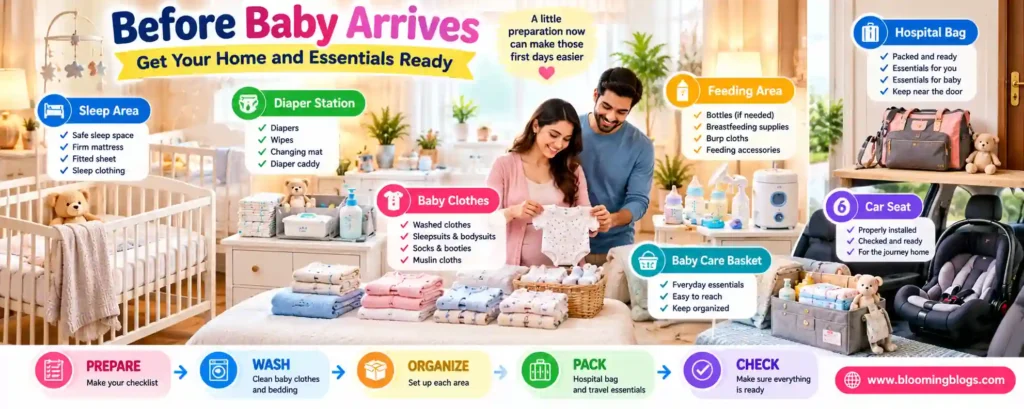
Complete Newborn Baby Essentials Checklist
Use this consolidated checklist to review your preparation before delivery.
Safe Sleep
- Appropriate crib or bassinet
- Firm, flat mattress
- Correctly fitted sheets
- Safe sleep space free from pillows and loose bedding
Clothing
- 5–8 front-opening onesies
- 4–6 sleepers
- 2–4 swaddles or suitable wearable sleep products
- Socks as needed
- Weather-appropriate hat
Diapering
- Small pack of newborn diapers
- Size 1 diapers when appropriate
- Gentle wipes or cotton pads
- Changing pad
- Barrier cream if needed
Feeding
- Feeding supplies appropriate to your feeding method
- Burp cloths
- Bottles and nipples if bottle feeding
- Bottle brush
- Cleaning and sterilizing supplies as appropriate
Bathing and Grooming
- Baby bath setup
- Soft washcloths
- Towels
- Gentle cleanser if needed
- Baby hairbrush
- Nail clippers or baby nail file
Health
- Digital thermometer
- Saline drops if recommended
- Nasal aspirator
- Basic grooming supplies
- Pediatrician or healthcare provider contact information
Travel
- Appropriate rear-facing infant car seat if traveling by car
- Car seat installed according to manufacturer instructions
- Newborn-suitable stroller configuration if needed
- Suitable baby carrier if desired
❓Frequently Asked Questions About Newborn Baby Essentials
Frequently Asked Questions About Newborn Baby Essentials
Preparing for a newborn can feel overwhelming, especially when every baby store seems to have a different list of “must-have” products. The good news is that newborns usually need fewer things than new parents expect. The most useful approach is to prepare the basics first and add other products when you discover what actually works for your baby and your family.
1. How many newborn baby essentials should I buy before the baby arrives?
You do not need to buy everything at once. Start with the essentials your baby will need immediately: a safe place to sleep, suitable clothing, diapers and changing supplies, feeding supplies appropriate to your feeding plan, basic bathing and grooming items, and a safe way to travel home. It is usually better to begin with modest quantities because babies grow quickly and individual preferences become clearer after birth.
2. What should I buy for a newborn baby before delivery?
Before delivery, concentrate on items that would be difficult to manage without during the first few days. These generally include a safe sleep space, a few changes of comfortable clothing, diapers, wipes or cotton wool, muslin or burp cloths, basic hygiene supplies and any feeding equipment you already know you will need. If you will travel home by car, arrange an appropriate rear-facing infant car seat according to local requirements and the manufacturer’s instructions.
3. Which newborn products should I have ready on the first day at home?
Think about the first 24 hours rather than the entire first year. Have a safe sleeping space prepared, clean clothes available, diapers and changing supplies within easy reach, feeding supplies ready, and a few basic grooming and hygiene items available. Keeping these things together in one easily accessible area can make those first days considerably less stressful.
4. What are the most useful newborn items that parents use every day?
The everyday basics are usually the items that support feeding, sleeping, diaper changes and clothing changes. Parents commonly find diapers, wipes or cotton wool, comfortable bodysuits or sleepsuits, muslin cloths, a safe sleep space and feeding supplies particularly useful. Recent parent discussions also frequently mention burp cloths and easy-to-change zippered sleepsuits as items that get used repeatedly.
5. What newborn products can I safely buy after the baby is born instead of buying in advance?
Many optional products can wait. Examples include larger quantities of clothing, specialized feeding equipment, certain baby gadgets, additional storage products and some travel accessories. Waiting can prevent you from spending money on products your baby may not need or tolerate. Several experienced parents describe taking a “wait and see” approach because it was easier to purchase something later when an actual need became clear.
6. How can I make a newborn baby shopping list without buying unnecessary products?
Divide your list into three groups: needed immediately, useful later and optional. Put sleep, clothing, diapering, feeding, basic hygiene and safe transportation at the top. Then consider your home, climate, feeding plans and lifestyle before adding extras. This simple approach can prevent a long shopping list from becoming a collection of products that rarely get used.
7. What newborn essentials are useful for the first few weeks but not necessarily for the entire first year?
Newborn-size clothing, very small diapers, certain swaddling products and some newborn-specific accessories may only be useful for a short period. Babies can outgrow small sizes surprisingly quickly. Instead of buying large quantities, start with enough for regular use and keep a few larger sizes available for the next stage.
8. How do I choose newborn products when there are so many baby-care options available online?
Start with the function rather than the brand or appearance. Ask whether the product is genuinely needed, whether it is appropriate for a newborn, whether the instructions are clear, whether the materials and construction are suitable, and whether it is easy to clean and use. For safety-related products, follow recognized safety requirements and the manufacturer’s instructions rather than relying only on customer ratings.
9. Should I buy a newborn essentials kit or purchase each baby product separately?
Either approach can work. A newborn kit may be convenient if it contains products you genuinely need, but buying individually gives you more control over quantities, quality and price. Check the contents carefully before purchasing a bundle. A kit is not automatically better simply because it contains more items.
10. What baby items are worth spending more money on, and where can I save money?
Prioritize safety, durability and frequent-use products. A suitable sleep space, properly fitted mattress, safe car seat and products that you will use repeatedly deserve careful consideration. You can often save money on decorative clothing, toys and accessories that are not immediately necessary. The goal is not to buy the cheapest product or the most expensive one, but to choose appropriate products for your actual needs.
Newborn Baby Essentials for the First Three Months
11. What does a baby actually need during the first month at home?
During the first month, focus on the basics: safe sleep, frequent feeding, diaper changes, comfortable clothing and simple hygiene. You will also need a practical way to carry and transport the baby safely. Many parents find that their newborn spends most of the early weeks feeding, sleeping, being changed and being held, so an elaborate nursery is not essential on day one.
12. Which baby products become useful during the second and third months?
As your baby grows, you may find additional clothing sizes, a more convenient diaper bag, age-appropriate play items and certain travel or feeding accessories useful. The exact timing varies from baby to baby. Rather than purchasing everything in advance, consider adding products when your baby’s development and your daily routine create a genuine need.
13. Should I buy clothes for all three months at once or purchase them as my baby grows?
A small selection in newborn and 0–3-month sizes is usually more practical than buying a large wardrobe immediately. Babies differ considerably in birth size and growth rate, and some newborns move into larger clothing sooner than expected. Keep tags and receipts where possible if you are buying clothes well before delivery.
14. How many newborn diapers should I keep at home before delivery?
Start with a small supply rather than stocking up on many large boxes. Newborns can go through diapers quickly, but they may also move to the next size sooner than expected. Having one small pack of newborn diapers and another suitable size available can give you flexibility without tying up money in products you may not use.
15. How many muslin cloths and burp cloths are useful during the first three months?
There is no universal number because babies differ in how often they spit up and how frequently you do laundry. A small starter supply is sensible, and you can add more if you find yourself washing them constantly. Many parents report using muslin and burp cloths far more frequently than expected, especially during feeding and clothing changes.
16. What feeding supplies should I keep ready if I am not sure whether I will breastfeed or bottle-feed?
You can prepare for both possibilities without buying every feeding product in advance. A few basic nursing supplies may be enough if you plan to breastfeed, while parents considering bottles or formula can keep a small supply of suitable bottles and cleaning equipment ready. Your feeding plans may change after birth, so there is no need to purchase large quantities before you know what works best for you and your baby. Additional supplies can be purchased later based on your baby’s needs and advice from your healthcare professional.
17. Which newborn products can help make nighttime care easier during the first three months?
Simple organization often matters more than gadgets. Keep diapers, wipes, clean clothing, burp cloths and feeding supplies within easy reach of the baby’s usual nighttime care area. A dim light can also help you see what you are doing without turning on bright room lighting. Whatever products you use, the baby’s sleep space should remain free from items that are not intended for safe sleep.
18. What should I keep in a newborn care basket or caddy for daily use?
A practical basket can hold diapers, wipes or cotton wool, barrier cream if you use one, muslin cloths, a spare change of clothing and other frequently used care supplies. The advantage is convenience: you can move the basket between rooms rather than keeping essential items in several different places. Keep any medicines or potentially hazardous products securely out of the baby’s reach.
19. Which baby essentials are most useful when recovering from delivery while caring for a newborn?
Convenience can make a big difference. Keeping diapers, clothing, feeding supplies and basic care items close to where you spend most of your time can reduce unnecessary trips around the house. It is also worth preparing practical support for yourself, such as easy meals, drinking water and comfortable seating. Caring for a newborn is demanding, so making everyday tasks easier can be just as valuable as buying another baby gadget.
20. What should I add to my newborn shopping list for frequent laundry and clothing changes?
Plan for several changes of clothing rather than one perfect outfit for each day. Bodysuits, sleepsuits, socks where appropriate and muslin cloths can accumulate quickly when there are spit-ups, diaper leaks or other messes. Your ideal quantity depends on how often you want to do laundry, your storage space and whether you have access to a dryer.
Baby Boy and Baby Girl Essentials
21. Are newborn baby essentials different for a baby boy and a baby girl?
The basic essentials are essentially the same. Newborns of either sex need a safe sleep environment, suitable clothing, diapering supplies, feeding support, hygiene items and safe transportation. Differences are mostly related to individual family preferences, clothing styles and specific care guidance rather than a completely different shopping list.
22. Do I need to buy different newborn clothes for a baby boy and a baby girl?
No. Comfortable newborn clothing can be used for either baby. Practical features such as soft fabrics, easy openings and suitable sizing are more important than whether clothing is marketed for boys or girls. Choosing simple, versatile pieces can also make it easier to reuse clothes for future children or pass them on to another family.
23. What newborn essentials are suitable for both boys and girls?
Most newborn essentials are suitable for both. This includes a safe sleep space, fitted sheets, diapers, muslin cloths, basic grooming supplies, bathing products, suitable clothing and appropriate travel equipment. When shopping, focus on the baby’s size, comfort, safety and your family’s practical needs rather than gender labels.
24. Are there any baby-care products I should wait to buy until I know my baby’s size and needs?
Yes. It can be sensible to wait before purchasing large quantities of newborn-size clothes, diapers and some specialized products. Your baby’s birth size, growth and feeding routine can influence what you actually need. Starting with modest quantities gives you room to adjust without wasting money.
25. What clothing should I choose for a newborn boy if I want practical everyday outfits?
Choose soft, comfortable clothing that is easy to change. Front-opening bodysuits, sleep-suits and other designs with simple fastenings can be particularly convenient during frequent diaper changes. Avoid building a wardrobe around formal outfits that are difficult to put on or remove.
26. What clothing should I choose for a newborn girl if I want comfortable everyday outfits?
The same practical principles apply. Look for soft fabrics, comfortable fits and easy openings. Dresses or decorative outfits can be reserved for occasional use if you enjoy them, while simple bodysuits and sleep-suits are often more convenient for everyday care.
Newborn Clothes and Clothing Accessories
27. How many bodysuits, sleepsuits and onesies should I keep for a newborn?
A small starter wardrobe is usually enough. Around five to eight pieces of frequently used clothing can be a reasonable starting point, but the ideal quantity depends on how often you do laundry and how frequently your baby needs changing. Some parents find they need considerably more during the early weeks, while others manage with fewer.
28. Is it better to buy newborn-size clothes or 0–3-month clothes?
It is usually useful to have some of both. Newborn clothing can be convenient for a smaller baby, but some babies outgrow it quickly or fit directly into 0–3-month clothing. Avoid buying a very large quantity of either size until you know how your baby fits into the available sizing.
29. What type of newborn clothes are easiest to put on a baby?
Clothes with wide openings, front fasteners or easy-to-use zippers are generally convenient. Two-way zippers can also make diaper changes easier because you do not always have to remove the entire outfit. Many parents specifically mention zippered sleep-suits as practical during the early months.
30. What newborn clothing should I pack for the hospital?
Pack a few simple changes rather than the baby’s entire wardrobe. Depending on the hospital’s policies and the weather, this may include bodysuits or vests, sleepsuits, socks or booties, a suitable hat, muslin cloths and the baby’s going-home outfit. Check with your hospital beforehand because requirements and available supplies vary.
31. Do newborn babies really need shoes, or are socks and booties enough initially?
Newborns generally do not need structured shoes simply for everyday indoor use. Soft socks or booties can be useful when appropriate for the weather, while comfortable footed sleepsuits may provide enough coverage. If you buy footwear, make sure it does not restrict the baby’s feet.
32. How many newborn hats, mittens and socks should I buy?
Keep quantities modest. One or two suitable hats may be enough initially, depending on the season and local conditions, while a few pairs of socks can provide useful backups. Scratch mittens are optional and should not be relied on as a substitute for keeping babies’ nails safely trimmed. Always consider the temperature and avoid overheating.
33. What fabrics are practical for newborn baby clothes in hot and humid weather?
Lightweight, breathable fabrics are generally more comfortable in hot conditions. Soft cotton clothing is a popular practical choice because it is easy to wash and suitable for everyday use. Dress your baby according to the surrounding temperature and avoid unnecessary layers.
34. What newborn clothes are suitable for winter without making the baby too warm?
Use layers rather than relying on one very heavy garment. This makes it easier to add or remove clothing as conditions change. For sleep, avoid loose bedding and follow safe-sleep guidance instead of using heavy blankets or excessive layers to keep the baby warm.
35. Should I wash new baby clothes before putting them on my newborn?
Washing new clothes before first use is a sensible precaution because clothing may have been handled, stored or transported before reaching you. Use a suitable detergent and rinse clothes thoroughly. If your baby develops skin irritation, discuss appropriate products and care with a healthcare professional.
Newborn Accessories and Baby Products
36. Which newborn accessories are genuinely useful and which ones are mostly optional?
Useful accessories are generally the ones that solve an everyday problem, such as a diaper bag, burp cloths, changing supplies and practical storage. Many other accessories are optional. Baby swings, wipe warmers, specialized organizers, decorative items and smart gadgets may be convenient for some families but unnecessary for others.
37. What accessories should I keep in a newborn diaper bag?
A basic diaper bag can contain diapers, wipes or cotton wool, changing supplies, a portable changing mat, a spare outfit, muslin cloths and a suitable bag for soiled clothing. Depending on your baby’s feeding arrangements and the length of your outing, you may also need feeding supplies. Keep the bag simple and restock it after each trip.
38. What newborn baby products make diaper changes easier at home and while traveling?
At home, a stable changing surface, diapers, wipes or cotton wool, barrier cream if needed and spare clothing can make changes easier. For travel, a portable changing mat and compact supplies are useful. You do not necessarily need a dedicated changing table if another safe, suitable setup works well in your home.
39. Do newborns need a baby bathtub, or can bathing supplies be kept simple?
You can keep bathing supplies fairly simple. What matters most is having a safe way to support the baby during bathing, along with suitable washing and drying supplies. A dedicated baby bath can be convenient, but it is not necessary to fill your bathroom with specialized products. Never leave a baby unattended around water, even for a moment.
40. What grooming products should be included in a newborn baby-care kit?
A basic kit may include a baby-safe nail file or nail clippers, a soft brush or comb, a suitable thermometer and simple bathing supplies. You do not need a large collection of lotions, fragrances and cosmetic products. Newborn skin is delicate, so introducing unnecessary products may not be helpful.
41. What basic health and temperature-checking items should parents keep at home for a newborn?
A reliable digital thermometer and basic supplies for routine nasal care and grooming can be useful. Parents should also know how to contact their baby’s healthcare provider if they are concerned about illness. For babies younger than three months, a temperature of 100.4°F (38°C) or higher requires prompt medical evaluation; parents should follow their healthcare professional’s advice rather than relying only on home treatment.
Hospital and First-Time-Mom Shopping
42. What should a first-time mom buy for the baby before going to the hospital?
A first-time mom does not need to have the entire nursery completed before going into labor. Focus on the immediate basics: a safe sleep space at home, a few changes of newborn clothing, diapers, feeding supplies appropriate to your plan, muslin cloths, basic hygiene items and a safe way to bring the baby home. It is also helpful to check your hospital’s own packing requirements in advance.
43. What newborn items should be packed separately for the hospital stay and the journey home?
Separating items into small groups can make the hospital bag easier to manage. Keep diapers, a few clothing changes, muslin cloths, a hat if appropriate, and the going-home outfit together. If travelling by car, make sure the infant car seat is ready before discharge and installed according to its manufacturer’s instructions and applicable local requirements. Hospital packing lists commonly recommend keeping the baby’s supplies simple rather than bringing the entire nursery.
44. What should I include in a newborn essentials kit if my baby will be born in a hospital?
A practical hospital newborn kit can include diapers, wipes or cotton wool, several simple outfits, muslin cloths, suitable socks or booties, a hat when appropriate, and the baby’s going-home clothing. Feeding-related items depend on your plans and what the hospital provides. Always check the hospital’s own list because policies and available supplies differ.
45. What baby products should I order online before delivery, and what is better to buy after meeting the baby?
Order the basics that you know you will need, especially products related to safe sleep, clothing, diapering and getting home safely. Consider waiting on large quantities of newborn-size clothing, specialized feeding equipment, expensive gadgets and products that depend on your baby’s individual preferences. Buying fewer items initially can save money and gives you the freedom to learn what works for your family.
46. How many newborn clothes should I buy before the baby is born?
A modest starter supply is usually more practical than buying a large wardrobe.
Around 5 to 8 onesies and 4 to 6 sleepers can provide a useful starting point, but the exact amount depends on your baby’s size, laundry routine, climate and how frequently clothes need changing.
47. Is it safe to use a secondhand car seat?
A secondhand car seat should be used only when you can confidently verify its history, condition, labels, instructions, expiry information where applicable and that it has not been involved in a crash.
If you cannot verify these details, choosing a new seat is the safer option.
48. Do I really need a dedicated diaper pail?
No.
A dedicated diaper pail is an optional convenience.
A regular covered waste bin may be sufficient depending on your household routine and local waste-disposal arrangements.
49. When should I pack my hospital bag and have my baby gear ready?
Many parents find it helpful to have the hospital bag and essential baby equipment ready several weeks before the due date.
Your healthcare provider or hospital may have specific recommendations, so follow their guidance.
50. Can a newborn sleep in a stroller or car seat at home?
A stroller or car seat should not be treated as a routine sleep space unless the product is specifically designed and approved for sleep in that configuration.
For routine sleep, use an appropriate firm, flat sleep surface such as a crib or bassinet.
If your baby falls asleep during travel, follow current safety guidance and move the baby to an appropriate sleep surface when practical.
51. How do I wash newborn clothes for the first time?
Wash baby clothes before first use.
A mild detergent can be used, and families with babies who have sensitive skin may prefer fragrance-free products.
Follow the clothing manufacturer’s washing instructions.
52. What is cradle cap, and do I need special products for it?
Cradle cap is a common condition that can cause flaky or oily scales on a baby’s scalp.
It often improves over time.
Avoid aggressively scraping the scales. Gentle washing and a soft baby brush may help loosen flakes.
If the scalp becomes very red, swollen, infected-looking or the condition persists or concerns you, speak with your baby’s healthcare provider before trying additional treatments.
53. What is a Newborn Essentials Checklist?
A Newborn Essentials Checklist is a practical planning guide that lists the supplies parents may need for a newborn, including safe-sleep equipment, clothing, diapers, feeding supplies, bathing products, basic healthcare items and travel equipment.
The exact list varies according to the baby’s needs, family circumstances, climate, feeding method and healthcare guidance.
A Final Thought for New Parents
Preparing for a baby does not have to mean filling your home with dozens of products. Start with the essentials that support safe sleep, feeding, diapering, clothing, hygiene and safe transportation. Once your baby arrives, you will have a much better idea of what your family actually needs.
The best newborn shopping list is not necessarily the longest one. It is the one that helps you feel prepared without encouraging unnecessary spending.
Remember: every baby and every family is different. Product recommendations should be considered alongside your baby’s individual needs, your healthcare professional’s advice, your local hospital’s requirements and the manufacturer’s safety instructions.
💡 Did You Know?
Common Mistakes First-Time Parents Make
- Buying too many newborn-size clothes.
- Stockpiling one diaper brand before knowing what suits the baby.
- Choosing products based only on trends or social media.
- Forgetting practical everyday items like burp cloths or waterproof mattress protectors.
- Purchasing furniture before measuring available space.
- Waiting until the last minute to install the infant car seat.
- Assuming expensive products are always safer or higher quality.
A thoughtful checklist helps you stay focused on practical needs rather than marketing claims.
⏰ Quick Preparation Checklist
Before your due date, aim to complete these tasks:
1. Create your newborn essentials shopping list.
2. Set a realistic baby budget.
3. Prepare a safe sleeping area.
4. Wash baby clothing and bedding using a gentle detergent if recommended by the manufacturer.
5. Install and inspect the infant car seat.
6. Pack your hospital bag.
7. Schedule or confirm your baby’s first pediatric appointment if applicable in your healthcare system.
8. Organize diapers, clothing, and feeding supplies in easy-to-reach locations.
9. Keep important medical and emergency contact information accessible.
A little preparation before the birth can make those first days at home feel more organized and less stressful.
Completing these steps can make those first days at home feel more organized and less overwhelming.
✅Final Review and Summary
Preparing for a newborn does not mean buying everything.
It means identifying the products that genuinely support safe sleep, feeding, diapering, clothing, hygiene, healthcare and transportation.
Use this newborn baby essentials checklist as a starting point rather than a rigid shopping rule.
Start with the basics, avoid unnecessary stockpiling, check product safety information carefully and add items only when you discover a genuine need.
Most importantly, remember that no shopping list can replace responsive care, professional healthcare advice and your understanding of your own baby’s individual needs.
🔔Final Newborn Essential Checklist
Print or save this streamlined checklist to ensure you have the bare essentials covered before your little one arrives:
- [ ] Safe Sleep Space: Certified crib or bassinet located near your bed.
- [ ] Firm Surface: Snug mattress with 2 to 3 fitted sheets.
- [ ] Harness Checked: Rear-facing infant car seat properly installed.
- [ ] First-Week Wardrobe: 6 onesies, 4 sleepers, 3 swaddles.
- [ ] Sanitation Basics: 1 pack of newborn diapers, sensitive wipes, barrier cream.
- [ ] Emergency Medical Supplies: Digital thermometer, saline drops, nasal aspirator.
- [ ] Nutrition Support: Bottles and slow-flow nipples or nursing supplies.
💬 Share Your Experience
Did this guide help you prepare for your little one’s arrival?
Share your favorite newborn essentials, shopping tips or questions in the comments below. Your practical experience may also help other parents preparing for their first baby.
📝 Editorial Notes
This guide is intended to provide general educational information and practical shopping guidance.
Health and safety recommendations can change over time, and product instructions can vary. Blooming Blogs aims to review and update this article when relevant guidance changes.
For medical or safety questions concerning your individual baby, consult your pediatrician, healthcare provider or the relevant qualified professional.
⚠️Disclaimer
This article is for educational and informational purposes only. It does not substitute for professional medical advice, diagnosis or treatment.
Always consult your pediatrician, healthcare provider or other qualified professional regarding your baby’s health, feeding, sleep, medication, development or individual safety needs.
💙Blooming Blogs Promise
At Blooming Blogs, we aim to provide practical, understandable and responsibly researched information for parents and families.
Our goal is to help readers make informed decisions without unnecessary product pressure or complicated jargon.
🌐External Authoritative References
For additional evidence-based information, readers should consult established health and safety organizations, including:
- National Health Service (NHS) – Pregnancy, labor, newborn care, and feeding advice.
- UNICEF – Early childhood development and newborn care.
- National Institutes of Health (NIH) – Medical research and infant health information.
- Mayo Clinic – Patient-friendly newborn care guidance.
- American Academy of Pediatrics (AAP) – Pediatric health and safe-sleep guidance.
- Centers for Disease Control and Prevention (CDC) – Infant health, feeding and safety information.
- World Health Organization (WHO) – Maternal, newborn and child health guidance.
This article has been researched using guidance from leading global health organizations. Always check the most current guidance directly from the relevant organization or your healthcare professional, particularly for medical and safety-related decisions.