


Introduction
Good newborn umbilical cord care starts right from the first day home with your baby. A small cord stump remains on your little one’s belly after birth. Many parents feel nervous around this tiny area. You may worry about tugging it, getting it wet, or folding diapers over it.
Simple daily habits keep the stump clean and dry as it heals. Most stumps dry out and fall off within one to three weeks. Spotting normal healing versus early warning signs helps you stay calm. This guide shares clear care steps, expected timelines, and when to call a doctor.
What Is the Newborn Umbilical Cord?
During pregnancy, the umbilical cord acts as a soft, flexible lifeline between you and your growing baby. This tube-like structure connects your placenta directly to your baby’s belly. Inside, three important blood vessels work together around the clock. Two umbilical arteries carry waste products away from your baby back to the placenta. Meanwhile, one umbilical vein delivers fresh oxygen and vital nutrients straight to your little one.
Once your baby enters the world, they begin breathing air and feeding on their own. At that moment, your baby no longer needs this lifeline. A doctor or midwife places a small plastic clip on the cord and snips it cleanly. Neither you nor your baby feels any pain during this quick step because the cord has no nerves.
What Happens to the Newborn Umbilical Cord Stump After Birth?
After cutting, a short piece stays attached to your baby’s tummy along with the plastic clamp. Doctors call this small piece the umbilical cord stump, and it usually measures about 2 to 3 centimeters long.
Over the next few days, a few natural changes take place:
- The moist, yellowish-green stump slowly begins to dry out and shrink.
- Its color darkens to brown, gray, or even black as it heals.
- Most healthcare providers remove the plastic clip once the stump dries completely, often within 24 to 48 hours.
- The dried stump naturally falls off on its own within one to three weeks after birth.
- Once it drops away, your baby’s permanent belly button, or navel, remains neatly in its place.
What Is the Function of the Umbilical Cord During Pregnancy?
Throughout your pregnancy, the placenta and umbilical cord team up to keep your growing baby healthy and strong. While inside the womb, your baby cannot breathe air or eat food on their own. Instead, the placenta acts like your baby’s lungs, heart, and digestive system all at once. The umbilical cord links your baby directly to this vital organ so life-giving support flows smoothly.
How Two-Way Blood Flow Works Inside the Umbilical Cord
Picture the umbilical cord as a busy two-way highway running between you and your baby. Blood moves in both directions without ever mixing, thanks to specialized umbilical blood vessels:
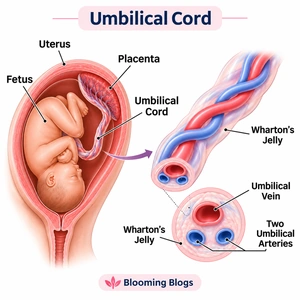
- Nutrient and Oxygen Delivery: Fresh blood rich in oxygen, vitamins, and nutrients travels from the placenta to your baby. This steady supply fuels healthy growth and organ development every single day.
- Waste Removal: Used blood low in oxygen carries waste products, such as carbon dioxide, away from your baby. The umbilical arteries send this waste back to the placenta, where your body safely filters and removes it.
- Continuous Protection: This two-way exchange runs nonstop until the moment of delivery, adapting to your baby’s changing needs.
Why Your Baby No Longer Needs the Cord After Birth
The moment your baby takes their first breath of air, everything changes. Their own lungs expand, their heart shifts circulation, and their digestive system prepares to process milk. Because their organs now handle these jobs independently, your baby no longer needs the placenta and umbilical cord. Proper newborn umbilical cord care then takes over to help the remaining stump heal cleanly.
Anatomy of the Umbilical Cord: Location, Look, Size, and Vessels
Understanding the anatomy of umbilical cord structures helps new parents appreciate how well nature protects a growing baby.
Where Is the Umbilical Cord Located?
The umbilical cord forms inside your uterus during the first trimester of pregnancy. It links your developing baby to the placenta, a temporary organ attached to your uterine wall. One end usually connects to the center of the placenta. The other end attaches right to your baby’s belly, at the exact spot that becomes their belly button.
What Does the Umbilical Cord Look Like and How Big Is It?
A healthy umbilical cord looks like a thick, twisted rope with natural spirals down its entire length. These coils add strength and stop the cord from getting squished as your baby moves and grows. A smooth, white, jelly-like tissue called Wharton’s jelly surrounds and cushions the inside of the cord.
By the end of your second trimester, a normal umbilical cord length reaches about 19.6 to 23.6 inches (50 to 60 centimeters). Despite that length, its thickness stays under one inch, measuring roughly 1 to 2 centimeters across.
What Are the Umbilical Cord Vessels?
A typical three vessel umbilical cord holds three vital blood vessels in umbilical cord tissue:
- One Umbilical Vein: This single vessel carries fresh, oxygen-rich blood and nutrients from the placenta straight to your baby.
- Two Umbilical Arteries: These two vessels carry oxygen-poor blood and waste products from your baby back to the placenta.
Why Your Baby Has an Umbilical Cord Stump After Birth
The moment your baby enters the world, their own lungs, heart, and digestive system take over. Your baby no longer needs the placenta and umbilical cord to deliver oxygen or food. A healthcare provider places a small plastic clip on the cord and cuts it cleanly right after birth. Neither you nor your baby feels any pain during this step because the cord has no nerves.
This quick trim leaves behind a small piece on your baby’s tummy, usually 2 to 3 centimeters long. Doctors call this piece the newborn umbilical cord stump. Proper newborn umbilical cord care keeps this tiny stump clean and dry while it heals. Within one to three weeks after birth, the stump naturally dries out, darkens, and falls off on its own. Your baby’s permanent belly button, or navel, stays neatly in place.
Common Umbilical Cord Conditions and Abnormalities During Pregnancy
Most pregnancies progress smoothly without any cord issues. Still, knowing about possible umbilical cord conditions helps expectant parents stay informed. When a problem affects the cord, it can slow down healthy blood flow to the baby. Reduced blood flow may affect how a baby’s organs grow and develop inside the womb.
9 Umbilical Cord Conditions Doctors Watch For
Doctors and midwives check for several umbilical cord abnormalities during routine prenatal care:
- Abnormal Cord Coiling: A healthy cord has a balanced number of spirals. Sometimes, the cord develops too many coils (hypercoiled) or too few coils (hypocoiled). Shifts in blood flow or certain baby movements can cause this change, which doctors link to occasional pregnancy complications.
- Marginal Cord Insertion: Normally, the cord attaches right at the center of the placenta. With marginal insertion, the cord connects near the outer edge of the placenta instead.
- Nuchal Cord: Knowing what nuchal cord means brings comfort to many worried parents. It simply means the umbilical cord wrapped around neck tissues of the baby. A loose loop happens often and rarely causes harm, though a tight loop can sometimes create challenges during pregnancy or delivery.
- Single Umbilical Artery: Instead of a normal three vessel umbilical cord, this two-vessel cord has only one artery and one vein. Doctors sometimes link a single umbilical artery to genetic conditions, like trisomy, or changes in fetal organs such as the heart.
- True Knot: Baby movements inside the womb can occasionally tie a tight knot in the cord. A tight knot can pinch the vessels and reduce vital blood flow to the baby.
- Umbilical Cord Cysts: Small, fluid-filled sacs called cysts sometimes grow along the cord. Most cysts stay completely harmless, yet a large cyst can press against the cord and slow blood flow.
- Umbilical Cord Prolapse: During labor, the cord can slip down into the cervix ahead of the baby. Umbilical cord prolapse is a serious medical emergency that usually requires an immediate C-section delivery.
- Vasa Previa: In this rare condition, unprotected umbilical blood vessels cross directly over the opening of the cervix. Labor pressure can tear these fragile vessels and cause heavy bleeding. Spotting vasa previa early allows doctors to plan a safe C-section and protect the baby.
- Velamentous Cord Insertion: Here, the cord fails to reach the inside of the placenta properly. Instead, it attaches to the outer fetal membranes, which can slow a baby’s growth and cause other complications.
How Prenatal Ultrasounds Keep Your Baby Safe
Most of these umbilical cord conditions are quite rare, and many never cause serious trouble. Your healthcare provider watches your baby closely at every prenatal checkup. Modern ultrasounds give your doctor a clear view of the placenta and umbilical cord throughout pregnancy. If your provider spots anything unusual, they will guide you on extra monitoring or simple next steps to keep both you and your baby safe.
What Happens to a Newborn Umbilical Cord Right After Birth?
Right after delivery, your baby takes their first breaths and prepares to feed on their own. Because your little one no longer needs support from the placenta, a doctor or midwife clamps and cuts the newborn umbilical cord. This routine step separates your baby from the placenta cleanly and safely.
Only a small piece remains attached to your baby’s tummy. Within a few weeks, this umbilical cord stump dries up and drops away on its own. Once it falls off, your baby’s permanent belly button, or umbilicus, appears in its place.
Does My Baby Feel Any Pain in Their Umbilical Cord?
No, your baby has zero feeling in their umbilical cord. The cord contains no nerves at all. Your baby feels no pain when the provider clamps and snips it after birth. Likewise, your little one feels no discomfort while the stump dries, shrinks, and falls off over the coming days.
When Does an Umbilical Cord Fall Off and What Should You Expect?
Many new parents ask, “when does an umbilical cord fall off?” Most stumps—along with the plastic umbilical cord clamp—drop off naturally between 5 and 14 days after birth (though some take up to three weeks). As the area heals, your baby’s belly button takes its final shape.
3 Natural Healing Signs Before the Umbilical Cord Falls Off
Before the umbilical cord falling off stage completes, the stump goes through three normal visual changes:
- It Dries Out: The moist, shiny tissue loses moisture and turns firm.
- It Shrinks: The thick stump shrivels down into a much smaller, thinner piece.
- It Darkens: Its color shifts from yellowish-green to brown, gray, or black.
Safe Rules for the Umbilical Cord Clamp and Stump
Follow these simple rules to protect your baby’s healing belly:
- Never Pull the Stump: Do not tug or twist the cord stump, even when it hangs by a tiny thread. Pulling it early delays healing and can cause scarring.
- Leave the Clamp Alone: Never remove the plastic umbilical cord clamp yourself. It falls off naturally with the dried stump, or your midwife can remove it safely if you prefer it off earlier.
- Expect a Little Oozing or Bleeding: In the day or two before the umbilical cord fell off milestone—and right after it drops—you may notice a few drops of blood or light oozing on your baby’s clothes. A small scab forms over the spot and stops bleeding quickly.
- Ask About Belly Button Shape: Every belly button heals into its own natural “innie” or “outie” shape. If you ever feel unsure about how your baby’s navel looks, check in with your midwife or pediatrician for reassurance.
Newborn Umbilical Cord Care: How to Clean and Protect the Stump
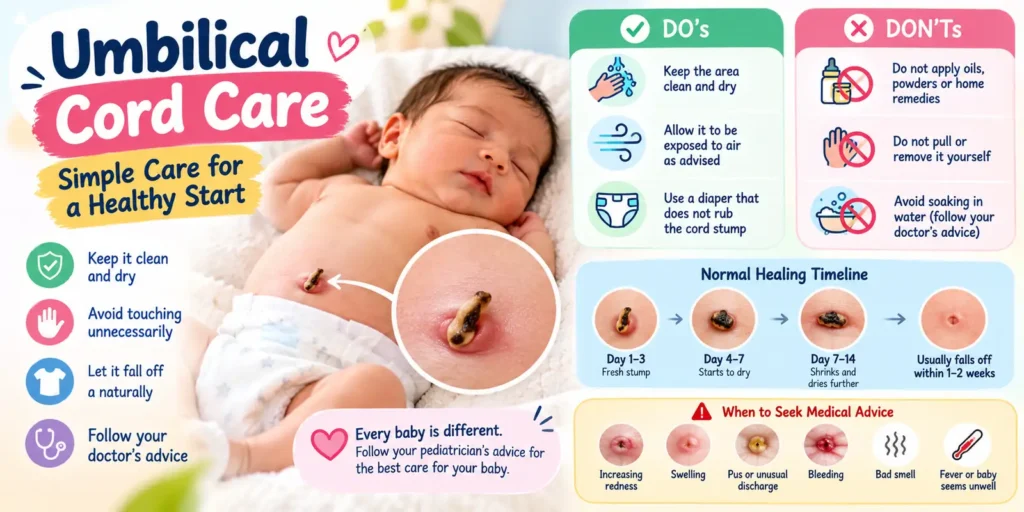
Before you leave the hospital, your doctor or midwife will share basic instructions for newborn umbilical cord care. The main goal is simple. Keep the umbilical cord stump clean and dry so it heals fast and avoids infection (omphalitis). Most stumps dry out and drop off within 1 to 3 weeks after birth.
7 Simple Daily Steps for Newborn Umbilical Cord Care
Treat the healing area gently every day by following these practical care tips:
- Stick to Sponge Baths First: Give your baby sponge baths until the stump drops off. Wipe your baby’s skin with a warm, damp washcloth or sponge instead of placing them in a tub of water. You can add a tiny drop of mild baby wash, rinse with a clean wet cloth, and pat the body dry with a towel. Do not worry if a little water touches the stump, because getting it wet causes no harm. Just let the stump air dry completely, and wait a couple of days after it falls off before giving a full tub bath.
- Keep the Stump Exposed to Air: Fresh air dries out the base of the cord faster. Dress your baby in loose, breathable clothing and let the stump air dry after every cleaning.
- Fold the Diaper Below the Stump: Always fold the front waistband of your baby’s diaper down and inward toward their tummy so it sits below the umbilical cord stump. This stops pee and poop from rubbing against the healing tissue. You can also buy newborn diapers with a built-in cord cutout, or carefully trim a small notch in the front and seal the cut edge with tape (sticking half the tape inside and half outside).
- Clean Up Stool and Pee Right Away: If poop or urine touches the stump, wash the dirty spot immediately with a cloth dipped in mild soap and warm water. Gently pat the area dry with a clean towel and leave it open to the air.
- Wipe Away Normal Oozing Fluids: Clear or slightly blood-tinged fluid often seeps from the base of the stump as it heals. Dip a cotton swab in clean water and wipe those fluids away. You may need to gently press down on the skin around the base or tilt the stump slightly to reach hidden moisture, then pat it dry with a clean cloth.
- Let the Stump Fall Off Naturally: Never pull, twist, or tug on the stump, even when it hangs by a tiny thread. Pulling the stump early causes painful bleeding and harms your baby’s delicate skin.
- Watch Closely for Infection Signs: Check the base at every diaper change for redness, swelling, pus, a foul smell, or active bleeding. Call your pediatrician right away if you notice any signs of an umbilical cord infection.
Can You Use Rubbing Alcohol for Newborn Umbilical Cord Care?
No, doctors no longer recommend putting rubbing alcohol on your baby’s umbilical cord stump. Years ago, parents routinely dabbed alcohol on the cord after baths and diaper changes. Today, medical research shows that rubbing alcohol kills helpful, healthy bacteria that actually help the stump dry out and drop off on schedule. Unless your healthcare provider specifically tells you to use it, skip the alcohol and stick to plain water, gentle wiping, and plenty of fresh air.
Diapers, Nappies, and Newborn Umbilical Cord Care
Fresh air dries out your baby’s healing stump much faster than trapped moisture. Never cover the umbilical cord stump with a diaper or nappy. If the waistband reaches your baby’s belly button, simply fold the top edge down so it sits safely underneath the cord area. This small habit keeps urine and stool away while supporting proper newborn umbilical cord care.
Normal vs Infected Umbilical Cord: Warning Signs to Watch
Knowing normal vs infected umbilical cord signs helps you act fast if trouble develops. While most stumps heal smoothly, an infection in umbilical cord tissue needs prompt medical attention. Call your doctor right away if you spot any of these three warning signs:
- Foul-Smelling Discharge: Thick, yellowish pus or a bad odor oozing from the base of the cord.
- Red or Swollen Skin: Redness spreading outward on the skin around the base of the stump.
- Pain or Tenderness: Your baby cries or pulls away whenever you touch the cord or the skin right next to it.
When Does an Umbilical Cord Fall Off?
Parents often wonder, “when does an umbilical cord fall off?” Typically, the stump dries out and drops away one to three weeks after birth. Before falling off on its own, the stump shrinks and shifts color from yellowish-green to brown and finally black. Once it detaches, you can simply throw the dried piece away.
If the stump stays attached past three weeks, schedule a visit with your pediatrician. A cord that lingers beyond three weeks can sometimes point to an underlying medical condition that needs a quick check.
What to Do After Your Baby’s Umbilical Cord Fell Off
Once the umbilical cord fell off milestone passes, your baby’s new belly button needs just a few days of gentle care to finish healing.
1. Handling Light Umbilical Bleeding Newborn Parents Notice
Seeing a few drops of blood right after the stump drops off is completely normal. Gently wipe the spot with a clean, damp cloth. The same rule applies if a diaper or onesie accidentally pulls the stump off early. However, if fresh blood keeps appearing every time you wipe, call your pediatrician right away for umbilical bleeding newborn care.
2. Why Does the Belly Button Look Yellow Underneath? (Umbilical Granuloma)
Sometimes, a small, moist bump of pinkish or yellow scar tissue stays behind after the stump drops off. Doctors call this common, harmless growth an umbilical cord granuloma (or umbilical granuloma). It often drains a tiny bit of light-yellow fluid and usually clears up on its own within a week. Always let your pediatrician check any skin changes around the navel. If the bump lasts longer than a week, your doctor can treat it quickly right in the office.
3. How Long Does Belly Button Healing Take?
Your baby’s belly button usually heals completely within just a few days after the stump drops off. Light oozing or minor spotting remains normal during this short window. Follow these three simple hygiene steps while it finishes healing:
- Wash Your Hands First: Always clean your hands thoroughly with soap and water before touching your baby’s belly button.
- Clean Gently With Warm Water: Dip a clean cotton bud in warm water to softly wipe away any dried ooze around the navel.
- Keep the Area Clean and Dry: Pat the skin dry and let air reach the belly button so it closes cleanly.
Other Newborn Umbilical Cord and Belly Button Problems to Watch
Even with proper newborn umbilical cord care, a few harmless skin or muscle issues can show up after the stump drops away. Knowing what these bumps look like helps you stay calm and seek the right medical advice.
1. Umbilical Granuloma After the Umbilical Cord Falls Off
Sometimes, a baby’s belly button does not finish drying completely after the umbilical cord falls off. Instead of smooth skin, a small, moist lump of reddened or brownish scar tissue stays behind on the navel. Doctors call this common tissue growth an umbilical granuloma (or umbilical cord granuloma).
You may notice a few clear signs if one develops:
- A tiny, moist pink, red, or brownish bump sits right inside the belly button.
- The lump oozes a small amount of clear or light-yellow fluid.
- Your baby shows no pain or fever because the tissue has no nerves.
How Doctors Treat an Umbilical Granuloma
Most umbilical granuloma bumps shrink and vanish on their own within about one week. Always let your doctor, midwife, or child health nurse check the area if your baby’s belly button looks slow to heal. If the bump stays past a week, your pediatrician can quickly dry or chemically cauterize the extra tissue right in the office.
2. Umbilical Hernia in Babies and Toddlers
If your baby’s umbilical cord area pushes outward whenever they cry, cough, or strain, they may have an umbilical hernia. This condition happens when a small opening remains in the muscular wall of the tummy. Pressure inside the abdomen pushes tissue gently through that tiny gap, creating a soft bulge or swelling around the navel.
Umbilical hernias are very common in newborns and young children, and they rarely cause serious trouble. You will often notice the swelling come and go, looking larger during crying spells and flattening out when your baby relaxes.
Safe Care and Treatment for an Umbilical Hernia
Almost every umbilical hernia closes naturally as your baby’s tummy muscles grow stronger, usually within the first 12 to 18 months of life. Follow these three essential care rules:
- Skip Home Remedies: Never tape a coin, bandage, or tight wrap over your baby’s belly button. Pressing a coin onto the navel will not fix the hernia and can cause a painful skin rash.
- Watch for Rare Warning Signs: Contact your doctor right away if the bulge turns hard, looks discolored, feels tender, or cannot gently push back inside while your baby is calm.
- Know When Surgery Helps: In the rare event that the muscular opening does not close by 3 to 5 years of age, a pediatric surgeon can repair it with a simple, routine procedure called herniorrhaphy.
When to Call Your Doctor for Newborn Umbilical Cord Care
Watching your baby’s umbilical cord stump darken and shrink is a normal part of healing. Seeing a tiny spot of blood near the base is also common. Light spotting can happen if a diaper waistband rubs against the stump or if the cord catches slightly on clothing. Just like a healing scab, the belly button may also bleed a few drops right when the stump drops off.
However, knowing when to ask for medical help keeps your baby safe. Good newborn umbilical cord care includes checking the navel at every diaper change for early warning signs.
5 Signs of an Umbilical Cord Infection That Need Immediate Care
Contact your baby’s healthcare provider right away if you notice any of these symptoms:
- Worsening or Ongoing Bleeding: Blood from the stump grows heavier, or you still see fresh drops of blood after three days.
- Thick Yellow Pus: The belly button area oozes thick fluid, especially yellow pus.
- Redness or Warm Skin: The skin around the base turns red or develops red streaks. Because redness looks harder to spot on darker skin tones, gently touch the area with clean fingers. Infected skin often feels noticeably warmer than healthy skin nearby.
- Swelling, Pain, or Foul Odor: The navel looks swollen, smells bad, or makes your baby cry when you touch the skin around it.
- Changes in Your Baby’s Behavior: Your baby develops a fever, acts unusually sleepy or fussy, or feeds poorly.
These symptoms can point to an umbilical cord infection (omphalitis). Doctors treat this infection quickly so it does not spread further.
What If the Umbilical Cord Stump Still Has Not Fallen Off After 3 Weeks?
Most stumps dry out and drop away within one to three weeks. If your baby’s newborn umbilical cord stump stays firmly attached past three weeks, schedule a visit with your pediatrician. A delayed stump can sometimes signal an underlying issue, such as a mild infection or an immune system condition, that benefits from early medical care.
5 Surprising Facts About Your Newborn Umbilical Cord
Poets often call the umbilical cord the “string of life” for good reason. Inside the womb, this soft, coiled tube links you and your baby both physically and emotionally. Together, the placenta and umbilical cord draw oxygen and nutrients from your body to nourish your growing baby while carrying waste products safely away.
Beyond basic nourishment, the newborn umbilical cord holds several remarkable features that protect your baby before and after birth.
1. Umbilical Cord Length Varies Widely From Baby to Baby
Every umbilical cord starts as a tiny bundle of blood vessels early in pregnancy. Inside, one umbilical vein delivers fresh oxygen and nutrients to your baby, while two umbilical arteries carry used blood back toward the placenta.
Just like babies themselves, no two cords share the exact same size. A normal umbilical cord length ranges from 40 to 70 centimeters (about 15.5 to 27.5 inches). A smooth, protective coating called Wharton’s jelly wraps around the rope-like structure to keep it from twisting, kinking, or pinching under pressure.
2. The Placenta and Umbilical Cord Hold One-Third of Your Baby’s Blood
At birth, the placenta and umbilical cord still hold roughly 33 percent as much blood as your baby’s entire body. For example, a 7-pound newborn has about 300 milliliters (10 ounces) of blood inside their body, plus another 100 milliliters (3.5 ounces) waiting inside the cord and placenta.
Waiting just 1 to 5 minutes before clamping—a practice called delayed cord clamping—allows much of that blood to flow into your baby as their lungs fill with air. During those few minutes, a 7-pound baby receives roughly 60 milliliters (2 ounces) of extra blood. This boost builds healthy iron stores that support brain development throughout your baby’s first year.
3. Leftover Umbilical Cord Blood Can Replace Painful Newborn Needle Sticks
Even after delayed clamping, valuable blood remains inside the cut cord. Preterm babies, infants in the neonatal intensive care unit (NICU), and babies with birth conditions often need frequent lab tests to check for serious infections like sepsis. Traditional needle draws can hurt tiny babies and cause risky blood loss.
Doctors can use postnatal umbilical cord blood sampling (PCBS) instead. Because the cord has no nerves, collecting leftover cord blood causes zero pain while delivering accurate lab results. Studies show PCBS helps keep a premature baby’s blood pressure steady and lowers the need for early blood transfusions. Labs use this sample for blood counts, blood cultures, genetic screenings, and infection checks.
4. Cord Blood Banking and Donation Save Young Lives
The blood inside a newborn umbilical cord also contains rich, life-saving stem cells. Parents can choose to donate cord blood to a public bank or store it privately for family use. Doctors use these stem cells in transplants to treat children facing blood cancers, immune disorders, and metabolic diseases. Collecting cord blood is safe, painless, and far less invasive than a bone marrow transplant.
5. Proper Newborn Umbilical Cord Care Requires Fresh Air, Not Bandages
After birth, the remaining stump sits right above your baby’s belly button and takes 1 to 3 weeks to fall off. Good newborn umbilical cord care relies on keeping that tiny stump clean, dry, and open to the air—never covered by a bandage or tight diaper waistband.
Stick to gentle sponge baths so trapped water does not trigger an umbilical cord infection (omphalitis). Check the base at every diaper change. Call your baby’s doctor right away if you notice yellow or white pus, spreading redness, swelling, bleeding, or yellow-brown drainage.
Frequently Asked Questions About Newborn Umbilical Cord Care
1. What heals the umbilical cord fast?
Fresh air and dryness heal an umbilical cord fastest. Keep the stump clean, fold diapers down below the navel, and dress your baby in loose cotton clothes so air circulates freely around the base. Avoid creams, ointments, or rubbing alcohol, because trapped moisture slows down natural drying.
2. What are the signs of umbilical cord infection?
Watch for thick yellow pus, a foul smell, spreading redness, or warm, swollen skin around the base of the stump. Your baby may also cry when you touch the area, develop a fever, or feed poorly. Call your pediatrician right away if you notice any of these signs of an umbilical cord infection.
3. How long do umbilical cords take to heal?
Most umbilical cord stumps dry up and fall off within 1 to 3 weeks after birth. Once the stump drops away, your baby’s belly button takes just a few more days to finish healing completely.
4. How to care for a newborn umbilical cord?
Good newborn umbilical cord care relies on three simple daily habits:
- Give gentle sponge baths instead of full tub baths until the stump falls off.
- Fold the front waistband of the diaper down below the cord area.
- Wipe away any stool or normal oozing with a damp cloth or cotton swab and let the skin air dry.
5. Can I put vaseline on a baby’s umbilical cord?
No, you should never put Vaseline, petroleum jelly, lotions, or oils on your baby’s umbilical cord stump. Thick ointments trap moisture against the skin, block airflow, and prevent the stump from drying out properly.
6. Can I bathe my newborn baby’s umbilical cord?
Stick to gentle sponge baths until the stump drops off on its own. Wipe your baby’s body with a warm, damp washcloth rather than submerging them in a tub of water. If a few drops of water splash onto the cord, simply pat the surrounding skin dry and let the stump air dry.
7. How long do I wait to give my baby a bath after umbilical cord?
Wait 2 to 3 days after the umbilical cord stump falls off before giving your baby a full tub bath. Giving the belly button a couple of extra days allows any tiny raw spot or light scab underneath to close cleanly.
8. What does a healthy umbilical cord look like?
A healthy newborn umbilical cord stump starts out moist and yellowish-green right after birth. Over the next several days, it naturally shrinks, hardens, and darkens to brown, gray, or black before falling off. A tiny bit of dried blood or light crusting around the base is also normal.
9. How to put diaper on newborn with umbilical cord?
Fasten the diaper snugly around your baby’s hips, then fold the front top edge down and inward toward the tummy so it sits below the stump. You can also choose newborn diapers made with a built-in curved cutout around the belly button.
10. Can newborns wear pants with umbilical cord?
Yes, newborns can wear pants as long as the waistband sits comfortably below the stump or fits loosely over it without rubbing. High-waisted, tight elastic waistbands can press against the healing cord and cause irritation or light bleeding.
11. What is the hardest week of a newborn?
Many new parents find week 2 or week 3 the hardest stage with a newborn. During these weeks, early birth adrenaline fades, sleep deprivation builds up, and babies often hit their first growth spurt with frequent cluster feeding and evening fussiness.
12. Can I cover my umbilical cord with a diaper?
No, never cover the healing umbilical cord stump with a diaper. A covered stump traps warmth and moisture, rubs against wet fabric, and increases the risk of irritation or infection from pee and poop.
13. What are the best clothes for a newborn with an umbilical cord?
Loose, breathable 100% cotton outfits work best while the stump heals. Kimono-style side-snap shirts, roomy cotton bodysuits, and soft sleep gowns let air reach the belly button without putting pressure on the stump.
14. How long should I wait to cut my baby’s umbilical cord?
Doctors and midwives typically practice delayed cord clamping by waiting 1 to 3 minutes (and up to 5 minutes) after birth before clamping and cutting the umbilical cord. This short pause lets extra iron-rich blood flow from the placenta into your baby.
15. How do I bathe my newborn without an umbilical cord?
Once the stump falls off and the belly button looks dry and healed, you can transition to a warm baby bathtub. Support your baby’s head and neck with one hand, use a mild fragrance-free baby wash, and gently clean inside and around the new navel with a soft washcloth.
16. Should I clean baby’s belly button after cord falls off?
Yes, keep cleaning your baby’s belly button gently with warm water and a clean cotton swab or soft washcloth for a few days after the cord drops off. Wash your hands first, wipe away any light dried ooze, and pat the area completely dry.
17. What exactly is an umbilical cord?
An umbilical cord is a soft, flexible, rope-like tube that connects a growing baby to the placenta inside the womb. It contains one vein that carries oxygen and nutrients to the baby and two umbilical arteries that carry waste products back to the placenta.
18. What is the umbilical cord called after birth?
After a doctor clamps and cuts the cord at birth, the short 2 to 3 centimeter piece left on your baby’s belly is called the umbilical cord stump. Once that stump drops off, the healed mark left behind is called the umbilicus or belly button.
19. Whose DNA is in an umbilical cord?
The umbilical cord contains your baby’s DNA, not the mother’s DNA. Because the cord and placenta grow from the fertilized egg alongside the baby, the cord tissue and cord blood match the newborn’s exact genetic profile.
20. Which cord is cut after delivery?
A baby only has one umbilical cord connecting them to the placenta. After delivery, the healthcare provider places two plastic clamps on that single cord and cuts cleanly between them.
21. What happens if you never cut the umbilical cord after birth?
Leaving the umbilical cord uncut so it stays attached to the placenta until it dries and detaches naturally is called a lotus birth. The cord and placenta slowly dry out and separate from the baby’s navel on their own within 3 to 10 days, though doctors warn this practice carries a higher risk of bacterial infection.
22. What is the 5 5 5 rule after birth?
The 5-5-5 postpartum rule is a gentle recovery guide for new mothers during their first 15 days after delivery. It encourages spending 5 days in the bed, 5 days on the bed, and 5 days around the bed so your body can heal while you bond with your newborn.
23. Can dad cut umbilical cord after C-section?
Yes, in many hospitals, a partner or dad can trim the umbilical cord during a C-section. The surgeon usually clamps and cuts the cord first to keep the surgical field sterile, then brings the baby to the warmer where the partner safely trims the excess stump.
24. Can a baby cry before the umbilical cord is cut?
Yes, most healthy babies cry within seconds of birth—well before anyone clamps or cuts the umbilical cord. Taking that first breath and crying helps clear fluid from the lungs and starts normal oxygen circulation.
25. Are husbands allowed during a c-section?
Yes, most hospitals welcome one support person—such as a husband, partner, or doula—into the operating room during a planned C-section. Your partner sits right beside your head behind the surgical drape to offer comfort, though hospital policies may ask partners to wait outside during rare emergency deliveries.
26. Do children born by c-section have a higher IQ?
No, babies born by C-section do not have a higher IQ than babies born vaginally. Research shows that a child’s intelligence depends on genetics, nutrition, and a nurturing home environment rather than their method of delivery.
27. Do C-section babies look different?
At birth, C-section babies often have slightly rounder heads than babies born vaginally because they did not pass through the narrow birth canal. Within a few days to weeks, any mild cone-shaped molding from vaginal birth smooths out, and all babies look completely alike.
People also ask :
1. What is the Umbilical cord and why is it important for a baby?
The umbilical cord is a flexible tube that connects a developing baby to the placenta during pregnancy. It carries oxygen and essential nutrients to the baby and helps transport waste products away. After birth, the cord is clamped and cut, leaving a small stump that gradually dries and falls off.
2. What is the correct Umbilical cord care for a newborn?
The correct umbilical cord care involves keeping the stump clean and dry until it falls off naturally. Wash your hands before handling it, keep the diaper folded below the stump, avoid covering it tightly, and do not apply oils, powders, creams, or home remedies unless specifically recommended by your healthcare professional.
3. What is the Umbilical cord two arteries and one vein meaning in hindi?
The phrase “Umbilical cord two arteries and one vein meaning in hindi” refers to the normal structure of most umbilical cords.
In Hindi, it means नाभि की गर्भनाल में दो धमनियां और एक शिरा होती हैं।
The two arteries carry blood away from the baby towards the placenta, while the single vein carries oxygen-rich blood and nutrients from the placenta to the baby. This is known as a normal three-vessel umbilical cord.
4. When does the Umbilical cord fall off after birth?
The umbilical cord fall off process usually takes around 1–2 weeks after birth, although the timing can vary. The stump gradually changes colour, dries, becomes darker, and separates naturally from the baby’s belly button. Never pull or twist it to make it fall off faster.
5. What are the common signs of Umbilical cord infection?
Umbilical cord infection can cause redness around the belly button, swelling, tenderness, pus-like discharge, or an unpleasant smell. Your baby may also develop a fever, become unusually sleepy, or feed poorly.
Seek urgent medical assessment if you notice these symptoms because newborn infections can become serious quickly.
6. Is Umbilical cord smell normal in newborn babies?
A mild change in smell can sometimes occur as the stump dries, but a strong or unpleasant Umbilical cord smell, particularly with yellow discharge, redness, swelling, or tenderness, may indicate an infection. Contact your baby’s healthcare professional promptly if these signs appear.
7. Is Umbilical cord bleeding normal when the stump falls off?
A tiny spot of blood when the stump separates can be normal. However, persistent bleeding, active bleeding, or blood that continues to appear after gently wiping the area needs medical attention. Contact your baby’s doctor rather than trying home treatments.
8. What happens if the Umbilical cord around neck during pregnancy?
An umbilical cord around neck is commonly called a nuchal cord. It occurs when the cord loops around the baby’s neck before birth. It is relatively common and does not automatically mean the baby is in danger. Your healthcare team monitors the baby’s well-being during pregnancy and labour.
9. Is an Umbilical cord wrapped around neck dangerous for the baby?
An Umbilical cord wrapped around neck does not necessarily cause complications. Many babies with a nuchal cord are delivered safely. However, healthcare professionals monitor the baby’s heart rate during labour to identify any signs of distress and decide whether additional intervention is necessary.
10. What is Umbilical cord prolapse and why is it an emergency?
Umbilical cord prolapse occurs when the umbilical cord slips through the cervix into the vagina before or alongside the baby during labour. The cord may become compressed, reducing the baby’s oxygen supply. It is an obstetric emergency requiring immediate medical attention and urgent delivery planning.
11. What is the Umbilical cord meaning in hindi pregnancy?
The Umbilical cord meaning in hindi pregnancy is गर्भनाल (Garbhnaal) or नाभि नाल (Nabhi Naal).
It is the tube-like structure connecting the baby to the placenta inside the uterus. It provides oxygen and nutrients to the developing baby throughout pregnancy.
12. What does the Umbilical cord contains during pregnancy?
The umbilical cord contains three main blood vessels: two arteries and one vein. These blood vessels are surrounded by a protective, jelly-like substance called Wharton’s jelly, which helps protect them from compression. The cord is covered by a thin outer membrane.
13. How is Umbilical cord cutting performed after delivery?
Umbilical cord cutting is performed after the baby is delivered and the healthcare team has assessed the mother and baby. The cord is clamped and cut using sterile instruments. Delayed cord clamping is recommended in many birth situations because it provides additional placental blood to the newborn. The timing depends on the clinical circumstances.
14. What is the Umbilical cord in hindi called?
The Umbilical cord in hindi is called गर्भनाल (Garbhnaal) or नाभि नाल (Nabhi Naal). It connects the developing baby to the placenta and supports the transfer of oxygen and nutrients during pregnancy.
15. What is the correct Umbilical cord care procedure at home?
Follow these basic steps for the Umbilical cord care procedure:
- Wash your hands with soap and water before handling your baby.
- Keep the cord stump clean and dry.
- Fold the front of the diaper below the stump.
- Avoid pulling, twisting, or covering the stump tightly.
- If it becomes dirty, clean it gently according to your healthcare professional’s instructions.
- Avoid applying powders, oils, creams, or traditional remedies.
- Watch for redness, swelling, pus, unpleasant smell, or persistent bleeding.
Seek medical advice if you notice signs of infection.
16. What should parents do for Umbilical cord care after it falls off?
Umbilical cord care after it falls off involves keeping the belly button clean and dry while the remaining skin heals. A small amount of spotting or discharge may occur briefly. Clean the area gently with plain water if needed and pat it dry. Consult your baby’s doctor if there is persistent discharge, bleeding, redness, swelling, or a pink, moist lump.
17. What topics should an Umbilical cord care ppt include?
An Umbilical cord care ppt for parents, nursing students, or healthcare workers can include:
- Introduction to the umbilical cord
- Structure and functions of the cord
- Normal three-vessel cord anatomy
- Newborn umbilical cord care
- Hygiene and handwashing
- Signs of umbilical cord infection
- Normal cord separation
- Warning signs requiring medical attention
- Care after the stump falls off
The presentation should use medically reviewed information and clear educational illustrations.
18. Where can parents find reliable Umbilical cord care articles?
Parents can find reliable Umbilical cord care articles through trusted healthcare organisations such as the World Health Organization (WHO), NHS, MedlinePlus, and recognised children’s hospitals. Choose articles that explain safe cleaning, drying, normal separation, infection warning signs, and when to seek medical attention.
19. What should an Umbilical cord care drawing show?
An educational Umbilical cord care drawing should show a newborn’s abdomen, the attached cord stump, the surrounding skin, and the correct diaper position below the stump. It can also illustrate handwashing, keeping the stump dry, and avoiding the application of powders or traditional substances.
20. How can parents ensure proper Umbilical cord care of newborn baby?
Proper Umbilical cord care of newborn baby starts with simple hygiene. Keep the stump clean and dry, wash your hands before handling it, avoid covering it with the diaper, and allow it to separate naturally. Do not use unprescribed products or pull the stump off. Watch for signs of infection and consult a healthcare professional if anything looks unusual.
21. What are the essential steps of Umbilical cord care after birth?
Umbilical cord care after birth involves keeping the stump clean, dry, and exposed to air. Wash your hands before handling the baby, fold the diaper below the stump, and allow it to fall off naturally. Follow your healthcare provider’s instructions regarding bathing and cleaning.
22. Is Umbilical cord care powder safe for newborn babies?
Umbilical cord care powder is generally not recommended for routine newborn cord care. Powders can collect around the stump and may interfere with keeping the area clean and dry. Avoid talcum powder, herbal powders, turmeric, oils, and other home remedies unless a healthcare professional specifically prescribes a treatment.
23. What information should an Umbilical cord care in newborn ppt contain?
An Umbilical cord care in newborn ppt should explain the anatomy of the umbilical cord, its function during pregnancy, the process of cord clamping and cutting, newborn stump care, hygiene practices, normal healing, and infection warning signs. It should also include illustrations demonstrating safe diaper positioning and proper cleaning practices.
24. What are the basic steps of Umbilical cord care in hindi?
Umbilical cord care in hindi can be explained through these simple instructions:
- बच्चे की नाभि की गर्भनाल को साफ और सूखा रखें।
- गर्भनाल को छूने से पहले हाथ धोएं।
- डायपर को गर्भनाल के नीचे मोड़कर रखें।
- गर्भनाल को खींचें या जबरदस्ती न हटाएं।
- उस पर तेल, पाउडर या घरेलू नुस्खे न लगाएं।
- लालिमा, सूजन, पस या दुर्गंध दिखाई देने पर डॉक्टर से संपर्क करें।
- गर्भनाल को खींचकर या ज़बरदस्ती हटाने की कोशिश न करें।
25. What is an Umbilical hernia in newborn babies?
An Umbilical hernia occurs when a small portion of tissue pushes through the abdominal muscles near the baby’s belly button, creating a soft bulge. It may become more noticeable when the baby cries or strains. Many infant umbilical hernias close naturally as the abdominal muscles develop. Never press or tape the bulge down. Consult your baby’s doctor for an assessment.
26. What is the difference between a Normal vs infected umbilical cord?
A normal umbilical cord stump gradually dries, darkens, and separates without causing significant discomfort. A small amount of dried blood or sticky discharge can sometimes occur during separation.
An infected stump may show redness spreading onto the surrounding skin, swelling, tenderness, pus-like discharge, or an unpleasant smell. These symptoms require prompt medical assessment.
27. How to clean umbilical cord when it falls off?
To understand how to clean umbilical cord when it falls off, first wash your hands thoroughly. If the belly button area is dirty, gently clean it with plain water and pat it dry with a clean cloth or gauze. Do not scrub, pick at the healing skin, or apply unprescribed products. Contact your doctor if bleeding, discharge, redness, or swelling persists.
28. What is the difference between Umbilical cord care before it falls off and after separation?
Umbilical cord care before it falls off focuses on keeping the attached stump clean, dry, and uncovered while allowing it to separate naturally.
Umbilical cord care after separation focuses on maintaining gentle hygiene around the healing belly button and watching for persistent discharge, bleeding, redness, or swelling.
Both stages require gentle handling and good hand hygiene.
29. Where can I download an Umbilical cord care pdf?
An Umbilical cord care pdf can be found through trusted healthcare resources, including WHO publications, NHS newborn-care guidance, and children’s hospital patient information leaflets. Look for medically reviewed PDFs explaining newborn cord hygiene, safe cleaning, normal separation, and infection warning signs.
30. What is the Umbilical cord care definition?
The Umbilical cord care definition refers to the hygienic practices used to maintain a newborn’s umbilical cord stump after birth until it dries, separates naturally, and heals. It includes hand hygiene, keeping the stump clean and dry, avoiding unprescribed substances, and recognising signs of infection.
31. How can parents recognise an Umbilical cord infection early?
Parents can recognise an Umbilical cord infection early by checking for redness spreading around the belly button, swelling, tenderness, pus-like discharge, or an unpleasant smell. A newborn with fever, poor feeding, unusual sleepiness, or reduced responsiveness needs urgent medical assessment. Do not wait for all symptoms to appear before seeking help.
Final Thoughts on Newborn Umbilical Cord Care
Caring for a newborn umbilical cord stump feels daunting at first, yet nature handles almost all the hard work on its own. Your main job as a parent is keeping the area clean, dry, and open to fresh air. Stick to gentle sponge baths, fold diapers below the navel, and skip rubbing alcohol or heavy ointments.
Within one to three weeks, the dried stump drops off naturally and reveals your baby’s new belly button. Stay alert for early signs of an umbilical cord infection, such as spreading redness, foul-smelling pus, or ongoing bleeding, and call your pediatrician whenever something feels off. With simple daily habits and a little patience, your baby’s belly button will heal cleanly and safely.
Medical Disclaimer
The information in this guide serves educational and informational purposes only. It does not replace professional medical advice, diagnosis, or treatment from a qualified pediatrician, midwife, or healthcare provider. Always consult your baby’s doctor with any questions about newborn umbilical cord care, healing delays, or signs of infection. If your newborn shows symptoms of a medical emergency—such as heavy bleeding, a high fever, extreme lethargy, or poor feeding—seek immediate medical care right away.
Authoritative Medical References
- American Academy of Pediatrics (AAP) – HealthyChildren.org: Umbilical Cord Care in Newborns (Adapted from Caring for Your Baby and Young Child: Birth to Age Five, 8th Edition) — https://www.healthychildren.org/English/ages-stages/baby/bathing-skin-care/Pages/Umbilical-Cord-Care.aspx
- Mayo Clinic: Umbilical Cord Care: Do’s and Don’ts for Parents — https://www.mayoclinic.org/healthy-lifestyle/infant-and-toddler-health/in-depth/umbilical-cord/art-20048250
- National Health Service (NHS) – Milton Keynes University Hospital: Care of the Umbilical Cord — https://www.mkuh.nhs.uk/patient-information-leaflet/care-of-the-umbilical-cord
- World Health Organization (WHO): WHO Recommendations on Postnatal Care of the Mother and Newborn (Dry Cord Care Guidelines) — https://www.who.int/publications/i/item/9789241506649
🔗 Related Articles
If you are preparing for a newborn, these helpful Blooming Blogs guides can help you plan, prepare, and care for your baby with greater confidence:
- 1. Best Infant Formula for Newborns: Types, Choices & Safety Guide
- 2. Newborn Baby Essentials Checklist for Soon-to-Be Parents
- 3. How to Prepare Formula Milk for a Newborn Baby
- 4. Newborn Baby Care: Complete Guide for New Parents
- 5. Formula Mixing & Bottle Ratio Calculator
- 6. Hospital Bag for Delivery: Complete Checklist for Mom and Baby
- 7. The Ultimate Pregnancy Hospital Bag & Registry Checklist: Your Stress-Free Delivery Guide
- 8. Hospital Bag Checklist Tool
- 9. Rompers for Newborn: Ultimate Guide to Safe Baby Clothes
- 10. Onesies and Rompers: How to Dress Your Newborn Right
- 11. Baby Onesies Buying Guide: Best Soft Outfits for Newborns
🛠️ Try Our Free Interactive Baby Care Tools
Planning your nursery, preparing for your newborn, or setting up healthy daily routines? Explore our collection of free, interactive baby care tools and calculators designed to make parenting easier, safer, and more organised.
Explore our helpful tools:
- Formula Mixing & Bottle Ratio Calculator
- Baby Sleep Calculator
- Baby-Proofing Safety Audit Tool
- Hospital Bag Checklist Tool
- Hospital Bag & Baby Registry Checklists
- LittleSafe Home Checklist
- Mid-Parental Height Calculator
- Newborn Diapers Tracker
Discover more helpful resources: Visit the Blooming Blogs Free Online Tools Hub for practical calculators, checklists, and interactive tools.
🌱 Continue Exploring…
Whether you’re nurturing a newborn, curating a sanctuary for your home and garden, or simply looking to level up your day-to-day life, there’s always a new perspective waiting to be discovered. From practical everyday parenting guidance, women’s wellness information, ideas to make your home more beautiful, tips for caring for pets and plants, or inspiration for your spiritual journey, Blooming Blogs brings useful knowledge together in one place.
Blooming Blogs — knowledge that blooms.
🌸 Blooming Blogs Promise
We’re here to bring you thoughtful, reliable, and helpful insights you can truly count on. Every article on Blooming Blogs is thoroughly researched, crafted with care, and written with genuine empathy to support you in your everyday journey. Your trust means everything to us, and we are dedicated to sharing content that informs, inspires, and makes your life a little easier.
📰 Editorial Notes
Our team strives for clarity, accuracy, and depth in every piece we publish. Content is periodically updated to ensure facts, recommendations, and guides stay relevant over time. While we consult trusted sources and expert research, our goal is always to present complex topics in a simple, practical, and conversational way that works for real life.
⚠️ Disclaimer
The content provided on Blooming Blogs is for informational and educational purposes only and should not be considered professional medical, legal, or financial advice. Always consult with a qualified expert or licensed professional before making decisions related to your health, family, or personal finances. Blooming Blogs is not liable for any actions taken based on the information provided on this website. (For full details, please visit our Disclaimer Policy Page).
💬 Share Your Experience — Leave a Comment
We’d love to hear from you! Did this article help you, or do you have a personal tip or story to share with our community? Drop your thoughts, questions, or feedback in the comment section below. Every voice enriches our community, and we read every single comment!