


Introduction
Noticing thick, yellowish crusts or dry skin on newborns head can feel alarming for any new parent. Thankfully, cradle cap is a harmless and very common skin condition in babies. Doctors call this condition infantile seborrheic dermatitis, or seborrhea infant. It causes oily, scaly patches on a baby’s scalp, though it rarely bothers your little one.
Many parents immediately wonder what is cradle cap and whether poor hygiene triggers it. In truth, washing routines do not cause these stubborn flakes. Instead, lingering maternal hormones stimulate your baby’s oil glands to produce extra sebum. Consequently, dead skin cells stick to the scalp instead of shedding normally.
You also do not need harsh chemicals to clear those flakes. Gentle daily care makes healing cradle cap simple and stress-free at home. In this complete guide, you will learn what causes cradle cap, when to call a doctor, and how to get rid of cradle cap safely.
Key Takeaways
- Understand the root cause: Overactive oil glands from maternal hormones and natural Malassezia yeast make dead skin cells clump together on a newborn’s head.
- Keep care simple: Soften thick scales with plain mineral oil or petroleum jelly for 15 minutes, wash with mild baby shampoo, and brush softly.
- Skip harsh remedies: Avoid olive oil, adult shampoos, essential oils, and fingernail picking to protect your baby’s fragile skin barrier.
- Partner with your pediatrician: Schedule a quick checkup if scales spread to the body, bleed, ooze, or last beyond a few months.
What Is Cradle Cap in Newborns?
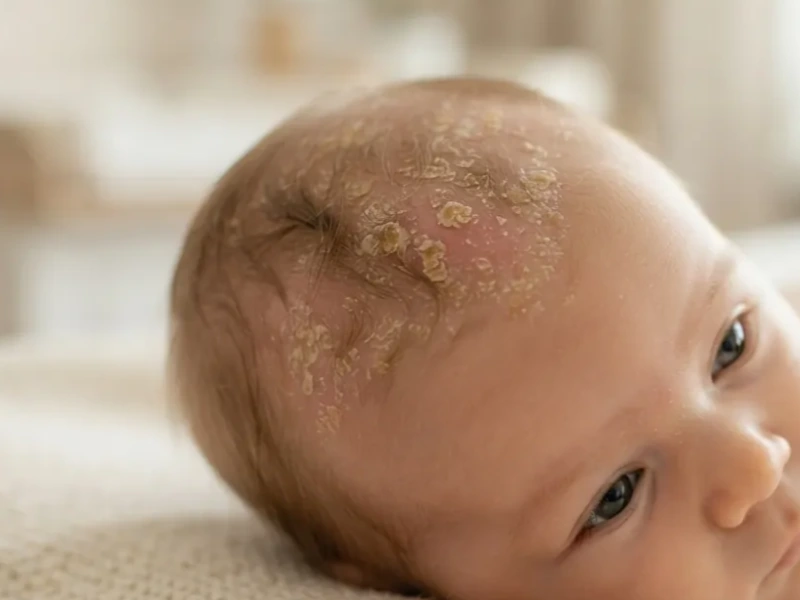
Cradle cap is a harmless skin condition that creates yellow or white scaly patches on your baby’s head. These scales often feel greasy or flaky, and a mild rash may surround them. Rest assured that your little one feels no danger or discomfort from this condition. It causes zero negative effects on your baby’s overall health. Moreover, it never disrupts feeding routines or sleep schedules. Because the patches rarely itch or hurt, they usually fade away within a few weeks or months. Doctors also call this condition crusta lactea, honeycomb disease, milk crust, or pityriasis capitis. Most importantly, these scalp flakes are completely non-contagious, so your baby cannot catch or spread them. Always avoid scratching or picking at the crusts, as doing so can irritate delicate skin.
When Does Cradle Cap Start and Clear Up?
This common condition affects most babies at some point during infancy. If you wonder when does cradle cap start, symptoms typically appear within the first three months after birth. Nearly all cases show up during a baby’s first year of life. Because newborn cradle cap begins so early, it usually clears up on its own before your child’s first birthday. However, a small number of toddlers still develop mild scaling at one or two years of age.
Do Babies Need Medical Treatment for Scalp Scales?
Most cases of cradle cap infants experience stay very mild. In fact, your baby likely needs no medical treatment at all, because the crusts clear naturally over time. Still, you should speak with your pediatrician whenever you have questions or concerns about dry skin on newborns head. If you want to help the process along, gentle home care routines can safely loosen and lift the flaky skin a little sooner.
What Is the Difference Between Cradle Cap and Seborrheic Dermatitis in Infants?
Doctors use the medical term seborrheic dermatitis to describe itchy red patches and greasy scales that can affect people at any age. In adults, most people simply recognize this common scalp condition as dandruff. By comparison, cradle cap is a specific, mild form of seborrheic dermatitis that stays limited to your baby’s scalp and appears shortly after birth. Pediatricians often refer to this early condition as infantile seborrheic dermatitis (ISD), or seborrhea infant.
Sometimes, babies develop seborrheic dermatitis on other parts of their body beyond the scalp, such as their face or diaper area. When dry scalp in newborn babies spreads to those extra areas, your pediatrician can share tailored advice to help clear your little one’s skin safely.
Symptoms of Cradle Cap in Newborns
Newborn Scalp Scales – How To Recognize It!
Parents usually first notice patchy scaling or thick crusts on their baby’s head. When you gently touch these patches, the skin can feel fragile and flaky or waxy and greasy. Thankfully, dry skin on newborns head causes zero pain or discomfort. Most infants do not even notice the scales, because the condition rarely itches.
Key Signs on Your Baby’s Scalp
When you examine your little one’s head closely, you will often spot yellow or white patches that resemble tiny fish scales. These crusts cling to the skin and typically show several distinct features:
- Thick, crusty patches: Oily or dry areas of skin often build up across the top of the scalp.
- Dandruff-like flakes: Loose white or yellow skin flakes frequently shed onto clothing or bedding.
- Mild redness or color changes: On light skin tones, a pink or red rash may surround the scales. On darker skin tones, the surrounding rash often looks lighter or darker than your baby’s natural skin color.
- Temporary hair loss: After a crust loosens and falls off, a few strands of hair may come away with it, though new hair grows back normally.
Other Body Areas Where Scales Can Appear
Although cradle cap typically starts on the scalp at or shortly after birth, similar scales can spread elsewhere. You might notice mild scaling on your baby forehead, behind the ears, on the eyelids, or around the neck and nose. Patches can also show up in skin creases like the groin, armpits, and the backs of the knees. When seborrhea infant patches appear on the body rather than the scalp, doctors refer to the condition as seborrheic eczema.
Cradle Cap vs. Atopic Dermatitis (Eczema)
Because newborn cradle cap causes red, flaky skin, parents sometimes confuse it with atopic dermatitis. However, one major difference separates these two skin conditions. Atopic dermatitis causes intense itching and discomfort, while cradle cap infants experience stays calm and itch-free. Always avoid picking or scratching at the crusts, as breaking the skin can lead to an infection.
What Causes Cradle Cap in Newborns?
Doctors still do not know the single exact trigger behind what causes cradle cap. However, medical researchers believe a combination of natural factors leads to these stubborn scalp scales. First, it helps to know what does not cause this condition. Cradle cap is never contagious, and poor hygiene, allergies, or bacterial infections do not trigger it. You did nothing wrong to cause it, and most babies sleep right through these harmless flakes without any discomfort.
Main Factors Behind Infant Scalp Scales
Researchers point to four key reasons why dry skin on newborns head develops during early infancy:
- Lingering maternal hormones: Hormones pass from mother to baby before birth and stay in the infant’s body for several months. These hormones stimulate sebaceous oil glands and hair follicles to produce extra oil, known as sebum. Too much sebum prevents dead skin cells from drying and shedding normally, causing them to stick to the scalp.
- Natural skin yeast (Malassezia): Parents often wonder is cradle cap fungal or caused by yeast. A harmless fungus called Malassezia (pronounced mal-uh-SEE-zhuh) naturally lives on human skin and grows in oily sebum alongside normal bacteria. Because antifungal treatments like ketoconazole often clear stubborn crusts, doctors believe this yeast plays a key role.
- Early antibiotic exposure: Sometimes, yeast overgrowth follows antibiotic use. If a mother took antibiotics before giving birth, or if a newborn received antibiotics during their first week of life, the medicine can wipe out helpful skin bacteria that normally keep fungi in check.
- Family history: Clinical studies show that babies who develop seborrhea infant patches often have a close family member with allergic or inflammatory conditions, such as eczema or asthma.
Medical Note: Always consult your pediatrician before applying any medicated cream, ketoconazole product, or over-the-counter antifungal medicine to your baby’s skin.
Risk Factors, Diagnosis, and Prevention of Cradle Cap
Because cradle cap is so widespread among infants, parents often ask whether certain babies face higher odds or how doctors confirm it. Fortunately, this harmless scalp condition requires no complicated medical testing and responds well to simple daily habits.
Are There Any Risk Factors for Newborn Scalp Scales?
In truth, newborn cradle cap affects babies across all backgrounds equally, and doctors recognize no specific risk factors for it. Nearly every healthy infant can develop mild scaling during their first few months of life.
How Do Doctors Diagnose Cradle Cap?
Your pediatrician or healthcare provider can identify cradle cap infants experience simply by looking closely at your baby’s head. The greasy or flaky scales, combined with their typical location on the scalp, give your doctor clear visual clues right away. Your baby never needs painful blood work, lab tests, or skin biopsies to confirm the diagnosis.
Can You Prevent Cradle Cap from Coming Back?
Because medical researchers still do not know the exact root cause behind dry scalp in newborn babies, you cannot completely prevent the first outbreak. However, once healing cradle cap clears those initial crusts, gentle scalp care helps stop new flakes from returning. Follow these simple daily steps to keep your baby’s head clean and flake-free:
- Wash hair regularly: Clean your baby’s hair every few days using a mild, tear-free baby shampoo.
- Brush gently: Use a soft-bristled baby brush to lift loose flakes softly after bath time.
- Follow medical advice: Stick to gentle baby products unless your pediatrician recommends a stronger medicated shampoo for cradle cap.
Gentle Cradle Cap Treatment and Safe Home Care
If your baby only has cradle cap on the scalp—with no rashes elsewhere on the body—medical treatment is rarely needed. Most cases clear up naturally within a few months without prescription products.
Still, many parents want to loosen stubborn flakes safely at home. Simple daily scalp care can soothe your baby’s skin and help scales lift away gently.
1. Three Safe Home Care Steps for Cradle Cap
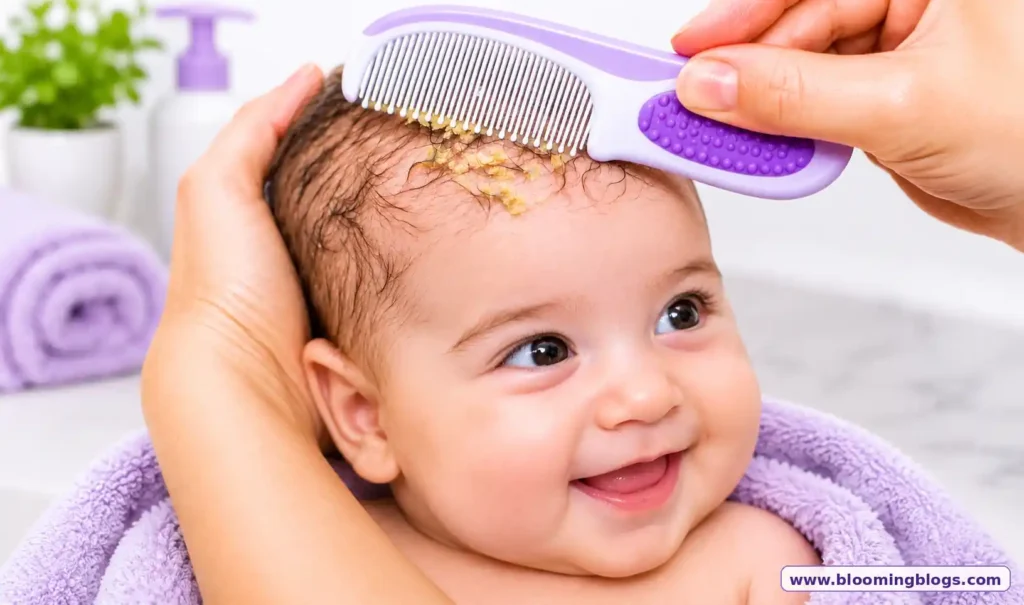
Follow these three simple steps to care for your baby’s scalp without irritating delicate skin:
- Soften the scales before washing: Gently massage a plain emollient—such as mineral oil, petroleum jelly, or baby oil—into your baby’s scalp. Avoid olive oil, which may irritate baby skin, and skip peanut oil due to allergy risks. Let the oil sit for several hours or overnight before shampooing, and always wash it out completely because leaving oil on can cause more scales to form.
- Lather gently and brush softly: Wash your baby’s scalp every other day using a mild, fragrance-free baby shampoo. Massage the scalp softly with your fingertips or a soft washcloth—never scrub hard or scrape with your fingernails—and use a soft baby brush to lift loosened flakes.
- Never pick or scratch the scales: Resist the urge to pry stubborn flakes off with your fingers. Picking at scales leaves raw, tender skin behind and raises your baby’s risk of a painful infection.
2. Medical Treatments and Important Safety Rules for Cradle Cap
If home care tips do not improve cradle cap, talk with your pediatrician before trying store-bought or medicated products. Your doctor may suggest targeted treatments based on your baby’s symptoms:
- Doctor-recommended topical options: A pediatrician might recommend a low-potency hydrocortisone cream or a medicated shampoo containing 2% antifungal ketoconazole. Keep medicated shampoo far away from your baby’s eyes, because it can sting and irritate.
- Check before using over-the-counter creams: Always ask your healthcare professional before applying nonprescription cortisone or antifungal creams, since some formulas are too harsh for delicate newborn skin.
- Avoid salicylic acid shampoos: Never use dandruff shampoos containing salicylic acid on babies, because infant skin can absorb this ingredient into the body.
- Treat inflammation or infection promptly: If redness, swelling, or a skin infection develops, your doctor may prescribe antibiotics, a mild steroid cream, or an antifungal shampoo or soap.
Cradle cap is rarely serious, yet you should always consult a physician if you feel unsure about how severe your baby’s scalp rash looks.
(Note: This content shares general educational guidance and does not replace advice from your pediatrician. Always consult your child’s doctor before applying medicated creams or shampoos to infant skin.)
Choosing the Best Shampoo for Cradle Cap
Many parents wonder which wash works best when treating cradle cap at home. Often, the simplest option gives the safest results. A mild, unscented baby shampoo works wonderfully to gently lather and clean your little one’s head. Always avoid adult washes or anti-dandruff shampoos, because harsh ingredients irritate a baby’s delicate skin.
If plain baby wash is not enough, you can try a specially formulated shampoo for cradle cap. You can easily spot these gentle cleansers in stores with “cradle cap” printed right on the label. You can also ask your pediatrician or dermatologist to recommend a targeted wash designed for dry scalp in newborn babies.
Timeline for Healing Cradle Cap in Newborns
In most cases, cradle cap clears up completely on its own within a few weeks or months without medical treatment. Gentle home care routines simply help loosen flakes and speed up the clearing process. However, if the scales do not fade after a few months, schedule a visit with your pediatrician. Your doctor will examine your baby’s scalp to rule out another skin condition that might need targeted care.
Possible Complications of Cradle Cap and When to Call a Doctor
Although cradle cap is rarely serious, parents should keep a close eye on their baby’s scalp in case symptoms worsen. Most mild flakes clear up smoothly, yet irritated skin can sometimes lead to secondary issues that need a pediatrician’s care.
1. Six Warning Signs That Need Medical Help
Contact your baby’s healthcare provider right away if you notice any of these six changes:
- Skin turns bright red: Affected patches on the scalp begin looking noticeably redder than before.
- Patches look raw or irritated: Flaky spots become swollen, tender, or visibly irritated.
- The rash spreads beyond the scalp: Scales move onto your baby’s face or start appearing on other parts of the body.
- Diaper rash develops: A persistent or stubborn diaper rash appears alongside scalp scaling.
- Your baby gets a fungal ear infection: Signs of irritation, redness, or yeast buildup develop inside or around the ear.
- Signs of oral thrush appear: White patches show up inside your baby’s mouth, tongue, or cheeks.
2. Secondary Infections and Other Symptoms to Report
When a fungal infection develops on irritated skin, it can weaken the skin barrier and allow bacteria to grow. In more severe cases of cradle cap, harmful bacteria can settle into areas where fragile skin has cracked or started bleeding.
You should also tell your pediatrician about any other unusual symptoms—such as diarrhea—because these issues can occasionally connect to broader infant skin or yeast conditions.
(Note: This content shares general educational guidance and does not replace advice from your pediatrician. Always consult a qualified healthcare professional if your baby shows signs of infection, spreading rashes, or illness.)
Common Mistakes to Avoid When Treating Cradle Cap
Gentle care clears newborn scalp scales safely, whereas rough home habits can irritate delicate skin or trigger an infection. Avoid these six common mistakes while caring for your baby’s head:
- Picking or scratching the crusts: Never peel dry flakes off with your fingernails, because torn skin invites painful bacterial infections.
- Using adult dandruff shampoos: Adult anti-dandruff washes contain harsh chemicals and strong fragrances that burn or dry out an infant’s sensitive scalp.
- Applying olive oil to the scalp: Olive oil carries high levels of oleic acid, which weakens a newborn’s skin barrier and encourages skin yeast to grow.
- Leaving oil on overnight without washing: Unwashed oil traps dead skin cells and worsens buildup instead of lifting flakes.
- Scrubbing too hard with a comb: Aggressive brushing reddens the skin and pulls out healthy baby hair along with loose scales.
- Ignoring rashes beyond the scalp: Spreading redness in skin folds or the diaper area needs a pediatrician’s review rather than home oil treatments alone.
When to See a Doctor for Newborn Scalp Scales
Most cases of cradle cap improve steadily at home without prescription medicine. However, you should contact your pediatrician right away if you notice any of these warning signs:
- Signs of skin infection: The scalp looks bright red, feels warm to the touch, swells, or oozes fluid and pus.
- Spreading body rash: Flaky patches extend beyond the head onto your baby’s face, neck folds, armpits, or diaper area.
- No improvement after home care: Stubborn crusts fail to soften after two to three weeks of gentle washing and brushing, or they last past your baby’s first birthday.
- Visible discomfort or itching: Your baby cries, rubs their head constantly, or seems bothered by the rash, which may point to eczema instead.
- Bleeding or cracked skin: Patches split open or bleed when you gently wash your baby’s hair.
Points to Remember
- Harmless and painless: Infant scalp scales look crusty, yet they cause zero pain, itching, or sleep disruption for your baby.
- Not caused by poor hygiene: Lingering maternal hormones and natural skin yeast trigger excess oil, not infrequent baths.
- Completely non-contagious: Your baby cannot catch this skin condition from others or spread it to siblings.
- Patience works best: Mild scaling typically resolves on its own within a few weeks or months.
- Gentle routines win: A fragrance-free baby wash and a soft brush handle most mild cases safely.
FAQs About Cradle Cap
1. What is cradle cap in newborns?
Cradle cap is a harmless, common form of infantile seborrheic dermatitis that causes yellow or white greasy scales on a baby’s scalp.
2. What causes cradle cap to appear on a baby’s head?
Lingering maternal hormones stimulate oil glands to make extra sebum, causing dead skin cells and natural skin yeast to stick together.
3. Does cradle cap hurt or itch my baby?
No, this condition does not hurt, itch, or bother your baby, and most infants sleep and feed completely normally with it.
4. Is cradle cap contagious to other children?
No, infant scalp scaling is completely non-contagious and cannot spread from baby to baby through touch or shared bedding.
5. Does poor hygiene cause dry skin on newborns head?
No, washing habits do not cause scalp crusts, because hormonal oil production drives the buildup rather than dirt.
6. When does cradle cap start in babies?
Symptoms typically appear between two weeks and three months after birth, with nearly all cases showing up during the first year.
7. How long does cradle cap last?
Most mild cases clear up on their own within a few weeks to a few months, usually disappearing before your baby’s first birthday.
8. How to get rid of cradle cap safely at home?
Massage a small amount of baby oil or petroleum jelly onto the scales, wash with mild baby shampoo, and brush loosened flakes softly.
9. Can I use mineral oil for cradle cap?
Yes, plain baby mineral oil works well to soften thick crusts for 15 to 20 minutes before you gently wash your baby’s hair.
10. Is coconut oil safe for baby scalp scales?
Pure, cold-pressed virgin coconut oil can help loosen dry flakes, though you should patch-test a tiny spot first to check for sensitivity.
11. Why should I avoid olive oil on my baby’s scalp?
Olive oil contains high oleic acid, which can weaken a newborn’s delicate skin barrier and encourage natural skin yeast to grow.
12. Should I pick or scratch the flakes off?
Never pick or scratch stuck crusts with your fingernails, because breaking the fragile skin can cause bleeding and bacterial infection.
13. What is the best shampoo for cradle cap?
A mild, unscented baby shampoo works best for daily care, though pediatricians sometimes suggest gentle medicated washes for stubborn buildup.
14. Can I use adult dandruff shampoo on my newborn?
No, adult dandruff shampoos contain strong active ingredients and fragrances that irritate a newborn’s sensitive skin and eyes.
15. How often should I wash my baby’s hair during an outbreak?
Washing your baby’s hair every two to three days with mild baby shampoo helps lift excess oil and prevent fresh crusts from forming.
16. Is cradle cap fungal or bacterial?
It is not a bacterial infection, though a harmless yeast called Malassezia that naturally lives on skin often grows in the excess scalp oil.
17. Can cradle cap spread to the face or eyebrows?
Yes, similar flaky patches can appear on the forehead, eyebrows, eyelids, nose creases, behind the ears, or in the diaper area.
18. What is the difference between cradle cap and baby eczema?
Baby eczema causes dry, very itchy red patches that make infants uncomfortable, whereas scalp seborrhea stays calm and itch-free.
19. Will my baby lose hair when the crusts fall off?
A few loose hairs may come away attached to shedding flakes, yet healthy new hair grows back normally once the scalp clears.
20. Can cradle cap come back after it clears?
Yes, mild flakes can return during the first year, though regular washing and soft brushing help keep the scalp clear.
21. Can breastfeeding cause or worsen newborn scalp scales?
No, breastfeeding does not cause scalp crusts, and you do not need to change your diet or nursing routine.
22. Do babies need prescription medicine for mild scaling?
Most babies need zero prescription medicine, because simple home washing and brushing clear mild crusts safely over time.
23. When is antifungal cream needed for seborrhea infant?
A pediatrician may prescribe a gentle antifungal cream or ketoconazole wash only when severe redness or yeast overgrowth persists.
24. Can I prevent my newborn from getting scalp crusts?
You cannot prevent the initial outbreak caused by maternal hormones, yet regular gentle shampooing prevents flakes from building up again.
25. When should I call a pediatrician about my baby’s scalp?
Call your doctor if the scalp bleeds, oozes, smells bad, looks bright red, spreads across the body, or lasts beyond twelve months.
Final Thoughts on Caring for Your Baby’s Scalp
Seeing yellow scales or dry skin on newborns head can feel worrying at first, yet cradle cap remains one of the mildest and most common parts of early infancy. With a little patience, a gentle baby wash, and a soft brush, those stubborn crusts will fade away smoothly while keeping your little one comfortable. Whenever you feel unsure about a spreading rash or stubborn buildup, your pediatrician is always your best partner for personalized care.
Medical Disclaimer
This article provides educational information for parents and caregivers and does not replace professional medical advice, diagnosis, or treatment. Always consult your pediatrician or a qualified healthcare provider before applying medicated shampoos, antifungal creams, or new oils to your baby’s skin, or if you notice signs of redness, swelling, oozing, or infection.
References & Trusted Resources
- American Academy of Pediatrics (AAP) – HealthyChildren.org: Cradle Cap (Infantile Seborrheic Dermatitis)
- Mayo Clinic: Cradle Cap – Symptoms and Causes
- Cleveland Clinic: Cradle Cap (Infantile Seborrheic Dermatitis): Causes & Treatment
- National Health Service (NHS UK): Cradle Cap in Babies
- American Academy of Dermatology (AAD): How to Treat Cradle Cap
🔗 Related Articles
If you are preparing for a newborn, these helpful Blooming Blogs guides can help you plan, prepare, and care for your baby with greater confidence:
- 1. Best Infant Formula for Newborns: Types, Choices & Safety Guide
- 2. Newborn Baby Essentials Checklist for Soon-to-Be Parents
- 3. How to Prepare Formula Milk for a Newborn Baby
- 4. Newborn Baby Care: Complete Guide for New Parents
- 5. Formula Mixing & Bottle Ratio Calculator
- 6. Hospital Bag for Delivery: Complete Checklist for Mom and Baby
- 7. The Ultimate Pregnancy Hospital Bag & Registry Checklist: Your Stress-Free Delivery Guide
- 8. Hospital Bag Checklist Tool
- 9. Rompers for Newborn: Ultimate Guide to Safe Baby Clothes
- 10. Onesies and Rompers: How to Dress Your Newborn Right
- 11. Baby Onesies Buying Guide: Best Soft Outfits for Newborns
🛠️ Try Our Free Interactive Baby Care Tools
Planning your nursery, preparing for your newborn, or setting up healthy daily routines? Explore our collection of free, interactive baby care tools and calculators designed to make parenting easier, safer, and more organised.
Explore our helpful tools:
- Formula Mixing & Bottle Ratio Calculator
- Baby Sleep Calculator
- Baby-Proofing Safety Audit Tool
- Hospital Bag Checklist Tool
- Hospital Bag & Baby Registry Checklists
- LittleSafe Home Checklist
- Mid-Parental Height Calculator
- Newborn Diapers Tracker
Discover more helpful resources: Visit the Blooming Blogs Free Online Tools Hub for practical calculators, checklists, and interactive tools.
🌱 Continue Exploring…
Whether you’re nurturing a newborn, curating a sanctuary for your home and garden, or simply looking to level up your day-to-day life, there’s always a new perspective waiting to be discovered. From practical everyday parenting guidance, women’s wellness information, ideas to make your home more beautiful, tips for caring for pets and plants, or inspiration for your spiritual journey, Blooming Blogs brings useful knowledge together in one place.
Blooming Blogs — knowledge that blooms.
🌸 Blooming Blogs Promise
We’re here to bring you thoughtful, reliable, and helpful insights you can truly count on. Every article on Blooming Blogs is thoroughly researched, crafted with care, and written with genuine empathy to support you in your everyday journey. Your trust means everything to us, and we are dedicated to sharing content that informs, inspires, and makes your life a little easier.
📰 Editorial Notes
Our team strives for clarity, accuracy, and depth in every piece we publish. Content is periodically updated to ensure facts, recommendations, and guides stay relevant over time. While we consult trusted sources and expert research, our goal is always to present complex topics in a simple, practical, and conversational way that works for real life.
⚠️ Disclaimer
The content provided on Blooming Blogs is for informational and educational purposes only and should not be considered professional medical, legal, or financial advice. Always consult with a qualified expert or licensed professional before making decisions related to your health, family, or personal finances. Blooming Blogs is not liable for any actions taken based on the information provided on this website. (For full details, please visit our Disclaimer Policy Page).
💬 Share Your Experience — Leave a Comment
We’d love to hear from you! Did this article help you, or do you have a personal tip or story to share with our community? Drop your thoughts, questions, or feedback in the comment section below. Every voice enriches our community, and we read every single comment!