
Introduction
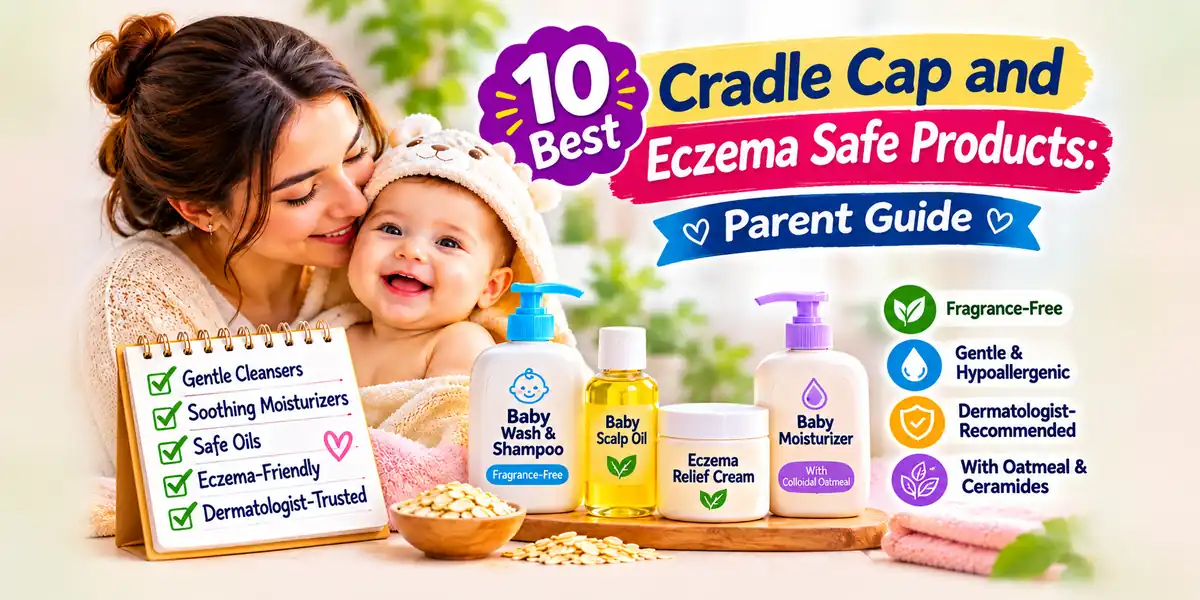
Cradle Cap and Eczema Safe Products: A Parent’s Complete Guide to Gentle Baby Skincare: If you are staring at flaky patches on your newborn’s scalp while simultaneously trying to soothe red, dry spots on their cheeks or arms, take a deep breath. You are definitely not alone. Dealing with both cradle cap and baby eczema at the same time is one of the most common—and honestly, most frustrating—skin challenges new parents face.
Walk down any baby care aisle, and you will be greeted by dozens of colorful bottles promising “gentle,” “natural,” or “dermatologist-tested” relief. Yet when your baby has sensitive, reactive skin, choosing the wrong wash or lotion can turn a mild dry patch into an angry, itchy flare-up overnight.
The secret to managing both conditions safely isn’t buying a cabinet full of complicated treatments. Instead, it comes down to stripping back your routine, reading ingredient labels like a pro, and choosing gentle, fragrance-free products that protect your baby’s delicate skin barrier.
In this guide, we will break down the difference between cradle cap and eczema, highlight the exact ingredients to look for (and avoid), share the safest types of products to keep in your nursery, and walk through a stress-free daily routine.
Cradle Cap vs. Baby Eczema: Understanding What You Are Treating
Before choosing any product, it helps to understand what is actually happening on your baby’s skin. While cradle cap and eczema often show up around the same time—usually within the first few months of life—they are two distinct conditions with different triggers.
What is Cradle Cap?
In medical terms, cradle cap is known as infantile seborrheic dermatitis. Despite how uncomfortable those thick, yellowish, or greasy scales look, cradle cap is completely harmless, non-contagious, and rarely bothers the baby. It isn’t caused by poor hygiene or allergies. Rather, dermatologists believe it happens when maternal hormones still circulating in your baby’s body stimulate their oil glands to produce excess sebum, causing dead skin cells to stick to the scalp rather than shedding naturally.
What is Baby Eczema?
Atopic dermatitis, commonly called baby eczema, is a chronic inflammatory skin condition tied to a compromised skin barrier and an overactive immune response. Unlike cradle cap, eczema is very itchy and uncomfortable. It typically appears as dry, red, rough, or scaly patches on the cheeks, forehead, scalp, and the outer surfaces of the arms and legs. Because the skin barrier is leaky, moisture escapes easily while irritants, allergens, and bacteria sneak in.
Why Overlap Matters When Shopping
Many babies have both conditions simultaneously. Here is the catch: traditional home remedies for cradle cap—like rubbing olive oil on the head or using heavy, perfumed baby oils—can severely irritate eczema-prone skin. Likewise, harsh shampoos meant to strip scalp oil will dry out eczematous patches on the face and neck when the suds rinse down in the bath.
When your baby deals with both, every single product that touches their skin needs to be eczema-safe.
The Golden Rules of Ingredient Labels
Marketing buzzwords on the front of a bottle mean very little when it comes to sensitive skin. Even products labeled “hypoallergenic,” “organic,” or “for sensitive skin” can contain hidden triggers. Whenever you pick up a wash, oil, or cream, flip it over and check the ingredient list against these rules.
Ingredients to Embrace
- Colloidal Oatmeal: Finely ground oats suspended in a liquid or cream base. Colloidal oatmeal forms a protective film over the skin, locks in moisture, and contains natural compounds (avenanthramides) that calm redness and itching.
- Ceramides: Lipids (fats) that naturally make up over 50% of the human skin barrier. Skincare enriched with ceramides helps “patch the bricks” in a leaky, eczema-prone skin barrier.
- Petrolatum (White Petroleum Jelly): One of the safest, purest occlusive ingredients available. It sits on top of the skin to prevent water loss and soften crusty cradle cap scales without clogging pores or causing allergic reactions.
- Glycerin and Hyaluronic Acid: Gentle humectants that pull moisture into the top layer of the skin without stinging.
- Panthenol (Pro-Vitamin B5): A soothing, skin-conditioning agent that supports barrier repair and reduces irritation.
- Cold-Pressed Virgin Coconut Oil or Fragrance-Free Mineral Oil: Safe, simple emollients for softening stubborn cradle cap flakes before a bath.
Ingredients to Strictly Avoid
- Fragrance and Parfum: The number one culprit behind contact dermatitis in babies. Even natural essential oils—like lavender, tea tree, eucalyptus, or citrus—can trigger severe eczema flare-ups. Always look for the words “Fragrance-Free” rather than “Unscented” (unscented products sometimes use masking fragrances to hide chemical smells).
- Harsh Sulfates (SLS / SLES): Sodium Lauryl Sulfate and Sodium Laureth Sulfate create big, bubbly lather, but they strip away the natural oils your baby desperately needs.
- Olive Oil: While often recommended in older parenting advice, clinical research shows that olive oil is high in oleic acid, which can actually break down the skin barrier and worsen eczema.
- Adult Anti-Dandruff Actives: Never use adult dandruff shampoos containing salicylic acid, coal tar, or high-strength ketoconazole on a baby unless a pediatrician explicitly prescribes them. Babies absorb topical chemicals much more readily than adults.
- Dyes, Parabens, and Formaldehyde-Releasing Preservatives: Unnecessary additives that increase the risk of skin sensitization.
Best Types of Cradle Cap and Eczema Safe Products
To keep your baby’s routine simple, effective, and budget-friendly, you only need four core categories of products. Look for items that carry reputable seals of approval, such as the National Eczema Association (NEA) Seal of Acceptance, or formulations specifically developed with pediatric dermatologists.
1. Soap-Free, Fragrance-Free Baby Wash & Shampoo
A gentle two-in-one cleanser is ideal because it simplifies bath time and ensures that whatever washes off your baby’s head won’t irritate their cheeks or body.
- What to look for: A pH-balanced (around pH 5.5), tear-free, soap-free liquid cleanser enriched with ceramides, glycerin, or colloidal oatmeal.
- Top Examples to Consider:
- CeraVe Baby Wash & Shampoo: Formulated with three essential ceramides, hyaluronic acid, and vitamin E. It cleanses away excess scalp oil gently without disrupting the skin barrier and carries the NEA Seal of Acceptance.
- Cetaphil Baby Gentle Wash & Shampoo: A pediatrician-favorite soap-free formula containing glycerin and panthenol that rinses clean without leaving irritating residue.
- Aveeno Baby Cleansing Therapy Moisturizing Wash: Designed specifically for extra-dry, eczema-prone skin using soothing oat essence and ceramides.
- Mother Sparsh Simply Unscented Baby Shampoo: A great fragrance-free, pH 5.5 oat-based option for parents seeking mild, tear-free daily scalp care.
2. Targeted Oils & Balms for Loosening Cradle Cap
Picking or scratching dry cradle cap flakes with your fingernails can break the skin and introduce bacterial infections. Instead, you want a safe emollient to soften the scales before washing.
- What to look for: Single-ingredient or ultra-minimalist fragrance-free oils and ointments.
- Top Examples to Consider:
- Pure White Petroleum Jelly : Inexpensive, hypoallergenic, and remarkably effective at softening thick crusts in 15 to 20 minutes. Vaseline Original Petroleum Healing Jelly, Vaseline 100% Pure Petroleum Jelly Original
- Cold-Pressed Virgin Coconut Oil : Naturally moisturizing and gentle enough for newborns, provided your baby has no known coconut sensitivity. Viva Naturals Organic Extra Virgin Coconut Oil , ROOT and SOIL Baby Coconut Hair Oil (100ml)
- Fragrance-Free Mineral Oil or Dedicated Cradle Cap Scalp Oils : Lightweight options that loosen scales without heavy perfumes. Mustela Fragrance-Free Baby Cradle Cap Cream , AreoVeda Cradle Cap Scalp Oil & Foam Shampoo Combo
3. Thick Barrier Creams and Ointments for Eczema
When managing baby eczema, thickness matters. Thin, watery lotions packaged in pump bottles contain more water and preservatives, which evaporate quickly and can sometimes sting cracked skin. Creams in tubs or thick tubes provide far better protection.
- What to look for: Rich creams or ointments with colloidal oatmeal, ceramides, or petrolatum as primary active or base ingredients.
- Top Examples to Consider:
- Aveeno Baby Eczema Therapy Moisturizing Cream (or Soothing Relief Moisture Cream): Packed with colloidal oatmeal and ceramides to calm active redness, relieve itching, and hydrate for 24 hours.
- CeraVe Baby Moisturizing Cream: A rich, non-greasy barrier cream featuring essential ceramides and dimethicone to seal in moisture on both the face and body.
- Mustela Stelatopia Emollient Cream: Formulated with sunflower oil distillate to help replenish lipids in very dry, atopic-prone newborn skin, completely free of fragrance.
- Aquaphor Baby Healing Ointment: A semi-occlusive petrolatum-based ointment enriched with panthenol and glycerin—wonderful for stubborn dry patches on cheeks, chins (from drool), and skin folds.
4. Gentle Tools: Soft Silicone or Boar-Bristle Brushes
Products work best when paired with the right technique. Ditch rough washcloths and fine-toothed plastic combs that scrape delicate skin.
- What to look for: A soft medical-grade silicone scalp scrubber or a plush natural goat-hair/boar-bristle baby brush. Using soft circular motions during shampooing helps lift loosened flakes painlessly while stimulating healthy circulation.
Step-by-Step Bath & Skincare Routine for Both Conditions
Consistency is far more effective than aggressive scrubbing. Follow this gentle 15-minute routine two to three times a week (or daily if your pediatrician recommends daily bathing for eczema):
- Pre-Bath Scalp Softening (15–20 Minutes Prior): Apply a small, dime-sized amount of fragrance-free petroleum jelly, mineral oil, or virgin coconut oil directly onto the scaly areas of your baby’s scalp. Gently massage it in with your fingertips and let it sit to soften the buildup. (Tip: If your baby has thick hair, apply only to the patchy spots so it is easier to rinse out.)
- Keep Bath Water Lukewarm: Hot water strips natural skin lipids and immediately triggers eczema itching. Keep the bath water comfortably warm (around 98°F / 37°C) and limit bath time to 5 to 10 minutes.
- Wash and Gently Brush: Apply a small amount of your fragrance-free baby wash/shampoo to the scalp. Use a soft silicone brush or plush baby brush in gentle, circular motions to lift the softened flakes. Do not force any scales that aren’t ready to come off. Rinse the scalp thoroughly so no oil remains trapped on the skin.
- Cleanse Only Where Needed: On the rest of the body, use your hands (not a rough washcloth) to wash only dirty areas like the diaper region, neck folds, hands, and feet. Plain lukewarm water is enough for dry arms and legs.
- Pat Dry—Never Rub: Lift your baby out of the tub and gently pat their skin dry with a soft, clean cotton towel, leaving the skin slightly damp.
- The “3-Minute Rule” for Moisturizing: Within three minutes of stepping out of the bath, apply a generous layer of thick, fragrance-free eczema cream or ointment from head to toe. Locking in that surface dampness is the single most effective way to prevent eczema flares.
Laundry & Everyday Nursery Habits That Protect Sensitive Skin
Even the best baby lotion cannot outwork an irritating environment. Support your skincare routine with a few simple household adjustments:
- Switch to “Free & Clear” Laundry Detergent: Wash all baby clothes, crib sheets, burp cloths, and towels in a dye-free, fragrance-free liquid detergent. Skip fabric softeners and dryer sheets entirely, as they leave a waxy, perfumed film on fabrics.
- Dress in Breathable 100% Cotton: Wool, polyester, and rough seams trap heat and sweat, which are major triggers for both eczema itching and scalp buildup. Soft, breathable cotton or bamboo fabrics keep your baby’s temperature regulated.
- Keep Fingernails Short: Trimming your baby’s nails regularly (or using soft cotton mittens during sleep if needed) prevents accidental scratching from breaking eczematous skin.
When to Call Your Pediatrician
Most cases of mild cradle cap and eczema improve steadily within a few weeks of switching to fragrance-free barrier care. However, you should reach out to your pediatrician or a pediatric dermatologist if you notice any of the following:
- The cradle cap spreads aggressively to the face, ears, or diaper area, or becomes bright red and swollen.
- Eczema patches begin oozing clear fluid, developing yellow crusts, or bleeding (signs of a secondary bacterial infection like impetigo).
- Your baby seems constantly uncomfortable, inconsolable, or is losing sleep due to intense itching.
- Over-the-counter gentle moisturizers show zero improvement after two weeks of consistent use.
In stubborn cases, a doctor may recommend a short course of a mild, baby-safe topical hydrocortisone cream or an antifungal wash tailored specifically to your infant’s needs.
Top 10 Cradle Cap & Eczema Safe Products
To help you shop confidently no matter where you live, we selected ten globally trusted cleansers, scalp treatments, barrier creams, and bath tools that are readily available across major pharmacies and online retailers in India, the United States, and the United Kingdom. Every product below is formulated without added fragrances, harsh sulfates, or common eczema triggers.
1. CeraVe Baby Wash & Shampoo
When you are managing both flaky cradle cap buildup and dry, reactive body skin, a two-in-one cleanser that respects the skin barrier is essential. Developed with pediatric dermatologists, CeraVe Baby Wash & Shampoo uses ultra-mild, soap-free surfactants paired with barrier-restoring ceramides. It gently lifts excess sebum and loosened cradle cap scales from the scalp without leaving your baby’s cheeks, neck folds, or arms feeling tight and stripped.
- Key Ingredients: Ceramide NP, Ceramide AP, Ceramide EOP, Hyaluronic Acid, Vitamin E (Tocopheryl Acetate), Cocamidopropyl Hydroxysultaine.
- Pros:
- Carries the official National Eczema Association (NEA) Seal of Acceptance.
- Completely free from fragrance, parabens, phthalates, dyes, and sulfates.
- Tear-free formula rinses cleanly with zero soapy residue.
- Replenishes natural skin lipids while washing away scalp buildup.
- Cons:
- Produces a very low lather, which takes getting used to if you prefer traditional bubbly washes.
- Does not contain medicated antifungals for severe, persistent cradle cap crusts.
- Who It’s Best For: Parents looking for one safe, pediatrician-approved wash that handles both hair and sensitive, eczema-prone body skin effortlessly.
2. Aveeno Baby Dermexa / Eczema Therapy Moisturizing Cream
(Sold as Aveeno Baby Eczema Therapy Moisturizing Cream in the USA, and Aveeno Baby Dermexa Daily Emollient Cream in the UK and India)
Aveeno has spent decades researching the soothing properties of oats, and this rich emollient cream is one of the most reliable over-the-counter options for calming active eczema flares worldwide. Formulated with a Triple Oat Complex (colloidal oatmeal, oat oil, and avenanthramides) alongside ceramides, it creates a breathable protective layer over rough, dry patches on the cheeks, hairline, arms, and legs.
- Key Ingredients: Colloidal Oatmeal, Avenanthramides (Oat Essence), Oat Oil, Ceramide NP, Glycerin, Panthenol.
- Pros:
- Clinically proven to relieve itching, redness, and irritation on atopic-prone baby skin.
- 100% fragrance-free, steroid-free, paraben-free, and dye-free.
- Rich texture absorbs smoothly without feeling overly sticky or staining cotton baby clothes.
- Safe for daily head-to-toe moisturizing from early infancy.
- Cons:
- Contains oat derivatives, so babies with rare, confirmed oat sensitivities should perform a small patch test first.
- Thick consistency near the bottom of the tube can require extra squeezing to dispense.
- Who It’s Best For: Babies dealing with dry, itchy eczema patches on the face, hairline, and body who need long-lasting, steroid-free barrier relief.
3. Mustela Cradle Cap Foam Shampoo (or Mustela Stelatopia Foam Shampoo)
Mustela’s self-foaming newborn shampoo is a cult favorite among parents dealing with stubborn cradle cap. Available in both the classic Foam Shampoo for Newborns and the Stelatopia Foam Shampoo (tailored specifically for extremely dry, eczema-prone skin), along with Mustela’s Cradle cap duo, its airy pump foam clings gently to the scalp without running into your baby’s eyes. The Stelatopia version is 100% fragrance-free and enriched with sunflower oil distillate to soothe redness and dry scalp patches while lifting flakes.
- Key Ingredients: Sunflower Oil Distillate (in Stelatopia), Avocado Perseose / Fruit Extract, Coco-Glucoside, Citric Acid, Glycerin.
- Pros:
- Self-foaming pump makes one-handed newborn bath time simple and mess-free.
- Fragrance-free, tear-free, hypoallergenic, and safe from birth.
- Helps soften and rinse away cradle cap scales while supporting the scalp’s lipid barrier.
- Cons:
- Pricier per milliliter than standard baby washes.
- Can feel slightly drying on the hair strands if used daily; best used 2–3 times a week.
- Who It’s Best For: Newborns with visible scalp flaking and sensitive, atopic-prone skin who benefit from a targeted, non-irritating foaming scalp wash.
4. Mustela Stelatopia Emollient Cream
Engineered specifically for newborns and babies with eczema-prone skin, Mustela Stelatopia Emollient Cream stands out for its use of sunflower oil distillate—a patented lipid-replenishing ingredient that helps infant skin rebuild its own natural protective barrier rather than merely coating the surface. It glides effortlessly onto inflamed, scaly skin and calms tightness immediately after bathing.
- Key Ingredients: Sunflower Oil Distillate (Helianthus Annuus Seed Oil Unsaponifiables), Avocado Perseose, Glycerin, Shea Butter, Ceramide NP.
- Pros:
- Formulated with 89% ingredients of natural origin and zero fragrance, parabens, or phthalates.
- Clinically tested for safety from birth onward, including babies with sensitive, reactive skin.
- Silky, fast-absorbing texture spreads easily without tugging on tender skin.
- Cons:
- Higher price point compared to everyday drugstore moisturizers.
- Contains avocado and sunflower extracts, so patch testing is recommended for babies with complex plant allergies.
- Who It’s Best For: Infants with chronically dry, flaky skin who need a nourishing, lipid-boosting daily moisturizer that spreads smoothly without heavy greasiness.
5. Cetaphil Baby Gentle Wash & Shampoo (Fragrance-Free / Sensitive Formula)
(Tip for shoppers: Cetaphil offers both a lightly scented calendula line and a completely Fragrance-Free sensitive formula—always verify the front label says Fragrance-Free when buying for eczema!)
Cetaphil’s soap-free baby wash is a staple in pediatric clinics across all three regions. Balanced to match the natural pH of healthy infant skin, it gently lifts away sweat, drool, and loosened cradle cap oils without disrupting the skin’s delicate acid mantle. Because it rinses completely clean without leaving irritating detergent film behind, it is ideal for washing out pre-bath scalp treatments.
- Key Ingredients: Glycerin, Panthenol (Pro-Vitamin B5), Coco-Glucoside, Disodium Cocoyl Glutamate.
- Pros:
- Soap-free, tear-free, mineral-oil-free, and strictly fragrance-free.
- Hydrating glycerin and panthenol leave skin soft and calm after bathing.
- Easy to find in local neighborhood pharmacies and supermarkets at an affordable price.
- Cons:
- Packaging closely resembles the scented version, making it easy to grab the wrong bottle if shopping in a rush.
- Must be paired with a thicker barrier cream afterward for moderate-to-severe eczema.
- Who It’s Best For: Families seeking an accessible, pediatrician-recommended daily cleanser for newborns with delicate scalps and reactive skin.
6. Vaseline Pure White Petroleum Jelly (100% Triple-Purified Petrolatum)
Pure White Petroleum Jelly : Inexpensive, hypoallergenic, and remarkably effective at softening thick crusts in 15 to 20 minutes. Vaseline Original Petroleum Healing Jelly, Vaseline 100% Pure Petroleum Jelly Original Sometimes the simplest, most affordable product in the pharmacy is also the safest. Pure white petroleum jelly is a single-ingredient occlusive powerhouse that serves double duty for babies with cradle cap and eczema. Massaged gently onto the scalp 15 to 20 minutes before a bath, it softens stubborn, crusty cradle cap scales so they lift away painlessly with a soft brush. Applied after a bath over damp skin or layered on top of an eczema cream, it seals in moisture and shields chapped cheeks from drool and cold air.
- Key Ingredients: 100% Triple-Purified White Petrolatum.
- Pros:
- Hypoallergenic, non-comedogenic, and virtually incapable of triggering an allergic reaction.
- Very inexpensive and widely available in every town and city across India, the US, and the UK.
- Works simultaneously as a pre-bath cradle cap softener, diaper barrier ointment, and eczema moisture lock.
- Cons:
- Heavy, greasy texture requires thorough shampooing to wash out of baby hair completely.
- Seals in moisture rather than adding hydration on its own, so it works best over damp skin.
- Who It’s Best For: Minimalist parents wanting one ultra-safe, multi-purpose product to soften tough cradle cap crusts and protect cracked eczema patches.
7. Aquaphor Baby Healing Ointment or Eucerin Aquaphor Soothing Skin Balm
(Sold as Aquaphor Baby Healing Ointment in the USA and via online retailers in India, and as Eucerin Aquaphor Soothing Skin Balm in the UK and India)
While similar to pure petroleum jelly, Aquaphor blends petrolatum with skin-conditioning humectants like panthenol (Pro-Vitamin B5) and glycerin. This creates a “semi-occlusive” protective barrier that prevents water loss while allowing oxygen to reach the skin to support natural recovery. Pediatricians frequently recommend it for raw, chapped eczema patches around the mouth, chin, neck folds, and behind the knees.
- Key Ingredients: Petrolatum (41%), Mineral Oil, Ceresin, Lanolin Alcohol, Panthenol, Glycerin, Bisabolol.
- Pros:
- Glides on smoother and feels slightly less dense than 100% petroleum jelly.
- Panthenol and bisabolol actively calm minor redness, drool rash, and chafing.
- Completely free of fragrances, dyes, and preservatives.
- Cons:
- Contains purified lanolin alcohol (derived from sheep’s wool); while safe for most, a small subset of babies with severe eczema can react to lanolin.
- Too heavy for widespread use across thick baby hair.
- Who It’s Best For: Babies dealing with weeping, chapped, or drool-irritated eczema patches on the face and skin folds, as well as spot-treating dry scalp edges.
8. CeraVe Baby Moisturizing Cream
While CeraVe Baby Wash handles bath time, CeraVe Baby Moisturizing Cream takes over the moment your baby steps out of the towel. Formulated with three essential ceramides, hyaluronic acid, and dimethicone, this rich cream acts like mortar between skin cells—sealing microscopic cracks where moisture escapes and irritants sneak in. It absorbs cleanly within seconds, making it ideal for quick diaper changes and bedtime routines.
- Key Ingredients: Ceramide NP, Ceramide AP, Ceramide EOP, Dimethicone (1.2%), Hyaluronic Acid, Glycerin, Caprylic/Capric Triglyceride.
- Pros:
- Carries the National Eczema Association Seal of Acceptance and is free of fragrances, parabens, and dyes.
- Non-greasy, velvet finish lets you dress your baby in cotton pajamas immediately without sticking.
- Dimethicone provides gentle protection against friction from diapers and clothing seams.
- Cons:
- Less occlusive than pure petrolatum ointments for deeply cracked or raw eczema flares.
- Can occasionally sell out quickly in certain regional pharmacies.
- Who It’s Best For: Everyday head-to-toe maintenance between eczema flare-ups, especially for babies who dislike sticky or greasy ointments.
9. 100% Cold-Pressed Unrefined Virgin Coconut Oil (Single-Ingredient)
Cold-Pressed Virgin Coconut Oil : Viva Naturals Organic Extra Virgin Coconut Oil , ROOT and SOIL Baby Coconut Hair Oil (100ml)
If you prefer a natural plant oil to loosen cradle cap scales before bath time, single-ingredient cold-pressed virgin coconut oil is one of the few botanical oils supported by dermatological research for eczema-prone skin. Unlike olive oil—which is high in oleic acid and can weaken the skin barrier—virgin coconut oil is rich in lauric acid, offering gentle hydration and mild antimicrobial properties. Massaging a small amount onto dry scalp crusts 20 minutes before shampooing helps lift flakes cleanly.
- Key Ingredients: 100% Cold-Pressed Unrefined Virgin Coconut Oil (Cocos Nucifera Oil).
- Pros:
- Pure single-ingredient formula with zero hidden perfumes, mineral oil, or preservatives.
- Melts instantly on contact with warm skin, making it easy to massage gently over delicate soft spots.
- Easy to source locally at high quality in India, the US, and the UK.
- Cons:
- Solidifies in cooler weather below 76°F (24°C), requiring you to warm a pea-sized dab between your palms first.
- Must be washed thoroughly off the scalp during bath time so leftover oil doesn’t trap dead skin flakes.
- Avoid if your baby has a known coconut allergy.
- Who It’s Best For: Parents who want a clean, single-ingredient pre-bath oil to soften stubborn cradle cap scales without risking the barrier damage linked to olive oil.
10. Frida Baby DermaFrida The FlakeFixer (or Soft Medical-Grade Silicone Scalp Brush)
Even the gentlest shampoo works twice as effectively when paired with the right physical tool. Standard plastic baby combs have rigid teeth that can scratch inflamed skin, while rough washcloths aggravate eczema. The Frida Baby FlakeFixer (along with similar soft medical-grade silicone scalp scrubbers) solves this with a gentle foam sponge to lather softly, an ultra-soft silicone brush to massage and loosen softened flakes without scratching, and a fine-toothed comb designed solely to lift loose scales out of hair strands—never scrape the scalp.
- Key Ingredients / Materials: Medical-grade, BPA-free, latex-free soft silicone and gentle foam sponge.
- Pros:
- Provides controlled, painless exfoliation without risking fingernail scratches or skin infections.
- Easy to rinse, sanitize, and air-dry on its included stand between baths.
- Works alongside any fragrance-free baby shampoo.
- Cons:
- Skip the fine-toothed comb step if your baby’s scalp is actively red, raw, or weeping from eczema.
- Foam sponge requires thorough drying to prevent mildew over time.
- Who It’s Best For: Parents managing thick, stubborn cradle cap scales who want a safe, hygienic way to lift loosened flakes during bath time.
Quick Global Starter Kit Summary
No matter whether you are shopping at a pharmacy in Mumbai, New York, or London, you only need three core items on your shelf to care for both cradle cap and eczema safely:
- Gentle Wash & Shampoo: CeraVe Baby Wash & Shampoo, Cetaphil Baby Fragrance-Free Wash, or Mustela Stelatopia Foam Shampoo
- Pre-Bath Scalp Softener & Brush: Vaseline Pure White Petroleum Jelly or Cold-Pressed Virgin Coconut Oil + a Soft Silicone Scalp Brush
- Daily Eczema Barrier Cream: Aveeno Baby Dermexa / Eczema Therapy Cream or CeraVe Baby Moisturizing Cream [1]
Frequently Asked Questions (FAQs)
1. Can I use the same product for both my baby’s cradle cap and eczema?
Yes, in many cases you can. A gentle, fragrance-free, soap-free baby wash and shampoo (such as a ceramide- or colloidal oatmeal-based cleanser) works safely on both the scalp and the body. Similarly, plain white petroleum jelly or cold-pressed virgin coconut oil can be used to soften cradle cap scales before a bath and also serve as a protective barrier on dry eczema patches.
2. Is coconut oil safe for cradle cap if my baby has eczema?
For most babies, 100% cold-pressed, unrefined virgin coconut oil is safe and soothing. Unlike olive oil, coconut oil contains lauric acid, which has mild antimicrobial properties and supports skin hydration. However, always do a small patch test on your baby’s inner arm 24 hours before applying it widely, and make sure to wash it completely off the scalp during bath time so trapped oil doesn’t worsen flaking.
3. How often should I wash my baby’s hair if they have cradle cap and eczema?
Washing your baby’s hair every two to three days with a mild, fragrance-free baby shampoo is usually plenty. Washing too frequently with harsh cleansers can dry out the scalp and worsen eczema around the hairline and forehead, while washing too infrequently allows oil and dead skin scales to build up.
4. Should I moisturize my baby’s scalp after treating cradle cap?
If your baby’s scalp looks dry or tight after bathing, you can lightly dab a tiny amount of a fragrance-free, non-greasy ceramide cream or colloidal oatmeal lotion onto dry spots. Avoid leaving heavy oils on the scalp between baths, as excess oil can feed the yeast (Malassezia) associated with cradle cap.
5. Are “natural” or “organic” baby products always safe for eczema?
No. “Natural” is not a regulated medical term, and many plant-based baby products contain botanical extracts, nut oils, or essential oils (like lavender, chamomile, or tea tree) that are common allergens for babies with eczema. Always prioritize “Fragrance-Free” and “Hypoallergenic” over “Natural.”
6. Will cradle cap cause my baby’s hair to fall out permanently?
No. Sometimes a few strands of baby hair come loose attached to shed flakes when you brush the scalp, which can look alarming. However, this is completely temporary, and your baby’s hair will grow back normally once the scalp clears.
References & Trusted Resources
- American Academy of Dermatology (AAD): Eczema Resource Center – Infant Eczema & Cradle Cap Care Guidelines. aad.org
- National Eczema Association (NEA): Accepted Product Directory & Understanding Baby Eczema. nationaleczema.org
- National Eczema Society (UK): Seborrhoeic Dermatitis (Cradle Cap) in Infants – Fact Sheet. eczema.org
- American Academy of Pediatrics (AAP) / HealthyChildren.org: Cradle Cap & Eczema in Babies: Symptoms, Causes, and Safe Home Care. healthychildren.org
- Mayo Clinic: Cradle Cap & Atopic Dermatitis (Eczema) Diagnosis and Treatment Overview. mayoclinic.org
🔗 Related Articles
If you are preparing for a newborn, these helpful Blooming Blogs guides can help you plan, prepare, and care for your baby with greater confidence:
- 1. Best Infant Formula for Newborns: Types, Choices & Safety Guide
- 2. Newborn Baby Essentials Checklist for Soon-to-Be Parents
- 3. How to Prepare Formula Milk for a Newborn Baby
- 4. Newborn Baby Care: Complete Guide for New Parents
- 5. Formula Mixing & Bottle Ratio Calculator
- 6. Hospital Bag for Delivery: Complete Checklist for Mom and Baby
- 7. The Ultimate Pregnancy Hospital Bag & Registry Checklist: Your Stress-Free Delivery Guide
- 8. Hospital Bag Checklist Tool
- 9. Rompers for Newborn: Ultimate Guide to Safe Baby Clothes
- 10. Onesies and Rompers: How to Dress Your Newborn Right
- 11. Baby Onesies Buying Guide: Best Soft Outfits for Newborns
🛠️ Try Our Free Interactive Baby Care Tools
Planning your nursery, preparing for your newborn, or setting up healthy daily routines? Explore our collection of free, interactive baby care tools and calculators designed to make parenting easier, safer, and more organised.
Explore our helpful tools:
- Formula Mixing & Bottle Ratio Calculator
- Baby Sleep Calculator
- Baby-Proofing Safety Audit Tool
- Hospital Bag Checklist Tool
- Hospital Bag & Baby Registry Checklists
- LittleSafe Home Checklist
- Mid-Parental Height Calculator
- Newborn Diapers Tracker
Discover more helpful resources: Visit the Blooming Blogs Free Online Tools Hub for practical calculators, checklists, and interactive tools.
🌱 Continue Exploring…
Whether you’re nurturing a newborn, curating a sanctuary for your home and garden, or simply looking to level up your day-to-day life, there’s always a new perspective waiting to be discovered. From practical everyday parenting guidance, women’s wellness information, ideas to make your home more beautiful, tips for caring for pets and plants, or inspiration for your spiritual journey, Blooming Blogs brings useful knowledge together in one place.
Blooming Blogs — knowledge that blooms.
🌸 Blooming Blogs Promise
We’re here to bring you thoughtful, reliable, and helpful insights you can truly count on. Every article on Blooming Blogs is thoroughly researched, crafted with care, and written with genuine empathy to support you in your everyday journey. Your trust means everything to us, and we are dedicated to sharing content that informs, inspires, and makes your life a little easier.
📰 Editorial Notes
Our team strives for clarity, accuracy, and depth in every piece we publish. Content is periodically updated to ensure facts, recommendations, and guides stay relevant over time. While we consult trusted sources and expert research, our goal is always to present complex topics in a simple, practical, and conversational way that works for real life.
⚠️ Disclaimer
The content provided on Blooming Blogs is for informational and educational purposes only and should not be considered professional medical, legal, or financial advice. Always consult with a qualified expert or licensed professional before making decisions related to your health, family, or personal finances. Blooming Blogs is not liable for any actions taken based on the information provided on this website. (For full details, please visit our Disclaimer Policy Page).
💬 Share Your Experience — Leave a Comment
We’d love to hear from you! Did this article help you, or do you have a personal tip or story to share with our community? Drop your thoughts, questions, or feedback in the comment section below. Every voice enriches our community, and we read every single comment!
Medical Disclaimer
Medical & Product Disclaimer:
The content published in this article—including text, product reviews, skincare routines, and checklists—is provided strictly for general educational and informational purposes only and does not constitute professional medical advice, diagnosis, or treatment. Infant skin is uniquely sensitive, and conditions such as infantile seborrheic dermatitis (cradle cap) and atopic dermatitis (baby eczema) vary widely in severity from child to child.Always consult a qualified pediatrician, family doctor, or board-certified pediatric dermatologist before introducing new skincare products, oils, or over-the-counter remedies to your baby’s routine, especially if your child has broken, weeping, or infected skin. Perform a small 24-hour patch test on your baby’s inner arm before applying any new wash, oil, or cream widely. Never disregard professional medical advice or delay seeking medical care because of information you have read on this website.
Product Formulation & Accuracy Notice: Manufacturers occasionally update their ingredient lists, packaging, and regional formulations without prior notice. While we strive to recommend fragrance-free, hypoallergenic products verified at the time of writing, always inspect the physical ingredient label on the bottle or jar before applying any product to your baby. We make no guarantees regarding individual skin outcomes and are not liable for any adverse reactions resulting from the use of products mentioned on this page.
📚 Baby Care Articles – Related Reading Guide
Explore More: Discover practical parenting guides, helpful resources, and free interactive calculators at Blooming Blogs – Knowledge that blooms.