


Introduction
Seeing red, irritated skin on your baby for the first time can feel scary. You change every wet diaper right away and use gentle wipes, yet diaper rash still shows up. Take a deep breath. You did nothing wrong.
A newborn diaper rash affects almost every baby during their first few months of life. Their brand-new skin is thin, sensitive, and still adjusting to the world outside the womb. Constant moisture, friction, and frequent diaper changes easily irritate those delicate folds.
The good news? Most rashes clear up fast with a few simple tweaks at home. In this guide, you will learn what triggers these flare-ups, how to soothe sore skin safely, and when to call your pediatrician.
Key Takeaways:
Managing and Preventing Newborn Diaper Rash
- Moisture is the main trigger: Most flare-ups happen when dampness, pee, or stool sits against a newborn bottom too long, breaking down the skin’s natural barrier.
- Swap diapers promptly: Change wet or soiled diapers right away, and rinse your baby’s bottom with warm water and a soft cloth instead of rubbing with scented wipes.
- Prioritize diaper-free air time: Let your baby kick around without a diaper for 10 to 15 minutes several times a day to dry out hidden moisture in skin folds.
- Use thick barrier creams: Apply a generous coat of baby diaper rash cream with zinc oxide or petroleum jelly at every change to shield healing skin from wetness.
- Know how to spot a fungal infection: A bright red diaper fungal rash with tiny satellite spots—often seen after antibiotic use or deep in a rash on buttocks crack—requires a targeted diaper rash antifungal cream rather than plain ointment.
- Avoid risky household remedies: Skip talcum powder, cornstarch (which feeds yeast), and direct baking soda pastes on raw skin.
- Call your pediatrician when needed: Seek medical advice if a bad diaper rash fails to improve after two to three days of home care, or if you spot a blistering diaper rash, oozing sores, bleeding, or a fever.
What Is a Newborn Diaper Rash?
A diaper rash is a common skin irritation that forms right inside your baby’s diaper area. Doctors call this condition irritant contact dermatitis. It shows up as red, warm, or bumpy patches on your little one’s bottom, thighs, and genitals. Anyone who wears a diaper can get it, though young infants face it the most.
Mild cases leave the skin looking slightly pink and tender to the touch. If the irritation gets worse, small blisters or painful open sores can appear. Watching your baby squirm during a wipe-down breaks any parent’s heart.
Fortunately, most mild flare-ups heal within three to four days using simple home care. Frequent diaper changes, plenty of diaper-free air time, and a thick barrier cream usually do the trick. Severe or stubborn rashes, however, need a quick visit to your pediatrician for targeted treatment.
Types of Diaper Rash in Newborns
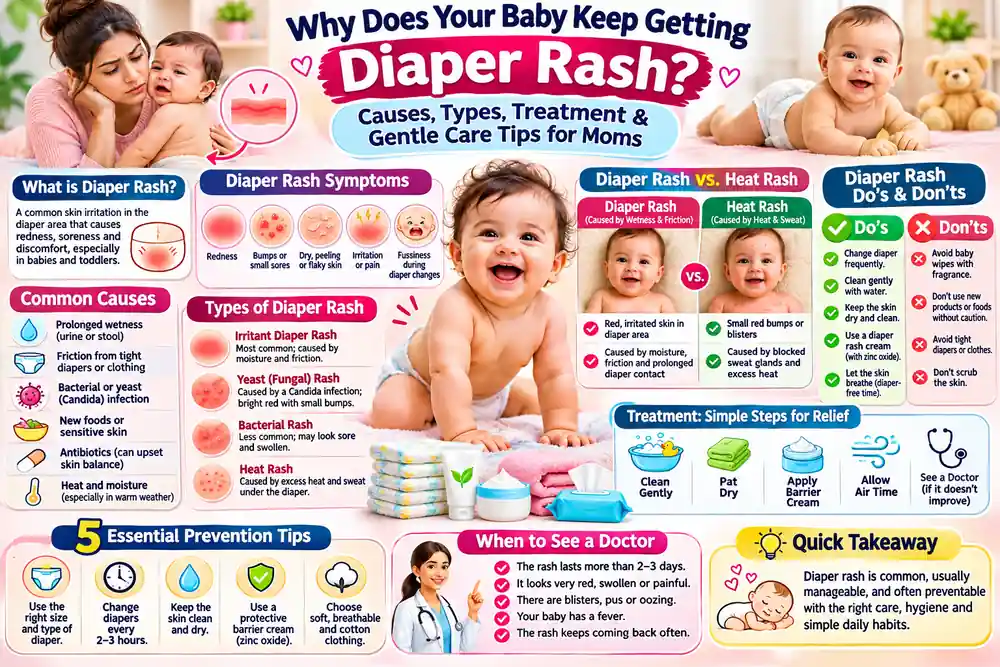
Not every red bottom happens for the exact same reason. Spotting the specific type of diaper rash helps you pick the right treatment fast. Here are the four main varieties you might see on your baby:
1. Irritant Diaper Rash
This is the classic, everyday rash most parents deal with first. Too much trapped moisture, friction, and prolonged contact with pee or poop trigger it. You will notice flat, pink, or red patches wherever the diaper rubs against your baby’s skin.
2. Yeast (Candida) Diaper Rash
A natural fungus called Candida lives inside your baby’s digestive tract. Warm, damp diapers create the perfect spot for this yeast to multiply fast, especially after a round of antibiotics.
Unlike standard irritation, a yeast rash settles deep inside the groin folds. Watch for shiny, bright red patches with sharp borders and tiny pink bumps spreading outward.
Severe cases can even cause cracked skin that oozes or bleeds. Wash your hands well before and after every change, and ask your pediatrician for a targeted antifungal cream.
3. Bacterial Diaper Rash
Sometimes, common bacteria like Staph or Strep invade broken skin and cause an infection called impetigo. Bright red skin circling the anus often points to a strep infection. Meanwhile, yellow crusts, oozing fluid, or tiny pus-filled pimples signal a staph infection.
👉 Note: Skip over-the-counter antibiotic ointments, as their extra ingredients can irritate raw skin even more. Always let your doctor diagnose and treat a suspected bacterial rash.
4. Allergic Reaction Diaper Rash
Some newborns react badly to dyes, fragrances, or harsh preservatives. New baby wipes, scented diapers, laundry detergents, or even thick barrier creams can set off an allergy. If a rash pops up right after you switch brands, your baby’s sensitive skin likely hates the new product.
5. Rare Skin Conditions
Occasionally, other medical issues mimic a stubborn diaper rash. Seborrheic dermatitis (cradle cap of the groin) happens when skin glands make too much oil. Pediatric psoriasis and rare genetic conditions like zinc deficiency can also spark lasting redness.
If standard home care fails after a couple of days, schedule a quick checkup with your pediatrician to rule these out.
How Common Is a Newborn Diaper Rash?
If your baby has a red bottom right now, you are definitely not alone. Diaper rash ranks among the most common skin issues in infancy. In fact, studies show that over half of all babies between 4 and 15 months old get a rash at least once every two months.
Newborns face an especially high risk during their first few weeks of life. They pee and poop constantly, and their brand-new skin has not built up a strong protective barrier yet. Even the most attentive parents deal with occasional flare-ups.
Signs and Symptoms of a Diaper Rash
Spotting a diaper rash early helps you soothe your baby before the skin gets raw. In mild cases, you will notice slightly pink or red patches around your baby’s bottom, thighs, and genitals. The skin often feels warm to the touch. You might see just a few small spots, or the redness can spread across the entire diaper zone.
Severe flare-ups look much angrier and hurt more. Painful blisters, peeling skin, or open sores can form. If bacteria or yeast infect the rash, the skin turns bright red and swells up.
Watch for these four common symptoms during your daily routine:
- Red, inflamed skin: Pink or bright red patches appear across your baby’s buttocks, inner thighs, and genital area.
- Tender, itchy spots: The irritated skin feels warm, sensitive, or mildly bumpy when you gently clean it.
- Blisters or open sores: Raw, peeling skin or tiny fluid-filled bumps develop in more severe cases.
- Fussiness during changes: Your baby cries, squirms, or seems extra uncomfortable whenever a wipe or fresh diaper touches the area.
Why Does My Baby Keep Getting a Newborn Diaper Rash?
Watching a diaper rash return again and again feels exhausting, especially when you do everything right. Most flare-ups are harmless, yet they make your baby cranky and stress you out. Changing diapers every three to four hours—or right after a poop—prevents most irritation.
Still, stubborn rashes sometimes sneak past your best efforts. Check out these five hidden reasons your baby’s bottom stays red:
1. Your Baby (or You) Started Taking Antibiotics
Antibiotics wipe out harmful germs, yet they also clear away healthy gut bacteria. This sudden drop triggers two distinct problems:
Diarrhea Rash
Loose stools rush through the digestive tract and carry harsh digestive enzymes. When watery poop touches delicate skin, it burns fast.
Yeast Rash
Without good bacteria keeping Candida fungus in check, yeast multiplies quickly. Babies with a yeast rash sometimes also get oral thrush, which looks like white patches inside their mouth. (Note: If you breastfeed and take antibiotics, the medicine passes into your milk and can spark the same reaction.)
2. Your Baby Recently Started Solid Foods
Introducing purees or finger foods marks an exciting milestone, yet it shakes up your baby’s tummy. New foods change the acid levels, frequency, and texture of your little one’s poop. Acidic fruits and veggies often trigger sudden skin flare-ups until your baby’s gut adjusts.
3. You Switched Diaper or Wipe Brands
Even gentle products can bother ultra-sensitive newborn skin. Dyes, fragrances, and preservatives in new wipes, creams, or diapers sometimes cause mild allergic reactions. Try switching back to your old brand or picking fragrance-free options to see if the redness fades.
4. Your Cloth Diaper Wash Routine Needs a Tweak
Cloth diapers need an extra-thorough wash to remove lingering bacteria and soap residue. Always dump solid waste into the toilet and presoak messy diapers first. Wash them in hot water, run a double rinse cycle, and skip fabric softeners or dryer sheets that leave irritating coatings behind.
5. Your Baby’s Diapers Fit Too Tightly
Snug diapers block airflow, trap warm sweat, and rub against soft skin. Check your baby’s thighs and waist during your next change. If the elastic leaves red indentations, fasten the tabs more loosely or size up right away.
Many sneaky triggers can spark a newborn diaper rash even when you keep things clean and dry. If your baby’s skin refuses to heal after a few days of home care, call your pediatrician for personalized help.
What Causes a Newborn Diaper Rash?
When delicate baby skin stays wet for too long, its natural protective barrier starts to break down. Damp skin rubs easily, making it super vulnerable to friction and irritation. Once pee, poop, or harsh chemicals touch that weakened skin, a diaper rash develops quickly.
Several everyday triggers can spark this uncomfortable redness. Here are the seven most common causes of a newborn diaper rash:
1. Prolonged Contact with Pee and Poop
Too much moisture or Leaving a wet or messy diaper on for too long irritates sensitive skin fast. Frequent bowel movements or bouts of diarrhea raise your baby’s risk even further.
2. Chafing and Constant Rubbing
Tightly fastened diapers or snug onesies rub repeatedly against damp skin, creating painful friction rashes.
3. Reactions to New Baby Products
Your baby’s skin might hate a new brand of wipes, disposable diapers, lotions, or powders. Harsh laundry detergents, bleach, and fabric softeners on cloth diapers also trigger flare-ups.
4. Yeast or Bacterial Infections
A warm, damp diaper acts like a greenhouse for germs. What starts as mild redness can quickly turn into a spreading yeast or bacterial infection deep inside your baby’s skin creases.
5. Dietary Changes and New Foods
Starting solid foods changes the acidity, texture, and frequency of your baby’s poop. Breastfed babies can also react to acidic or spicy foods their mothers eat.
6. Naturally Sensitive Skin
Babies who already deal with eczema (atopic dermatitis) or cradle cap (seborrheic dermatitis) face higher odds of getting rashes inside their diaper zone.
7. Recent Antibiotic Use
Antibiotics wipe out helpful gut bacteria that normally stop yeast from overgrowing, while also triggering loose stools. This affects babies taking medicine directly, as well as breastfed infants whose mothers take antibiotics.
What Increases the Risk of Diaper Rash on an Infant?
Even the most careful parents deal with a painful rash from diapers from time to time. Certain daily habits and health changes make your baby’s delicate skin far more vulnerable to irritation.
Your baby faces a much higher risk of developing an infant diaper rash when they:
- Stay in damp diapers too long: Moisture breaks down a newborn bottom quickly. Skin that stays wet or soiled loses its natural protective barrier.
- Poop frequently or overnight: Constant bowel movements expose tender skin to harsh digestive enzymes. Poop sitting inside a diaper while your baby sleeps overnight often sparks a bad diaper rash or an uncomfortable rash on buttocks crack by morning.
- Suffer from diarrhea: Loose, watery stools pass through the gut fast and carry extra acid that burns soft skin on contact.
- Start eating solid foods: Introducing purees and table foods shifts the makeup of your baby’s stool. Combined with extra drool from a teething diaper rash, new foods frequently trigger sudden flare-ups.
- Take antibiotics (or breastfeed while you do): Antibiotics clear away helpful gut bacteria alongside bad germs. This drop often leads to loose stools or a stubborn yeast infection from diaper rash (also called a diaper fungal rash).
When to See a Doctor for a Newborn Diaper Rash
Most mild flare-ups heal quickly with simple diaper rash home remedies. However, some stubborn skin issues need a doctor’s eye and targeted treatment for diaper rash. If a rash from diapers fails to improve after two or three days of home care, call your pediatrician. Your baby might need prescription medicine, or the irritation could stem from eczema, psoriasis, or a nutritional issue. Always follow your doctor’s instructions closely, as strong prescription creams only stay safe for short periods.
Schedule a prompt visit with your healthcare provider if you notice any of these eight warning signs:
- Your baby is a brand-new newborn: Any diaper rash on infant skin during the first few weeks of life deserves a quick checkup.
- The rash gets worse after 48 to 72 hours: If redness spreads or refuses to fade despite regular diaper rash treatments, seek medical advice.
- You spot blisters, pimples, or oozing sores: A blistering diaper rash, peeling skin, yellow crusts, or pus-filled bumps often signal a bacterial infection.
- Your baby develops a fever: A temperature paired with a bad diaper rash points to an underlying infection that needs immediate care.
- You suspect a fungal or yeast infection: Look for a bright red diaper fungal rash with tiny red satellite spots around the edges, especially if your baby takes antibiotics. Your doctor will likely prescribe a safe diaper rash antifungal cream to treat yeast diaper rash properly.
- The rash spreads beyond the diaper zone: Red patches moving onto your baby’s face, scalp, or arms indicate a broader skin condition.
- The skin bleeds or hurts severely: Intense pain, swelling, or crying during pee and poop can warn of deeper skin infections like cellulitis.
- Deep creases stay bright red and raw: A stubborn rash in buttock crack folds that cracks or weeps requires professional treatment of diaper rash.
Potential Complications of a Newborn Diaper Rash
Most mild flare-ups heal fast without leaving a mark. However, ignoring a bad diaper rash or skipping proper treatment for diaper rash can occasionally trigger deeper skin problems.
Watch out for these two main complications when caring for a diaper rash on infant skin:
- Temporary changes in skin color: In babies with brown or Black skin, a rash from diapers can cause the healed patches to look lighter than normal. Doctors call this condition post-inflammatory hypo-pigmentation. Mild lightening usually fades within a few weeks. Deeper irritation on a newborn bottom, however, might take several months or even years to regain its natural pigment.
- Stubborn skin infections: Broken, raw skin lets everyday germs sneak inside easily. A simple irritation can turn into a severe bacterial infection or a painful diaper fungal rash that resists basic diaper rash home remedies. If standard creams fail, your doctor will prescribe targeted diaper rash treatments to clear the infection safely.
How Is a Newborn Diaper Rash Diagnosed?
In most cases, you will not even need a doctor’s visit for a mild rash from diapers. Simple diaper rash home remedies clear up everyday redness within a few days.
When you do visit the clinic, your pediatrician diagnoses a diaper rash on infant skin through a quick visual exam. Doctors can easily spot the difference between standard chafing, a diaper fungal rash, and a blistering diaper rash just by looking closely at your baby’s bottom.
If a bad diaper rash refuses to heal after standard diaper rash treatments, your doctor may take two extra steps to pinpoint the exact trigger:
- Skin swabs or scrapings: Your provider gently collects a tiny sample from a rash on buttocks crack or oozing sore to check for specific yeast or bacterial infections.
- Allergy or patch testing: If your baby reacts to wipes, creams, or diaper materials, your doctor may run tests to rule out allergic contact dermatitis before starting a targeted treatment for diaper rash.
How to Treat a Newborn Diaper Rash at Home and Medically
The most effective treatment for diaper rash starts with one simple goal: keep your baby’s skin clean and dry. Most mild flare-ups respond fast to gentle diaper rash home remedies right in your nursery.
Follow these five steps to soothe a newborn bottom and heal a rash from diapers quickly:
- Change wet or dirty diapers right away: Check your baby’s diaper often and swap it out the moment they pee or poop. Less moisture on the skin speeds up healing.
- Clean the area gently without scrubbing: Wipe your baby’s skin using warm water and a soft washcloth. Skip wipes containing alcohol and fragrance, and save soap for stubborn poop. If your baby has a bad diaper rash or a blistering diaper rash, use a squirt bottle of warm water to rinse the skin without rubbing it.
- Pat dry and let the skin air-dry: Gently pat the area with a clean towel instead of rubbing. Let your baby enjoy diaper-free time so fresh air can dry out a stubborn rash in buttock crack folds completely.
- Apply a thick barrier ointment: Spread a generous layer of cream containing zinc oxide or petroleum jelly over the clean skin. You do not need to scrub off the old ointment at every change—just clean the messy top layer so you do not damage tender skin further.
- Fasten diapers loosely: Leave extra breathing room around your baby’s waist and thighs, especially overnight. Loose diapers stop damp fabric from rubbing against a teething diaper rash.
- Avoid talcum powder and cornstarch: Never dust baby powder onto a diaper rash on infant skin. Babies can inhale fine powders, and cornstarch actually feeds yeast infections.
Medical Treatments for Stubborn Diaper Rashes
Sometimes, basic diaper rash treatments cannot clear a deep infection on their own. Depending on how severe the irritation looks, full recovery can take several days. If your baby’s skin does not improve after a few days of home care, your doctor may prescribe one of these three targeted options:
- Mild hydrocortisone cream: Pediatricians sometimes recommend a weak (0.5% to 1%) steroid cream applied twice a day for three to five days to calm severe inflammation.
- Prescription antifungal ointment: If your baby develops a diaper fungal rash, your provider will prescribe a safe diaper rash antifungal cream to treat yeast diaper rash properly.
- Oral antibiotic medicine: If bacteria infect raw skin, your doctor will prescribe antibiotics taken by mouth to clear the infection safely.
A stubborn diaper rash on infant skin can occasionally come back again and again. If redness persists even after prescription treatments, your pediatrician may refer your baby to a skin specialist (dermatologist) for further care.
Natural and Alternative Home Remedies for Newborn Diaper Rash
Many parents look for gentle, natural diaper rash home remedies before reaching for medicated ointments. While traditional zinc oxide remains the gold standard for treatment for diaper rash, several alternative options show promise for soothing a mild rash from diapers.
Here are four popular natural approaches—along with what science actually says about their safety and results:
- Human breast milk: Nursing mothers often dab a few drops of fresh breast milk onto a newborn bottom to calm mild irritation. Research shows mixed results on whether this works better than standard diaper rash treatments. In one study of 141 babies, breast milk worked just as well as a mild 1% hydrocortisone cream. However, another newborn study found that a classic zinc oxide and cod liver oil barrier cream healed redness faster than breast milk alone. If you try this method, let the milk air-dry completely before putting on a fresh diaper so trapped dampness does not trigger a diaper fungal rash.
- Cold-pressed virgin coconut oil: Unrefined coconut oil hydrates dry, chafed skin and calms minor redness without harsh chemicals. It melts quickly at body temperature, so it works best for mild daytime irritation rather than heavy overnight wetness. Never apply coconut oil over a blistering diaper rash or an active yeast infection, as oils can trap heat inside skin folds.
- Plant-based balms (Calendula and Aloe Vera): Many organic diaper creams blend soothing herbs like calendula, chamomile, or pure aloe vera gel to cool an inflamed diaper rash on infant skin. While parents love these gentle botanicals, doctors still need more clinical studies to prove how well they heal a bad diaper rash on their own. Always pick fragrance-free formulas and patch-test a tiny spot first to avoid allergic reactions.
- Bee products and cod liver oil: Some natural salves use beeswax, bee pollen, or cod liver oil to lock out moisture from a rash in buttock crack folds. Beeswax creates a nice water-repellent shield, yet raw bee products can trigger allergies or even encourage bacterial growth on broken skin. Check with your pediatrician before using unverified herbal mixes, and never use natural oils to treat yeast diaper rash—always ask your doctor for a safe diaper rash antifungal cream instead.
Should You Use Baking Soda or Cornstarch for a Newborn Diaper Rash?
Scrolling through online parenting forums often turns up DIY diaper rash home remedies using kitchen staples like baking soda or cornstarch. However, pediatricians urge parents to think twice before putting household powders directly onto a newborn bottom. Broken, raw skin absorbs substances easily, and the wrong pantry item can make irritation much worse.
Keep these three safety rules in mind before trying kitchen remedies on a rash from diapers:
- Skip cornstarch completely: Many parents dust cornstarch onto a diaper rash on infant skin to soak up moisture. Unfortunately, Candida yeast loves to feed on cornstarch. Using it on a diaper fungal rash or a rash on buttocks crack folds actually helps the fungus grow faster, turning mild redness into a stubborn yeast infection from diaper rash.
- Never apply baking soda directly to skin: Rubbing dry baking soda or thick baking soda paste onto raw skin disrupts your baby’s natural pH balance and causes stinging burns. The only safe way to use baking soda is dissolving two tablespoons into a warm bath for a gentle 10-minute soak, followed by a plain water rinse.
- Avoid all loose baby powders: Babies can easily inhale fine powder particles during diaper changes, which irritates their tiny lungs. Stick to proven, store-bought barrier creams with zinc oxide or petroleum jelly for safe treatment for diaper rash.
How Long Does a Newborn Diaper Rash Last?
Most mild flare-ups clear up within three to four days once you start consistent home care. Frequent diaper changes, plenty of diaper-free air time, and thick barrier ointments heal everyday redness fast.
However, a bad diaper rash or a blistering diaper rash takes longer to recover. If your baby needs prescription antibiotics for bacteria or a diaper rash antifungal cream to treat yeast diaper rash, expect the skin to take one to two weeks to heal completely. Always finish the full course of prescribed diaper rash treatments, even if the redness fades early.
How to Prevent a Newborn Diaper Rash
Stopping a rash from diapers before it starts is much easier than treating sore, broken skin later. The secret to keeping a newborn bottom healthy comes down to one simple habit: keep the diaper zone clean, dry, and well-ventilated.
Follow these nine everyday tips to stop a diaper rash on infant skin before redness ever appears:
- Change wet or dirty diapers right away: Check your baby’s diaper every two to three hours, and swap it out the second they poop. If your baby attends daycare, ask caregivers to follow the same strict schedule. Super-absorbent disposable diapers also pull wetness away from delicate skin fast.
- Rinse gently with warm water: Clean your baby’s bottom during every change using warm water from a sink, squeeze bottle, or soft cotton balls. If you use disposable wipes, pick gentle brands free from alcohol and fragrance, and save mild cleanser for messy poops.
- Pat skin dry and skip baby powder: Gently pat the diaper area with a clean, soft towel instead of rubbing. Never shake talcum powder or cornstarch onto your baby, as powders irritate tiny lungs and feed yeast growth.
- Give your baby daily diaper-free time: Let your little one kick around bare-bottomed on a large waterproof mat or towel during playtime. Fresh air dries out damp skin naturally and prevents a stubborn rash in buttock crack folds.
- Apply a daily barrier ointment: If your baby gets frequent flare-ups, smooth on a thin layer of zinc oxide or petroleum jelly at every change. When the previous layer still looks clean, leave it in place and simply add a fresh coat on top.
- Fasten diapers loosely for better airflow: Avoid cinching diaper tabs too tightly or dressing your baby in snug plastic diaper covers. A little extra wiggle room prevents chafing and lets air circulate underneath.
- Wash baby clothes and cloth diapers in mild detergent: Switch to hypoallergenic, fragrance-free laundry soap for all onesies, blankets, and cloth diapers. Always double-rinse cloth diapers in hot water and skip fabric softeners that leave irritating chemical coatings behind.
- Watch closely when introducing new foods: Pay attention to your baby’s skin and poop whenever you start new purees or finger foods. Acidic fruits or extra drool from a teething diaper rash can quickly irritate sensitive skin, so apply extra barrier cream during these milestones.
- Wash your hands after every diaper change: Scrubbing your hands well with soap and water stops bacteria and fungus from spreading to other parts of your baby’s body—preventing a painful diaper fungal rash or blistering diaper rash down the road.
10. Consider probiotics during antibiotic courses: Ask your pediatrician about infant probiotic drops whenever your baby takes antibiotics. Probiotics restore healthy gut bacteria and help prevent loose stools and a yeast infection from diaper rash before they start.
Essential Self-Care Tips to Heal a Newborn Diaper Rash Fast
Most mild flare-ups respond quickly to consistent diaper rash home remedies right in your own nursery. The secret to a successful treatment for diaper rash lies in protecting broken skin from moisture while giving it plenty of room to breathe.
Follow these ten practical self-care steps to soothe a newborn bottom and clear a rash from diapers comfortably:
- Keep the diaper area clean and dry: Swap wet or dirty diapers the moment you notice them. Until the skin heals, you may even need to wake up once during the night for a quick change. Super-absorbent disposable diapers pull pee away from tender skin much faster than standard liners.
- Rinse gently with warm water at every change: Clean your baby’s bottom using warm water from a squeeze bottle, sink, or soft cotton balls. Skip wipes containing alcohol and perfume, and save mild soap for messy poops. Gentle rinsing protects a sore rash on buttocks crack folds from painful friction.
- Pat dry and avoid baby powders: Gently pat the area with a clean towel or let it air-dry completely. Never rub inflamed skin, and keep talcum powder or cornstarch away from your baby’s nursery.
- Apply a thick protective barrier cream: Spread a generous layer of paste or ointment onto dry skin. If the cream from the last diaper change still looks clean, leave it alone and add another coat on top. When you do need to wipe off thick paste, dab a cotton ball in Baby Safe mineral oil so you do not scrub raw skin.
- Choose high-strength zinc oxide or petroleum jelly: Over-the-counter creams rich in zinc oxide or petroleum jelly block wetness effectively. Popular pediatric choices include Desitin, Triple Paste, Balmex, and A+D. Before use ask your pharmacist or doctor which formula suits a bad diaper rash best.
- Top your paste with petroleum jelly: Smooth a thin layer of plain petroleum jelly right over your zinc oxide cream. This clever trick stops the diaper fabric from sticking to thick paste and pulling at healing skin.
- Know when to try an over-the-counter antifungal: If standard diaper rash treatments fail after several days, your baby might have a diaper fungal rash or a yeast infection from diaper rash. Ask your doctor before applying a diaper rash antifungal cream like clotrimazole twice a day to treat yeast diaper rash. If redness lasts longer than five to seven days, book a clinic visit right away.
- Avoid harsh or toxic ingredients: Stick strictly to products formulated for babies. Never apply creams containing camphor, phenol, benzocaine, boric acid, baking soda, diphenhydramine, or salicylates, as delicate infant skin absorbs these chemicals easily.
- Maximize fresh airflow around the diaper zone: Let your baby nap on a waterproof pad without a diaper or ointment for short stretches. Ditch tight plastic diaper covers, and temporarily size up your baby’s diapers so damp edges do not rub against a blistering diaper rash or teething diaper rash.
- Give a daily warm bath and drop trigger products: Bathe your baby once a day in warm water using a gentle, fragrance-free cleanser until the diaper rash on infant skin fades. At the same time, swap out any new wipes, diapers, or laundry detergents that might be sparking an allergic reaction.
- Wash your hands before and after every change: Scrubbing your hands with soap and water stops yeast and bacteria from spreading across your baby’s skin or transferring to other family members.
Which Type of Diaper Should You Use to Prevent Diaper Rash?
Choosing between cloth and disposable diapers feels like a big decision for new parents. Both options work well, yet they affect moisture on a newborn bottom differently.
Understanding the pros and cons of each style helps you stop a painful rash from diapers before it starts:
- Disposable diapers: You toss disposable diapers in the trash right after each use. Most modern disposables contain super-absorbent gels that pull pee away from sensitive skin fast. Because they lock away wetness so efficiently, studies suggest a diaper rash on infant skin happens slightly less often with disposables. Still, some babies react to dyes or perfumes, so choose fragrance-free, hypoallergenic brands if your baby gets a bad diaper rash.
- Cloth diapers: You wash and reuse cloth diapers after every wet or messy change. They save money over time and create less household waste. However, natural fabrics hold dampness closer to your baby’s skin unless you add stay-dry fleece liners. Always wash cloth diapers in fragrance-free detergent and skip fabric softeners to avoid a rash in buttock crack folds or a diaper fungal rash.
Ultimately, how often you change your baby matters far more than which diaper you buy. Leaving any wet diaper on too long traps moisture and triggers a blistering diaper rash or a teething diaper rash. Whether you pick cloth, disposables, or a mix of both, swap soiled diapers right away to keep your baby clean, dry, and comfortable.
Still unsure which brand or style fits your family best? Read our complete guide: How Do I Choose the Right Diaper for My Baby? to compare absorbency, comfort, and skin safety side by side.
Gentle Care Tips for Moms
Caring for a baby with a rash from diapers takes patience, energy, and plenty of calm—especially when you are already running on broken sleep. A newborn bottom can turn bright red overnight, and it is easy to feel guilty when your baby cries during diaper changes. Take a deep breath: a diaper rash on infant skin is super common, and quick action helps you stay ahead of flare-ups.
Keep these six gentle habits in mind for your own peace of mind and daily routine:
- Let go of mom guilt: Even the most attentive parents see a rash from diapers pop up occasionally. Sensitive skin, teething drool, tummy bugs, or a round of antibiotics can spark a bad diaper rash despite your best efforts. Focus on what you can control right now rather than blaming yourself.
- Keep a ready-to-grab care station: Stock your changing table with soft washcloths, fragrance-free wipes, a squeeze bottle of warm water, and your favorite baby diaper rash cream with zinc oxide. Having supplies within arm’s reach makes nighttime changes faster and less stressful for both of you.
- Protect your hands too: Frequent handwashing and diaper changes can leave your own hands dry or cracked. Keep a gentle hand cream near the sink so you can care for your skin while keeping germs away from a diaper fungal rash or blistering diaper rash.
- Accept help with small tasks: Ask a partner, family member, or friend to handle laundry, restock diapers, or hold your baby during a fussy change. Sharing small chores gives you space to rest and recharge.
- Trust your instincts and call for backup: You know your baby best. If a yeast infection from diaper rash or stubborn redness on a rash on buttocks crack area does not improve after a few days of diaper rash home remedies, reach out to your pediatrician for clear next steps instead of guessing alone.
- Take micro-breaks when needed: If your baby cries nonstop during a change and your stress rises, set your baby down safely in their crib for a 60-second breather. Stepping back for a moment helps you return calmer and gentler.
Preparing for Your Pediatrician Visit: Questions to Ask About Newborn Diaper Rash
When a stubborn rash from diapers refuses to fade, a quick visit to your pediatrician brings fast relief and peace of mind. Preparing a short list of notes before you walk into the exam room helps you get the exact treatment for diaper rash your baby needs.
1. How to Prepare Before Your Appointment
Jot down these four quick details on your phone before you head to the clinic:
- Symptom timeline: Note when you first spotted the diaper rash on infant skin and whether it looks like a blistering diaper rash, a rash on buttocks crack folds, or a teething diaper rash.
- Diet and medicine changes: List any recent antibiotics, new solid foods, or acidic foods you ate while breastfeeding.
- Nursery products: Bring the labels—or snap photos—of your wipes, diapers, creams, soaps, and laundry detergents.
- Past treatments: Note which diaper rash home remedies or creams you already tried and whether they helped.
2. Best Questions to Ask Your Baby’s Doctor
Make the most of your visit by asking these seven essential questions:
- What is causing this rash? Could it be a simple irritation, an allergy, or a diaper fungal rash?
- Which diaper rash treatments work best here? Should I use a thick zinc oxide paste, a barrier ointment, or a prescription diaper rash antifungal cream to treat yeast diaper rash?
- Which ingredients or products should I avoid? Are any of my current wipes, soaps, or creams making my baby’s skin worse?
- Should I change my baby’s diet or my own? Do we need to pause certain solid foods or adjust my breastfeeding diet?
- Can I leave my baby’s diaper off during naps? How much daily diaper-free air time is safe right now?
- How fast should my baby’s skin heal? When should I call you back if a bad diaper rash gets worse?
- How can I prevent future flare-ups? What daily routine keeps a sensitive newborn bottom rash-free?
3. Questions Your Doctor Will Likely Ask You
Expect your pediatrician to ask these five quick questions to pinpoint the root cause:
- When did the redness start, and how often do you change diapers?
- Do you use cloth or disposable diapers, and which wipes or soaps touch your baby’s skin?
- Has your baby started solid foods or had diarrhea recently?
- Is your baby breastfed, and have you or your baby taken antibiotics lately?
- What ointments or creams have you already applied?
Frequently Asked Questions About Newborn Diaper Rash
1. What is the fastest treatment for diaper rash at home?
The fastest treatment for diaper rash combines frequent diaper changes with thick barrier protection. Rinse your baby’s bottom with warm water, pat the skin dry, and allow 10 to 15 minutes of diaper-free air time. Finish by applying a generous layer of zinc oxide paste or petroleum jelly at every change.
2. How do I tell a regular rash from a diaper fungal rash?
A standard rash from diapers looks pink or lightly red and stays mostly on flat skin surfaces. In contrast, a diaper fungal rash appears bright red, settles deep inside skin folds like a rash on buttocks crack areas, and shows tiny red satellite bumps around the outer edges. If you suspect a yeast infection from diaper rash, ask your doctor for a targeted diaper rash antifungal cream.
3. Does teething really cause a diaper rash on infant skin?
Teething itself does not directly irritate a newborn bottom, yet it triggers a teething diaper rash indirectly. Babies swallow extra drool while cutting teeth, which makes their poop looser and slightly more acidic. Changing dirty diapers immediately and applying extra barrier ointment protects sensitive skin during teething weeks.
4. Can I use coconut oil as one of my diaper rash home remedies?
Yes, pure cold-pressed virgin coconut oil soothes mild dryness and chafing on intact skin. However, it melts quickly and cannot block heavy overnight wetness like zinc oxide paste. Never apply coconut oil over a blistering diaper rash or an active yeast infection, as oils can trap heat inside skin folds.
5. When should I call a doctor for a bad diaper rash?
Contact your pediatrician if redness fails to improve after two or three days of consistent diaper rash treatments. Seek prompt medical care right away if your baby develops a fever, oozing sores, bleeding, or bright red spots that spread beyond the diaper area.
People Also Ask: Common Questions About Newborn Diaper Rash
1. What should I look for in a good baby diaper rash cream?
Choose a fragrance-free, hypoallergenic baby diaper rash cream made specifically for sensitive newborn skin. Look for thick barrier formulas that block moisture without dyes, parabens, or harsh preservatives. Ointments containing petrolatum or lanolin work well for everyday protection, while heavier pastes calm active redness fast.
2. Why is a baby diaper rash cream with zinc oxide so effective?
A baby diaper rash cream with zinc oxide creates a thick, physical shield that sits on top of the skin. It blocks urine, stool, and digestive enzymes from touching raw tissue while soothing active inflammation. For mild irritation, pick a formula with 10% to 15% zinc oxide, and use a 40% maximum-strength paste for a bad diaper rash.
3. How do I recognize and treat a baby yeast diaper rash?
A baby yeast diaper rash looks bright beefy red with sharp borders and tiny red satellite spots scattered around the edges. It often settles deep inside skin folds, such as a rash on buttocks crack areas, especially after your baby takes antibiotics. Standard barrier creams will not cure a yeast infection from diaper rash, so ask your pediatrician for a targeted diaper rash antifungal cream to clear it safely.
4. How can I get rid of a diaper rash in 24 hours?
While severe irritation takes three to four days to heal completely, you can dramatically calm a mild rash from diapers within 24 hours by following four strict steps:
- Change diapers every one to two hours: Never let wetness or stool sit on a newborn bottom.
- Rinse with warm water instead of wiping: Pat the skin gently with a soft towel so you do not rub inflamed areas.
- Give plenty of diaper-free air time: Let your baby lie bare-bottomed on a waterproof mat for 15 to 20 minutes after every change.
- Apply a thick zinc oxide barrier: Frost the clean, dry skin with a heavy coat of ointment to lock out moisture overnight.
5. What causes a fungal diaper rash, and how is it different from regular chafing?
A fungal diaper rash (also called a diaper fungal rash) happens when Candida yeast overgrows in warm, damp diaper folds. Unlike everyday friction or a teething diaper rash that improves with basic diaper rash home remedies, a fungal infection worsens when treated with cornstarch or plain barrier ointments alone. Always keep the area dry and consult your doctor for proper antifungal treatment for diaper rash.
Final Thoughts: Keeping Your Newborn’s Bottom Healthy and Rash-Free
Dealing with a diaper rash on infant skin feels stressful for any new parent, yet most flare-ups heal within a few days of gentle care. Remember the golden rule of newborn skincare: keep the diaper zone clean, dry, and protected.
Swap wet diapers quickly, skip harsh scented wipes, let your baby enjoy daily diaper-free air time, and seal out moisture with a thick zinc oxide barrier cream. When a stubborn bad diaper rash resists home care or shows signs of a fungal infection, reach out to your pediatrician for fast, targeted relief. With a few simple daily habits, you can keep your baby comfortable, happy, and rash-free.
Medical Disclaimer: This article is for informational and educational purposes only and is not a substitute for professional medical advice, diagnosis, or treatment. Always consult your pediatrician regarding your baby’s health, especially if a diaper rash is severe, persistent, or worsening.
References & Medical Sources
- American Academy of Pediatrics (AAP) – HealthyChildren.org: Common Diaper Rashes & Treatments — Clinical guidance on preventing diaper dermatitis, recognizing yeast and bacterial infections, and when to contact a pediatrician.
- Mayo Clinic: Diaper Rash – Diagnosis and Treatment — Evidence-based recommendations on zinc oxide and petroleum jelly barrier ointments, safe self-care routines, and ingredients to avoid on infant skin.
- Mayo Clinic: Diaper Rash – Symptoms and Causes — Overview of common triggers including moisture, chafing, antibiotic use, and dietary changes.
- Cleveland Clinic: Diaper Rash (Diaper Dermatitis): Symptoms, Causes & Treatment — Detailed guide on home healing timelines, cloth versus disposable diapers, and avoiding household powders.
- Pediatric Dermatology (PubMed / NIH): Comparison of the Effect of Human Milk and Topical Hydrocortisone 1% on Diaper Dermatitis — Clinical trial evaluating topical human breast milk versus 1% hydrocortisone ointment in 141 infants with diaper rash.
🔗 Related Articles
If you are preparing for a newborn, these helpful Blooming Blogs guides can help you plan, prepare, and care for your baby with greater confidence:
- 1. Best Infant Formula for Newborns: Types, Choices & Safety Guide
- 2. Newborn Baby Essentials Checklist for Soon-to-Be Parents
- 3. How to Prepare Formula Milk for a Newborn Baby
- 4. Newborn Baby Care: Complete Guide for New Parents
- 5. Formula Mixing & Bottle Ratio Calculator
- 6. Hospital Bag for Delivery: Complete Checklist for Mom and Baby
- 7. The Ultimate Pregnancy Hospital Bag & Registry Checklist: Your Stress-Free Delivery Guide
- 8. Hospital Bag Checklist Tool
- 9. Rompers for Newborn: Ultimate Guide to Safe Baby Clothes
- 10. Onesies and Rompers: How to Dress Your Newborn Right
- 11. Baby Onesies Buying Guide: Best Soft Outfits for Newborns
🛠️ Try Our Free Interactive Baby Care Tools
Planning your nursery or setting up daily routines? Check out these handy calculators designed to simplify baby care:
🌱 Continue Exploring…
Whether you’re nurturing a newborn, curating a sanctuary for your home and garden, or simply looking to level up your day-to-day life, there’s always a new perspective waiting to be discovered. From practical everyday parenting guidance, women’s wellness information, ideas to make your home more beautiful, tips for caring for pets and plants, or inspiration for your spiritual journey, Blooming Blogs brings useful knowledge together in one place.
Blooming Blogs — knowledge that blooms.
🌸 Blooming Blogs Promise
We’re here to bring you thoughtful, reliable, and helpful insights you can truly count on. Every article on Blooming Blogs is thoroughly researched, crafted with care, and written with genuine empathy to support you in your everyday journey. Your trust means everything to us, and we are dedicated to sharing content that informs, inspires, and makes your life a little easier.
📰 Editorial Notes
Our team strives for clarity, accuracy, and depth in every piece we publish. Content is periodically updated to ensure facts, recommendations, and guides stay relevant over time. While we consult trusted sources and expert research, our goal is always to present complex topics in a simple, practical, and conversational way that works for real life.
⚠️ Disclaimer
The content provided on Blooming Blogs is for informational and educational purposes only and should not be considered professional medical, legal, or financial advice. Always consult with a qualified expert or licensed professional before making decisions related to your health, family, or personal finances. Blooming Blogs is not liable for any actions taken based on the information provided on this website. (For full details, please visit our Disclaimer Policy Page).
💬 Share Your Experience — Leave a Comment
We’d love to hear from you! Did this article help you, or do you have a personal tip or story to share with our community? Drop your thoughts, questions, or feedback in the comment section below. Every voice enriches our community, and we read every single comment!