

Introduction ☕
Hey there, mama. Take a deep breath.
If you are sitting in a quiet nursery at 2:00 AM, endless product lists can feel overwhelming as you search for your core breastfeeding must haves. You might wonder if you bought the right pump, creams, or pillows. Please know that you are not alone. Bringing a newborn home brings magic, deep emotion, and a little bit of chaos.
When I first started nursing, I thought willpower and a baby were enough. Soon, I realized that keeping essential breastfeeding must haves for first-time moms within reach transforms a sore experience into a sweet bonding ritual. You do not need to spend a fortune or clutter your home with endless gadgets. However, a curated breastfeeding essentials list makes those early postpartum weeks much easier.
Whether you plan to nurse directly or pump exclusively, this zero-judgment guide covers everything you need. We will explore comfortable wardrobe foundations, skin care, breastfeeding mom nutrition, free breastfeeding supplies, and a starter food list for infants. Grab a warm cup of tea, relax your shoulders, and let us walk through this gentle roadmap together.
Essential Breastfeeding Must Haves for First-Time Moms: What You Truly Need
When preparing for your baby’s arrival, the sheer volume of baby gear advertisements can make any lactating mom feel lost. Marketing campaigns often convince first-time parents that they need every high-tech gadget on the market. However, true essential breastfeeding must haves for first-time moms focus on five foundational goals: physical comfort, smooth milk flow, targeted skin care, proper baby support and practical storage.
When you focus on these foundational items, you stay rested, hydrated, and comfortable. These simple steps help you establish a healthy milk supply with complete confidence.
As a nursing mother, your body works overtime. Your metabolic demands increase significantly—burning an extra 400 to 500 calories a day—and your body pulls heavily from your own hydration reserves. Building a reliable breastfeeding essentials kit is not about cluttering your nursery; it is about choosing items that actively protect your mental peace, prevent physical pain, and support your feeding journey.
Setting Up Your Nursing Station
At its absolute core, nursing requires only you and your baby. Creating a dedicated nursing station is one of the best hacks for those early postpartum weeks. You will spend hours parked in one spot cluster feeding, so comfort is non-negotiable. However, modern ergonomic and physical support tools make a massive difference in preventing posture strain and physical tissue damage during early weeks.
- Ergonomic Latch & Posture Support: Positioning your baby correctly prevents nipple pain, plugged ducts, and upper back strain.
- Skin Hydration & Barrier Protection: Plant-based balms and medical-grade ointments shield sensitive skin while your tissue adapts to frequent feeding.
- Absorbent Breast Pads: Leaking is a completely natural part of milk supply regulation during the first six to eight weeks postpartum.
- Supportive Nursing Pillow: Keeps baby at breast height without straining your neck, shoulders, or back.
- Water Bottle with Straw: Dehydration hits fast when nursing; having a spill-proof straw cup lets you drink one-handed.
- Healthy Snacks: Keep trail mix, lactation cookies, or protein bars within arm’s reach for midnight hunger spikes.
- Phone Charger & Entertainment: Long nursing sessions call for audiobooks, podcasts, or a reliable charger cable.
Pumping & Milk Storage Essentials
If you plan to return to work, build a freezer stash, or let your partner share feeding duties, having the right breastfeeding devices is essential. Many moms wonder what do I need for breastfeeding and pumping once their supply regulates. Selecting the right pump depends entirely on your lifestyle, pumping frequency, and personal comfort preferences.
- Breast Pump (Electric, Manual, or Wearable): Essential for expressing milk, building a backup stash, or maintaining supply when separated from baby.
- Sterile Milk Storage Containers: BPA-free milk bags or specialized glass storage bottles designed specifically for cold storage and freezing breast milk..
- Properly Fitted Flanges & Inserts: Correctly sized breast shields prevent tissue friction, optimize milk output, and eliminate pain.
- Bottle Sterilizer & Dryer: Streamlines cleaning routines so you are never caught scrambling for clean parts.
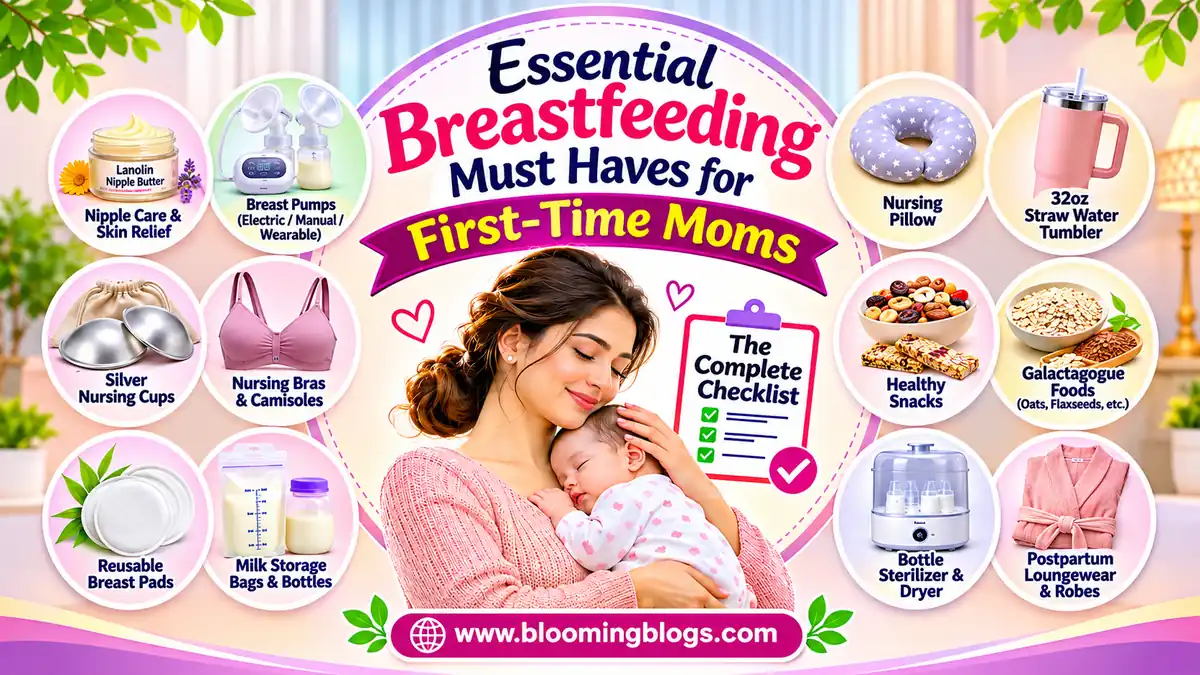
Essential Breastfeeding Must Haves for First-Time Moms: The Complete Checklist
If you are writing down your baby registry and wondering what do you need for breastfeeding, use this comprehensive, category-by-category checklist to cover every stage of early lactation.
Category 1 – Nipple Care & Physical Comfort
Soreness can occur during the first two weeks as your body adjusts to the demands of frequent nursing. Keeping targeted care accessories on hand ensures you can soothe mild irritation before it escalates into cracks or severe pain.
- Pure Medical-Grade Lanolin or Organic Nipple Butter: Provides a rich moisture barrier to heal tender skin naturally. Apply a thin layer directly after feeds.
- Hydrogel Soothing Pads: Placed directly against the skin, these cool inflamed tissue and accelerate healing between nursing sessions.
- Natural Silver Nursing Cups: Crafted from antimicrobial silver, these smooth cups sit inside your bra to protect sensitive skin from fabric friction while catching letdown drops.
- Reusable Bamboo Breast Pads: Ultra-soft, highly absorbent, and eco-friendly pads that keep your skin dry and prevent leaks without chafing.
Category 2 – Essential Comfort and Support Garments
Your body deserves ultimate comfort while nursing. Traditional underwire bras can constrict milk ducts and increase the risk of painful plugged ducts or mastitis. Investing in flexible nursing mom essentials makes midnight feeds significantly easier.
- Seamless Wireless Nursing Bras: Soft, stretchy, wire-free bras with one-handed clip-down cups accommodate shifting breast size without pinching your ribs.
- Hands-Free Pumping Bras: Essential for holding pump flanges securely against your body, leaving your hands completely free to read, type, or rest.
- Nursing Camisoles & Layering Tops: Feature discreet drop-down clips or double-layer fabric openings for easy, low-stress feeding at home or on the go.
- Postpartum Loungewear & Robes: Lightweight, breathable cotton robes with easy front access make hospital recovery and quiet home nursing comfortable.
Category 3 – Hydration & Lactating Mom Nutrition Support
Producing milk requires continuous energy and fluid replacement. Prioritizing targeted breastfeeding mom nutrition keeps your stamina high and supports your milk supply.
- 32oz Insulated Straw Water Tumbler: Dehydration strikes quickly during letdown. Keeping a large, spill-proof straw bottle by your side lets you drink one-handed while holding your baby.
- One-Handed Protein & Energy Snacks: Stock your nursing station with trail mix, lactation bars, nut butter packets, and dried fruit for sudden hunger spikes.
- Clean Electrolyte Powders: Low-sugar hydration mixes help replenish minerals lost during round-the-clock cluster-feeding marathons.
- Galactagogue Foods: Incorporating whole oats, flaxseeds, brewer’s yeast, and gentle herbal teas can naturally encourage steady milk production.
- Postnatal Multivitamins: Continue taking your doctor-recommended supplements to replenish your body’s nutrient reserves throughout lactation.
Category 4 – Pump Technology & Milk Expression Gear
Selecting the right breastfeeding devices depends entirely on your daily routine, how often you plan to pump, and your movement needs.
- Hospital-Grade Double Electric Breast Pump: Best for establishing a full milk supply quickly, managing low supply, or handling frequent daily pumping sessions.
- Wearable Wireless Pumps: Cord-free units that slip directly inside your bra, giving you complete freedom to move around the house while expressing milk.
- Manual Silicone Milk Savers (Haakaa): Utilize gentle suction on the non-nursing breast to catch passive letdown milk that would otherwise leak into a cloth pad.
- Flange Sizing Kits: Removable silicone sizing inserts ensure your nipples fit correctly inside pump shields, preventing friction trauma and inefficient milk drainage.
- Sterile Milk Storage Containers: BPA-free milk bags or specialized glass storage bottles designed specifically for cold storage and freezing breast milk..
- Bottle Sterilizer & Dryer: Streamlines cleaning routines so you are never caught scrambling for clean parts.
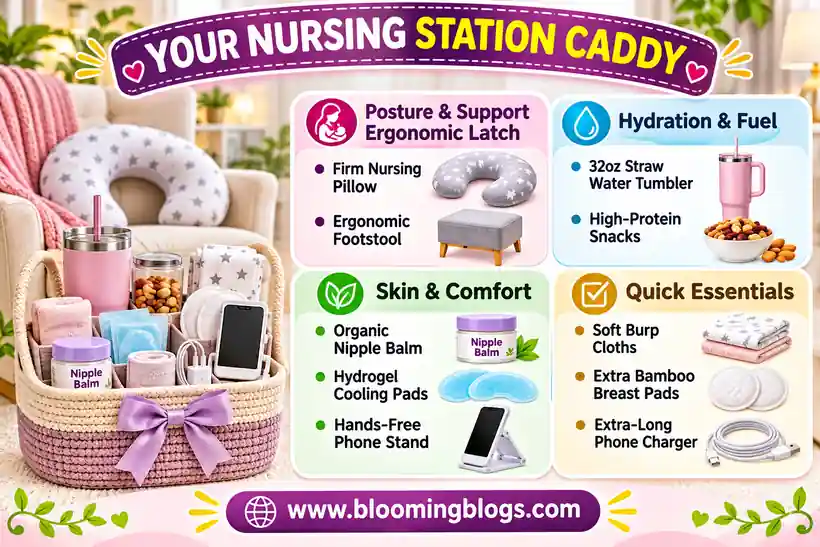
Setting Up Your Dedicated Nursing Station
Creating a dedicated nursing station is one of the single best hacks for surviving early postpartum weeks. Newborns cluster feed frequently, meaning you will spend hours seated in one spot. Setting up a fully stocked station transforms potential frustration into a relaxed, organized sanctuary.
How to Stock Your Station for Maximum Ease
- Position a Supportive Chair: Choose a rocker or armchair with firm armrests. Add a small footstool to keep your knees slightly elevated, taking pressure off your lower back.
- Keep Hydration and Fuel Within Arm’s Reach: Never sit down to nurse without a full water bottle. Place your favorite protein bars or lactation snacks right on the side table.
- Organize a Portable Utility Caddy: Use a lightweight basket or rolling cart to hold your nipple balms, hydrogel pads, burp cloths, and spare breast pads so they never go missing.
- Set Up Power & Entertainment: Keep an extra-long phone charging cable, headphones, and a small nightlight ready for late-night nursing sessions.
Galactagogue Foods & Herbs: Top Indian & International Milk Boosters
A galactagogue (derived from the Greek galacta, meaning milk) is any substance—food, herb, or medication—that helps stimulate breast milk production. While frequent nursing and complete breast emptying remain the primary drivers of supply, incorporating nutrient-dense, lactogenic foods can provide crucial metabolic and hormonal support for lactating mothers.

🇮🇳 Traditional Indian Galactagogues (Ayurvedic & Regional Staples)
Indian postpartum care (Sutika Paricharya) places heavy emphasis on warming, nutrient-dense foods designed to heal the womb, aid digestion, and boost lactation.
1. Methi (Fenugreek Seeds) & Saunf (Fennel Seeds)
- Why It Works: Both contain phytoestrogens (plant-based estrogens) and compound precursors that help stimulate prolactin and mammary gland tissue.
- How to Use: Drink overnight-soaked methi water in the morning or enjoy traditional methi laddoos made with whole wheat, ghee, and jaggery. Sip warm saunf tea after meals to reduce gas for both mom and baby.
- Safety Note: Fenugreek can lower blood sugar, cause a maple syrup scent in urine/sweat, and may worsen asthma symptoms. Consult your doctor if you have thyroid or blood sugar concerns.
2. Shatavari (Asparagus racemosus)
- Why It Works: Revered in Ayurveda as the ultimate female reproductive tonic, Shatavari acts as an adaptogen that regulates stress hormones and increases serum prolactin levels naturally.
- How to Use: Available in root powder (churna) or granule form. Mix 1 teaspoon with warm milk and a pinch of cardamom daily.
3. Moringa (Drumstick Leaves / Sahjan)
- Why It Works: A powerhouse superfood high in iron, protein, calcium, and Vitamin C. Clinical studies show moringa leaf supplementation significantly increases breast milk production in early postpartum days.
- How to Use: Add fresh moringa leaves to dal, sambar, or stir-fries, or blend moringa leaf powder into green smoothies.
4. Postpartum Laddoos (Gond, Til, & Nuts)
- Why It Works: Edible gum (Gond), sesame seeds (Til), almonds, and walnuts provide dense calories, high calcium, and essential fatty acids needed to fuel milk synthesis.
- How to Use: Consume one nut-and-seed laddoo daily with warm milk during morning or evening snack times.
🌍 Top International Galactagogues
Motherhood traditions across the globe feature time-tested foods designed to support lactation energy demands.
1. Rolled Oats & Whole Barley
- Why It Works: Whole grains contain beta-glucan, a type of soluble fiber that stimulates prolactin secretion and prevents maternal iron deficiency anemia (which can diminish supply).
- How to Use: Start your day with warm oatmeal, baked oat bars, or barley water soups.
2. Brewer’s Yeast (Nutritional Yeast)
- Why It Works: Packed with B-complex vitamins, chromium, trace minerals, and phytoestrogens that support breast tissue health and cellular energy production.
- How to Use: Mix 1–2 tablespoons into homemade lactation cookies, brownie batters, or savory pasta dishes.
3. Dark Green Leafy Vegetables (Spinach, Kale, Swiss Chard)
- Why It Works: Abundant in plant-based estrogens, calcium, folate, and iron. Calcium demands spike during lactation, making dark greens essential.
- How to Use: Sauté with garlic and olive oil, steam alongside roasted vegetables, or blend into morning smoothies.
Comparison Chart / Tables
| Category | Product Type | Primary Purpose & Best For | Key Features to Look For | Portability & Cleaning |
| Pumping & Expression | Double Electric Pump | Expressing milk quickly, building freezer supply; ideal for working moms & exclusive pumpers | High suction power, hospital-grade options, closed system (prevents milk backflow), adjustable speeds | Portability: Moderate (requires battery pack or outlet) Cleaning: 4–6 parts per side |
| Pumping & Expression | Wearable Hands-Free Pump | On-the-go pumping and multitasking around the house while staying mobile | Cordless, ultra-quiet motor, fits discreetly inside standard nursing bras | Portability: High (completely hands-free) Cleaning: 3–5 specialized parts |
| Pumping & Expression | Manual Silicone Milk Saver (e.g., Haakaa) | Catching passive let-down on the opposite breast while nursing; relieving engorgement gently | 100% food-grade silicone, continuous passive suction design, hands-free attachment | Portability: Compact (fits in any purse/bag) Cleaning: Single-piece construction (easiest) |
| Comfort & Garments | Seamless Wireless Nursing Bra | Everyday wear, sleeping, and supporting fluctuating breast size without pinching ribs | Wire-free, stretchy, ultra-soft breathable organic fabric, easy one-handed clip-down access | Portability: N/A Cleaning: Standard machine wash (delicate cycle) |
| Soothing Care | Organic Nipple Butter / Balm | Healing sore or cracked skin during early weeks of latching adjustment | Lanolin-free, non-toxic, 100% organic plant oils, safe for baby to ingest (no washing off before feeds) | Portability: Compact tube/tub for nursery or purse Cleaning: N/A |
| Soothing Care | Hydrogel Cooling Pads | Immediate postpartum nipple relief, soothing raw, hot, or inflamed skin between feeds | Instant cooling sensation, flexible gel layer, reusable for up to 24 hours | Portability: Slim foil pouches for emergency caddies Cleaning: Wipe clean & store in fridge |
| Ergonomic Support | Supportive Nursing Pillow | Maintaining proper posture and positioning baby at breast height without neck/back strain | Firm support core, adjustable height layers, removable machine-washable slipcover | Portability: Nursery-based station item Cleaning: Removable washable cover |
How to Access Free Breastfeeding Supplies & Financial Support
Many expectant parents are unaware that essential gear can be obtained at zero out-of-pocket cost through healthcare insurance and federal support programs.
Obtaining Breast Pumps Through Health Insurance
Under the Affordable Care Act (ACA), most health insurance plans are required to cover the cost of a breast pump for pregnant and postpartum mothers.
- Contact your insurance provider during your third trimester.
- Request a prescription from your OB-GYN or midwife.
- Order through authorized durable medical equipment (DME) suppliers.
Does WIC Help With Breast Pumps and Supplies?
A common query among new parents is: does WIC help with breast pumps? Yes! The Special Supplemental Nutrition Program for Women, Infants, and Children (WIC) offers extensive support for breastfeeding families.
- Pump Loans & Issuance: WIC provides hospital-grade electronic breast pumps for mothers with medical need or separation from infants, as well as personal manual/electric pumps.
- Free Breastfeeding Supplies: WIC local clinics distribute breast shells, nursing pads, and supplemental feeding systems.
- Lactation Peer Counselors: Free one-on-one guidance from trained peer counselors and IBCLCs. (IBCLC stands for International Board Certified Lactation Consultant).
Breastfeeding Mom Nutrition & Infant Food List Progression
Proper nutrition fuels milk synthesis and ensures your growing infant receives optimal vitamins and minerals.
Breastfeeding Mom Nutrition Fundamentals
A balanced diet helps maintain your energy levels and milk composition. Focus on whole, nutrient-dense foods:
- Complex Carbohydrates: Oats, brown rice, and quinoa provide steady energy.
- Healthy Fats: Avocados, nuts, seeds, and extra virgin olive oil support brain development.
- Lean Proteins: Eggs, poultry, fish (low-mercury options like salmon), and legumes.
- Galactagogue-Rich Foods: Oats, flaxseed, and brewer’s yeast are traditionally used to support healthy supply.
Master Guide to Breastfeeding Positions & Latch Success
Finding a comfortable nursing hold isn’t just about avoiding a sore neck—it is the single most effective way to guarantee a deep, pain-free latch and help your baby drain milk efficiently. Every mother’s body and baby are unique, so don’t hesitate to experiment with different positions until you find what feels natural for both of you.
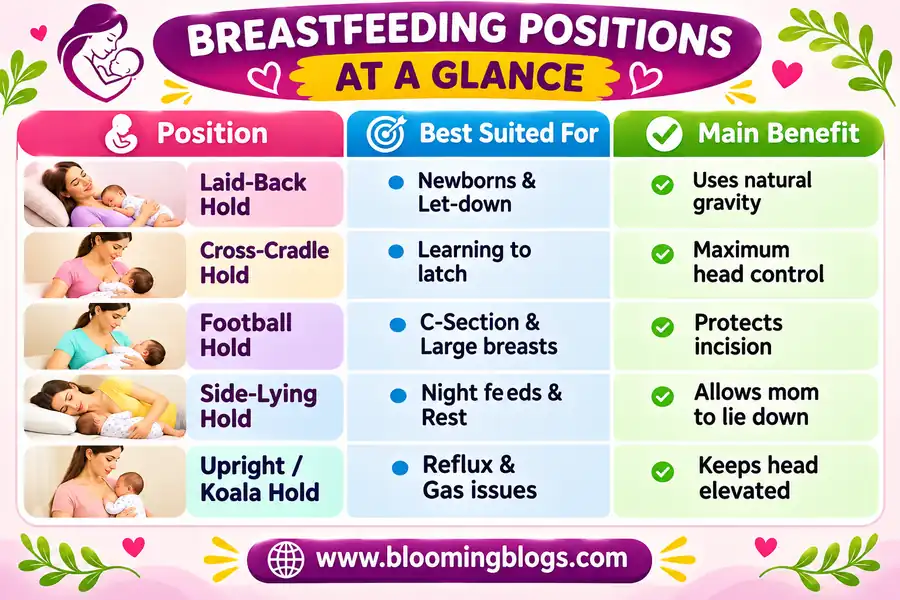
1. The Laid-Back Nursing Position (Biological Nurturing)
This position relies on your body’s natural instincts and gravity. You lean back comfortably on a couch or bed supported by pillows, with your baby laying tummy-down directly on your chest.
- Best For: Early newborn days, fast milk flow (forceful letdown), and moms recovering from birth soreness.
- How to Do It: Recline back at roughly a 45-degree angle. Place your baby prone on your torso, letting their belly rest against yours. Gravity helps hold them securely as their natural rooting reflexes take over to self-attach.
- Why It Works: Gravity keeps your baby pressed gently against you so you don’t have to carry their full weight with your arms.
2. The Cross-Cradle Hold
One of the most popular holds for beginners because it gives you precise control over your baby’s head and neck.
- Best For: Newborns, small babies, and first-time mothers learning how to guide a deep latch.
- How to Do It: Sit upright. If nursing on the right breast, hold your baby using your left hand and arm. Support the base of their head and neck with your fingers while their body rests along your forearm. Use your right hand to shape your breast into a “C” or “U” hold.
- Why It Works: Supporting the head with your opposite arm allows you to angle your baby’s mouth precisely toward your nipple.
3. The Cradle Hold
The classic, iconic nursing position that most people picture when they think of breastfeeding.
- Best For: Older babies who have strong neck control and an established latch.
- How to Do It: Sit comfortably with good back support. Rest your baby’s head in the crook of your elbow on the same side as the breast you are feeding from. Your forearm supports their spine, and your hand holds their bottom.
- Why It Works: It is cozy and comfortable once your baby can latch independently without extra head guidance.
4. The Football Hold (Clutch Hold)
In this position, your baby rests under your arm like a football or clutch purse, tucked alongside your ribcage.
- Best For: Mothers recovering from a C-section (keeps baby off the stomach incision), moms with larger breasts, or nursing twins.
- How to Do It: Tuck your baby under your arm with their legs pointing toward your back and their head at your breast level. Support their head and neck with your hand while your forearm supports their spine. Use a pillow under your arm for extra elevation.
- Why It Works: Completely avoids pressure on your abdomen while giving you clear visibility of your baby’s face and latch.
5. The Side-Lying Position
A true lifesaver for nighttime feedings and resting while nursing.
- Best For: Midnight feeds, moms recovering from painful perineal tears or C-sections, and getting extra rest.
- How to Do It: Lie on your side with a pillow under your head and another between your knees for spinal support. Lay your baby on their side facing you, so their nose is level with your nipple. Cup their back with your lower arm or a rolled blanket.
- Why It Works: Allows you to feed lying down without strain, helping both mom and baby drift back to sleep easily.
6. The Upright or Koala Hold
In this upright position, your baby sits straddling your thigh or hip facing your breast.
- Best For: Older infants, babies with acid reflux, or infants dealing with ear infections or low muscle tone.
- How to Do It: Sit your baby upright on your thigh facing you. Support their back and neck securely with one hand while guiding your breast with the other.
- Why It Works: Keeping your baby seated vertically uses gravity to reduce milk regurgitation and gas reflux.
3 Steps to Positioning for Latch:
- Bring Baby to Breast, Not Breast to Baby: Bring your baby’s chin in first so their mouth opens wide toward your breast. Avoid leaning down over your baby, which strains your back.
- Align in a Straight Line: Ensure your baby’s ear, shoulder, and hip form a straight line. A baby cannot swallow easily if their neck is twisted.
- Check the Nose and Chin: Your baby’s chin should touch your breast firmly, while their nose remains naturally clear for breathing room.
When to Seek Professional Lactation Help
While early sensitivity during the first few days can happen as your body adjusts, nursing should never be excruciating. Whether you are consulting an International Board Certified Lactation Consultant (IBCLC) internationally or working with a pediatrician, lactation expert, or hospital nursing team in India, reach out for professional support if you experience any of the following:
- Severe Nipple Trauma: Sharp, persistent pain during or between feeds, visible cracking, blistering, or bleeding.
- Inadequate Diaper Output or Weight Gain: Your baby is not gaining weight steadily, seems constantly unsatisfied after long feeds, or produces fewer than 6 heavy wet diapers in a 24-hour period.
- Latch Mechanics & Oral Ties: Frequent clicking, smacking, or slipping sounds during feeds, which often point to a shallow latch, high palate, or oral restrictions like a tongue-tie or lip-tie.
- Signs of Mastitis or Duct Infection: Flu-like symptoms (chills, sudden fever, body aches), accompanied by hard, red, warm, or tender lumps on your breast tissue.
- Concerns About Milk Supply: Experiencing a sudden drop in output, or struggling to transition back to direct nursing after exclusive pumping or early bottle supplementation.
Tips 💡
- Set Up a Nursing Station: Create dedicated nursing baskets in your living room and bedroom stocked with burp cloths, nipple balm, water, snacks, and your phone charger so you never get stranded without supplies.
- Prioritize Latch Over Gear: No gadget can fix an improper latch. Always consult an International Board-Certified Lactation Consultant (IBCLC), pediatrician, lactation expert, or hospital nursing team early if you experience persistent pain.
- Measure for Flanges Early: Don’t assume standard 24mm flanges fit you. Incorrect flange size is the #1 cause of low output and nipple discomfort while pumping.
- Practice Pump Assembly Before Baby Arrives: Unbox your electric pump, sterilize the parts, and test the motor while pregnant so you aren’t reading manuals at 3:00 AM.
- Rotate Nursing Positions: Switch between the cradle, football, and side-lying holds to drain different milk ducts and prevent plugged ducts or mastitis.
- Prioritize Skin-to-Skin: Frequent skin-to-skin contact naturally boosts oxytocin levels and encourages natural rooting and feeding reflexes.
- Keep Track of Diapers: Wet and dirty diapers are your best real-time indicator that your baby is getting enough milk.
- Alternate Starting Sides: Remember which side you finished on last feed to ensure balanced stimulation and milk production.
Did You Know? 💡
- Did you know that your breast milk dynamically changes its composition throughout the day and even during a single feeding session? The milk at the beginning of a feed (foremilk) is thinner and quenches your baby’s thirst, while the milk at the end (hindmilk) is richer in fat and calories to help your baby feel full and satisfied!
- The act of nursing triggers the release of oxytocin, a hormone that not only promotes bonding but also helps your uterus contract back to its pre-pregnancy size.
- Colostrum, the nutrient-dense gold liquid produced in the first few days, is often called “liquid gold” because it acts as your baby’s first natural immunization.
- Insurance Must Cover Support: In addition to pumps, many insurance policies cover home visits with a certified lactation consultant (IBCLC).
Hacks
- The Pitcher Method: Pump throughout the day, chill the milk in a single large pitcher in the fridge, and pour daily bottles at night to save time on washing parts.
- Freezer Stash Bag Hack: Freeze your breast milk storage bags flat in a baking pan or Ziploc bag so they stack neatly like books in your freezer.
- Coconut Oil Alternative: Pure organic coconut oil works wonderfully as a natural lubricant for pumping flanges to eliminate friction.
- The Wet Bag Trick: Keep a waterproof wet bag in your diaper bag for soiled nursing pads or damp burp cloths when you are out and about.
Common Mistakes to Avoid
- Waiting Too Long to Feed: Waiting until your baby is crying hysterically makes latching much harder; look for early hunger cues like rooting, lip-smacking, or fist-sucking.
- Ignoring Hydration: Forgetting to drink water directly impacts your energy levels and milk volume.
- Suffering Through Pain: Assuming excruciating pain is “just part of the process”—sharp, persistent pain usually indicates a shallow latch that needs adjustment.
- Over-Sanitizing Pumps Constantly: Storing pump parts in a clean sealed bag in the refrigerator between daytime pumps saves hours of washing (check local pediatric guidelines for your baby’s age).
Expert Recommendations
- Consult Professionals Early: Do not wait until a crisis hits. Having a lactation consultant’s number saved in your phone provides immense peace of mind.
- Focus on Nutritious Whole Foods: Support your body with nutrient-dense meals rather than restrictive diets.
- Build a Support Village: Surround yourself with partners, family members, or mother groups who validate your journey and encourage rest.
Recommendations
- Invest in Quality Over Quantity: Two high-quality nursing bras you love are better than five uncomfortable ones.
- Try Before You Stockpile: Buy small trial packs of nursing pads or storage bags before purchasing bulk quantities to see what suits your body best.
Key Points
- Preparation reduces postpartum anxiety and empowers you during late-night feeds.
- Comfort items like pillows, water bottles, and nipple balms are absolute essentials, not luxuries.
- Proper latch technique and professional guidance solve the vast majority of early nursing hurdles.
Points to Remember
- Every mother-baby duo is unique; comparison is the thief of joy when it comes to milk supply and feeding routines.
- Your mental health and emotional well-being matter just as much as your baby’s feeding schedule.
Gentle Reminders
- You are doing an incredible job, even on the days that feel messy and chaotic.
- Feeding your baby—whether exclusively nursing, pumping, supplementing, or formula feeding—is rooted in love. You are enough.
FAQs (Frequently Asked Questions)
1. What are the absolute core breastfeeding must haves for a newborn?
The core essentials include a comfortable nursing pillow, breathable nursing bras, lanolin or organic nipple butter, washable nursing pads, and a large insulated water bottle.
2. When should I start building my breastfeeding essentials kit?
It is best to gather your core supplies around your 30th to 36th week of pregnancy so you are fully prepared before baby arrives.
3. Do I need a breast pump right away?
Not necessarily. If you plan to stay home exclusively with baby in the early weeks, you may only need a manual pump or silicone milk saver. An electric pump becomes essential if you are returning to work or building a freezer stash.
4. What foods should I eat as a lactating mom?
Focus on nutrient-dense whole foods including oats, leafy greens, lean proteins, healthy fats like avocados, and plenty of water.
5. Are there specific foods to avoid while nursing?
Most babies tolerate everything well, but if you notice gassiness, fussiness, or rashes, common culprits like dairy, high caffeine, or spicy foods can be evaluated with your pediatrician.
6. How can I increase my milk supply naturally?
Frequent nursing or pumping, proper hydration, getting adequate rest, and ensuring complete breast emptying are the most effective ways to support supply.
7. What is the difference between foremilk and hindmilk?
Foremilk is the watery milk at the start of a feed that quenches thirst, while hindmilk comes later and is rich in fats and calories for growth.
8. How do I know if my baby is getting enough milk?
Look for consistent weight gain, 6 to 8 heavy wet diapers a day, and periods of contentment after nursing sessions.
9. Is nipple pain normal in the beginning?
Mild sensitivity can occur in the first few days as your body adapts, but sharp pain, blistering, or bleeding is not normal and usually indicates a shallow latch.
10. How do I clean and sanitize my pump parts?
Wash parts in hot soapy water after every use, or use a specialized sterilizer dryer system according to manufacturer and safety guidelines.
11. Can I use WIC to help with breast pumps?
Yes, many state WIC programs provide breast pumps and nutritional support to qualifying nursing mothers.
12. What are the best free breastfeeding supplies available?
Insurance providers often cover electric breast pumps under the Affordable Care Act, and local hospitals or lactation clinics often supply starter kits.
13. What is the best way to store expressed breast milk?
Store milk in clean breast milk storage bags or sterile bottles, labeled with the date, in the back of the refrigerator or deep freezer.
14. How long can breast milk sit at room temperature?
Freshly expressed breast milk can typically sit at room temperature (up to 77°F or 25°C) for up to 4 hours safely.
15. Can I freeze and thaw breast milk multiple times?
No, once thawed, breast milk should be used within 24 hours and never refrozen.
16. What is a silicone milk saver used for?
It suctions to the opposite breast while you nurse or pump to catch letdown that would otherwise be lost in a nursing pad.
17. How do I prevent plugged milk ducts?
Feed on demand, ensure complete drainage, avoid tight underwire bras, and use gentle massage if you feel a tender lump.
18. What should I do if I get mastitis?
Contact your healthcare provider immediately. Mastitis is an inflammation of breast tissue that often requires medical evaluation and sometimes antibiotics.
19. How many nursing bras do I need?
Having 3 to 5 comfortable, high-quality nursing bras allows you to rotate them between washes easily.
20. Are nursing pads reusable?
Yes, you can choose between disposable pads and eco-friendly washable bamboo nursing pads.
21. What is the best position for nursing a newborn?
The cradle hold, cross-cradle hold, and football hold are popular beginner positions that offer great control over latching.
22. Can I breastfeed while sick with a cold?
Yes! Your body produces antibodies against your illness and passes them to your baby through your milk, helping protect them.
23. How does cluster feeding work?
Cluster feeding is when a baby nurses frequently over a short period, often during growth spurts. It is completely normal and helps boost your milk supply.
24. What is a nursing station cart?
A rolling utility cart stocked with water, snacks, burp cloths, remotes, and creams that follows you from room to room.
25. Do I need a nursing cover?
Only if it makes you feel more comfortable in public; public nursing is fully supported and protected, so use a cover purely based on personal preference.
26. How can my partner support my breastfeeding journey?
Partners can handle burping, diaper changes, bringing you snacks and water, and washing pump parts.
27. What are the signs of a good latch?
Baby’s mouth is wide open, lips flange outward like a fish, chin touches your breast, and you see rhythmic jaw movement with audible swallowing.
28. Can I drink coffee while breastfeeding?
Moderate caffeine intake (typically up to 200–300 mg per day) is generally considered safe for most nursing mothers.
29. How do I stop or reduce night nursing safely?
Gradual night weaning involves shortening feed times or offering comforting cuddles with a partner as your baby gets older and starts solid foods.
30. When do babies start solid foods alongside nursing?
Most pediatricians recommend introducing starting solids around 6 months of age when baby shows signs of readiness.
31. What are essential starting solids items?
A high chair, soft-tipped spoons, easy-clean bibs, a spill-proof cup, and divided suction plates.
32. How do I manage engorgement when milk comes in?
Apply warm compresses before feeding to encourage letdown and cool compresses or ice packs afterward to reduce swelling.
33. What is the best way to travel with expressed breast milk?
Use an insulated cooler bag with ice packs for transport, and check airline regulations if flying.
34. Can stress affect my milk supply?
High stress can temporarily impact the oxytocin reflex needed for letdown; taking deep breaths and practicing self-care helps.
35. How often should a newborn feed?
Newborns typically feed every 2 to 3 hours around the clock in the first few weeks of life.
36. What is a nursing stool used for?
Elevating your feet while nursing helps maintain proper posture and prevents slouching.
37. Are lactation cookies effective?
Many moms find them helpful and delicious as a calorie boost, though oats, brewer’s yeast, and hydration are the active drivers.
38. How do I deal with biting during nursing?
Gently pull baby close to your breast to block their nose briefly (they will release), say a calm “no,” and take a short pause.
39. Can I exercise while breastfeeding?
Yes, moderate exercise is safe; just wear a supportive sports bra and stay extra hydrated.
40. What is a nursing nightgown?
A sleep gown featuring discreet front openings or clips for nighttime feeding convenience.
41. How do I choose the correct breast shield (flange) size?
Measure your nipple diameter; flange size matters immensely to prevent friction, discomfort, and poor milk output.
42. What should I wear during postpartum recovery?
Loose, soft clothing that accommodates changing body shapes and grants easy access for feeding.
43. Is it normal for supply to fluctuate?
Yes, supply naturally fluctuates during growth spurts, stress, illness, or hormonal shifts.
44. How do I handle a forceful letdown?
Expressing a little milk by hand before latching can help slow a fast flow so baby doesn’t choke or gulp air.
45. What is tandem nursing?
Nursing two children of different ages, such as a newborn and a toddler, simultaneously.
46. How do I store my breast pump safely?
Store clean, dry pump parts in a breathable bag or dedicated container away from dust and pet hair.
47. Can I take medications while breastfeeding?
Always check with your pharmacist or doctor, as many common medications are safe while others require caution.
48. What is the golden hour after birth?
The first hour following delivery where uninterrupted skin-to-skin contact initiates successful early nursing reflexes.
49. How do I know if my baby has a tongue-tie?
An IBCLC or pediatrician can evaluate your baby for oral ties if latching is consistently painful or ineffective.
50. Where can I find community support as a new mom?
Local mother support groups, online communities like Blooming Blogs, and lactation clinics offer wonderful encouragement and advice.
Quick Takeaways
- Prep Early: Gather your nursing pillows, pads, and creams before baby arrives.
- Prioritize Comfort: Invest in supportive bras and hydration stations.
- Seek Support: Lean on lactation consultants and trusted parenting communities.
Quick Summary
Navigating the early days of nursing is a journey of trial, error, and immense love. By equipping yourself with the right breastfeeding must haves, prioritizing self-care, and leaning on expert guidance, you can build a confident, beautiful feeding relationship with your little one.
Final Thoughts
Remember, mama, there is no single “perfect” way to nurse or feed your baby. Trust your intuition, lean on your village, and celebrate every small victory along the way. You are doing an amazing job.
External Authoritative References & Citations
American Academy of Pediatrics (AAP) – Policy Statement: Breastfeeding and the Use of Human Milk Guidelines
Centers for Disease Control and Prevention (CDC) – Proper Storage and Handling of Expressed Breast Milk
International Board of Lactation Consultant Examiners (IBCLC) – Latch and Positioning Clinical Resources
National Institutes of Health (NIH / LactMed®) – Drugs and Lactation Database: Clinical Reviews on Herbal Galactagogues (Fenugreek, Shatavari, & Moringa)
Academy of Breastfeeding Medicine (ABM) – Clinical Protocol #9: Use of Galactagogues in Initiating or Augmenting Maternal Milk Secretion
Cochrane Database of Systematic Reviews – Oral Galactagogues for Increasing Breast Milk Production in Nursing Mothers
🔗 Related Articles
If you are preparing for a newborn, these helpful Blooming Blogs guides can help you plan, prepare, and care for your baby with greater confidence:
- 1. Best Infant Formula for Newborns: Types, Choices & Safety Guide
- 2. Newborn Baby Essentials Checklist for Soon-to-Be Parents
- 3. How to Prepare Formula Milk for a Newborn Baby
- 4. Newborn Baby Care: Complete Guide for New Parents
- 5. Formula Mixing & Bottle Ratio Calculator
- 6. Hospital Bag for Delivery: Complete Checklist for Mom and Baby
- 7. The Ultimate Pregnancy Hospital Bag & Registry Checklist: Your Stress-Free Delivery Guide
- 8. Hospital Bag Checklist Tool
- 9. Rompers for Newborn: Ultimate Guide to Safe Baby Clothes
- 10. Onesies and Rompers: How to Dress Your Newborn Right
- 11. Baby Onesies Buying Guide: Best Soft Outfits for Newborns
🛠️ Try Our Free Interactive Baby Care Tools
Planning your nursery or setting up daily routines? Check out these handy calculators designed to simplify baby care:
🌱 Continue Exploring…
Whether you’re nurturing a newborn, curating a sanctuary for your home and garden, or simply looking to level up your day-to-day life, there’s always a new perspective waiting to be discovered. From practical everyday parenting guidance, women’s wellness information, ideas to make your home more beautiful, tips for caring for pets and plants, or inspiration for your spiritual journey, Blooming Blogs brings useful knowledge together in one place.
Blooming Blogs — knowledge that blooms.
🌸 Blooming Blogs Promise
We’re here to bring you thoughtful, reliable, and helpful insights you can truly count on. Every article on Blooming Blogs is thoroughly researched, crafted with care, and written with genuine empathy to support you in your everyday journey. Your trust means everything to us, and we are dedicated to sharing content that informs, inspires, and makes your life a little easier.
📰 Editorial Notes
Our team strives for clarity, accuracy, and depth in every piece we publish. Content is periodically updated to ensure facts, recommendations, and guides stay relevant over time. While we consult trusted sources and expert research, our goal is always to present complex topics in a simple, practical, and conversational way that works for real life.
⚠️ Disclaimer
The content provided on Blooming Blogs is for informational and educational purposes only and should not be considered professional medical, legal, or financial advice. Always consult with a qualified expert or licensed professional before making decisions related to your health, family, or personal finances. Blooming Blogs is not liable for any actions taken based on the information provided on this website. (For full details, please visit our Disclaimer Policy Page).
💬 Share Your Experience — Leave a Comment
We’d love to hear from you! Did this article help you, or do you have a personal tip or story to share with our community? Drop your thoughts, questions, or feedback in the comment section below. Every voice enriches our community, and we read every single comment!