
Newborn Baby Clothing 👶
Navigating the world of onesies and rompers can quickly feel overwhelming for new parents trying to figure out how to dress their baby comfortably every day. There is a unique silence that only new parents truly understand:
It is 4:14 in the morning. The rest of the neighborhood sleeps peacefully while you sit in a softly lit nursery, gently rocking the smallest person you’ve ever held. Their tiny fingers curl around yours, their breathing is slow and steady, and for a brief moment, everything in the world feels calm, quiet, and wonderfully complete. 🕯️✨
Then comes the unmistakable, deep rumble from inside the diaper.
Within five seconds, your peaceful nursery moment transforms into a full-scale emergency. The diaper leaks, the pajamas are completely soaked, your baby begins crying in frustration, and you are frantically trying to pull a soiled, messy shirt upward over their face without spreading the mess everywhere.
INTRODUCTION
Every single new parent has lived through a version of this midnight story. It is during these exhausting, bleary-eyed moments that you realize something life-changing: baby clothing is never just about looking cute for photos. The right choice in onesies and rompers can make late-night diaper changes effortless, protect your newborn’s delicate skin barrier, prevent overheating, and help everyone in the house get back to sleep much faster. 🍼💤
Yet, stepping into a baby store or opening an online registry can instantly spark serious shopping overwhelm:
- One brand calls an item a bodysuit.
- Another store labels the exact same garment a onesie.
- A friend recommends rompers for baby boy, while another swears by zip-up sleepers.
- What is the real onesies and rompers difference? Are onesies and rompers same or totally different garments?
If you feel confused, take a deep, soothing breath. You are in the right place. 🌸
In this comprehensive, expert-backed guide, we are going to break down everything you need to know about onesies and rompers. From understanding fabric safety and lap shoulder secret features to choosing between rompers for baby with zipper versus snap closures, we’ve got your back. Consider this your coffee-table chat with a seasoned pediatric-focused mom who has navigated every diaper blowout imaginable. ☕❤️
Whether you’re preparing for your first baby or updating your little one’s wardrobe, understanding the difference between a onesie and a romper can save time, money, and many midnight frustrations.
Parent Tip 💡
The cutest outfit isn’t always the most practical. Prioritize comfort, easy diaper access, breathable fabrics, and safety features over decorative details. Your future sleep-deprived self will thank you.
1. Why Parents Often Confuse Onesies and Rompers 👗
Walk into any baby store or browse online for newborn clothing, and you’ll quickly encounter a long list of names:
- Onesies
- Bodysuits
- Rompers
- Sleepers
- Coveralls
- Playsuits
- Jumpsuits
- Kimono Bodysuits
To new parents, they all appear to be one-piece outfits.
However, each serves a different purpose.
Understanding these differences helps you buy only what your baby actually needs instead of filling drawers with clothes that rarely get worn.
At the simplest level:
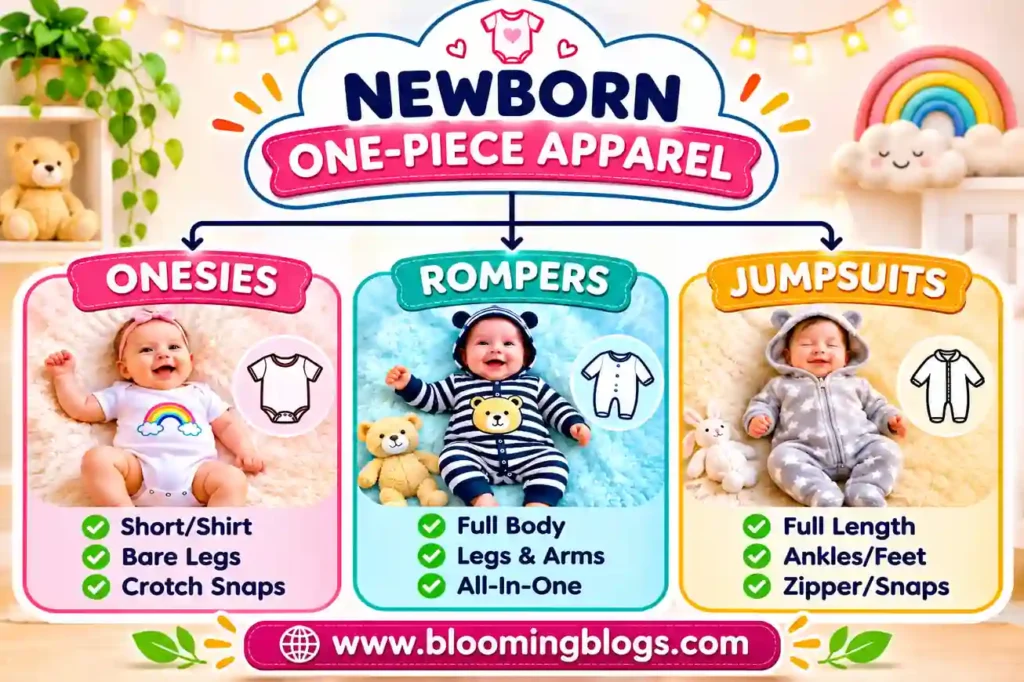
A onesie is the foundation of your baby’s outfit.
A romper is the complete outfit.
Think of a onesie as the comfortable base layer that stays close to your baby’s skin, while a romper is the stylish outer garment designed for daytime adventures, family visits, and outings.
Once you understand this simple distinction, shopping becomes far less confusing.
2. Onesies and Rompers Explained: Understanding Infant Clothing Basics 👶
When you look at newborn clothing, everything can look like a tiny, single piece of fabric. However, understanding how onesies and rompers function differently will transform how you plan your baby’s daily outfits and budget.
3. What Is a Baby Onesie?
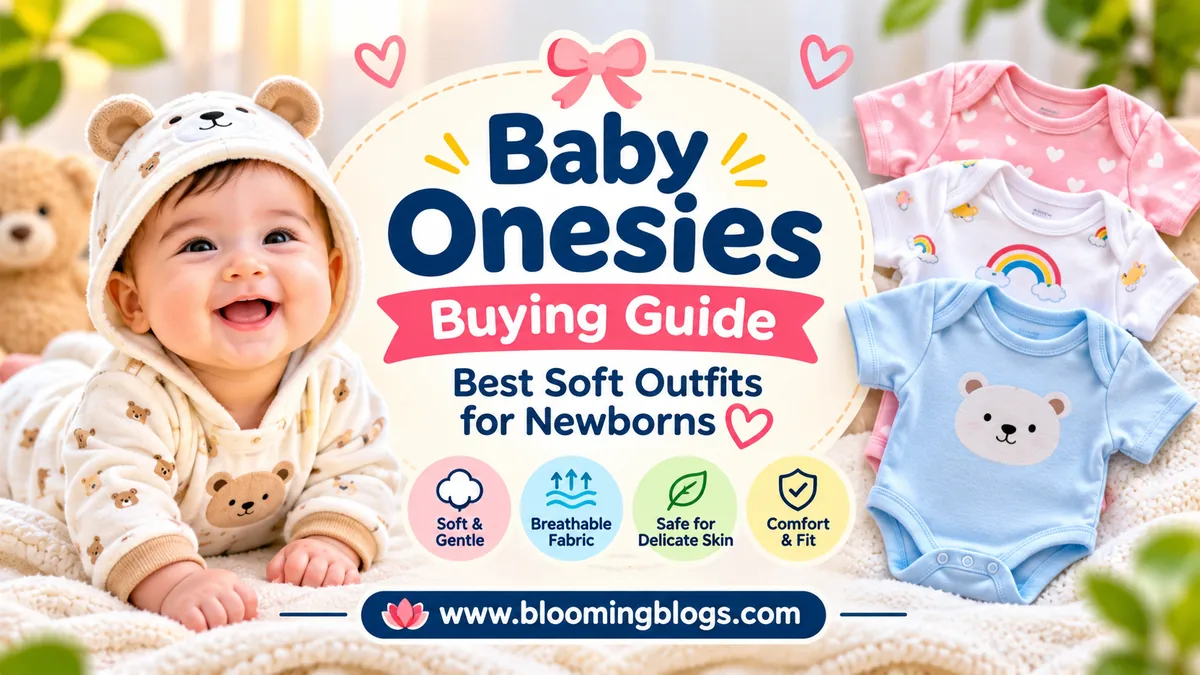
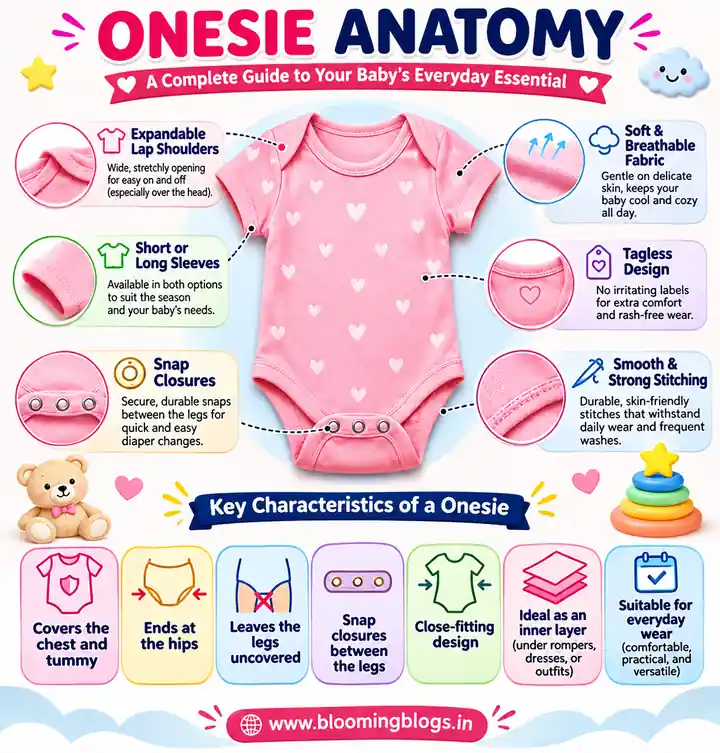
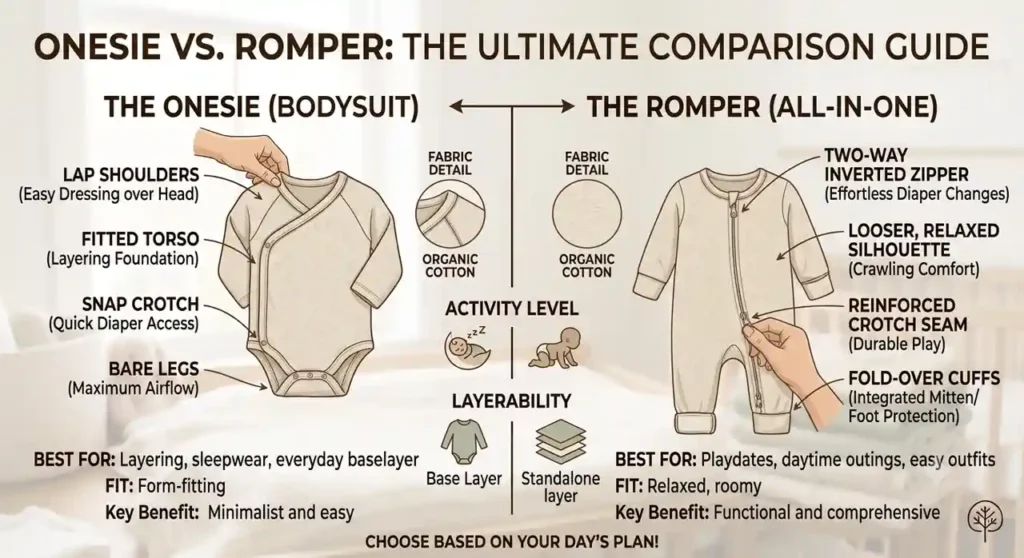
A baby onesie (frequently called a bodysuit or diaper shirt) is a close-fitting, one-piece garment designed to cover your baby’s chest, belly, and back while leaving their legs entirely bare. It secures between the legs using bottom snaps.
- The Core Purpose: It acts as the ultimate breathable base layer (think of it as baby underwear that stays perfectly tucked in).
- Key Features: Lap-shoulder necklines, snap closures at the crotch, legless design, and soft expandable knit fabrics.
- Why It’s Essential: It prevents shirts from riding up into uncomfortable waist folds during sleep or play, keeping your baby’s tummy warm and covered regardless of how much they wiggle.
Why Parents Love Onesies 😍
A well-designed onesie makes daily parenting significantly easier.
Because it stays securely fastened, your baby’s back remains covered when lifted, preventing cold drafts and keeping them comfortable.
The fitted design also prevents shirts from bunching under the arms or riding up during sleep.
For frequent diaper changes, the snap closures allow parents to change diapers without removing the entire outfit.
Did You Know? 🤔
Most experienced parents intentionally buy bodysuits with lap shoulders because they dramatically simplify cleaning after diaper accidents.
4. What Is a Baby Romper?
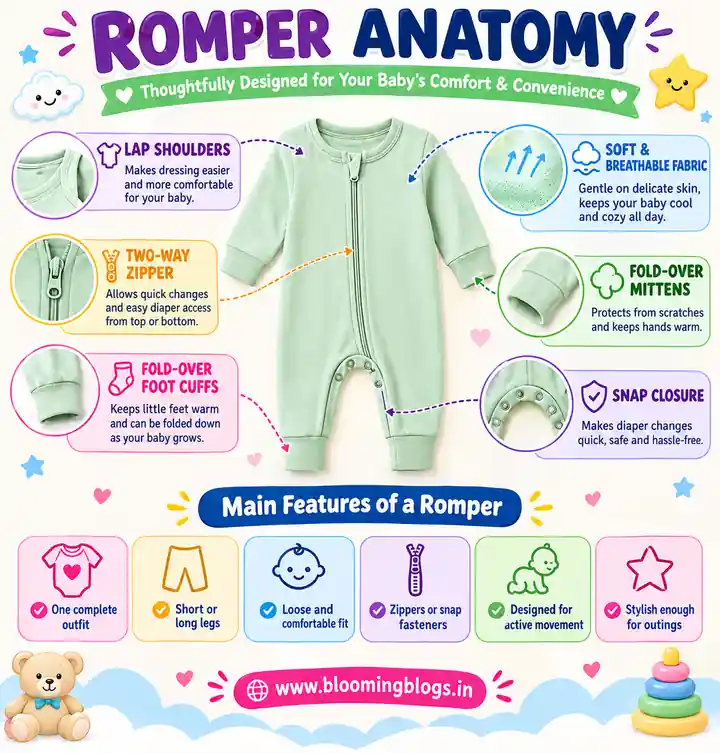
A baby romper is an all-in-one complete outfit that covers both the upper body and the legs (either short legs for warm weather or full-length legs for cooler days).
- The Core Purpose: It serves as a stylish, ready-to-wear outer garment for playtime, outings, and visits.
- Key Features: Built-in legs, full-length zippers or snap inseams, relaxed fit through the hips, and diverse designs (including collared accents, pockets, or decorative stitching).
- Why It’s Essential: It simplifies dressing by combining top and bottom into a single item, eliminating tight, restrictive waistbands that can pinch a newborn’s healing umbilical stump or sensitive belly.
Why Babies Love Rompers
As babies begin rolling, stretching, kicking, crawling, and exploring, restrictive clothing can become uncomfortable. The roomy construction of a romper allows babies to move naturally while keeping them comfortably dressed. Many premium rompers also include fold-over mittens, enclosed feet, and two-way zippers that make diaper changes faster without exposing the baby’s chest to cold air.
Parent Hack
If you’re leaving the house, choose a romper with a two-way zipper. It allows quick diaper changes while keeping your baby’s upper body warm and comfortable.
5. Onesies vs. Rompers: The Core Architectural Differences 📏
Understanding the structural design of onesies and rompers helps you purchase exactly what your lifestyle requires without wasting money on unused baby gear.
1. Leg Coverage & Warmth
Onesies stop abruptly at the top of the thighs. This makes them outstanding choices for warm summer days spent indoors or as an insulating undergarment beneath sweater jackets and pants during colder months. Rompers feature short sleeves paired with shorts, or long sleeves paired with full legs, providing built-in thermal coverage for outings.
2. Fit Profile
A onesie is engineered to fit snugly against the skin. This snug fit keeps diapers secure, prevents shifting, and avoids excess fabric bunching up when you layer pants or sleep sacks over top. Rompers feature a roomier, more relaxed silhouette that leaves plenty of room for active crawling, rolling, and bulky cloth diapers.
3. Diaper Change Mechanics
Both styles offer easy bottom access, but their execution differs:
- Onesies: Feature three simple snaps at the crotch. Diaper changes take under 30 seconds because you do not need to uncover legs or unbutton trouser legs.
- Rompers: Feature extended snap lines running down both inner thighs or a extended two-way zipper running from collar to ankle.
Onesie vs. Romper – Features and Comparison Guide
Choosing between a onesie and a romper isn’t about deciding which is better—it’s about understanding when each one works best.
| Feature | Onesie | Romper |
|---|---|---|
| Primary Purpose | Base layer | Complete outfit |
| Leg Coverage | No | Yes (short or full length) |
| Fit | Snug | Relaxed |
| Best For | Everyday wear, sleeping, layering | Outings, playtime, visitors |
| Diaper Changes | Very quick | Quick with zippers/snaps |
| Warmth | Moderate | Higher |
| Layering | Excellent | Usually worn alone |
| Typical Age | Birth onward | Birth onward, especially active babies |
Which One Should You Buy?
The answer is simple.
Buy both.
They are designed for different situations rather than replacing one another.
A practical newborn wardrobe usually contains more onesies than rompers because babies spend much of their early months sleeping, feeding, and having frequent diaper changes.
Rompers become increasingly useful as babies become more active and spend more time outside the home.
A balanced wardrobe gives you the flexibility to dress your baby comfortably in every season and for every occasion.
Quick Takeaway
Use Onesies For:
- Sleeping
- Layering
- Staying at home
- Hot weather
- Frequent diaper changes
Use Rompers For:
- Outdoor trips
- Visiting family
- Playtime
- Photos
- Cooler weather
Baby Skin Health • Best Fabrics • Buying Guide • Expert Tips
6. Why Your Baby’s Clothing Matters More Than You Think
Your newborn spends almost every hour of the day wrapped in fabric.
Whether they’re sleeping, feeding, cuddling, or exploring the world from your arms, their clothing is in constant contact with their skin. That’s why choosing the right material isn’t simply about comfort—it’s also about protecting one of the most delicate organs in their tiny body.
A baby’s skin is thinner, more absorbent, and less effective at regulating moisture than adult skin. Even small amounts of friction, trapped heat, or harsh chemicals can lead to redness, irritation, or discomfort.
Clothing becomes your baby’s first layer of protection.
👶 Did You Know?
A newborn’s skin is approximately 20–30% thinner than adult skin, making it more vulnerable to moisture loss, friction, and irritation. Choosing soft, breathable fabrics can help maintain comfort and support the skin’s natural protective barrier.
7. Understanding Newborn Skin
Before choosing the best clothing, it’s helpful to understand why newborn skin needs special care.
Unlike adult skin, a baby’s skin barrier is still developing during the first months of life. It loses moisture more quickly, reacts more easily to friction, and is more sensitive to dyes, perfumes, and certain synthetic materials.
This doesn’t mean every baby will develop skin problems, but selecting breathable, well-made clothing can reduce common sources of irritation.
Characteristics of Newborn Skin
- Thinner than adult skin
- More delicate
- Loses moisture faster
- More sensitive to friction
- Still developing its protective barrier
- Can overheat more easily
Parent Tip
Think of baby clothing as skincare you can wear. The fabric touching your baby’s skin matters just as much as the lotion or soap you choose.
8. What Causes Baby Rashes?
Many parents immediately suspect allergies whenever they notice a rash.
In reality, clothing and environmental factors can also contribute to skin irritation.
Some common reasons include:
- Trapped sweat
- Overheating
- Rough seams
- Scratchy labels
- Friction in skin folds
- Tight elastic bands
- Residue from harsh detergents
- Poorly breathable fabrics
Most mild irritation improves by keeping the skin clean and dry, dressing babies in breathable fabrics, and avoiding unnecessary friction. If a rash is persistent, severe, or accompanied by fever or other symptoms, seek advice from your pediatrician.
9. Best Fabrics for Onesies and Rompers: Protecting Delicate Infant Skin 🌿
A newborn’s skin is up to 30% thinner than adult skin! It absorbs moisture faster, loses heat rapidly, and reacts quickly to synthetic chemicals, harsh dyes, or rough interior tags. Choosing the right fabric for onesies and rompers is one of the most effective ways to prevent contact dermatitis, heat rash, and eczema flare-ups.
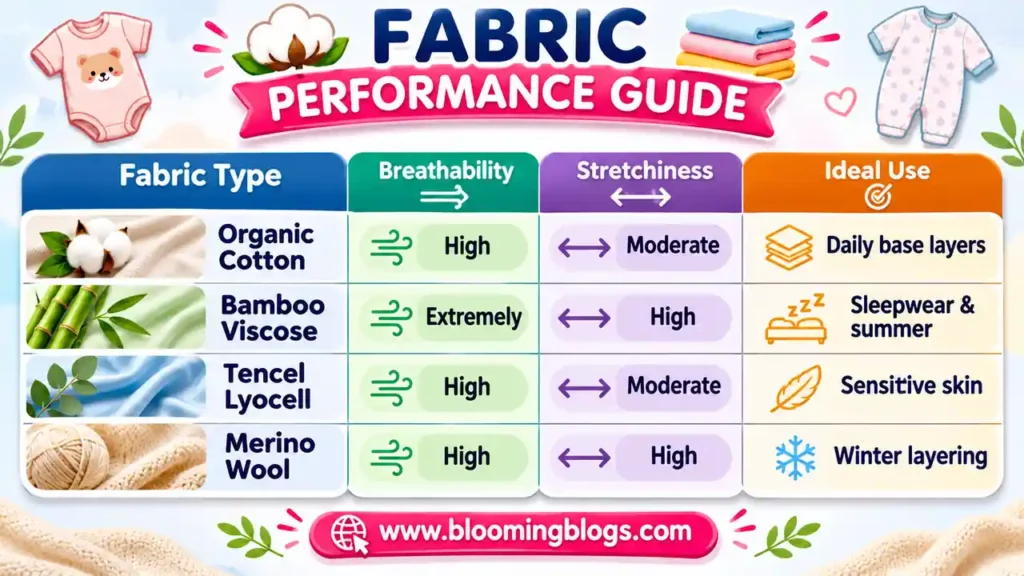
Organic Cotton Onesies and Rompers
Certified cotton onesies and rompers (especially those carrying Global Organic Textile Standard / GOTS certification) remain the gold standard in infant apparel.
- Pros: Exceptionally durable, easy to wash at high temperatures, completely free of pesticide residues, naturally hypoallergenic, and highly breathable.
- Cons: Can shrink slightly if dried on high heat; holds onto dampness longer than technical synthetic fibers if completely soaked through.
Bamboo Viscose Onesies and Rompers for Breathability
Bamboo-derived fabrics have become immensely popular among modern parents for good reason.
- Pros: Ultra-soft texture, incredible stretch capacity (often fitting babies across multiple growth spurts), superb moisture-wicking properties, and natural cooling qualities during hot summer months.
- Cons: Requires gentle cycle washing; can develop fabric pilling over time if washed alongside aggressive items like velcro bibs.
Tencel™ Lyocell Onesies and Rompers for Sensitive Skin
Engineered from sustainably harvested wood pulp, Tencel offers a smooth surface that reduces physical friction against delicate skin folds.
- Pros: Exceptionally smooth surface, excellent thermal regulation, naturally resistant to bacterial growth.
- Cons: Premium price point; less widely available in basic multi-pack budget lines.
Winter Onesies and Rompers: Fine Merino Wool Layering
Don’t let the word “wool” intimidate you—superfine, itch-free Merino wool is nature’s smart fabric.
- Pros: Thermo regulating (keeps babies warm in cold weather without overheating), naturally moisture-repellent on the outside, and soft to the touch.
- Cons: High cost; requires dedicated wool-safe washing routines.
10. Sizing Guide for Onesies and Rompers: From Birth to Active Toddlerhood 👶▶️👧
Your baby’s wardrobe needs evolve rapidly as they progress through physical milestones.
0-3 Months ──► Pure Comfort & Rapid Diaper Access (Onesies & Sleepers)
3-6 Months ──► Rolling & Tummy Time Freedom (Stretchy Rompers)
6-12 Months ─► Active Crawling & Floor Protection (Durable Rompers)
12-24+ Months► Independent Walking & Easy Potty Prep (Separates & Rompers)
1. Onesies and Rompers for Babies 0-3 Months (The Fourth Trimester)
- Primary Need: Maximum comfort, rapid diaper changes (10-12 times daily), zero waist friction near the healing belly button.
- Wardrobe Focus: Heavy emphasis on onesies for babies 0 3 months paired with soft pull-on pants, alongside zip-up rompers.
- Pro Tip: Look for kimono-style front-snap onesies to avoid pulling anything over a tender newborn head during the first few weeks.
2. Onesies and Rompers for Babies 3 to 6 Months (Rolling Stage)
- Primary Need: Freedom of movement around shoulders, hips, and knees.
- Wardrobe Focus: Equal mix of stretchy onesies and rompers baby girl or boy designs. Flexible bamboo rompers allow full leg extension without resistance.
3. Onesies and Rompers for Babies 6 to 12 Months (Crawling Era)
- Primary Need: Durable fabrics that protect knees from floor carpet burn while accommodating chunky, active legs.
- Wardrobe Focus: Reinforced rompers for baby boy and girl styles featuring padded or double-layered knees. Opt for rompers for baby with zipper features to speed up diaper changes for on-the-go babies.
4. Onesies and Rompers for Toddlers 12 to 24+ Months
- Primary Need: Support for walking balance, easy dressing for independent toddlers, and toddler fashion durability.
- Wardrobe Focus: Relaxed short shorts onesies and rompers, playful overalls, and standalone graphic rompers for daycare ease.
11. Styling Onesies and Rompers for Boys, Girls, & Gender-Neutral Wardrobes 🎨
While function always comes first, styling your baby in charming outfits brings immense joy to early parenthood!
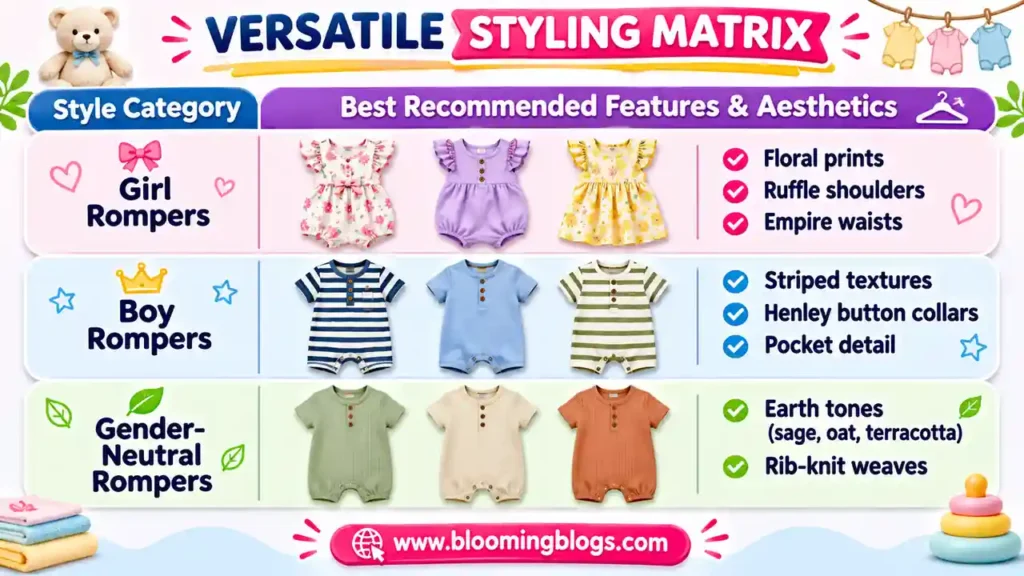
Rompers for Baby Girl Aesthetics
Modern onesies and rompers baby girl fashion has expanded beyond basic baby pink:
- Charming Details: Flutter shoulders, subtle ruffle leg cuffs, empire waists, and vintage floral illustrations.
- Popular Colors: Muted rose, lavender cream, soft sage, warm terracotta, and ochre yellow.
- Styling Tip: Pair a short-sleeved romper for baby girl with matching soft headbands or knee-high socks for outdoor family photos.
Rompers for Baby Boy Options
Contemporary onesies and rompers boy designs blend preppy functionality with play-ready comfort:
- Charming Details: Henley button necklines, faux chest pockets, raglan sleeves, and embroidered animal accents.
- Popular Colors: Deep navy, forest green, slate blue, warm mustard, and charcoal heather.
- Styling Tip: Layer a clean white onesies and rompers base under a button-up sleeveless boy onesies and rompers piece for instant dressy occasions.
The Power of Gender-Neutral Capsule Wardrobes
Opting for neutral colors (beige, cream, sage, oat, and charcoal) when purchasing newborn onesies and rompers creates maximum versatility:
- Easily passed down to future siblings regardless of gender.
- Mixes and matches effortlessly with any pants, cardigans, or socks.
- Delivers a timeless aesthetic for baby photography.
12. Seasonal Dressing & Temperature Safety Guidelines 🌡️
Keeping your baby at a safe, comfortable temperature requires strategic layering. Overheating is a recognized risk factor for Sudden Infant Death Syndrome (SIDS), making proper thermal management essential.
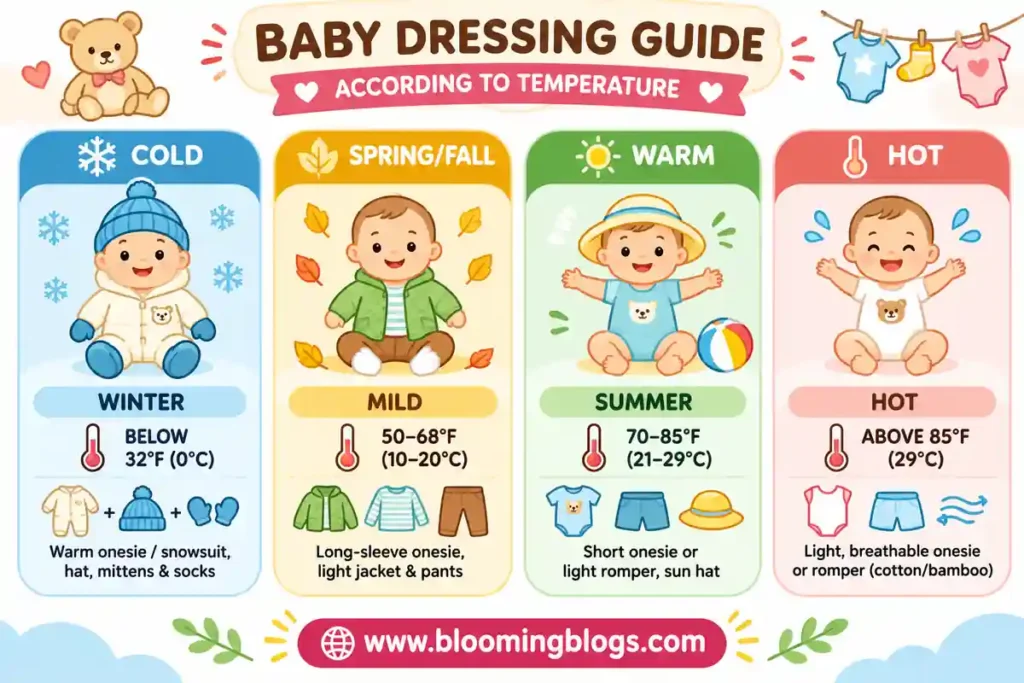
Summer Weather (Above 75°F / 24°C)
- Indoor Wear: A lightweight cotton onesies and rompers style or a single short-sleeved bamboo bodysuit.
- Outdoor Wear: Breathable shorts onesies and rompers crafted from 100% linen or thin muslin.
- Safety Check: Feel the back of your baby’s neck or chest. If it feels hot, sweaty, or clammy, remove a layer immediately.
Transition Seasons: Spring & Autumn (68°F–74°F / 20°C–23°C)
- Base Layer: A short-sleeved black onesies and rompers or neutral onesie.
- Outer Layer: A full-length cotton romper with long sleeves.
- Extra Warmth: Add lightweight knit booties or pull-on pants as needed.
Winter Weather (Below 67°F / 19°C)
- Base Layer: Thermal long-sleeve onesies for babies 0 3 months or winter onesies and rompers.
- Middle Layer: A plush fleece or thick knit romper.
- Outer Layer (For Stroller Walks): Weatherproof bunting suit, warm hat, and cozy mittens.
- Safe Sleep Rule: Never dress a baby in heavy hooded jackets or outerwear inside a car seat or sleeping crib. Use a TOG-rated wearable blanket (sleep sack) instead!
13. Comparison Chart / Tables
Onesies and Rompers Comparison Chart 📊
| Feature Criteria | Baby Onesie (Bodysuit) | Baby Romper (Play-suit) |
| Primary Purpose | Base-layer underwear / diaper cover | Complete standalone daily outfit |
| Leg Coverage | None (ends at hip line) | Full shorts or ankle-length coverage |
| Typical Fit | Form-fitting, snug to torso | Relaxed, roomy for movement |
| Diaper Access | 3 crotch snap buttons | Long zipper or full leg inseam snaps |
| Layering Versatility | High (wears seamlessly under pants/sweaters) | Low-to-Moderate (worn alone or over onesie) |
| Best Indoor Use | Daily lounging, sleeping under swaddle | Tummy time, household exploration |
| Best Outdoor Use | Summer wear or inner thermal layer | Stroller walks, park play, doctor visits |
14. Washing and Caring for Onesies and Rompers
Proper care helps clothing stay soft, comfortable, and durable.
Before First Wear
Always wash new baby clothes before your newborn wears them.
This helps remove manufacturing residues, dust, and packaging particles.
Washing Tips for Onesies and Rompers
- Wash with similar colors.
- Use cold or warm water as recommended on the care label.
- Choose a gentle cycle when appropriate.
- Turn printed garments inside out.
- Fasten snaps and zippers before washing.
Detergent Tips
Choose a mild detergent that suits your baby’s skin. If your baby has eczema, allergies, or recurring irritation, discuss suitable laundry products with your pediatrician.
Avoid excessive fabric softener, as it may reduce the absorbency of some fabrics.
Storage Tips for Onesies and Rompers
Store clean clothes in a dry, well-ventilated place.
Avoid sealing damp clothing in airtight containers, as this can encourage mildew.
15. Tips 📌
Practical Buying Tips for Onesies and Rompers 💡
- Test the Neck Stretch: Before buying, gently pull open the lap shoulders. Ensure the elastic springs right back into shape so it won’t sag after washing.
- Size Up for Cloth Diapers: If using bulky cloth diapers, purchase one size larger in onesies and rompers to avoid tight pressure across the hips.
- Inspect Snap Sturdiness: Tug gently on crotch snaps. High-quality snaps should seat securely without pulling or tearing the fabric around them.
- Choose Dark Colors for Messy Foods: When starting solid foods around 6 months, choose black onesies and rompers, red onesies and rompers, or blue onesies and rompers to hide stubborn purée stains.
- Keep Spare Outfits Everywhere: Keep at least two complete outfits in your diaper bag and one packed in your car glovebox for unexpected mess emergencies!
16. Did You Know? 💡
💡 The Secret Behind Lap-Shoulder Necklines!
Did you know that those folded fabric flaps on the shoulders of your baby’s onesie aren’t just a style choice? They are specifically engineered for diaper blowouts! If a diaper leaks, do not pull the messy onesie up over your baby’s face. Instead, stretch the lap shoulders wide outward and slide the garment down over their shoulders and legs. It keeps mess off their face and hair completely! 🤯✨
17. Hacks
Brilliant Parenting Hacks for Onesies and Rompers 🛠️
- The Zipper Cover Hack: Always check that zip-up rompers feature a soft fabric zipper tab cover at the collar. This prevents the metal zipper pull from poking your baby’s delicate chin folds.
- The Onesie-as-Extender Hack: If a favorite romper becomes slightly short in the torso but still fits the legs, use an inexpensive snap extender on the interior onesie to gain an extra month of comfortable wear!
- The Wash-Inside-Out Hack: Wash printed floral onesies and rompers or striped onesies and rompers inside out to preserve color vibrancy and prevent vinyl prints from cracking in the dryer.
- The Sock-Tuck Hack: Keep socks from falling off active feet by pulling the leg cuffs of a full-length romper down over the socks to lock them gently in place!
18. Common Mistakes to Avoid
Top Infant Clothing Mistakes & How to Fix Them 🛑
❌ BUYING TOO MUCH NEWBORN SIZE
   ├── Reality: Most babies outgrow NB size in 2-3 weeks!
   └── Fix: Focus budget on 0-3M and 3-6M sizing instead.

❌ CHOOSING FASHION OVER COMFORT
   ├── Reality: Complex buttons delay 3 AM diaper changes.
   └── Fix: Prioritize 2-way zippers and lap shoulders for daily wear.

❌ OVERDRESSING AT NIGHTTIME
   ├── Reality: Overheating increases infant health risks.
   └── Fix: Check neck warmth; match clothing layers to room TOG charts.

❌ IGNORING THE CARE LABELS
   ├── Reality: Never bother about the care labels and Instructions.
   └── Fix: Following the manufacturer's washing instructions helps preserve softness and fit.

❌ BUYING WITHOUT THINKING ABOUT THE SEASON.
   ├── Reality: Not having awareness about the fabric and when to use.
   └── Fix: Shop baby clothes as per the season.
- Buying Too Many Newborn (NB) Sizes: Newborns grow at a astonishing rate! Buying 20 newborn outfits often means half are outgrown before ever being worn. Stock up primarily on 0–3 month and 3–6 month sizes.
- Ignoring Interior Seams: Beautiful decorative patches or thick embroidery on the outside can hide rough, scratchy backing threads inside. Always feel the interior fabric before dressing your baby.
- Buying Complex Button-Up Rompers for Nightwear: Tiny decorative buttons look sweet, but trying to fasten seven small buttons on a squirming baby at 3:00 AM will try any parent’s patience. Stick to rompers for baby with zipper mechanisms for night duty!
- Washing Baby Clothes with Fragranced Laundry Soap: Synthetic perfumes in standard laundry detergents can trigger eczema outbreaks. Always use a gentle, fragrance-free, dermatologist-tested baby detergent.
19. Expert Recommendations
Pediatrician & Safety Expert Guidelines 🩺
- Safe Sleep Compliance: The American Academy of Pediatrics (AAP) advises keeping all loose blankets, pillows, and soft toys out of the crib. Choose a well-fitted onesie or romper paired with an appropriately TOG-rated wearable sleep sack instead.
- Skin Health Management: Pediatric dermatologists recommend washing all newly purchased cotton onesies and rompers before their first wear. This eliminates lingering textile manufacturing dust, sizing starches, and transit impurities.
- Umbilical Cord Safety: For the first 7 to 14 days until the umbilical stump falls off, select loose-fitting kimono-style onesies that snap at the side. This avoids direct friction across the healing navel area.
20. Recommendations
Top Curated Buying Recommendations 🛍️
- Best Everyday Staples: Multi-packs of 100% GOTS-certified organic cotton onesies and rompers in versatile neutral tones (white, grey, beige).
- Best Nighttime Sleepers: Bamboo-viscose zip onesies and rompers featuring fold-over mitten cuffs and two-way zippers.
- Best Budget-Friendly Pick: Multi-piece sets of onesies and rompers under 900 from reputable value retailers.
- Best Gift Option: Stylish, breathable rompers for baby girl or boy with matching soft knit accessories.
21. Key Points 📌
Essential Takeaways at a Glance 📌
- Onesies function as foundational legless base layers; rompers function as complete standalone outfits with built-in legs.
- Lap shoulders permit quick downward removal during diaper accidents.
- Natural, breathable fibers (organic cotton, bamboo, Tencel) help prevent heat rashes and skin irritation.
- Two-way zippers make diaper changes significantly faster than traditional snaps.
- Temperature regulation is vital—dress your baby in one layer more than you would comfortably wear yourself in the same environment.
22. Points to Remember 🧠
Essential Rules for Daily Dressing 📝
- Check garment labels for non-toxic dyes and nickel-free crotch snaps to avoid skin allergies.
- Ensure leg elastics are gentle and leave no deep red impression lines on your baby’s thighs.
- Always wash baby clothes in hypoallergenic, dye-free detergent.
- Keep 2 to 3 backup outfits inside your diaper bag at all times for unexpected mess cleanups.
23. Gentle Reminders 💖
A Friendly Note for Tired Parents 🌸
- Your baby does not care about brand names, boutique labels, or perfect color coordination.
- If an outfit gets stained during a messy feeding or diaper blowout, don’t worry—it happens to every parent!
- Prioritize comfort, softness, and ease of access. A cozy, happy baby resting on your chest is always the goal. ❤️
24. FAQs ❓
50+ Frequently Asked Questions About Onesies and Rompers
What is the main difference between onesies and rompers?
A onesie is a legless base layer that snaps at the crotch to cover the torso. A romper is a complete outfit that covers both the torso and the legs (either as shorts or full-length pants).
Are onesies and rompers same thing?
No, are onesies and rompers same is a common question, but they differ in design. Onesies end at the hip without leg coverage, whereas rompers extend down to cover the thighs or ankles.
What is the onesies and rompers meaning in baby fashion?
In infant apparel, a onesie refers to an undergarment bodysuit, while a romper refers to a complete, stylish, all-in-one outer play-suit.
Can a baby wear a onesie by itself?
Yes! In warm summer weather or inside cozy homes, a baby can comfortably wear just a soft cotton onesie.
Can babies sleep in rompers overnight?
Yes, babies can sleep peacefully in soft, breathable rompers as long as the garment has no hoods, drawstrings, or loose decorative elements that could pose a safety hazard.
How many onesies does a newborn need in their closet?
Most parents find that 7 to 10 onesies are ideal for maintaining a manageable laundry schedule while handling daily spit-ups and diaper changes.
How many rompers should I buy for a newborn?
A practical capsule wardrobe includes 4 to 6 cozy rompers for outings, family visits, and daytime activities.
What are lap shoulders on a baby onesie?
Lap shoulders feature overlapping fabric folds at the neck that expand wide, allowing you to pull a soiled garment downward over the baby’s shoulders rather than up over their face.
Why are rompers for baby with zipper styles so popular?
Two-way zip rompers allow you to unzip from the bottom for quick diaper changes while keeping your baby’s upper chest warm and cozy.
What fabric is best for baby onesies and rompers?
100% organic cotton and bamboo viscose are the finest fabric choices due to their breathability, soft feel, and gentle care for sensitive skin.
Should I buy newborn sizes or 0-3 months sizes?
Unless your pediatrician predicts a small birth weight, buy mostly 0–3 months sizes. Newborn sizes are outgrown quickly, often within 2 to 3 weeks!
What is the difference between bodysuits and onesies?
There is no functional difference! “Onesie” is a widely used name (originally registered by Gerber), while “bodysuit” is the generic industry term for the same legless garment.
Are jumpsuits & playsuits onesies and rompers the same category?
“Playsuit” is an alternate term for a romper, while “jumpsuit” usually refers to a full-length romper extending all the way to the ankles.
Do rompers need a onesie layered underneath?
During cold weather, layering a thin onesie under a romper provides extra insulation. In hot summer weather, a romper is worn entirely on its own.
How do I know if my baby is wearing the right size?
The garment should fit smoothly without pulling tight across the diaper or leaving deep red pressure marks around the leg openings or arm sockets.
Are adult onesies and rompers available too?
Yes! While this guide focuses on infants, adult onesies and rompers, man onesies and rompers, and woman onesies and rompers are popular loungewear choices for grownups!
What are kimono-style onesies?
Kimono onesies snap down the front side rather than pulling over the head. They are ideal for sensitive newborns before their umbilical cord stump detaches.
How do I remove stubborn poop stains from white onesies?
Rinse the stain immediately with cold water, apply a drop of gentle dish soap or stain remover, rub gently, and let the wet garment dry in direct sunlight. Sun exposure naturally lightens organic stains!
Can boys wear floral onesies and rompers?
Absolutedly! Floral prints, soft pastels, and nature patterns look wonderful on any baby regardless of gender.
What is a footed romper?
A footed romper (often called a sleep-and-play or sleeper) has closed fabric covers over the feet, eliminating the need for separate baby socks.
Are zip onesies and rompers safe for safe sleep?
Yes, as long as the zipper features a soft neck tab guard that prevents the zipper top from poking your baby’s neck skin.
How tight should a baby onesie fit?
It should fit snugly against the torso like a soft t-shirt, without pulling at the crotch snaps or bunching up tightly under armpits.
Should I wash new baby clothes before using them?
Yes, always wash new clothes with a gentle, dye-free detergent to remove manufacturing dust and fabric starches before wearing.
Why do baby socks always fall off, and how do rompers help?
Baby feet are smooth and active, causing separate socks to slip off easily. Footed rompers solve this problem completely by keeping tiny toes covered!
What does Tog rating mean for baby sleepwear?
TOG stands for Thermal Overall Grade. It measures how effectively a sleep garment retains heat, helping parents choose appropriate sleep layers for room temperatures.
What is the difference between rompers for baby boy and girl styles?
The main differences are aesthetic, such as patterns, color palettes, ruffles, or chest pockets. The underlying fit and leg construction remain functionally identical.
Can I buy online onesies and rompers safely?
Yes! Always check seller sizing charts using your baby’s length and weight measurements rather than age labels alone.
Are cheap onesies and rompers under 900 good quality?
Yes, many affordable multi-packs offer 100% breathable cotton, making them cost-effective options for daily wear.
What are fold-over mitten cuffs on onesies?
Fold-over cuffs are small fabric pockets at the sleeve ends that flip over a newborn’s hands, preventing them from scratching their delicate face with sharp nails.
Should babies wear hats with their rompers indoors?
No. Babies regulate their body temperature partly through their heads. Wearing hats indoors can cause overheating once out of the delivery hospital.
How do I choose winter onesies and rompers?
Look for thermal rib-knits, fleece materials, or long-sleeve organic cotton layers that fit comfortably under cozy sleep sacks.
Are snaps or zippers better on baby rompers?
Zippers offer faster dressing during diaper changes, while snaps allow you to open just the leg inseams without unzipping the torso.
How do I prevent skin irritation from tags?
Look for tagless clothes with printed size details, or carefully snip out woven neck tags using small fabric scissors.
Can babies wear shorts onesies and rompers in air conditioning?
If your home uses air conditioning, a full-length cotton romper or a onesie paired with soft pants helps protect your baby from cool drafts.
What color options are available for onesies and rompers?
Options range from classic white onesies and rompers, black onesies and rompers, red onesies and rompers, pink onesies and rompers, blue onesies and rompers, to trendy neutral earth tones.
Is bamboo fabric better than organic cotton for baby skin?
Both are excellent options! Bamboo feels softer and cools skin during hot weather, while organic cotton offers reliable durability for daily laundering.
How do I store outgrown onesies and rompers?
Wash garments thoroughly, ensure they are completely dry, and store them in airtight plastic bins labeled by size for future siblings.
What is a romper for baby girl with tutus or ruffles?
These are decorative dress rompers that combine an attached tulle skirt with a comfortable built-in diaper cover underneath.
Why do some onesies have three crotch snaps while others have two?
Three snaps offer a more secure hold across wider diapers, while two snaps are common on smaller newborn sizes for easier alignment.
What should a baby wear home from the hospital?
A soft, weather-appropriate onesie layered beneath a cozy zip-up romper, paired with a soft hat and comfortable socks.
Can baby boys wear pink onesies and rompers?
Of course! Babies look adorable in any color across the spectrum.
What is a male onesies and rompers vs female onesies and rompers distinction?
In infant sizes, fit and sizing are completely unisex. Design distinctions are purely cosmetic based on patterns or color styling.
How often should I change my baby’s onesie during the day?
Plan to change their outfit 2 to 4 times a day due to normal milk spit-up, diaper leaks, or messy play.
What are striping patterns on rompers?
Classic striped onesies and rompers feature timeless nautical or horizontal bar patterns, offering a clean, stylish look for outings.
Why does my baby’s romper gather around their neck?
If a neckline sags or bunches up, the torso length is likely too long. Try sizing down or adjusting the shoulder closures.
Are sleeveless onesies good for summer heat?
Yes! Tank-top or sleeveless onesies allow excellent airflow around arm sockets, keeping babies comfortable during high heat.
How do I know if my baby is overheating in a romper?
Check for flushed cheeks, a damp neck, rapid breathing, or heat rash spots. Remove an outer layer if you notice these signs.
Can I alter or lengthen a favorite onesie?
Yes, using snap-on bodysuits extenders at the crotch adds extra length, extending the life of your favorite items!
What makes Blooming Blogs the best place for baby advice?
Blooming Blogs provides researched, expert-verified, and empathetic advice designed to simplify parenting choices and support your family’s well-being! 🌸
26. Ready to Build Your Baby’s Wardrobe?
Whether you’re welcoming your first baby or updating your growing child’s wardrobe, investing in comfortable, high-quality essentials can simplify everyday parenting.
Look for clothing that offers:
- Soft, breathable fabrics
- Easy diaper access
- Comfortable fit
- Practical features
- Durable construction
- Simple care instructions
A thoughtfully chosen wardrobe supports your baby’s comfort while giving you one less thing to worry about during those busy early months.
27. Medical/Safety Notice ⚕️
Medical & Safety Disclaimer: The content provided on Blooming Blogs is intended strictly for educational, informational, and practical parenting guidance. It should never replace professional pediatric medical care, diagnosis, or treatment. Always consult your child’s pediatrician or a qualified healthcare provider regarding persistent skin rashes, body temperature concerns, allergic reactions, or infant health questions. Follow all safe sleep recommendations established by the American Academy of Pediatrics (AAP)—including keeping sleep environments free of loose items, hoods, and excess drawstrings. 🩺👶
28. Quick Takeaways ⏱️
- Onesies = Base Layers: Essential legless undergarments that keep diapers secure and tummies covered.
- Rompers = Complete Outfits: Standalone, stylish one-piece garments with built-in leg coverage.
- Smart Necklines Matter: Lap shoulders allow downward garment removal during diaper blowouts.
- Prioritize Breathable Fabrics: 100% organic cotton and bamboo viscose help protect sensitive baby skin.
- Choose Function Over Fashion: Opt for two-way zippers and stretchy fabrics for stress-free daily routines.
29. Quick Summary 📝
Choosing between onesies and rompers isn’t about deciding which item is superior—it’s about understanding how they work together! Onesies provide the cozy, breathable base layer your baby needs every single day, while rompers deliver easy, all-in-one style for floor play, stroller walks, and outings. By focusing on organic fabrics, practical necklines, and convenient two-way zippers, you can build a versatile baby capsule wardrobe that simplifies diaper changes and keeps your little one comfortable.
30. Final Review 🔍
When preparing your baby’s wardrobe, remember that functionality and comfort should always take priority over decorative trends. A well-stocked drawer containing 7 to 10 high-quality organic cotton onesies paired with 4 to 6 flexible zip-up rompers covers every scenario—from restful nighttime sleeping to active daytime exploration. Keep your focus on skin safety, avoid unnecessary synthetic materials, and lean on clever features like lap shoulders to handle everyday parenting surprises with ease!
31. Final Thoughts 💭
Parenting during your baby’s first year is filled with unforgettable moments—some calm, some messy, and many that fall somewhere in between! While the right choice in onesies and rompers won’t eliminate every diaper leak or sleepless night, it brings ease, comfort, and convenience to your daily routine.
Trust your parental instincts, choose garments that feel soft against your baby’s skin, and celebrate the small everyday victories. You are doing a wonderful job! 🌸
💊 Medical & Child Safety Notice
Medical & Child Safety Notice: This guide is for informational purposes only and does not replace professional medical or pediatric advice. Always consult your pediatrician regarding safe sleep, infant skin care, and child thermal safety. Never leave infants unattended with loose clothing, drawstrings, or unfastened hardware.
📚 External Authoritative References
The following sources support the infant Thermal Regulation and Infant Clothing safety Standards included in this article.
- American Academy of Pediatrics (AAP): Safe Sleep Guidelines & Infant Thermal Regulation Standards
- Global Organic Textile Standard (GOTS): Certified Organic Fiber Criteria for Infant Apparel
- Consumer Product Safety Commission (CPSC): Infant Clothing Safety Standards: Snaps, Zippers, and Drawstring Safety
- OEKO-TEX Association: Standard 100 Toxicological Testing Criteria for Baby Textiles
- American Academy of Pediatrics (AAP): Guidelines for Safe Infant Sleep and Thermal Environment Control. AAP Safe Sleep Standards 🩺
- Global Organic Textile Standard (GOTS): Ecology and Social Responsibility Criteria for Organic Textile Fabrics. GOTS Certification Info 🌿
- Journal of Pediatric Dermatology: Skin Barrier Function in Newborn Infants and Textile Friction Vulnerability. Pediatric Dermatology Research 🔬
🛡️ Industry Safety & Quality Standards
When you are shopping for rompers for newborn babies, seeing technical safety tags can feel a bit overwhelming. But knowing what reputable brands test for gives you ultimate peace of mind!
Here is a quick cheat sheet of the official global and Indian standards that keep your baby safe:
1. BIS Standards (Bureau of Indian Standards – India)
- IS 17482:2020 / IS 17483: Specifies mandatory safety requirements for children’s clothing, specifically regulating cords, drawstrings, and small components to eliminate strangulation and choking risks.
- IS 9873 (Part 1 to 3): Regulates safety criteria for infant accessories and toys, testing for mechanical hazards, flammability, and toxic element migration (heavy metals).
- IS 10937 / IS 390: Tests colorfastness and dye safety to ensure textile chemicals and heavy metal dyes won’t bleed onto baby’s sensitive skin through sweat or moisture.
- IS 15418 / IS 15419: Standardized testing methods for fabric tensile strength, ensuring seams and crotch snaps don’t rip out during frequent diaper changes.
2. ASTM & CPSC Standards (United States)
- ASTM F1816 & 16 CFR 1615: Regulate drawstrings on infant clothing and enforce strict flammability rules for tight-fitting baby sleepwear.
- ASTM D4910: Standardizes sizing measurements from Preemie to 24 Months, ensuring clothes don’t restrict baby’s joint movement.
3. EN Safety Standards (Europe)
- EN 16781: Sets safety limits for infant sleepwear—covering neck-opening dimensions, safe zipper plackets, snap pull-strength, and TOG thermal ratings.
- EN 14682 & CEN/TR 16792: Regulate mechanical safety to ensure cords, snaps, buttons, and zipper stops won’t pose choking or entrapment hazards.
4. ISO Quality Standards (Global)
- ISO 105 Series: Guarantees colorfastness and non-toxic dye standards for delicate skin.
- ISO 13935 / ISO 13934: Tests seam durability and structural strength across domestic wash cycles.
💡 Parent Safety Note: When building your baby wardrobe, always look for clothing tags mentioning GOTS Organic, OEKO-TEX Standard 100, BIS Certification (IS 17482), or compliance with ASTM/EN guidelines.
🔗 Related Articles
If you are preparing for a newborn, these helpful Blooming Blogs guides can help you plan, prepare, and care for your baby with greater confidence:
- Best Infant Formula for Newborns: Types, Choices & Safety Guide
- Newborn Baby Essentials Checklist for Soon-to-Be Parents
- How to Prepare Formula Milk for a Newborn Baby.
- Newborn Baby Care: Complete Guide for New Parents
- Hospital Bag for Delivery: Complete Checklist for Mom and Baby
🛠️ Try Our Free Interactive Baby Care Tools
Planning your nursery or setting up daily routines? Check out these handy calculators designed to simplify baby care:
🌱 Continue Exploring…
Whether you’re nurturing a newborn, curating a sanctuary for your home and garden, or simply looking to level up your day-to-day life, there’s always a new perspective waiting to be discovered. From practical everyday parenting guidance, women’s wellness information, ideas to make your home more beautiful, tips for caring for pets and plants, or inspiration for your spiritual journey, Blooming Blogs brings useful knowledge together in one place.
Blooming Blogs — knowledge that blooms.
🌸 Blooming Blogs Promise
We’re here to bring you thoughtful, reliable, and helpful insights you can truly count on. Every article on Blooming Blogs is thoroughly researched, crafted with care, and written with genuine empathy to support you in your everyday journey. Your trust means everything to us, and we are dedicated to sharing content that informs, inspires, and makes your life a little easier.
📰 Editorial Notes
Our team strives for clarity, accuracy, and depth in every piece we publish. Content is periodically updated to ensure facts, recommendations, and guides stay relevant over time. While we consult trusted sources and expert research, our goal is always to present complex topics in a simple, practical, and conversational way that works for real life.
⚠️ Disclaimer
The content provided on Blooming Blogs is for informational and educational purposes only and should not be considered professional medical, legal, or financial advice. Always consult with a qualified expert or licensed professional before making decisions related to your health, family, or personal finances. Blooming Blogs is not liable for any actions taken based on the information provided on this website. (For full details, please visit our Disclaimer Policy Page).
💬 Share Your Experience — Leave a Comment
We’d love to hear from you! Did this article help you, or do you have a personal tip or story to share with our community? Drop your thoughts, questions, or feedback in the comment section below. Every voice enriches our community, and we read every single comment!