
Introduction
Your due date is getting closer. The nursery may be taking shape, baby clothes are being washed, family members are asking when the little one will arrive, and you are probably thinking about a hundred small things at once.
Among all these preparations, one question keeps coming back:
Have I packed everything I will need at the hospital?
For a first-time mother, preparing a maternity bag can feel surprisingly complicated. One website recommends several products, another suggests something completely different, and family members may have their own opinions about what should be packed.
Should you carry two packets of maternity pads or three? How many newborn outfits are enough? Does the hospital provide nappies? What about medical reports, nursing bras, toiletries and feeding supplies?
The truth is that you do not need to carry your entire home to the hospital.
You need a practical, well-organized collection of items that supports your comfort, your baby’s basic needs and your hospital admission.
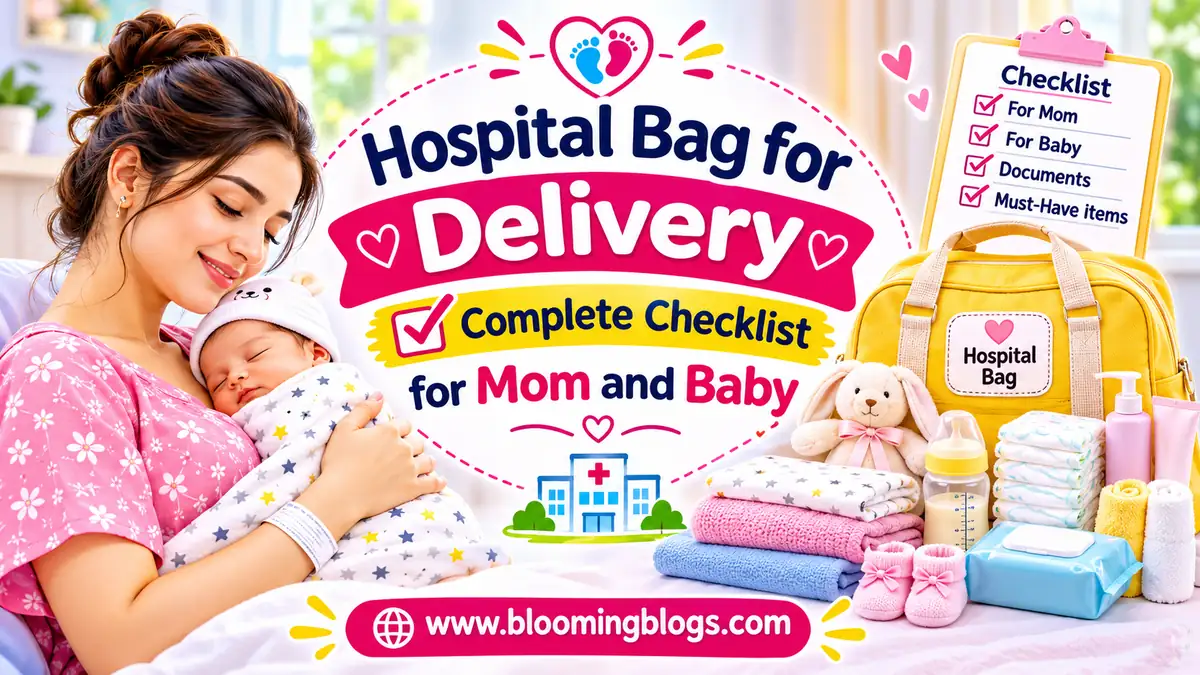
A carefully prepared Hospital Bag for Delivery makes this process easier. It gives you a clear idea of what to pack, what can stay at home and what you should confirm with your maternity hospital.
In this guide, we have brought together a detailed delivery bag pack list covering mothers, newborns and birth partners. You will also find separate recommendations for normal delivery and C-section, an India-focused maternity bag checklist, a printable packing list and a useful Hospital Bag Checklist Tool section.
By the time you finish reading, you should be able to organize your bag without unnecessary shopping or last-minute confusion.
Remember, a good maternity bag is not the biggest or most expensive one. It is the one that contains what your family actually needs.
Why Preparing Your Hospital Bag Matters
There is a difference between knowing what you need and having everything ready when you need it.
You might remember your toothbrush, but forget your pregnancy reports. Your baby’s clothes may be packed, but the going-home outfit could be in another cupboard. Your partner might know where the hospital bag is but have no idea where you kept the important documents.
These are ordinary situations. They happen because several things need attention around the same time.
Preparing early makes things simpler.
1. It reduces last-minute stress
Imagine receiving instructions to come to the hospital while you are still searching for your identification, medical records and baby clothes.
A prepared bag removes many of these small decisions.
2. It helps your birth partner support you
Your partner should know where the documents are kept, which pouch contains your clothes and where the baby’s first outfit is packed.
This becomes particularly helpful when you are tired or concentrating on labor.
3. It keeps important items together
Medical reports, prescriptions and hospital registration details should not be scattered across different drawers.
A dedicated document folder makes them easier to find.
4. It helps you avoid unnecessary purchases
A checklist allows you to identify genuine needs before spending money.
You may discover that the hospital already provides some items.
5. It makes preparation more manageable
Instead of trying to remember everything at once, you can prepare one category at a time.
Start with documents, move to mother’s essentials, then pack the baby’s supplies.
There is no need to finish everything in one afternoon.
When Should You Pack Your Hospital Bag?
A practical time to start preparing is around 32–35 weeks of pregnancy.
Aim to have the basic bag ready by approximately 36 weeks, or earlier if your doctor advises it.
The NHS recommends having the bag prepared ahead of the due date, with its checklist suggesting at least three weeks before the expected date. UCLH* also recommends having it packed by 35 weeks.
The reason is straightforward: babies do not always arrive on their expected date.
If your pregnancy involves a possibility of early admission, follow your obstetrician’s instructions rather than waiting for a particular week.
*University College London Hospitals NHS Foundation Trust.
A simple pregnancy preparation timeline
| Pregnancy stage | What to do |
|---|---|
| 28–30 weeks | Discuss hospital arrangements and admission requirements |
| 31–32 weeks | Prepare a shopping and document list |
| 33–34 weeks | Purchase necessary supplies |
| 35 weeks | Wash and organize baby clothes |
| 36 weeks | Complete the main maternity bag |
| 37 weeks onward | Review supplies and keep the bag accessible |
These are general planning suggestions, not medical deadlines.
Where should you keep your hospital bag?
Choose a place that is:
- Easy to reach.
- Known to your partner.
- Away from damp areas.
- Convenient to carry.
- Not blocked by other luggage.
If you have two bags, keep them together.
Place the document folder in a location where it can be accessed immediately.
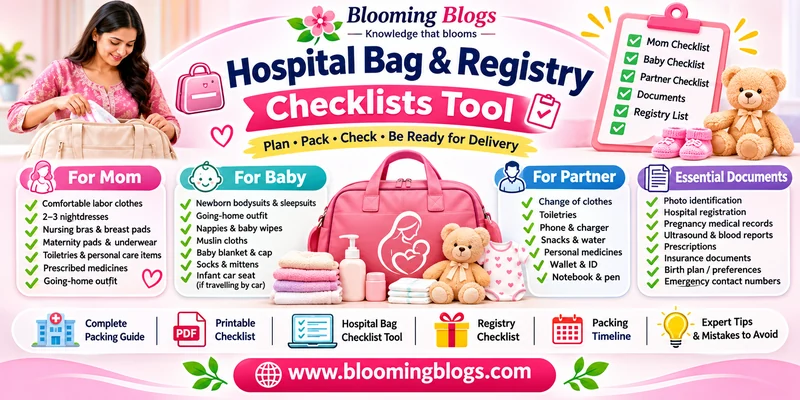
Quick Hospital Bag Checklist: What Do You Actually Need?
If you are short on time, begin with this simple list.
| Category | Main essentials |
|---|---|
| Mother | Comfortable clothes, maternity pads, underwear and toiletries |
| Baby | Newborn outfits, nappies, muslin cloths and going-home clothes |
| Documents | Identification, pregnancy reports, prescriptions and hospital details |
| Feeding | Nursing bras and breast pads, if needed |
| Partner | Clothes, toiletries, snacks and charger |
| Travel | Suitable infant car seat when travelling by car |
This is the basic maternity bag to hospital checklist.
The following sections explain each category in more detail.
Complete Hospital Bag Checklist for Mom
Your comfort matters during labor and recovery.
You may spend time walking, resting, changing clothes or receiving medical care. Pack items that are easy to wear, simple to wash and comfortable against your skin.
1. Clothes for labor
Pack:
- 2 comfortable nightdresses or oversized T-shirts.
- 1 extra loose-fitting outfit.
- 1 lightweight dressing gown.
- 2–3 pairs of socks.
- 1 pair of slippers.
- Comfortable footwear.
Choose clothes that allow easy movement.
If you prefer your own clothing during labor, ask the hospital whether this is permitted.
Avoid packing expensive or delicate garments that you would be upset to stain.
2. Clothes for after delivery
You will need comfortable clothing for your postpartum hospital stay.
Consider packing:
- 2–3 nightdresses.
- 1–2 loose daytime outfits.
- 1 going-home outfit.
- 5–6 pairs of comfortable underwear.
- 2–3 bras.
- Nursing bras, if preferred.
- A lightweight cardigan or shawl.
Front-opening nightwear can be convenient if you plan to breastfeed.
Choose breathable fabrics that are comfortable in your local weather.
3. Maternity pads and underwear
Postpartum bleeding, known as lochia, is a normal part of recovery after childbirth.
Maternity pads are designed to absorb this bleeding.
Pack:
- 2 packets of maternity pads as a practical starting point.
- Comfortable underwear.
- Disposable maternity underwear, if preferred.
- A small packet of tissues.
The actual quantity you need may vary. Ask your hospital what it recommends and whether pads are supplied.
Avoid tampons or menstrual cups during postpartum recovery unless your healthcare professional specifically advises otherwise.
4. Toiletries for mom
A small toiletry pouch should be sufficient.
Checklist:
- Toothbrush.
- Toothpaste.
- Face wash.
- Mild soap.
- Shampoo.
- Hairbrush.
- Hair ties.
- Deodorant.
- Moisturizer.
- Lip balm.
- Small towel.
- Tissues.
- Hand sanitizer.
You do not need to carry full-size bottles.
Travel-size containers can save space, provided the products are suitable for your use.
5. Nursing and breastfeeding essentials
If you plan to breastfeed, consider packing:
- 2 nursing bras.
- Breast pads.
- Front-opening nightwear.
- Comfortable feeding clothes.
- Any nipple-care product recommended by your healthcare professional.
Not every mother needs the same feeding accessories.
A breast pump, milk-storage bags and feeding pillow may be useful in certain circumstances, but they are not compulsory items for every hospital stay.
If you plan to formula-feed or combination-feed, discuss the hospital’s feeding arrangements in advance.
Your feeding decisions deserve respectful, practical support.
6. Personal medicines
Prepare a list of your regular medicines.
Carry prescribed medicines or medical supplies only according to the hospital’s instructions.
Tell the medical team about:
- Regular medication.
- Allergies.
- Existing medical conditions.
- Prescribed supplements.
- Medical devices you use.
Do not independently stop or change any prescribed medicine.
7. Comfort items
A few personal items can make your hospital stay more comfortable.
Consider:
- A water bottle.
- Lip balm.
- A small pillow, if permitted.
- Headphones.
- A relaxing music playlist.
- An eye mask.
- A light shawl.
- A small handheld fan.
Ask your healthcare team about food and drink during labor. Your medical circumstances and planned anesthesia can affect the advice.
Hospital Bag Checklist for Baby
Your newborn needs basic clothing, hygiene supplies and suitable travel arrangements.
Do not feel pressured to purchase a large collection of baby products.
1. Newborn clothing
Pack:
- 3–5 newborn bodysuits or vests.
- 3–5 sleepsuits.
- 1–2 going-home outfits.
- 2 pairs of socks.
- 1–2 caps, if appropriate.
- 1–2 pairs of mittens, if needed.
- 1 light cardigan, depending on weather.
Choose comfortable fabrics.
Avoid clothing with long strings, loose decorative pieces or small detachable accessories.
2. Newborn nappies
Pack a small supply of newborn-size disposable nappies if your hospital does not provide them.
Ask the maternity team how many you should carry.
You do not need to purchase an unusually large quantity just for the hospital stay.
3. Baby wipes and cleaning supplies
Consider:
- Fragrance-free wipes.
- Soft cotton wool.
- Small cotton cloths.
- A clean changing mat, if requested.
Some hospitals prefer cotton wool and water during the early newborn period.
Follow the advice given by your maternity team.
4. Muslin cloths
Muslin cloths are practical multipurpose items.
They can be useful for:
- Wiping small spills.
- Keeping your shoulder clean during burping.
- Protecting clothing during feeding.
- Cleaning up minor messes.
Pack three or four clean muslin squares.
Keep loose cloth away from your baby’s face and sleep area.
5. Baby blanket
A lightweight blanket may be useful when carrying your baby or travelling home.
Choose a suitable thickness for the weather.
Avoid excessive wrapping because newborns can become overheated.
6. Going-home outfit
Keep one complete outfit separately.
Include:
- Bodysuit.
- Sleepsuit.
- Socks.
- Appropriate outer layer, if required.
- A suitable blanket for carrying or travelling, if needed.
You can place these items in one labelled pouch.
This is one of the easiest ways to make discharge preparation simpler.
7. Baby skincare
For a short hospital stay, basic supplies are generally enough.
Avoid unnecessarily packing:
- Strong perfumes.
- Multiple lotions.
- Talcum powder.
- Numerous bathing products.
- Decorative accessories.
Newborn skin is delicate. Follow your pediatrician’s advice before introducing skincare products.
Important Hospital Documents and Medical Records
Documents are among the most important parts of your pregnancy checklist hospital bag preparation.
Keep them in a separate waterproof folder.
Document checklist for hospital admission in India
Prepare the following, as applicable:
- Government-approved photo identification.
- Hospital registration details.
- Pregnancy medical records.
- Ultrasound reports.
- Blood test reports.
- Blood group information.
- Prescriptions.
- Allergy information.
- Relevant medical history.
- Insurance policy details.
- Cashless authorization, if applicable.
- Health scheme documents, if applicable.
- Emergency contact numbers.
- Birth preferences or birth plan.
Hospital admission requirements vary.
Contact your hospital before the due date to confirm the exact documents required.
Should you carry all your ultrasound reports?
Keep your available pregnancy reports together, especially those your doctor has asked you to bring.
Your healthcare team can decide which records are relevant during admission.
Should you carry cash?
A small amount of cash may be convenient for incidental expenses.
Also confirm:
- Admission deposit.
- Payment methods.
- Insurance arrangements.
- Parking charges.
- Discharge payment procedures.
Avoid carrying unnecessary valuables.
Hospital Bag for Normal Delivery
If you are planning a vaginal birth, the standard maternity checklist will usually cover most of your needs.
Prioritize:
- Comfortable labor clothes.
- Nightwear.
- Maternity pads.
- Underwear.
- Nursing bras, if preferred.
- Toiletries.
- Medical documents.
- Baby clothes.
- Nappies.
- Muslin cloths.
- Phone and charger.
- Water bottle.
Labor can take different amounts of time.
Your hospital team will guide you regarding movement, food, drink, pain relief and medical care.
Do not assume that every birth follows the same sequence.
What additional items may help during labor?
Some mothers find the following useful:
- Lip balm.
- Headphones.
- Relaxing music.
- A small fan.
- A familiar pillow, if permitted.
- A water bottle.
These are comfort items, not medical requirements.
Hospital Bag for C-Section
A C-section may involve a different recovery experience from vaginal delivery.
Your basic packing list remains similar, but some additional clothing choices may be useful.
Consider:
- Loose nightdresses.
- High-waisted underwear.
- Comfortable clothing without tight waistbands.
- Slippers.
- Toiletries.
- Maternity pads.
- Nursing bras, if preferred.
- Prescribed medication information.
- Medical reports.
Why choose high-waisted underwear?
After a C-section, the abdominal area may feel tender.
High-waisted underwear can sit above the incision area and may be more comfortable than low-rise styles.
Choose soft, non-restrictive clothing.
Follow the hospital’s instructions for incision care.
Should I pack additional clothes for a C-section?
It may be sensible to keep additional clothing and baby supplies ready at home.
Your hospital stay and recovery requirements will depend on your medical circumstances.
Ask your obstetrician what you should prepare.
Hospital Bag Checklist for Birth Partner
The person accompanying you may spend several hours or longer at the hospital.
Their preparation matters too.
Birth partner packing list
- 1–2 changes of clothes.
- Comfortable footwear.
- Toothbrush and toothpaste.
- Deodorant.
- Phone.
- Charger.
- Water bottle.
- Snacks, subject to hospital rules.
- Personal medicines.
- Wallet.
- Identification.
- Notebook and pen.
- Emergency contact numbers.
What should your partner know before delivery?
Discuss these details before your hospital admission:
- Where the maternity bag is kept.
- Which hospital you are registered with.
- The doctor’s contact information.
- Where medical reports are stored.
- Who should be contacted in an emergency.
- Who will look after other children or pets.
- How you will travel to the hospital.
A partner who understands the preparation can provide more practical support.
🌸 Free Hospital Bag Checklist PDF
Getting ready for delivery is easier when everything is organised. We’ve created a colourful, printable hospital bag checklist covering essential, recommended and optional items for mom, baby and your birth partner.
Download your free checklist, print it, and tick off each item as you pack. Save paper, save trees, and enjoy a more organized preparation for your baby’s arrival!
Indian Hospital Bag Checklist: What Should You Consider?
A maternity bag for hospital delivery in India may need a few additional considerations.
Hospital facilities, admission policies and the items supplied to mothers can differ from one institution to another.
A private maternity hospital may provide some newborn supplies, while another hospital may ask parents to bring their own.
Do not assume that every hospital follows the same arrangement.
1. Check hospital-provided supplies
Ask whether the hospital provides:
- Newborn nappies.
- Maternity pads.
- Towels.
- Baby clothing.
- Toiletries.
- Feeding supplies.
- Drinking water.
- Blankets.
This can help prevent unnecessary shopping.
2. Consider Indian weather
Your clothing requirements may depend on the season and location.
For warmer regions:
- Lightweight cotton clothes.
- Breathable newborn clothing.
- A light shawl for air-conditioned rooms.
For colder regions:
- Additional suitable clothing.
- A warmer outer layer.
- Weather-appropriate baby clothing.
Avoid dressing your baby in excessive layers.
3. Confirm hospital attendant rules
Ask about:
- Number of permitted attendants.
- Visitor timings.
- Overnight accommodation.
- Food arrangements.
- Parking.
- Photography rules.
- Discharge procedures.
4. Keep insurance and payment details ready
If you are using health insurance or a cashless facility, confirm the hospital’s process.
Keep relevant documents accessible.
5. Prepare for the journey home
Arrange transport in advance.
If travelling by car, prepare an appropriate infant car seat and follow its installation instructions.
Essential vs Optional Items: What Should You Actually Buy?
Not every maternity product is necessary.
Here is a simple comparison.
| Item | Priority | Explanation |
|---|---|---|
| Medical records | Essential | Important for admission and care |
| Identification | Essential | Hospital administration |
| Comfortable clothes | Essential | Personal comfort |
| Maternity pads | Essential | Postpartum hygiene |
| Newborn clothes | Essential | Basic baby needs |
| Nappies | Essential if not supplied | Baby hygiene |
| Phone charger | Useful | Communication |
| Nursing bra | Useful | Breastfeeding comfort |
| Muslin cloths | Useful | Multiple practical uses |
| Baby blanket | Useful | Weather-dependent |
| Breast pump | Optional | Depends on feeding needs |
| Makeup | Optional | Personal preference |
| Multiple baby outfits | Usually unnecessary | Limited hospital stay |
| Large toys | Unnecessary | Not needed for a newborn hospital stay |
| Expensive accessories | Usually unnecessary | Can be purchased later |
Before buying anything, ask three questions
- Will I genuinely use this during the hospital stay?
- Does the hospital already provide it?
- Can I safely arrange it later if needed?
These questions can help you avoid unnecessary expenses.
How to Organize Your Maternity Bag
A well-packed bag should make items easy to find.
You should not need to empty the entire suitcase just to find a newborn vest.
Use separate pouches
Pouch 1: Documents
Medical reports, identification and admission details.
Pouch 2: Mother’s clothing
Nightwear, underwear, bras and comfortable outfits.
Pouch 3: Personal care
Toiletries, maternity pads and tissues.
Pouch 4: Baby essentials
Newborn clothes, nappies, muslin cloths and socks.
Pouch 5: Feeding essentials
Nursing bras, breast pads and any other required feeding supplies.
Pouch 6: Partner essentials
Clothes, toiletries and electronics.
One bag or two bags?
| Arrangement | Advantages | Limitations |
|---|---|---|
| One large bag | Everything stays together | May become difficult to organize |
| Two bags | Mother and baby items stay separate | Requires more space |
| Three smaller bags | Better category separation | Needs more preparation |
For many families, two bags and one document folder are a practical arrangement.
Label the pouches
Use simple labels:
- MOM
- BABY
- DOCUMENTS
- FEEDING
- PARTNER
Your partner should be able to identify each pouch without opening everything.
👉Hospital Bag Preparation Timeline
Here is a practical preparation plan.
At 28–30 weeks
- Confirm your hospital.
- Discuss admission requirements.
- Ask about hospital-provided supplies.
- Start a shopping list.
For 31–32 weeks
- Organize medical records.
- Check your identification.
- Purchase essential items.
At 33–34 weeks
- Wash baby clothes.
- Arrange mother’s clothing.
- Purchase any remaining essentials.
For 35 weeks
- Pack the main maternity bag.
- Prepare the partner’s pouch.
- Check the document folder.
At 36 weeks
- Review the complete checklist.
- Keep the bag accessible.
- Confirm transport arrangements.
After 36 weeks
- Review medicines and documents.
- Check that the phone charger is available.
- Keep emergency contact information ready.
Follow your own doctor’s advice if earlier preparation is needed.
Hospital Bag Checklist Tool: Organize Your Delivery Preparation
A Simple Way to Keep Track of Your Maternity Essentials
Preparing for delivery involves many small tasks.
You may have already purchased newborn clothes, but have you checked your medical documents? Are the maternity pads packed? Has your partner arranged the travel bag? Have you kept the baby’s going-home outfit separately?
It is easy to overlook something when you depend entirely on memory.
This is where the Blooming Blogs Hospital Bag Checklist Tool can make preparation more organized.
The tool is intended to help expecting parents review their packing requirements by category rather than trying to remember every item individually.
You can use it alongside this hospital bag for delivery guide to review:
- Mother’s clothing and personal-care essentials.
- Labor and delivery preparation.
- Postpartum recovery supplies.
- Newborn clothing and hygiene essentials.
- Hospital admission documents.
- Birth partner’s belongings.
- Additional travel and going-home items.
Who can use the Hospital Bag Checklist Tool?
First-time mothers
If you have never prepared a maternity bag before, a structured checklist can help you understand what belongs in each category.
Experienced mothers
You can review the list and adjust it according to your current pregnancy and hospital requirements.
Birth partners
Your partner can use the checklist to understand what is already packed and what still needs attention.
Families preparing for delivery in India
You can use the general checklist and add any additional items requested by your hospital.
Why use an online hospital bag checklist?
A checklist can help you:
- Review the main packing categories.
- Identify items that still need preparation.
- Avoid unnecessary purchases.
- Organize mother and baby supplies separately.
- Coordinate packing with your partner.
- Review the bag before leaving home.
Try the Blooming Blogs Hospital Bag Checklist Tool
Explore the tool and use it as a companion to the printable maternity checklist below.
You can also bookmark this article so you can return to the packing instructions whenever needed.
Publishing requirement: Describe only the features that the actual tool provides. Do not promise automatic saving, PDF downloads, progress tracking or other functions unless they are implemented and tested.
👉Practical Packing Hacks for Expecting Parents
Small organizational decisions can make a big difference.
Hack 1: Pack complete baby outfits together
Place a vest, sleepsuit and socks in one pouch.
This saves time when someone needs to find a complete outfit.
Hack 2: Keep the documents on top
Medical records should not be buried underneath clothing.
Use a separate folder.
Hack 3: Prepare an additional bag at home
You may not need every item immediately.
Keep extra clothes, toiletries and baby supplies ready at home.
A family member can bring them if required.
Hack 4: Keep a spare phone charger
If possible, arrange a spare charger or charging cable specifically for the hospital bag.
Hack 5: Prepare a written contact list
Store important numbers in your phone and keep a written backup.
Hack 6: Check everything after washing
Wash newborn clothes using a suitable laundry product and make sure they are completely dry before packing.
Hack 7: Keep the going-home outfit separate
Do not mix it with everyday baby clothes.
A labelled pouch makes it easier to find.
Hack 8: Do a partner review
Ask your partner to locate the following without your help:
- Medical folder.
- Mother’s nightwear.
- Baby’s first outfit.
- Maternity pads.
- Phone charger.
If they can find everything, your organization is working.
💡Did You Know?
You do not need to buy an expensive maternity suitcase.
A clean travel bag, overnight bag or ordinary suitcase can work well.
The most useful features are:
- Enough space.
- Easy access.
- Separate compartments.
- Comfortable handles.
- Simple organization.
Another helpful point: the NHS provides a downloadable hospital bag checklist that includes separate recommendations for mothers, babies and birth partners.
This supports an important idea: preparing for childbirth is a family activity.
Expert Recommendations and Safety Considerations
The following are general preparation recommendations. Your own medical team should guide decisions related to pregnancy, delivery and postpartum recovery.
1. Confirm hospital requirements
Different maternity hospitals provide different supplies.
Ask before purchasing large quantities of nappies, maternity pads and other items.
2. Keep prescribed medicines identifiable
Keep medication information and prescriptions available.
Tell the medical team about medicines, supplements and allergies.
3. Avoid unnecessary newborn products
A newborn does not need a large collection of lotions, powders or perfumes.
Keep early care simple.
4. Prepare suitable newborn travel arrangements
If traveling by car, use an appropriate infant car seat and follow the manufacturer’s installation instructions.
The US National Highway Traffic Safety Administration recommends rear-facing travel for young children until they reach the applicable seat manufacturer’s height or weight limit. Follow the relevant safety requirements and product instructions for your location.
5. Understand safe newborn sleep
The American Academy of Pediatrics recommends placing babies on their backs for sleep, on a firm, flat sleep surface with no loose bedding or soft objects.
A hospital bag may contain a blanket for carrying your baby, but loose blankets should not be placed in the baby’s sleep space.
6. Avoid excessive clothing layers
Dress your baby according to the room temperature and weather.
Overheating is a concern, so ask your healthcare team if you are unsure how to dress your newborn.
7. Follow postpartum medical instructions
After delivery, follow the instructions provided for bleeding, hygiene, stitches, incision care and medicines.
Do not use unapproved creams or products on a surgical incision.
👉Common Hospital Bag Packing Mistakes
Mistake 1: Packing too many clothes
A newborn does not need a large wardrobe for a short hospital stay.
A few clean outfits are usually enough.
Mistake 2: Forgetting medical records
Keep your reports and prescriptions in a separate folder.
Mistake 3: Buying unnecessary products
Do not assume every item marketed for maternity use is essential.
Mistake 4: Packing only for labor
Your stay may include postpartum recovery.
Remember your clothing, toiletries and hygiene supplies.
Mistake 5: Ignoring hospital facilities
Check what the hospital provides.
Mistake 6: Forgetting the partner’s needs
The accompanying person may also need clothes, toiletries and food.
Mistake 7: Keeping everything in one unorganized compartment
Separate pouches make items easier to find.
Mistake 8: Forgetting the going-home outfit
Keep a complete outfit ready for the baby.
Mistake 9: Not checking the travel arrangements
Confirm how you will reach the hospital and return home.
Mistake 10: Waiting until the last minute
Complete the essentials early and review the bag periodically.
👉Printable Hospital Bag Checklist for Mom and Baby
You can save or print this list and use it while packing.
Mother’s Checklist
- Comfortable labor clothes
- 2–3 nightdresses
- Going-home outfit
- Comfortable underwear
- Nursing bras, if preferred
- Breast pads
- Maternity pads
- Slippers
- Socks
- Dressing gown or shawl
- Toothbrush and toothpaste
- Shampoo and soap
- Hairbrush and hair ties
- Lip balm
- Moisturizer
- Towel
- Water bottle
- Phone and charger
- Prescribed medicines and prescriptions
- Glasses or contact lenses, if needed
Baby’s Checklist
- Newborn bodysuits
- Sleepsuits
- Going-home outfit
- Newborn nappies
- Cotton wool or suitable wipes
- Muslin cloths
- Baby blanket
- Socks
- Cap, if appropriate
- Weather-appropriate clothing
- Suitable infant car seat, if travelling by car
Hospital Documents Checklist
- Photo identification
- Hospital registration details
- Pregnancy medical records
- Ultrasound reports
- Blood test reports
- Prescriptions
- Insurance documents, if applicable
- Birth plan or birth preferences
- Emergency contact numbers
Birth Partner Checklist
- Change of clothes
- Toothbrush and toothpaste
- Deodorant
- Phone and charger
- Water bottle
- Snacks, if permitted
- Personal medicines
- Wallet and identification
- Notebook and pen
- Emergency contact information
FREQUENTLY ASKED QUESTIONS
General Hospital Bag Questions
1. What should I pack in my hospital bag for delivery?
Pack comfortable clothes, maternity pads, toiletries, medical records, newborn clothing, nappies, muslin cloths and important documents. Add items according to your hospital’s requirements.
2. When should I prepare my hospital bag?
Start around 32–35 weeks and aim to finish by approximately 36 weeks, unless your doctor recommends earlier preparation.
3. How many bags should I take to the hospital?
One large bag or two smaller bags can work. Separate mother and baby supplies if that makes organization easier.
4. Can I use a normal travel bag?
Yes. A clean travel bag is perfectly suitable if it has enough space and is easy to organize.
5. What is the most important thing in a maternity bag?
Medical records, identification, prescribed medicine information, comfortable clothes and essential newborn supplies should be priorities.
6. Should I pack my hospital bag before 36 weeks?
Yes. Early preparation can reduce last-minute stress, particularly if your doctor advises that you may need earlier admission.
7. What should I keep at the top of my hospital bag?
Keep your document folder, phone charger and items you may need immediately accessible.
8. Can my husband or partner pack the hospital bag?
Yes. Packing together helps your partner understand where everything is stored.
9. Is a maternity suitcase necessary?
No. A special maternity suitcase is optional. A clean, organized travel bag is sufficient.
10. What if I forget something?
Do not panic. Many ordinary items can be brought by family members later. Prioritize medical care and important documents.
Mother’s Hospital Bag Questions
11. How many maternity pads should I pack?
Two packets can be a practical starting point. Your actual requirement may vary, so confirm the quantity with your hospital.
12. Should I pack disposable underwear?
It is optional. Comfortable washable underwear is another suitable choice.
13. What clothes are best after delivery?
Loose, breathable and comfortable clothes are generally suitable. Front-opening nightwear can be convenient for breastfeeding.
14. How many nightdresses should I pack?
Two or three are a reasonable starting point for a short stay. Keep extra clothing available at home.
15. Should I pack nursing bras?
If you plan to breastfeed, nursing bras may be useful. Choose comfortable styles without tight pressure.
16. Are breast pads necessary?
They are useful for some mothers, but not compulsory for everyone.
17. Should I take my breast pump?
Not automatically. Discuss your feeding circumstances with your healthcare team.
18. Can I wear my own clothes during labor?
This depends on the hospital’s policies and your medical needs. Ask your maternity team.
19. Should I carry my own towel?
You may, but check whether your hospital provides towels.
20. Should I pack my regular medicines?
Bring medication details and follow the hospital’s instructions about prescribed medicines.
Baby Hospital Bag Questions
21. How many newborn clothes should I pack?
Three to five basic changes are a reasonable starting point, depending on your expected stay and hospital facilities.
22. How many nappies should I carry?
Carry a small initial supply if your hospital does not provide them. Confirm the quantity beforehand.
23. Should I buy newborn-size clothes before delivery?
Yes, keeping a few outfits ready is sensible. Avoid buying too many because newborn sizes may not fit every baby.
24. Should I pack baby wipes?
You may pack fragrance-free wipes or cotton wool, depending on the hospital’s preferred cleaning method.
25. Are muslin cloths useful?
Yes. They can be used for burping, wiping and keeping clothing clean.
26. Should I pack baby powder?
No, baby powder is generally unnecessary. Avoid products that can release particles near a newborn’s face.
27. Does a newborn need a blanket?
A suitable blanket can be useful for carrying your baby. Keep loose blankets out of the baby’s sleep space.
28. Are baby mittens necessary?
No. They are optional. Choose appropriate clothing and ask your healthcare team if you have concerns about scratching.
29. Should I pack a newborn cap?
A cap may be useful in certain situations. Follow hospital guidance and avoid overheating your baby.
30. Do I need newborn skincare products?
Usually, basic supplies are enough. Avoid unnecessary products and follow professional advice.
Delivery and Hospital Admission Questions
31. What should I pack for normal delivery?
Pack comfortable clothes, maternity pads, toiletries, medical documents, newborn clothes, nappies and basic hygiene supplies.
32. What should I pack for a C-section?
In addition to the basic list, consider loose nightwear, high-waisted underwear and clothing that does not rub against the incision area.
33. Is a C-section hospital bag different?
The main essentials are similar, but recovery-related clothing and additional supplies may be useful.
34. What documents are required for hospital delivery in India?
Requirements vary. Hospitals may request identification, registration details, pregnancy reports, prescriptions and insurance information.
35. Should I carry all my ultrasound reports?
Keep available pregnancy reports together, especially those requested by your doctor.
36. Should I carry cash?
A small amount may be convenient. Confirm the hospital’s payment and insurance procedures.
37. Can I carry snacks into the labor room?
Hospital rules and medical recommendations vary. Ask your healthcare team before consuming food during labor.
38. Should I pack my own pillow?
You may if the hospital permits it and there is sufficient space.
39. Does my newborn need a car seat?
If travelling home by car, prepare an appropriate infant car seat and follow the manufacturer’s instructions.
40. Should my partner carry a separate bag?
A small partner bag with clothing, toiletries, snacks and a charger can be helpful.
Checklist Tool and Preparation Questions
41. What is a Hospital Bag Checklist Tool?
It is a digital or printable checklist that helps expecting parents organize maternity packing by category.
42. Is an online checklist better than a handwritten list?
Both can be useful. An online checklist is convenient to access, while a handwritten list may be easier to keep with your documents.
43. Can I use a hospital bag checklist PDF?
Yes. A printable PDF can be saved, printed and used while organizing your maternity bag.
44. What should a hospital bag checklist for mom and baby include?
It should cover mother’s clothing, toiletries, maternity pads, newborn clothes, nappies, documents and partner essentials.
45. Can I customize my pregnancy hospital bag list?
Yes. Add or remove items according to your hospital’s instructions, medical circumstances and personal preferences.
46. Is a hospital bag checklist useful for first-time mothers?
Yes. It provides a clear structure and helps first-time mothers understand the different packing categories.
47. Do I need separate lists for normal delivery and C-section?
The basic list is similar, but a C-section may require additional recovery-related preparation.
48. Should I print my hospital bag checklist?
Printing is optional, but useful if you prefer ticking off items while packing.
49. Can my family use the checklist?
Yes. Sharing the list with your partner or family members makes it easier to divide preparation tasks.
50. Is every item on a maternity bag checklist compulsory?
No. Some items are essential, while others depend on hospital facilities and personal preferences.
51. What should I leave out of my maternity bag?
Avoid unnecessary valuables, excessive baby accessories, large toys, strong fragrances and products you are unlikely to use.
52. Should I pack a separate going-home outfit?
Yes. Keep a clean, weather-appropriate baby outfit in a separate pouch.
53. What if my hospital stay becomes longer?
Ask a family member to bring additional clothing and supplies from home. Keep a small backup collection ready.
54. Can I prepare the maternity bag in the third trimester?
Yes. The third trimester is a practical time to complete your packing.
55. What is the easiest way to remember everything?
Use a categorized hospital bag checklist, label the pouches and review everything with your partner before the due date.
FINAL REVIEW
Before considering your hospital bag complete, review these priorities.
Medical readiness: Keep medical records, prescriptions and identification organized.
Mother’s comfort: Pack clothing, maternity pads, underwear and personal-care supplies.
Baby’s essentials: Prepare basic clothing, nappies, muslin cloths and a going-home outfit.
Hospital requirements: Confirm which supplies are provided and which you must bring.
Safe travel: Arrange appropriate transportation and a suitable infant car seat if travelling by car.
What can wait: Expensive accessories, large baby wardrobes, unnecessary skincare products and decorative items.
The goal is not to pack everything imaginable. It is to prepare thoughtfully for the needs you can reasonably anticipate.
QUICK SUMMARY
A complete hospital bag for delivery should contain:
- Comfortable clothes for labor and recovery.
- Maternity pads and underwear.
- Nursing bras and feeding essentials, if needed.
- Toiletries and personal medicine information.
- Newborn clothing and nappies.
- Muslin cloths and suitable baby clothing.
- Medical reports and hospital documents.
- Birth partner’s belongings.
- Suitable travel arrangements.
Start early, organize everything into separate pouches and check the hospital’s own admission list.
👉POINTS TO REMEMBER
- You do not need an expensive maternity bag.
- Prepare early.
- Do not purchase excessive newborn clothing.
- Keep important medical records accessible.
- Check hospital-provided supplies.
- Prepare separately for postpartum recovery.
- Involve your birth partner.
- Use a checklist to review your preparation.
- Follow your obstetrician’s instructions.
- Prioritize safety and comfort.
MEDICAL AND SAFETY DISCLAIMER
The information in this article is intended for general educational purposes.
Pregnancy, childbirth and postpartum recovery are individual experiences. Your requirements may differ depending on your medical history, pregnancy complications, delivery method and hospital arrangements.
Always follow the advice of your obstetrician, midwife and pediatrician.
Do not use this packing guide as a substitute for professional medical advice, diagnosis or treatment.
If you experience concerning symptoms during pregnancy or after delivery, contact your healthcare provider promptly. For emergencies, seek immediate medical attention.
For newborn care, follow professional guidance on feeding, hygiene, temperature regulation, safe sleep and transportation.
📚 External Authoritative References
The following sources support the hospital preparation and newborn safety guidance included in this article.
- NHS – Hospital Bag Checklist
https://www.nhs.uk/best-start-in-life/pregnancy/preparing-for-labour-and-birth/hospital-bag-checklist/ - University College London Hospitals – What to Bring to Hospital
https://www.uclh.nhs.uk/our-services/find-service/womens-health-1/maternity-services/giving-birth/what-bring-hospital - National Childbirth Trust – Hospital Bag Checklist
https://www.nct.org.uk/information/labour-birth/planning-birth/hospital-bag-checklist-what-do-i-need - American Academy of Pediatrics – Safe Sleep
https://www.aap.org/en/patient-care/safe-sleep/ - National Highway Traffic Safety Administration – Rear-Facing Car Seat Installation
https://www.nhtsa.gov/car-seats-and-booster-seats/how-install-rear-facing-car-seats
🔗 Related Articles
If you are preparing for a newborn, these helpful Blooming Blogs guides can help you plan, prepare, and care for your baby with greater confidence:
- Best Infant Formula for Newborns: Types, Choices & Safety Guide
https://bloomingblogs.com/best-infant-formula-for-newborns/ - Newborn Baby Essentials Checklist for Soon-to-Be Parents
https://bloomingblogs.com/newborn-baby-essentials-checklist-for-soon-to-be-parents/ - How to Prepare Formula Milk for a Newborn Baby.
https://bloomingblogs.com/newborn-baby-essentials-how-to-prepare-formula-milk-for-a-newborn-baby/ - Newborn Baby Care: Complete Guide for New Parents
https://bloomingblogs.com/newborn-baby-care/ - Formula Mixing & Bottle Ratio Calculator
https://bloomingblogs.com/formula-mixing-bottle-ratio-calculator/
🌱 Continue Exploring…
Whether you’re nurturing a newborn, curating a sanctuary for your home and garden, or simply looking to level up your day-to-day life, there’s always a new perspective waiting to be discovered. From practical everyday parenting guidance, women’s wellness information, ideas to make your home more beautiful, tips for caring for pets and plants, or inspiration for your spiritual journey, Blooming Blogs brings useful knowledge together in one place.
Blooming Blogs — knowledge that blooms.
🌸 Blooming Blogs Promise
We’re here to bring you thoughtful, reliable, and helpful insights you can truly count on. Every article on Blooming Blogs is thoroughly researched, crafted with care, and written with genuine empathy to support you in your everyday journey. Your trust means everything to us, and we are dedicated to sharing content that informs, inspires, and makes your life a little easier.
📝 Editorial Notes
Our team strives for clarity, accuracy, and depth in every piece we publish. Content is periodically updated to ensure facts, recommendations, and guides stay relevant over time. While we consult trusted sources and expert research, our goal is always to present complex topics in a simple, practical, and conversational way that works for real life.
⚠️ Disclaimer
The content provided on Blooming Blogs is for informational and educational purposes only and should not be considered professional medical, legal, or financial advice. Always consult with a qualified expert or licensed professional before making decisions related to your health, family, or personal finances. Blooming Blogs is not liable for any actions taken based on the information provided on this website. (For full details, please visit our Disclaimer Policy Page).
💬 Share Your Experience — Leave a Comment
We’d love to hear from you! Did this article help you, or do you have a personal tip or story to share with our community? Drop your thoughts, questions, or feedback in the comment section below. Every voice enriches our community, and we read every single comment!