


Introduction
Bringing a baby home changes everything in an instant. You stare at that impossibly soft, brand-new skin and suddenly wonder how to protect it without overdoing it. Navigating newborn skin care feels overwhelming when every aisle offers dozens of lotions, washes, and balms. One day your baby’s cheeks look flawless, and the next morning tiny red bumps appear out of nowhere. You start questioning your bath routine, your laundry detergent, and whether you even need that expensive cream sitting on the nursery dresser.
Take a deep breath, mama—you do not need a ten-step routine to keep your baby comfortable. In fact, pediatricians agree that less is almost always more during those delicate first weeks of life. Your newborn’s skin barrier is still developing, which makes it thinner and far more sensitive than yours. Understanding what is totally normal—from harmless peeling to common newborn face rashes—takes the guesswork out of daily care.
In this complete guide, we break down everything you need to know about gentle newborn skincare from head to toe. You will learn how to master sponge baths, when to introduce a safe moisturizer, and which ingredients belong nowhere near your nursery. We will also cover how to handle dry patches, diaper rash, and sudden skin changes with calm confidence. Let’s walk through a simple, pediatrician-backed routine that keeps your little one cozy, healthy, and glowing.
Quick Takeaways
- Less Is Always More: Healthy infant skin thrives on plain warm water, mild pH-balanced cleansers, and minimal products.
- Protect the Umbilical Stump: Stick to sponge baths and fold diapers below the navel until the cord stump falls off naturally.
- Master the Three-Minute Rule: Lock hydration into dry skin by smoothing fragrance-free cream onto damp skin right after infant bathing.
- Leave Newborn Face Rashes Alone: Baby acne and milia clear naturally without scrubbing, squeezing, or medicated creams.
- Prioritize Shade Over Sunscreen: Shield babies under six months with wide-brimmed hats, lightweight long sleeves, and stroller shade.
- Wash Fabrics Fragrance-Free: Pre-wash all baby clothes and bedding in gentle, unscented detergent to prevent contact rashes.
Understanding Delicate Baby Skin: The Foundation of Newborn Skin Care
When you hold your newborn for the first time, their skin feels like pure silk. Yet beneath that velvety surface lies a complex organ that is still learning how to function outside the womb. Effective newborn skin care starts with understanding what makes your baby’s skin barrier completely different from yours.
Inside the womb, warm amniotic fluid and a waxy white coating called vernix caseosa protected your baby for nine months. The moment your baby enters the world, dry air, temperature shifts, and fabrics challenge that delicate surface. According to the American Academy of Pediatrics (AAP), a newborn’s epidermis is roughly 20% to 30% thinner than adult skin. Because the outer layer lacks mature lipid bonds, moisture escapes fast, and irritants sneak in easily.
Why Caring for Children’s Skin Requires a Gentle Approach
Caring for children’s skin during the first year demands patience rather than heavy products. Adult skincare relies on active acids, scrubs, and rich fragrances to strip away dead cells. In contrast, your baby’s skin produces very little natural oil and melanin during the first few months. This means harsh soaps wipe out their fragile acid mantle in seconds.
- Rapid Moisture Loss: Newborn skin absorbs water quickly during a bath, yet it loses that hydration just as fast once the skin dries.
- Higher Absorption Rates: Because your baby has a high surface-area-to-body-weight ratio, ingredients applied to the skin enter their system more easily.
- Underdeveloped Sweat Glands: Babies cannot regulate body temperature efficiently yet, which makes them prone to sudden heat rashes in warm rooms.
- Sensitive pH Balance: Healthy infant skin hovers near a neutral pH of 5.5 to 6.5, so alkaline bar soaps disrupt their natural defenses immediately.

Your Step-by-Step Newborn Skin Care Routine
You do not need an overflowing bathroom caddy to keep your little one comfortable. In fact, building a simple, repeatable newborn skin care routine saves you time, money, and late-night stress. Pediatric dermatologists recommend sticking to three core pillars: gentle cleansing, targeted hydration, and breathable protection.
Morning Refresh: The Top-and-Tail Method
On non-bath days, a quick morning “top-and-tail” wipe-down keeps your baby fresh without stripping natural oils. Keep a small bowl of warm water, soft organic cotton pads, and a clean washcloth beside your changing station.
- Clean the Eyes First: Dip a fresh cotton pad into warm water and wipe gently from the inner corner outward. Use a clean pad for each eye to prevent cross-contamination.
- Wipe the Face and Ears: Sweep a damp cloth across your baby’s forehead, cheeks, and chin. Pay close attention to the skin behind the ears, where dried milk often hides.
- Check the Neck Folds: Lift your baby’s chin softly and clean inside every tiny neck crease. Trapped drool and spit-up trigger redness fast if you miss these hidden spots.
- Refresh the Hands: Babies love sucking on their fists, so wipe their palms and between their fingers daily.
- Clean the Diaper Area: Finish by cleaning the diaper zone thoroughly from front to back, then pat the skin completely dry with a soft towel.
Evening Wind-Down & Overnight Protection
Nighttime skincare for newborns focuses on locking in moisture and preventing overnight diaper irritation. Before you zip up your baby’s pajamas, run through a quick three-minute skin check.
- Inspect Skin Folds: Check under the arms, behind the knees, and inside thigh creases for trapped lint or moisture.
- Apply a Barrier Layer: Smooth a thick layer of zinc oxide diaper cream onto clean, dry skin before your baby’s longest sleep stretch.
- Moisturize Dry Spots: Dab a pea-sized amount of fragrance-free ointment onto flaky ankles, wrists, or knees.
- Choose Breathable Sleepwear: Dress your baby in 100% GOTS-certified organic cotton or bamboo sleepers to prevent night sweats.
Infant Bathing 101: Safe Water Tips, Timing, and Technique
Bath time often feels like a high-stakes event during your first week home. Tiny babies become slippery the second water touches their skin, and temperature control requires careful attention. Mastering safe infant bathing turns a nervous chore into one of your favorite bonding rituals.
Sponge Baths vs. Tub Baths: When to Make the Switch
You should stick strictly to sponge baths until your baby’s umbilical cord stump falls off and heals completely. This healing process usually takes one to three weeks. Submerging the stump in water delays drying and increases the risk of infection.
| Bathing Stage | Recommended Timeline | Key Safety Rules | Ideal Frequency |
| Sponge Baths | Birth until umbilical stump falls off (Weeks 1–3) | Keep baby wrapped in a warm towel; uncover and wash one body part at a time. | 2 to 3 times per week |
| First Tub Baths | After stump falls off and circumcision (if applicable) heals | Use a contoured infant tub with 2 inches of warm water; keep one hand on baby at all times. | 2 to 3 times per week |
| Active Infant Baths | 3 to 12 months | Place a non-slip mat inside the tub; never leave baby unattended for even one second. | 3 times per week |
How Often Should You Bathe a Newborn?
Newborns do not crawl through mud or work up a heavy sweat, so daily baths do more harm than good. Bathing your baby more than three times a week dries out their developing skin barrier and worsens eczema. Two or three baths per week—paired with thorough diaper changes and daily face wipes—keep your baby spotless.
Step-by-Step Guide to a Stress-Free Baby Bath
Follow these exact newborn skin care guidelines to keep bath time calm, warm, and tear-free:
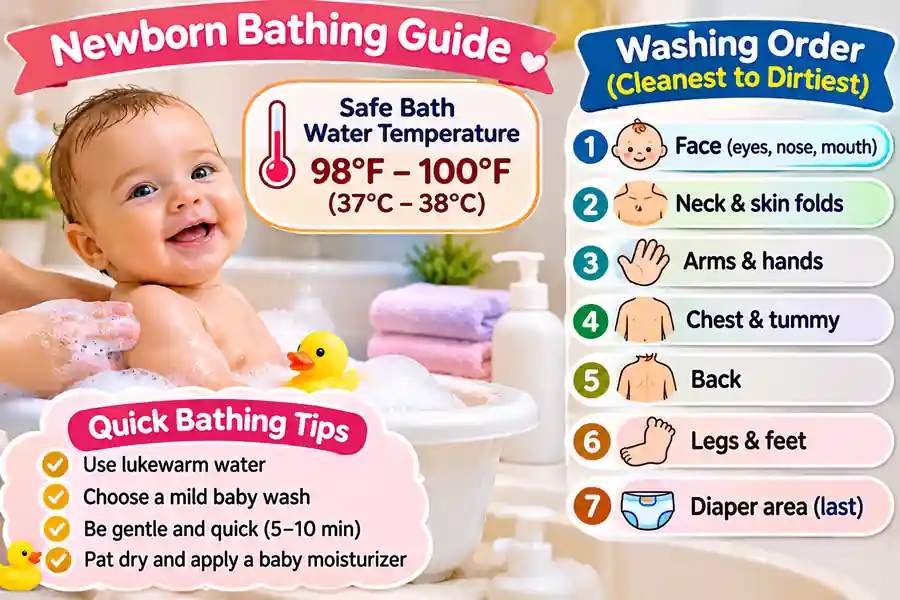
- Prep Your Station First: Gather a hooded towel, fresh diaper, clean onesie, washcloth, and mild cleanser before you undress your baby. Never walk away from a tub once water fills the basin.
- Test the Water Temperature: Fill the infant tub with just two inches of warm water. Aim for 98°F to 100°F (37°C to 38°C). Test the water with your wrist or inner elbow—it should feel comfortably warm, never hot.
- Wash from Cleanest to Dirtiest: Start with your baby’s face using plain warm water. Move down to the neck, chest, arms, tummy, and legs, saving the diaper area for last.
- Keep Shampoo Minimal: Wash your baby’s hair once or twice a week with a tear-free cleanser. Gently massage the scalp with your fingertips to loosen dry flakes without scratching.
- Pat Dry Immediately: Lift your baby straight into a warm hooded towel and pat their skin dry. Rubbing with a rough towel irritates delicate skin, so press gently instead.
Lotions, Creams & Moisturizers: What Your Baby Really Needs
Walk down any baby care aisle, and rows of pastel bottles promise silky-soft skin. Yet standing there as a sleep-deprived parent often sparks instant confusion. You want to protect your baby’s delicate skin barrier, but you also do not want to clog tiny pores or trigger sudden redness.
Can You Put Lotion on a Newborn?
One of the most common questions new moms ask is: can you put lotion on newborn skin right away? Yes, you can, but most newborns do not actually need daily moisturizer during their first few weeks. Babies enter the world coated in vernix caseosa, a rich, natural moisturizer that protects their skin after birth. As this protective layer wears off, many healthy newborns experience normal, harmless skin peeling on their hands, feet, and ankles.
Applying lotion on newborn skin too early—or slathering on heavily perfumed formulas—often irritates their immature skin barrier. Instead of reaching for a bottle out of habit, watch your baby’s skin cues first. If their skin feels soft and supple, skip the moisturizer and let their natural oils do the work.
When and How to Apply Lotion on a Newborn Safely
If you notice rough, flaky patches on your baby’s arms, legs, or cheeks, targeted hydration works wonders. The relationship between lotion and newborns comes down to smart timing and clean, minimalist formulas.
- Follow the Three-Minute Rule: Apply moisturizer within three minutes after infant bathing while your baby’s skin still feels slightly damp. This simple habit traps surface water inside the skin barrier before it evaporates.
- Warm It Between Your Palms: Rub a dime-sized amount of moisturizer between your hands first so cold lotion does not startle your baby.
- Use Gentle, Downward Strokes: Smooth the product along the direction of hair growth rather than rubbing in harsh circles, which can irritate hair follicles.
- Avoid Hands and Feet: Keep creams off your baby’s palms and fingers since newborns constantly put their hands in their mouths.
- Skip Skin Folds: Never trap thick creams inside neck creases, armpits, or groin folds, where excess moisture feeds yeast rashes.
Lotion vs. Newborn Skin Cream vs. Ointment: Which Works Best?
Not all moisturizers hydrate baby skin the same way. Understanding the difference between a runny lotion, a rich newborn skin cream, and a thick ointment helps you pick the right texture for every season.
| Moisturizer Type | Water-to-Oil Ratio | Best Use Cases | Key Pros & Cons |
| Baby Lotion | High water, low oil | Light daily hydration in warm, humid weather | Pros: Spreads easily, absorbs fast. Cons: Evaporates quickly; offers weak protection for severe dryness. |
| Newborn Skin Cream | Balanced water and oil (usually comes in a tub or pump) | Dry patches, flaky legs, and everyday eczema prevention | Pros: Locks in moisture longer than lotion without feeling overly greasy. Cons: Needs gentle warming in your hands before application. |
| Healing Ointment | 80% to 100% oil/petrolatum, zero water | Chapped cheeks, drool rash, cracked skin, and diaper barrier protection | Pros: Forms a breathable seal against moisture and wind; rarely stings broken skin. Cons: Feels heavy on large body areas during hot summer months. |
Expert Tip: If your baby shows early signs of dry, scaly patches or runs a family history of eczema, pediatric dermatologists recommend thicker creams or ointments over thin lotions. Thick formulas rebuild the lipid barrier far more effectively.
Choosing the Best Newborn Skin Care Products (And What to Avoid)
Shopping for newborn skin care products requires turning every bottle around and reading the back label. Front labels love buzzwords like “dermatologist-tested,” “hypoallergenic,” and “gentle,” even though federal regulators do not strictly define those terms. Knowing how to decode ingredient lists protects your baby from hidden irritants.
What Makes the Best Newborn Skin Care Products?
Whether you shop at your local pharmacy or browse online bundles, the best newborn skin care products share four non-negotiable traits:
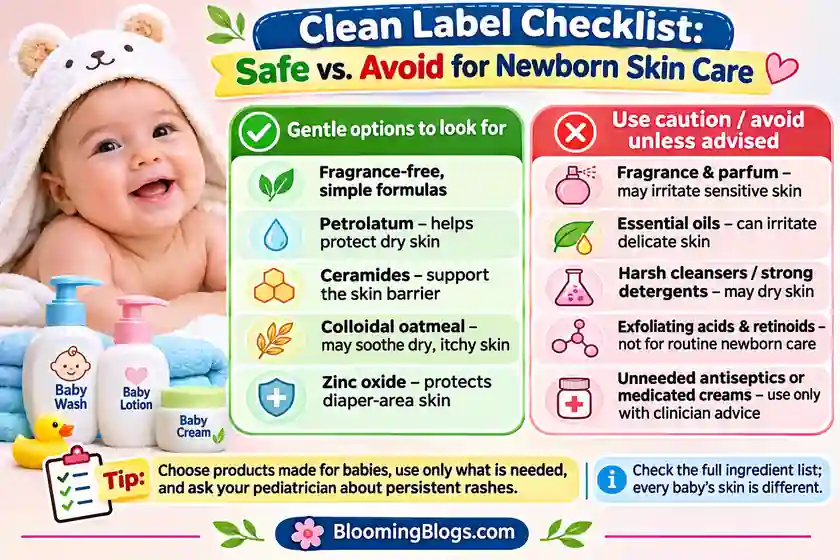
- 100% Fragrance-Free (Not Just “Unscented”): Products labeled “unscented” often contain masking chemicals that hide raw ingredient odors. Look strictly for “fragrance-free” on the label.
- Soap-Free and pH-Balanced: Choose liquid cleansers formulated around a skin-friendly pH of 5.5 so you never strip away healthy lipids.
- Short, Recognizable Ingredient Lists: Fewer ingredients mean fewer potential triggers for sensitive infant skincare. Look for soothing staples like colloidal oatmeal, ceramides, shea butter, sunflower seed oil, and petrolatum.
- National Eczema Association (NEA) Seal: Products carrying the NEA Seal of Acceptance pass strict screening for known allergens and skin irritants.
The Truth About Natural Newborn Skin Care
Many parents gravitate toward natural newborn skin care because plant-based formulas feel safer and purer. While cold-pressed sunflower oil, coconut oil, and calendula soothe mild dryness beautifully, “natural” does not automatically mean irritation-free.
- Skip Food-Based Oils on Broken Skin: Avoid olive oil, mustard oil, or nut oils on raw or eczematous skin, as oleic acid can weaken your baby’s skin barrier and trigger food sensitization.
- Watch Out for Essential Oils: Even pure lavender, tea tree, or eucalyptus oils are potent allergens that burn delicate infant skin.
- Always Do a 24-Hour Patch Test: Before using any new baby products for newborn skin care—including popular sets like the Tubby Todd baby bundle newborn skin care set or organic balms—dab a tiny spot on your baby’s inner forearm. Wait 24 hours to check for redness, bumps, or warmth before applying it broadly.
7 Harsh Ingredients to Ban From Your Nursery
Keep this quick red-flag list handy whenever you buy skin care for newborn essentials:
- Synthetic Fragrance & Parfum: The number-one cause of contact dermatitis in babies.
- Sodium Lauryl Sulfate (SLS) & SLES: Harsh foaming agents that strip natural moisture and sting eyes.
- Parabens (Methylparaben, Propylparaben): Synthetic preservatives linked to hormone disruption and skin sensitivity.
- Phthalates: Chemical plasticizers often hidden inside synthetic fragrances.
- Formaldehyde-Releasing Preservatives: Ingredients like DMDM hydantoin and quaternium-15 that trigger allergic reactions.
- Dyes and Artificial Colors: Purely cosmetic additives that offer zero benefit to your baby’s skin.
- Talc-Based Powders: Pediatricians advise against baby powders because tiny airborne particles irritate fragile infant lungs.
Gentle Shampooing Tips
Clean your baby’s hair just once or twice each week using a mild, tear-free baby wash that protects sensitive eyes. Many new parents worry about touching the soft spot on top of their baby’s head, known as the anterior fontanelle. You can wash this area gently with confidence because a tough, protective membrane shields your baby’s brain underneath.
Moisturizers, Oils, and Powders
Healthy newborn skin rarely needs daily creams or ointments during the first few weeks. Skip heavy oils and greasy balms on healthy skin, as thick coatings easily clog tiny sweat glands and trigger heat rash or small white bumps. When your baby develops dry or flaky patches, smooth a fragrance-free baby lotion or moisturizing cream onto the skin twice daily. Always apply moisturizer within three minutes of finishing a bath so the formula seals dampness right into the skin barrier.
For skin folds where friction causes chafing, a light dusting of cornstarch powder helps keep the area dry. Never use talcum-based baby powder, since tiny airborne talc particles irritate delicate airways and cause severe lung injury if your baby breathes them in.
Common Newborn Skin Conditions & Rashes: What Is Normal vs. When to Call the Doctor
Waking up to sudden spots, flakes, or blotches on your baby’s skin triggers instant worry for almost every new parent. Yet nearly every newborn develops temporary skin bumps or color shifts during the first two months of life. Knowing how to identify harmless newborn face rashes versus true infections saves you unnecessary panic and late-night internet spirals.
Understanding Newborn Face Rashes: Baby Acne, Milia & Drool Rash
Spotting a sudden rash on face of newborn skin rarely means you used the wrong soap or failed at hygiene. Most face rashes on newborn cheeks, noses, and chins happen because your baby’s oil glands and pores are still adjusting to life outside the womb.
- Neonatal Acne (Baby Acne): Tiny red or white pimples often pop up on your baby’s cheeks, forehead, and chin around two to four weeks of age. Lingering maternal hormones from pregnancy stimulate your baby’s oil glands, creating temporary breakouts. Wash your baby’s face gently once a day with plain warm water, and never squeeze the bumps or apply adult acne creams.
- Milia (Tiny White Bumps): Roughly half of all newborns develop pinhead-sized white bumps across their nose, chin, or cheeks. Trapped keratin proteins sit right beneath the skin surface, and these harmless pearls vanish on their own within a few weeks.
- Drool and Milk Rash: Dried spit-up, breast milk, or constant drooling irritates delicate skin around your baby’s mouth and neck folds. Pat the skin dry softly after every feeding, and apply a thin barrier of fragrance-free healing ointment before naps.
- Erythema Toxicum: Despite its scary medical name, this blotchy red rash with tiny yellowish-white centers is completely harmless. It appears on up to half of full-term newborns within days of birth and fades without treatment in one to two weeks.
Newborn Mottled Skin (Cutis Marmorata): Why Skin Looks Lacy or Blotchy
Have you ever undressed your baby for a diaper change and noticed a purple or pinkish lacy pattern across their arms and legs? Doctors call this harmless pattern newborn mottled skin (or cutis marmorata). Because a newborn’s tiny blood vessels and nervous system are still maturing, cool air causes blood vessels near the skin surface to widen and narrow unevenly.
Warming your baby in a cozy blanket or raising the nursery temperature usually makes the lacy pattern vanish within minutes. Proper skin care of newborn circulation simply means keeping your little one dressed in one extra breathable layer than you wear yourself. However, if mottled skin stays persistent even when your baby feels warm—or appears alongside lethargy, poor feeding, or fever—contact your pediatrician immediately.
Cradle Cap (Seborrheic Dermatitis): Clearing Flaky Scalp Scales
Yellowish, greasy, or crusty flakes on your baby’s scalp look alarming, yet cradle cap rarely itches or bothers your little one. Overactive oil glands on the scalp trap dead skin cells instead of letting them shed naturally during the first few months. Never pick or scratch dry scales with your fingernails, as breaking the skin invites infection.
- Loosen Scales Before Bath Time: Massage a few drops of pure mineral oil or pediatrician-approved baby oil into your baby’s scalp 15 minutes before washing.
- Brush Gently: Sweep a soft-bristled baby brush lightly over the scalp to lift softened flakes without irritating tender skin.
- Wash With a Mild Cleanser: Rinse the oil away cleanly during bath time with a tear-free, pH-balanced baby wash.
- Get Step-by-Step Help: For stubborn crusts around the eyebrows or behind the ears, check out our complete walkthrough on Cradle Cap in Newborns: Safe Home Remedies & When to Call the Doctor (insert internal link here).
Heat Rash (Miliaria): Keeping Overheated Skin Cool
Tiny red prickles across your baby’s neck, chest, back, or diaper line signal trapped sweat inside immature pores. Babies overheat fast when bundled in heavy fleece or synthetic fabrics. Move your baby into a cool, well-ventilated room, remove extra layers, and dab the skin with a cool, damp washcloth. Skip heavy ointments during a heat rash so blocked pores can breathe freely.
Diaper Rash: Prevention, Barrier Creams & Fast Relief
Even with dedicated skin care for infants, nearly every baby experiences diaper rash at some point. Wetness, friction, acidic stools, and new foods break down the fragile skin barrier inside the diaper zone.
- Change Diapers Promptly: Check diapers every two to three hours—and immediately after bowel movements—to limit contact with moisture and digestive enzymes.
- Pick Breathable, Gentle Diapers: Harsh dyes or poor absorbency trap dampness against raw skin, so review our tips on How Do I Choose the Right Diaper for My Baby? to find a soft, hypoallergenic fit.
- Apply a Thick Zinc Oxide Paste: Smooth a generous layer of fragrance-free zinc oxide or petrolatum barrier cream onto completely dry skin at every change.
- Give Daily Diaper-Free Time: Let your baby kick naked on a waterproof mat for 10 to 15 minutes twice a day so fresh air speeds healing.
- Know When Yeast Strikes: If bright red patches spread into thigh creases with tiny satellite red dots outside the main rash, your baby likely has a yeast infection. Dive deeper into targeted remedies in our complete resource on Diaper Rash in Newborns: Causes, Types & Treatment.
Quick Reference Guide: Common Newborn Rashes at a Glance
| Skin Condition | What It Looks Like | Common Locations | Safe Home Care |
| Baby Acne | Small red or white pimples without blackheads | Cheeks, forehead, chin | Wash once daily with warm water; avoid oils and lotions on the face. |
| Milia | Tiny, firm pearly-white bumps | Nose, chin, cheeks | Leave untouched; bumps clear naturally within 2 to 6 weeks. |
| Newborn Mottled Skin | Lacy, net-like pink or bluish marbling | Arms, legs, torso | Warm your baby gently with a light cotton blanket or skin-to-skin cuddles. |
| Cradle Cap | Thick, yellowish, greasy scales or flakes | Scalp, eyebrows, behind ears | Loosen with gentle oil before bath time, brush softly, and wash with mild cleanser. |
| Heat Rash | Clusters of tiny red bumps or clear blisters | Neck folds, chest, upper back | Dress in loose cotton clothes, cool the room, and keep skin dry. |
| Diaper Rash | Tender, shiny pink or bright red skin patches | Buttocks, groin, inner thighs | Change frequently, air-dry skin, and apply thick zinc oxide barrier paste. |
Red-Flag Symptoms: When to Call Your Pediatrician Right Away
Most newborn rashes clear up with simple home care, yet certain warning signs require prompt medical evaluation. Contact your pediatrician right away if you notice any of these symptoms:
- Fever or Behavioral Changes: Your newborn has a rectal temperature of 100.4°F (38°C) or higher, seems unusually sleepy, or refuses feeds.
- Fluid-Filled Blisters or Oozing: You spot yellow crusting, pus-filled pustules, open sores, or clear blisters anywhere on the body.
- Rapidly Spreading Redness: A rash spreads quickly, feels hot to the touch, or shows red streaks.
- Purple Spots That Do Not Fade: Tiny pinpoint red or purple dots (petechiae) stay visible when you press a clear drinking glass gently against the skin.
- Stubborn Rashes Past 3 Days: A diaper rash or skin irritation worsens after 48 to 72 hours of consistent barrier care.
Umbilical Cord Care: Keeping the Belly Button Clean and Dry
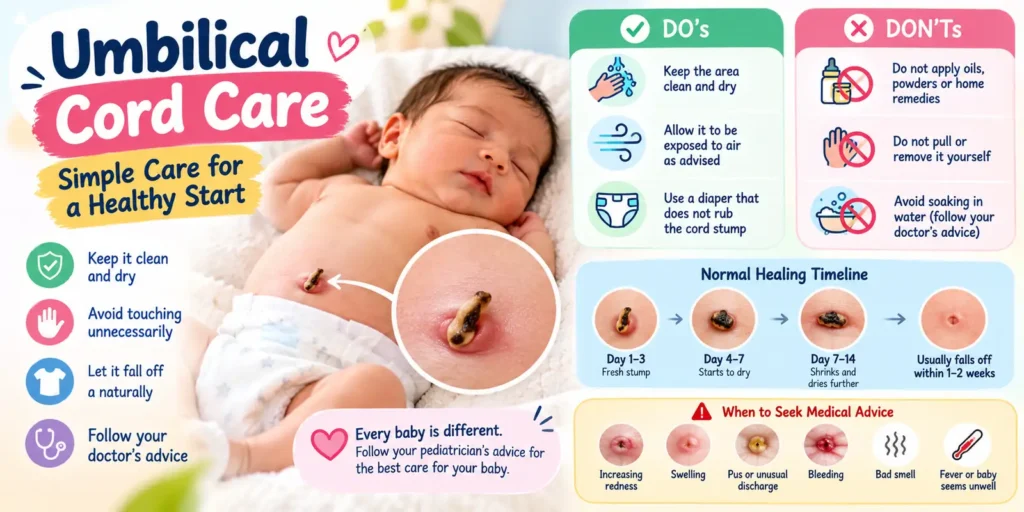
Your baby’s umbilical cord stump looks like a small, bluish-white clip right after birth, then slowly dries and darkens to brown or black. It usually drops off naturally within one to three weeks. Proper stump care is an essential part of newborn skin care because keeping that area clean prevents painful infections.
- Keep the Stump Dry and Exposed: Stick strictly to sponge baths until the stump falls off on its own. Fold the front waistband of your baby’s diaper down below the stump so air circulates freely and urine never soaks the area.
- Skip Alcohol and Harsh Swabs: Pediatricians no longer recommend dabbing rubbing alcohol on the cord stump. Plain air drying actually helps the stump heal and detach faster without irritating nearby skin.
- Clean Messes Gently: If spit-up or poop gets onto the stump, wipe it softly with a damp washcloth using plain water, then pat it completely dry.
- Let It Fall Off Naturally: Never pull or tug on a loose cord stump, even if it hangs by a single tiny thread.
- Watch for Infection Signs: Call your pediatrician right away if you notice foul-smelling yellow pus, swelling, red skin spreading around the navel, or active bleeding that does not stop after gentle pressure.
Trimming Baby Fingernails and Toenails Without Stress
Newborn fingernails grow surprisingly fast and feel paper-thin yet razor-sharp. Because babies lack full muscle control, they easily scratch their own cheeks and noses while sleeping or feeding. Building safe nail care into your weekly newborn skin care routine protects delicate facial skin from accidental marks.
- Pick the Best Timing: Trim your baby’s nails right after a warm bath when nails feel soft, or while your little one sleeps deeply.
- Use Baby-Safe Tools: Choose blunt-tipped baby nail scissors, infant nail clippers, or a gentle glass nail file designed for tiny fingers. Never bite your baby’s nails off, as mouth bacteria cause painful finger infections.
- Press the Finger Pad Back: Gently push the soft skin pad away from the nail edge before you clip so you never nick tender skin.
- Follow Natural Curves on Fingers: Trim fingernails smoothly along the natural curve of the fingertip, then file away any sharp corners.
- Cut Toenails Straight Across: Baby toenails grow much slower than fingernails. Always trim toenails straight across rather than rounding the edges to prevent painful ingrown nails.
Safe Laundry Habits for Sensitive Infant Skincare
Everything that touches your baby’s skin all day—from crib sheets to swaddle blankets—acts like an extension of your infant skincare routine. Factory dyes, fabric finishes, and scented laundry soaps easily trigger contact rashes on brand-new skin.
- Pre-Wash Every New Item: Wash all baby clothes, burp cloths, blankets, and crib sheets before your baby wears or sleeps on them for the very first time. This removes manufacturing dust and chemical sizing agents.
- Choose Fragrance-Free Detergents: Wash your baby’s laundry—and your own shirts that rest against your baby’s cheek—using a mild, dye-free, fragrance-free liquid detergent.
- Skip Dryer Sheets and Fabric Softeners: Scented fabric softeners coat cotton fibers in waxy chemicals that block breathability and irritate sensitive skin. Use plain wool dryer balls instead to soften fabrics naturally.
- Run an Extra Rinse Cycle: If your baby shows signs of dry patches or mild eczema, add a second water rinse cycle to clear every trace of soap residue.
Sun & UV Protection: Shielding Delicate Baby Skin Outdoors
Fresh air and gentle morning walks feel wonderful for both you and your baby. However, because newborn skin contains very little protective melanin, sunburn happens in just minutes—even on cloudy days. Smart outdoor habits form a vital part of caring for children’s skin from day one.
Shade and Sun-Protective Clothing Come First
For babies under six months old, physical shade offers the safest defense against harsh ultraviolet rays. Keep your little one out of direct sunlight, especially between 10 a.m. and 4 p.m. when UV rays peak.
- Create Portable Shade: Keep your baby under a tree, beach umbrella, pop-up tent, or stroller canopy whenever you step outside. Never drape a heavy blanket fully over a stroller opening, as trapped heat builds up dangerously fast inside.
- Dress in Lightweight Layers: Cover tiny arms and legs with loose, tightly woven cotton or bamboo clothing, including lightweight long-sleeved shirts and long pants.
- Add a Wide-Brimmed Hat and Sunglasses: Shield your baby’s face, ears, and neck with a soft, wide-brimmed sun hat. Pair the hat with flexible baby sunglasses labeled with 100% UV protection to guard sensitive eyes.
- Check the UPF Rating: For extra confidence outdoors, look for swimsuits and sun shirts carrying an Ultraviolet Protection Factor (UPF) label of 30 to 50+, which blocks over 97% of harmful rays.
Safe Sunscreen Rules for Babies Under Six Months
Pediatricians recommend minimizing sunscreen use on infants younger than six months old. When adequate shade and protective clothing are unavailable, you may apply a tiny amount of baby-safe sunscreen strictly to small exposed areas like the cheeks, back of the hands, and tops of the feet.
- Pick Mineral Formulas Only: Choose sunscreens made with zinc oxide or titanium dioxide. These physical mineral blockers sit gently on top of the skin without stinging or absorbing into delicate pores.
- Verify Broad-Spectrum Protection: Select a water-resistant, fragrance-free formula offering broad-spectrum protection (blocking both UVA and UVB rays) with an SPF of 30 or higher.
- Reapply Every Two Hours: No sunscreen is truly waterproof. Reapply mineral sunscreen every two hours—or immediately after water play or sweating—and wash it off gently with warm water once you head indoors.
Building healthy skin care for newborn habits early—from gentle bathing to daily sun protection—sets the foundation for lifelong skin health. Whenever you feel unsure about your baby’s skin, scalp, or nails, reach out to your pediatrician or a board-certified pediatric dermatologist for personalized guidance.
Newborn or Baby Eczema: Soothing Dry, Itchy Patches
If your baby develops rough, dry, red, or scaly patches on their cheeks, scalp, elbows, or behind the knees, they may have infant eczema (atopic dermatitis). Unlike harmless baby acne, eczema often feels itchy and uncomfortable, causing fussiness during sleep. It happens when a sensitive skin barrier loses moisture quickly and reacts to everyday triggers like fragrances, dry winter air, or scratchy fabrics.
- Moisturize Thickly and Often: Smooth a thick, fragrance-free newborn skin cream or ointment onto damp skin right after every bath to seal in hydration.
- Keep Baths Short and Lukewarm: Limit infant bathing to five or ten minutes using plain warm water and a soap-free, National Eczema Association-approved cleanser.
- Eliminate Hidden Triggers: Switch to dye-free, fragrance-free laundry detergent and dress your baby in soft, breathable 100% cotton sleepers.
- Know When to Seek Relief: Persistent or weeping patches need targeted care—explore gentle flare-up remedies in our upcoming guide on Newborn and Baby Eczema: Causes, Triggers & Soothing Relief (insert internal link here).
1. Vernix Caseosa & Normal Newborn Skin Peeling (Days 1–14)
Many new parents panic when their baby’s hands, feet, and ankles start shedding dry flakes during the first two weeks. This normal peeling happens as your baby sheds vernix caseosa—the creamy, white protective coating that shielded their skin inside the womb. Leaving vernix to absorb naturally right after birth boosts skin hydration and protects against early bacteria. You do not need to peel or scrub away flaking skin, as soft, fresh skin emerges underneath on its own.
2. Newborn Jaundice: Checking Skin Color Safely
Around 60% of full-term newborns develop a mild yellowish tint on their face, chest, and the whites of their eyes during the first week of life. Jaundice occurs because a newborn’s liver is still maturing and learning how to clear bilirubin, a normal byproduct of breaking down red blood cells. Check your baby’s skin color in bright natural daylight rather than under dim bedroom lamps. Contact your pediatrician right away if the yellow color spreads to your baby’s tummy, arms, or legs, or if your baby seems overly sleepy and struggles to feed.
3. Mongolian Spots (Dermal Melanocytosis) & Birthmarks
Flat, bluish-gray patches across a baby’s lower back, buttocks, or shoulders often look like bruises at first glance. Doctors call these harmless markings Mongolian spots (or congenital dermal melanocytosis), and they appear most commonly in babies with medium to darker skin tones. They cause zero pain and usually fade gradually during early childhood. Always ask your pediatrician to document birthmarks—such as salmon patches (“stork bites”) or strawberry hemangiomas—at your first checkup so you know what to expect as your baby grows.
4. Seasonal Newborn Skin Care: Winter Dryness vs. Summer Heat
Your baby’s newborn skin care routine needs small adjustments as the weather shifts outside:
- Winter & Dry Indoor Air: Cold air and indoor heaters pull moisture fast from delicate cheeks and lips. Run a cool-mist humidifier in your baby’s nursery, and apply a thin layer of fragrance-free healing ointment to exposed cheeks before stepping out into chilly wind.
- Summer Humidity & Sweat: Hot weather traps sweat inside chubby neck, thigh, and armpit folds. Dress your baby in loose, single-layer 100% cotton outfits, keep rooms cool, and pat damp skin folds dry several times a day.
5. Infant Bug Bites & Mosquito Protection (Under 6 Months)
Because babies cannot swat away mosquitoes or gnats, outdoor evening walks require simple physical barriers. Pediatricians advise against applying DEET or chemical insect repellents to infants younger than two months old. Instead, drape a fitted, breathable mesh mosquito net over your baby’s stroller or carrier, and dress your baby in lightweight long sleeves and pants outdoors.
6. Pet Dander, Kisses & Environmental Skin Triggers
Everyday household contact plays a big role in caring for children’s skin during the newborn stage:
- Wash Hands Before Holding: Ask family members and visitors to wash their hands before touching your baby’s face or hands to prevent transferring lotions, food residue, and germs.
- Skip Kisses Near the Face: Fragranced lip balms, beard stubble, and cold sore viruses easily irritate or infect fragile newborn skin.
- Manage Pet Hair & Dander: Keep pets off your baby’s crib sheets and play mats, and wash blankets regularly in fragrance-free detergent to prevent contact bumps.
7. Your Complete Newborn Skin Care Nursery Checklist (Quick Recap)
Keep this minimalist shopping list handy so you never waste money on unnecessary bottles:
- Cleansing: 1 soap-free, tear-free, pH-balanced liquid baby wash (5.5 pH) + soft organic cotton washcloths.
- Moisturizing: 1 fragrance-free newborn skin cream or plain healing ointment for dry patches.
- Diaper Zone: 1 thick zinc oxide diaper paste + water-based, fragrance-free wipes.
- Grooming & Laundry: 1 pair of blunt-tipped baby nail clippers/glass file + dye-free, fragrance-free laundry detergent.
Cystic Hygroma: Understanding Fluid-Filled Sacs in Newborns
- What Is It? A cystic hygroma is a benign, fluid-filled sac that usually appears on a baby’s head, neck, or underarm area. Doctors often detect it during a routine prenatal ultrasound or right after birth as a soft, painless swelling under the skin.
- Why Does It Happen? It develops when tiny lymph vessels fail to connect properly with the main lymphatic system during early pregnancy. Because lymph fluid cannot drain normally, it collects inside small pouches beneath the skin.
- How Do Doctors Identify and Manage It? Doctors use prenatal ultrasounds, MRI scans, or physical exams to check the size and depth of the swelling. Treatment depends entirely on the lump’s location and whether it presses on nearby airways.
- Consult Your Doctor: Always consult your pediatrician or a pediatric specialist right away if you notice any soft lump or swelling on your baby’s neck or body. Seek immediate medical care if the swelling grows quickly or affects your baby’s breathing or feeding.
Cystic Fibrosis: Basic Facts for New Parents
- What Is It? Cystic fibrosis (CF) is an inherited genetic condition that causes the body to produce unusually thick, sticky mucus. This heavy mucus affects the lungs, airways, and digestive system from infancy onward.
- Why Does It Happen? A baby develops cystic fibrosis only when they inherit two changed copies of the CFTR gene—one from each biological parent. This gene change disrupts how salt and water move in and out of cells, turning normal, slippery fluids into thick secretions.
- How Do Doctors Identify and Manage It? Most hospitals screen newborns for cystic fibrosis within days of birth using a simple heel-prick blood test. If screening flags a possible concern, doctors confirm the diagnosis with a painless sweat chloride test and build a specialized medical care plan.
- Consult Your Doctor: Speak with your pediatrician promptly if your newborn’s newborn screening flags a follow-up test, or if your baby shows salty-tasting skin, persistent coughing, or poor weight gain.
Newborn Melatonin: How Your Baby’s Sleep Hormone Works
- What Is It? Melatonin is a natural hormone that tells the brain when it is time to sleep and wake up. Unlike older children and adults, newborn babies do not produce their own steady supply of melatonin right after birth.
- Why Does It Happen? Inside the womb, your baby relied entirely on maternal melatonin passing through the placenta. After birth, a newborn’s pineal gland needs roughly eight to twelve weeks to mature and start making melatonin on its own.
- How Does It Affect Newborn Sleep? Because newborn melatonin levels stay low during the first two months, babies sleep in short bursts around the clock without knowing day from night. Exposure to natural morning daylight and dim evening rooms gradually teaches your baby’s internal clock when to release this sleep hormone.
- Consult Your Doctor: Never give melatonin supplements, drops, or sleep aids to a newborn or infant. Always consult your pediatrician before making changes to your baby’s sleep routine or if you have concerns about your newborn’s sleep patterns.
Newborn Face Rashes: Why Tiny Bumps Appear on Baby Skin
- What Is It? Newborn face rashes are common, temporary skin changes—such as tiny red pimples (baby acne), pinhead-sized white bumps (milia), or blotchy red spots—that appear on a baby’s cheeks, nose, chin, or forehead during the first weeks of life.
- Why Does It Happen? Lingering maternal hormones from pregnancy temporarily stimulate your baby’s oil glands, while tiny immature pores trap dead skin cells or sweat. Sensitive newborn skin also reacts easily to dried milk, drool, and friction against fabrics.
- How Do Doctors Evaluate Them? During routine well-baby checkups, pediatricians examine the bumps to tell harmless newborn skin transitions apart from allergic reactions, eczema, or skin infections. Most harmless face rashes on newborn skin fade on their own as hormone levels settle.
- Consult Your Doctor: Always consult your pediatrician to confirm the exact cause of any rash on face of newborn skin. Seek prompt medical attention if the bumps ooze fluid, form yellow crusts, spread rapidly, or appear alongside a fever.
Common Newborn Skin Care Mistakes to Avoid
Even the most attentive parents fall into common traps when trying to keep their baby clean and cozy. Avoiding these simple mistakes protects your baby’s developing barrier and prevents sudden irritation.
- Bathing Your Baby Every Single Day: Daily baths wash away natural protective oils and leave delicate skin dry and itchy. Stick to two or three gentle baths each week during the newborn stage.
- Scrubbing Newborn Face Rashes: Trying to wash away baby acne or milia with soap or rough washcloths inflames tiny pores. Most newborn face rashes clear on their own with plain warm water and patience.
- Using Scented Wipes and Lotions: Added perfumes and dyes cause the majority of allergic skin reactions in infants. Always pick 100% fragrance-free, alcohol-free wipes and creams.
- Applying Oils or Creams to Healthy Skin: Heavy balms and oils trap sweat inside immature glands, triggering prickly heat bumps. Moisturize only dry, flaky spots rather than coating your baby from head to toe.
- Leaving Wet Diapers On Too Long: Moisture and digestive enzymes break down delicate skin in less than an hour. Change wet or soiled diapers promptly and let the skin air-dry before fastening a fresh diaper.
- Using Talcum Baby Powder: Airborne talc dust harms tiny infant lungs when inhaled. Choose cornstarch-based powders or thick zinc oxide barrier creams instead.
- Over-Bundling Indoors: Dressing your baby in heavy fleece sleepers inside a warm room triggers heat rash and newborn mottled skin shifts. Dress your baby in one light, breathable cotton layer more than you wear comfortably.
Frequently Asked Questions
What is the best newborn skin care routine for the first month?
Keep your newborn skin care routine simple with three basic habits: sponge baths two to three times a week using warm water, prompt diaper changes with zinc oxide barrier cream, and fragrance-free moisturizer applied only to dry patches. Skip daily soaps and scented lotions so your baby’s natural skin barrier matures undisturbed.
Why is there a sudden rash on face of newborn skin?
A sudden rash on face of newborn cheeks, nose, or forehead usually stems from harmless neonatal acne, milia, or dried milk irritation. Maternal hormones lingering after birth stimulate your baby’s oil glands for a few weeks. Wash the face gently once daily with plain warm water and avoid applying oily creams or adult acne washes.
How can I treat face rashes on newborn babies safely at home?
Most face rashes on newborn infants fade without any medicine within two to six weeks. Pat your baby’s face dry softly after feedings, keep fingernails trimmed short to prevent scratching, and wash burp cloths in fragrance-free detergent. Call your pediatrician if bumps ooze yellow fluid, bleed, or appear alongside a fever.
Can you put lotion on newborn skin right after birth?
Yes, you can apply fragrance-free moisturizer if your baby has dry or cracked areas, though most newborns do not need daily lotion during week one. Babies are born with a protective natural coating that gradually sheds. When dry patches appear on wrists or ankles, apply a fragrance-free newborn skin cream within three minutes after bathing.
How often should I bathe my newborn baby?
Bathe your newborn just two to three times per week using lukewarm water around 98°F to 100°F (37°C to 38°C). Stick to sponge baths until the umbilical cord stump falls off and heals completely. On non-bath days, clean your baby’s face, neck folds, hands, and diaper area with a warm, damp washcloth.
Why does my baby have lacy, blotchy skin when undressed?
That purple or pink net-like pattern is called newborn mottled skin (cutis marmorata), and it happens because your baby’s blood vessels react strongly to cool air. Wrapping your baby in a warm cotton blanket usually makes the pattern fade within minutes. Contact your doctor if the blotchiness stays after warming or occurs with sluggishness.
What are the best newborn skin care products to buy before delivery?
Stock your nursery with four essentials: a soap-free, pH-balanced liquid cleanser, a thick fragrance-free newborn skin cream or healing ointment, a zinc oxide diaper paste, and water-based fragrance-free baby wipes. Choose products carrying the National Eczema Association Seal of Acceptance to minimize allergy risks.
Is natural newborn skin care safe for sensitive skin?
Plant-based natural newborn skin care works well when formulas use simple, cold-pressed ingredients like sunflower seed oil or colloidal oatmeal. However, avoid essential oils, olive oil, and nut oils on infant skin, as they can irritate pores or trigger sensitivities. Always test any new balm on a small patch of your baby’s forearm first.
When can I start using sunscreen on my newborn?
Pediatricians advise keeping babies under six months old out of direct sunlight using stroller canopies, wide-brimmed hats, and UPF-rated clothing. If shade and protective clothing are unavailable, apply a tiny amount of mineral sunscreen (zinc oxide or titanium dioxide, SPF 30+) strictly to small exposed areas like cheeks and hands.
How should I wash newborn clothes and blankets?
Wash all new baby outfits, crib sheets, and blankets before first use with a dye-free, fragrance-free liquid detergent. Skip scented fabric softeners and dryer sheets, which leave irritating chemical coatings on soft fibers. Run an extra rinse cycle if your baby has dry or eczema-prone skin.
Final Thoughts
Caring for your baby’s brand-new skin does not require complicated routines or pricey nursery shelves. When you keep bath time short, stick to fragrance-free essentials, and give newborn face rashes time to clear naturally, you give your baby’s skin barrier the exact support it needs. Trust your instincts, keep your routine simple, and reach out to your pediatrician whenever a rash or skin change leaves you unsure. You are already doing a wonderful job keeping your little one safe, comfortable, and loved.
Disclaimer & Medical/Safety Notice
Medical & Safety Disclaimer: We write our parenting and infant care guides to educate and support families. However, this article provides general informational content and never replaces professional medical advice, diagnosis, or treatment. Every baby has unique skin needs. Always consult your pediatrician or a board-certified pediatric dermatologist before you apply new products, treat persistent rashes, or adjust your baby’s care routine. Seek immediate medical care if your newborn develops a fever, fluid-filled blisters, oozing sores, or widespread skin redness.
External Authoritative References & Citations
We ground our newborn skin care guidance in peer-reviewed pediatric dermatology standards and global child health guidelines. Review these trusted clinical resources for deeper medical details:
- American Academy of Pediatrics (AAP) – HealthyChildren.org: Bathing Your Newborn — Clinical guidelines on sponge bathing, water temperature safety, umbilical cord care, and gentle infant cleansing.
- American Academy of Pediatrics (AAP) – HealthyChildren.org: Avoiding Dry Winter Skin in Babies and Toddlers — Evidence-based advice on fragrance-free moisturizers, ointments versus lotions, and safe baby laundry habits.
- American Academy of Pediatrics (AAP) – HealthyChildren.org: What is Cradle Cap? — Pediatric dermatology guidance on managing scalp scales safely and recognizing signs of skin infection.
- World Health Organization (WHO): Postnatal Care for Mothers and Newborns — Global postnatal recommendations on delaying the first bath, preserving protective skin barriers, and maintaining healthy newborn warmth.
- American Academy of Dermatology (AAD): Infant Sun Protection: How Parents Can Keep Their Baby Safe — Dermatology standards on physical shade, UPF-rated sun clothing, and mineral sunscreen rules for infants under six months.
- National Eczema Association (NEA): Eczema in Babies and Toddlers — Ingredient screening criteria for pH-balanced, fragrance-free baby cleansers and barrier creams.
🔗 Related Articles
If you are preparing for a newborn, these helpful Blooming Blogs guides can help you plan, prepare, and care for your baby with greater confidence:
- 1. Best Infant Formula for Newborns: Types, Choices & Safety Guide
- 2. Newborn Baby Essentials Checklist for Soon-to-Be Parents
- 3. How to Prepare Formula Milk for a Newborn Baby
- 4. Newborn Baby Care: Complete Guide for New Parents
- 5. Formula Mixing & Bottle Ratio Calculator
- 6. Hospital Bag for Delivery: Complete Checklist for Mom and Baby
- 7. The Ultimate Pregnancy Hospital Bag & Registry Checklist: Your Stress-Free Delivery Guide
- 8. Hospital Bag Checklist Tool
- 9. Rompers for Newborn: Ultimate Guide to Safe Baby Clothes
- 10. Onesies and Rompers: How to Dress Your Newborn Right
- 11. Baby Onesies Buying Guide: Best Soft Outfits for Newborns
🛠️ Try Our Free Interactive Baby Care Tools
Planning your nursery or setting up daily routines? Check out these handy calculators designed to simplify baby care:
🌱 Continue Exploring…
Whether you’re nurturing a newborn, curating a sanctuary for your home and garden, or simply looking to level up your day-to-day life, there’s always a new perspective waiting to be discovered. From practical everyday parenting guidance, women’s wellness information, ideas to make your home more beautiful, tips for caring for pets and plants, or inspiration for your spiritual journey, Blooming Blogs brings useful knowledge together in one place.
Blooming Blogs — knowledge that blooms.
🌸 Blooming Blogs Promise
We’re here to bring you thoughtful, reliable, and helpful insights you can truly count on. Every article on Blooming Blogs is thoroughly researched, crafted with care, and written with genuine empathy to support you in your everyday journey. Your trust means everything to us, and we are dedicated to sharing content that informs, inspires, and makes your life a little easier.
📰 Editorial Notes
Our team strives for clarity, accuracy, and depth in every piece we publish. Content is periodically updated to ensure facts, recommendations, and guides stay relevant over time. While we consult trusted sources and expert research, our goal is always to present complex topics in a simple, practical, and conversational way that works for real life.
⚠️ Disclaimer
The content provided on Blooming Blogs is for informational and educational purposes only and should not be considered professional medical, legal, or financial advice. Always consult with a qualified expert or licensed professional before making decisions related to your health, family, or personal finances. Blooming Blogs is not liable for any actions taken based on the information provided on this website. (For full details, please visit our Disclaimer Policy Page).
💬 Share Your Experience — Leave a Comment
We’d love to hear from you! Did this article help you, or do you have a personal tip or story to share with our community? Drop your thoughts, questions, or feedback in the comment section below. Every voice enriches our community, and we read every single comment!